Upon Re-Reading Animal Farm

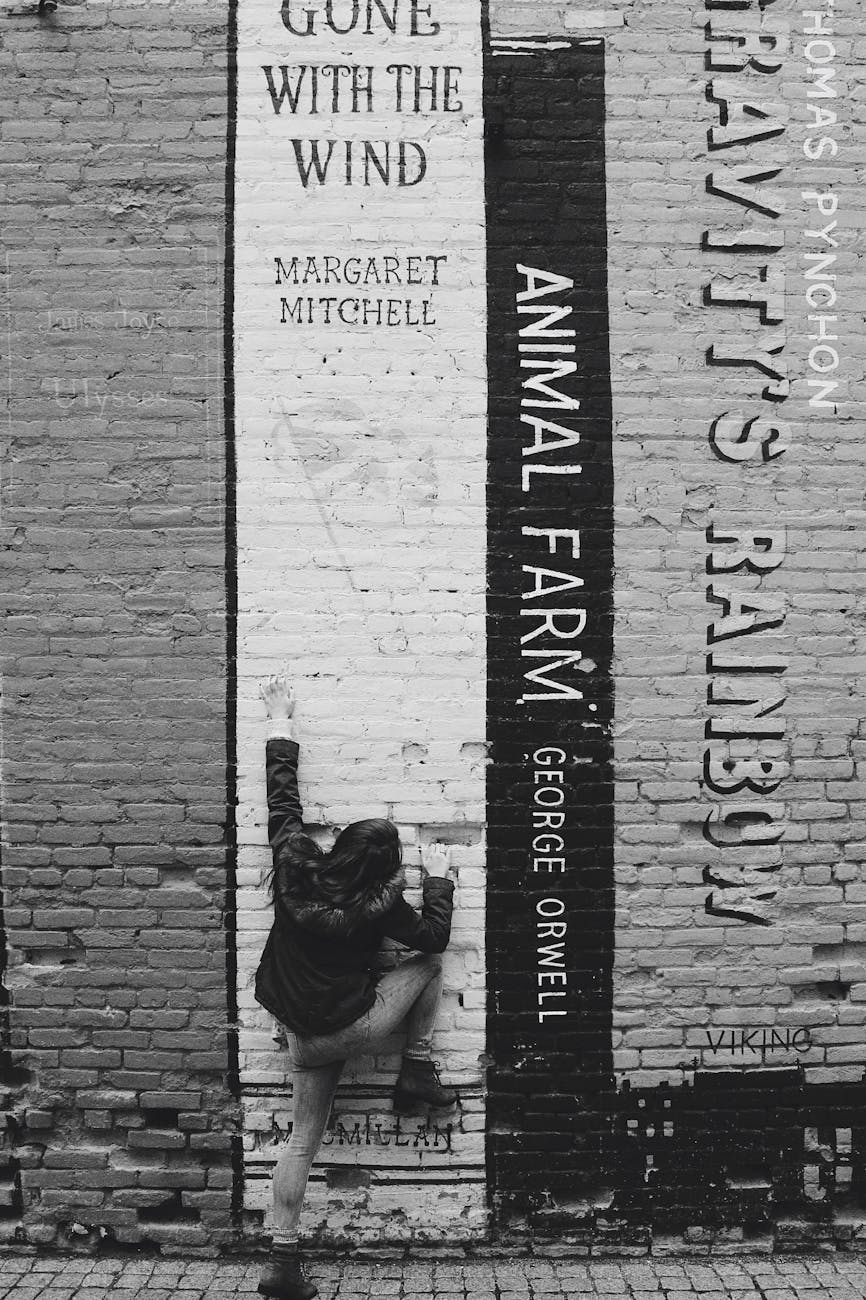
Photo by Anna Taylor on Pexels.com

I recently re-read Animal Farm, by George Orwell and it’s just as relevant and powerful as when I first encountered it in middle school. Orwell’s tale of rebellion and betrayal stirred something in me even then. I didn’t yet know the term “satire,” but I could feel its force. I knew Orwell wasn’t just telling a story about animals—he was warning us about power, manipulation, and the fragility of truth. That moment was a leap forward in my educational growth. It was the first time I understood that stories could say one thing on the surface and something entirely different underneath.

That breakthrough didn’t happen in isolation. Just before reading Animal Farm, I had participated in the Junior Great Books® program at my middle school. I remember sitting in a circle with a few kids from different classes, discussing a boxed set of stories and folk tales from around the world. Our teacher guided us with open-ended questions, but the magic came from the conversations themselves. That program didn’t just introduce me to literature—it taught me how to think about it.

Girl in library behind a circle of books
Photo by Ying Ge on Unsplash

The Great Books Foundation was founded in 1947 by Robert Maynard Hutchins and Mortimer Adler, visionaries who believed that meaningful conversation around classic texts should be accessible to everyone—not just scholars. In 1960, the Foundation launched the Junior Great Books program that still brings that same spirit of inquiry to younger readers like it did me all those years ago.

I still remember the African folk tales that spoke to me—stories rich with wisdom, humor, and moral complexity. They opened my eyes to cultures beyond my own and taught me that stories could carry truths across time and geography. That foundation prepared me to meet Orwell’s satire with curiosity and insight. The Junior Great Books program had already primed me to ask questions, to listen to others’ interpretations, and to trust my own instincts. Reading Animal Farm so soon after that gave me the tools to recognize manipulation, to question authority, and to appreciate the power of language—not just in literature, but in life.

Photo by Blue Arauz on Pexels.com

Today, I see Animal Farm challenged in some circles, dismissed as “pro-communist” by those who never learned to read it as satire. That misunderstanding underscores why programs like Junior Great Books matter. They don’t just teach kids to read—they teach them to think. To question. To recognize nuance. And in a world where critical thinking is more vital than ever, I’m deeply grateful for the education I had.

I still have that boxed set of Junior Great Books. It’s a little worn, but it reminds me of the moment I first learned to read between the lines—and how that skill has shaped everything I’ve done since. Animal Farm was the spark, but the Great Books program gave me the lens. And for that, I’ll always be thankful.

Curious about the legacy of Junior Great Books and the Shared Inquiry method that shaped generations of readers? Learn more about the Great Books Foundation’s mission and history here.

Getting to Choose

It’s here! The Fall/Winter 2025 edition of Teach. Write. I hope you will take a look at it. Many fine writers from all over the globe have contributed poetry, short stories, creative non-fiction, and essays to this edition. You can find the journal here. For those who are not aware, I began Teach. Write. as part of this site in 2017. In 2023, to become a member of the Community of Literary Magazines and Presses (clmp.org), I was required to create a separate website for the journal, but I am still the sole editor and publisher. I am grateful to have more time to dedicate to the journal now that I’m retired, and I hope that this edition demonstrates what I’ve been learning and attempting to put into practice.

Everyone told me I would stay busy during retirement, and that’s true. The difference is, however, I get to choose. Most things anyway. I certainly didn’t choose the health issues in my family, but I’m grateful to have the freedom and flexibility to go where I’m needed and continue most of the activities I want to do.

Me receiving an Appy Inkwell Award for Best Memoir at the Appalachian Writer's Conference, 2024
Me receiving an Appy Inkwell Award for Best Memoir at the Appalachian Writer’s Conference, 2024

My biggest chosen project is my teaching memoir that is in the final stages of editing. It isn’t what I thought it would be, but with the help of a fine editor, it’s becoming better. Furthermore, the process is birthing new ideas and future writing projects that I may pursue.

I’ve also chosen to travel. I went to Davidson College for the Squire Summer Workshop, a program of the North Carolina Writers’ Network in July. In September I attended the Appalachian Writers Conference in Berea, Kentucky at the Historic Boone Tavern. I would have never been able to go to a September writing conference in the middle of the week while I was teaching.

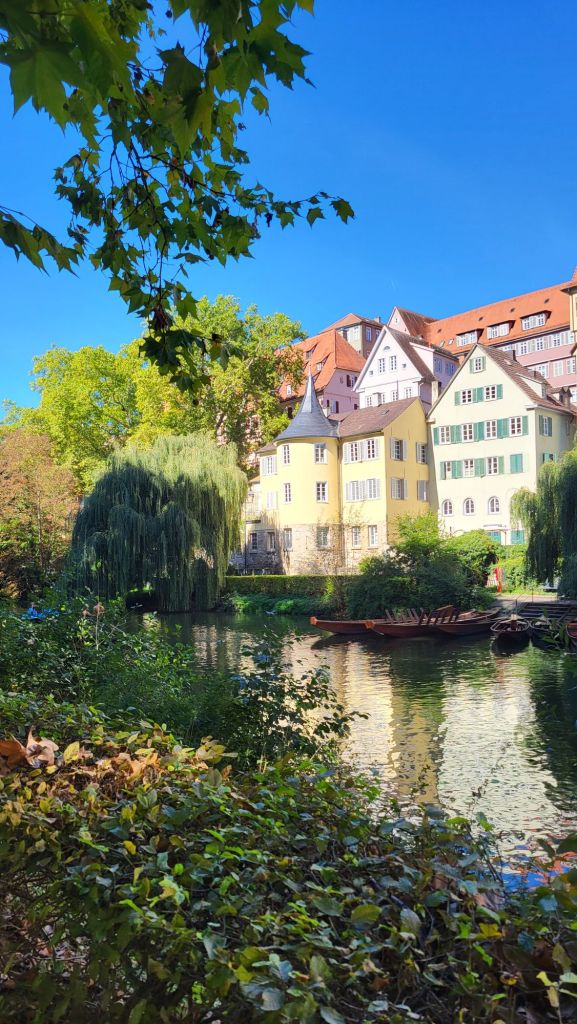
Soon after I got back from Berea, my family traveled to Europe where we spent 16 days with my brother and his family in Nagold, Germany, right on the edge of the Black Forest and then a week in Provence. Magnifique!! Then, it was back to Nagold for a few days, including a trip to nearby Tuebingen, where my husbund and I spent an extended vacation when we were first married.

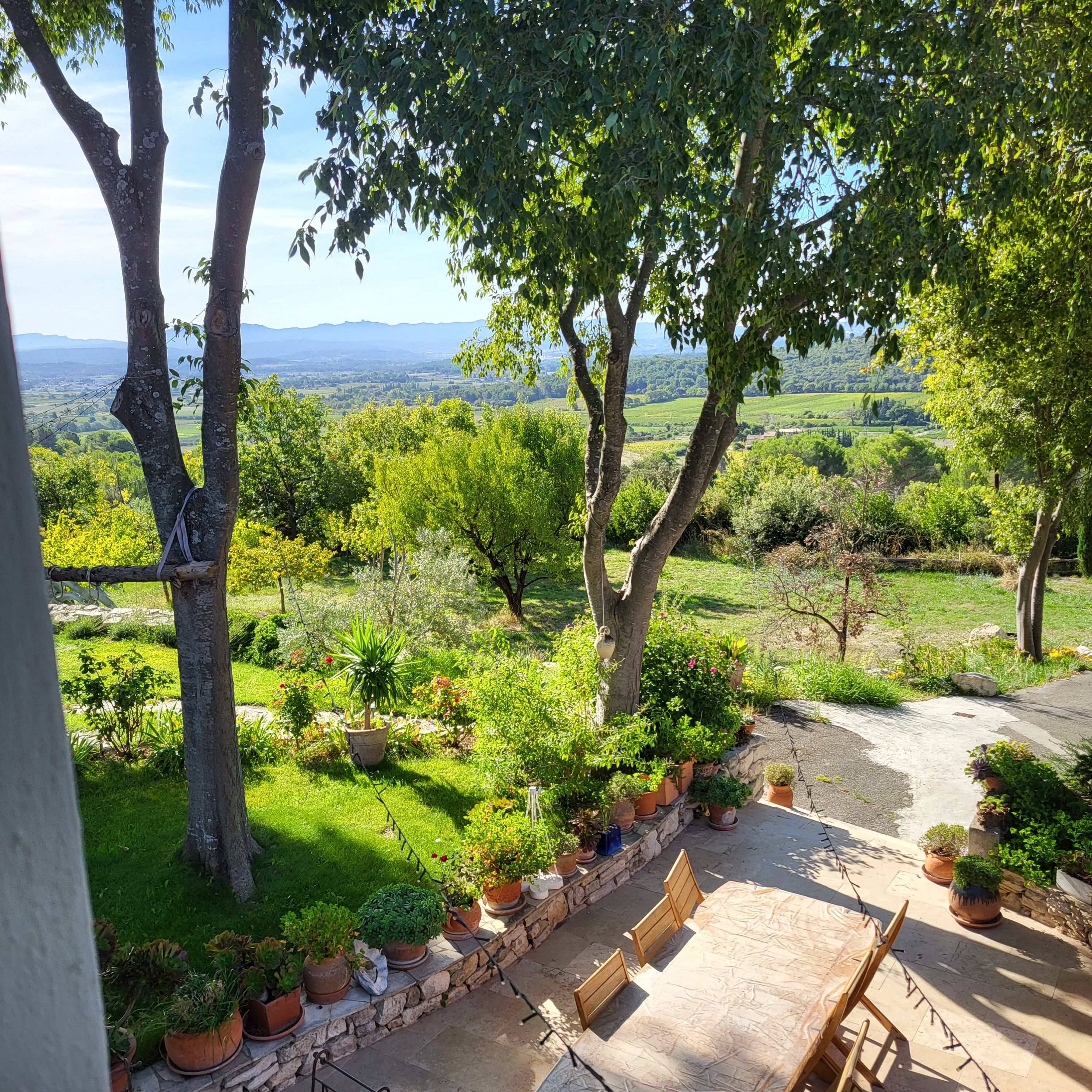
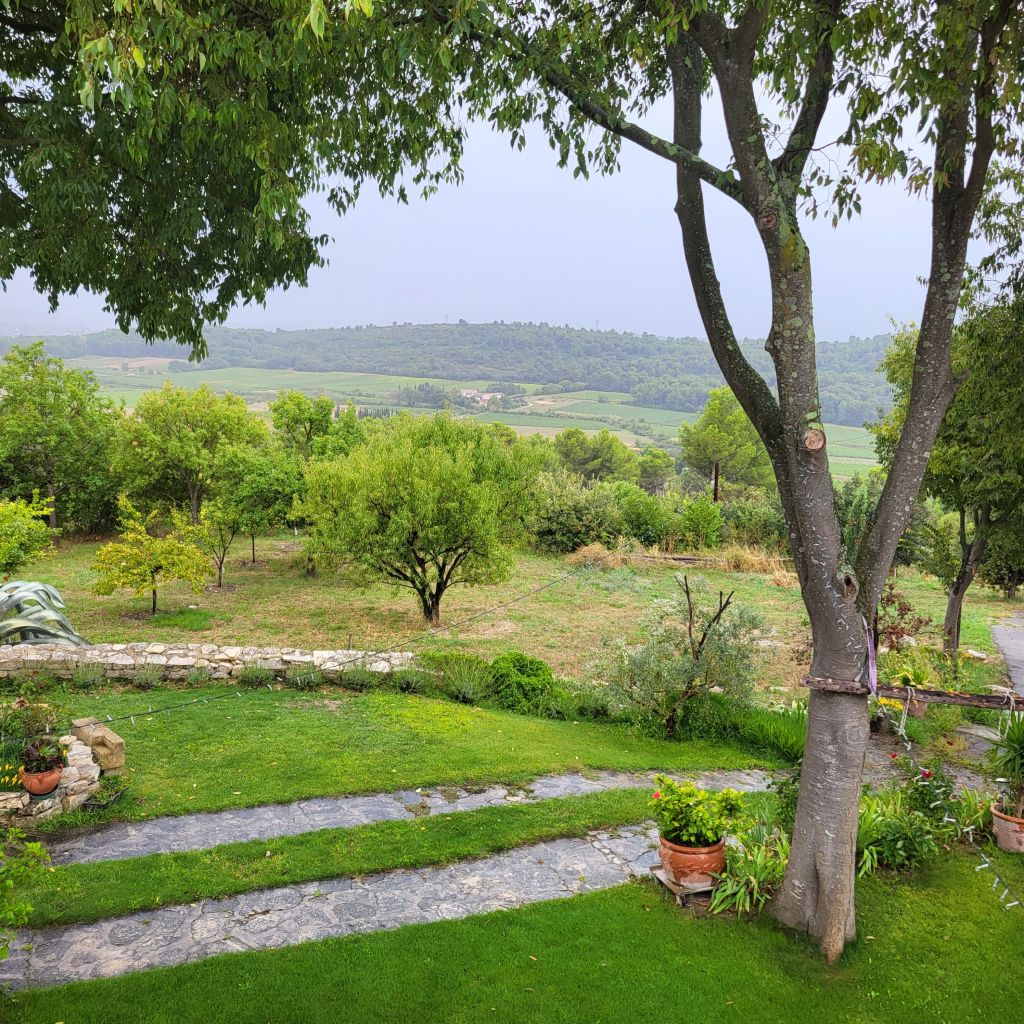
View from our villa in Provence

I’m in Alabama visiting family but soon I will be home in western North Carolina, choosing, God willing, to spend time with my husband and daughter, cuddle and play with my cat Flint, cook and bake, sit on my porch and read, drive up on the Blue Ridge Parkway to leaf watch, hike, help out as assistant stage manager for a stage version of Clue at the local community theater, meet with friends, and write, write, write.

I choose to do a lot, don’t I? Good thing it makes me happy.

I’m still here!

Me receiving an Appy Inkwell Award for Best Memoir at the Appalachian Writer's Conference, 2024
Me receiving an Appy Inkwell Award for Best Memoir at the Appalachian Writer’s Conference, 2024

About this time last year, I found out that the opening pages of my teaching memoir, Lessons: A Teaching Life, won a contest sponsored by Martin Sisters Publishing, a small press in Barbourville, Kentucky. With the prize came eventual publication. My long year of revising, editing, and polishing began at the beginning of this year. At the end of July, I reached a milestone, finishing my personal revision and editing stage! Now, I’m working with my wonderful editor, Ryan Wineberg, to edit the book and ready it for the publisher. If all goes well, I hope to have my first book published in the first quarter of next year.

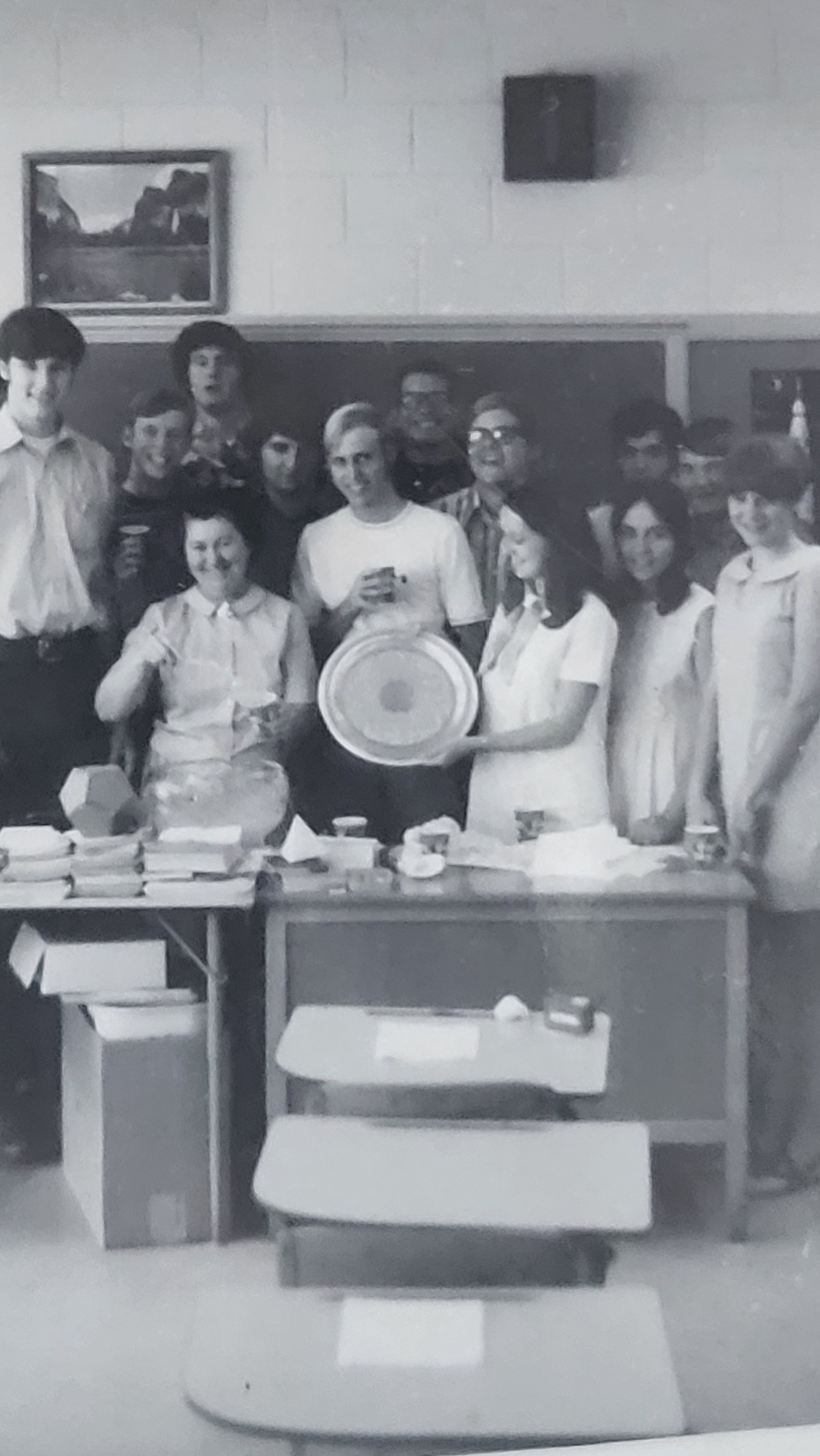
My grandfather when principal of Ridge Grove School (far right, back row)

One of the first things Ryan asked me to do was think about adding pictures, which for some reason, I had never thought about doing before. It’s been an interesting process and trip into my teaching roots, especially the pictures I have found of my own and my mother’s family, many who were educators. My grandfather, Gordon Dabbs, died before I was born, but through my mother I have learned what a great principal and physics teacher he was. My grandmother, Katherine, and her sister, Jane Leath, were also teachers as was my mother’s brother Eldridge Dabbs. My father was a principal, teacher, and coach. My mother taught English but spent the bulk of her career as a high school librarian, now retired for many years. My mother’s first cousin Judson Jones became a principal, too, and two of his daughters, Leah and Lori work in education; Lori has her doctorate like her daddy.

My grandmother with her first class at Lanett High School, Lanett, Alabama (front row, far right)
Great Aunt Jane at her retirement celebration (front row, far left)

It’s been great to look back and see pictures that represent this rich legacy that helped shape the value I put on education. For me and my family, it’s been priceless!

I will sure keep you all updated about the book’s progress. In the meantime, I’ll be traveling to the Appalachian Writers’ Conference again in September. Excited to go back and keep learning–as my dad always said, “I’m not going to retire. I’m going to refire!”

What’s Mrs. Winkler up to?

I’m not sure anyone cares, but here goes:

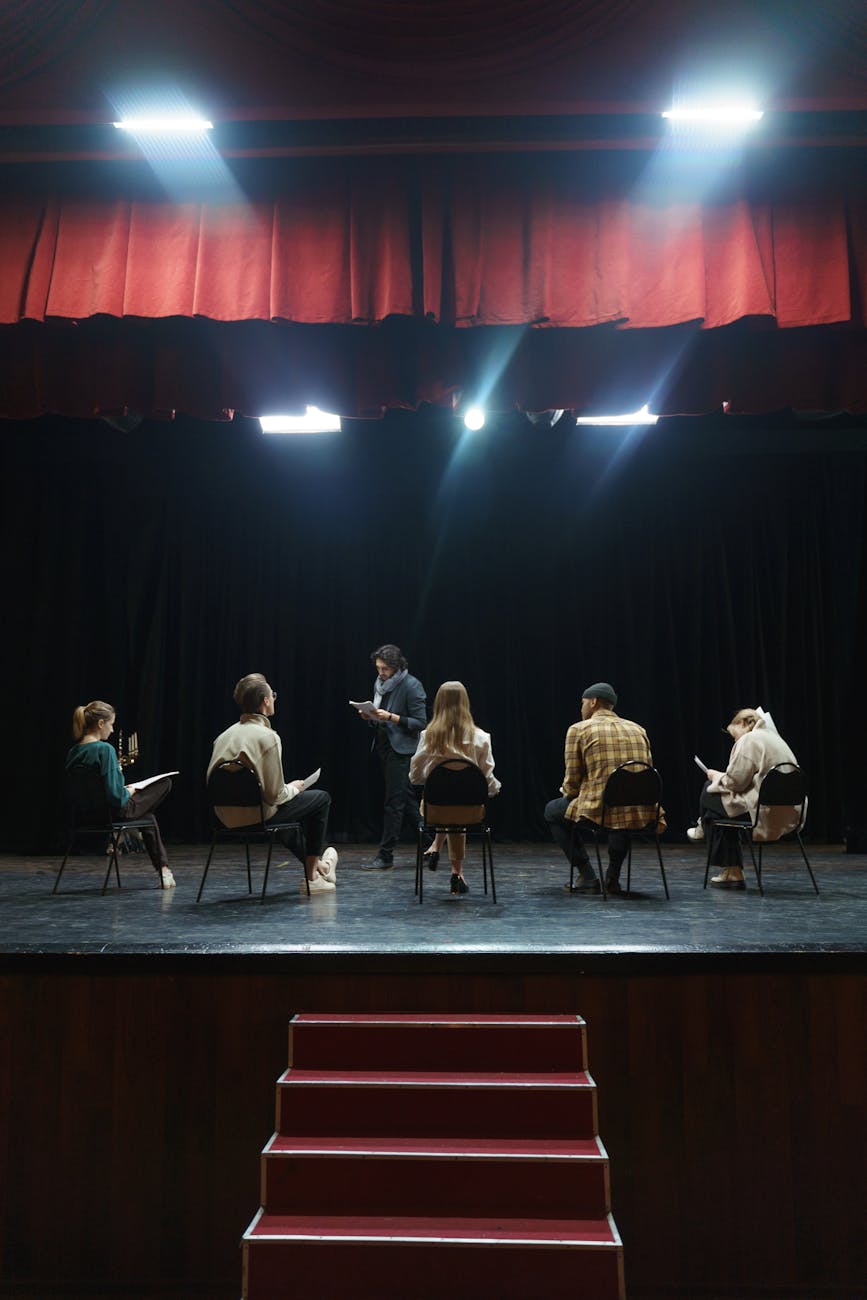
Actors from the original production of A Carolina Story on stage during a rehearsal
Rehearsal of the original A Carolina Story at Blue Ridge Community College, 2012–photo by Katie Winkler
  • I had the reading of the re-write of my play, A Carolina Story, that I worked on for a year during my time as a Dramatists Guild Foundation National Virtual Fellow. It was only a workshop reading at a local community theater, and it went well, but it felt a bit anti-climatic. I think I made it loom large in my mind and tried to make it a bigger “production” than it should have been, so I was bound to be a little disappointed, especially when I ended up with less time than I expected and had to cut out parts of the reading.
  • On the other hand, the actors who read for me were fantastic! Many of them were my dear friends and some of them had either directed or acted in the original version. They read so well, giving me the feedback and inspiration I needed. I don’t know what will happen with the play next, but the major revision is finished, it’s better, and the year of learning and revising and planning was not wasted.
  • I’m learning to get over myself. I have made many mistakes and will continue to make more, but I’m better for it. Each misstep is another opportunity to grow. I’m proud that I have not let my stupidity stop myself from trying and taking chances. One of the great things about being my age is that I’ve gotten close to not giving a rat’s patootie what people think about me.
  • I continue to make progress on my teaching memoir thanks to Ryan, the great editor Martin Sisters Publishing assigned me, although I do give my own hard work its due as well. I was stuck for a little while, I have to admit, struggling with structure and focus. I just couldn’t quite wrap my head around how to put the book together or where to put the emphasis, but suggestions from Ryan helped as. It looks like I will finish with my first big edit ahead of the deadline.
  • What else am I up to? Trying to live well–planning and going on trips, writing, reading, listening to audio books, spending time with my husband and daughter, laughing with people, trying to help them, trying to stay informed about current events without obsessing, trying to take care of my health, finding ways to stay calm and enjoy the time I have left on the planet.
  • And I remember. Working on a memoir means living with the past, including all of those mistakes I just talked about, and while some of it has been painful, much of it has been glorious. It’s been a good life and despite the hardships and disappointments of my teaching career, I never wanted to do anything else except write, and I have been able to do both for most of my life. That’s something, isn’t it? And I’m grateful.
Me receiving an Appy Inkwell Award for Best Memoir at the Appalachian Writer's Conference, 2024
Receiving the Appy Inkwell Award for Best Memoir at the Appalachian Writer’s Conference, 2024

Hey, Mrs. Winkler: A History

In 2014, I started this blog as a way to stay sane as I became increasingly alarmed about the state of things at my institution, a small community college south of Asheville, North Carolina. Since 1995, I had taught English composition, developmental English, British literature, and creative writing. During the first decade or so, I had enjoyed blessed autonomy, trusted to develop my own curriculum that followed limited state and institutional guidelines. I liked it that way, and by all indications, I and other English instructors were effective teachers, especially when preparing students to be successful when they transferred to four-year institutions. We collaborated on the required freshman English classes, using the same textbooks and study materials, but we were still considered the experts when it came to our individual classes and pretty much left to create our own curriculum and assessments.

Photo by cottonbro on Pexels.com

However, as online instruction and dual enrollment became more popular, the college administration as well as the state sought more and more standardization because, you know, it’s so much easier to collect data and dollars that way and aren’t those the only things that matter? I guess you can tell how I felt about the changes and my loss of academic freedom.

As that first decade of Hey, Mrs. Winkler moved on, I found myself feeling smaller and smaller as an employee, even though I was growing in my abilities and contributions to the college, including the development of four online literature classes—World Literature II (I believe the first online lit. in the state of North Carolina), British Literature I and II, and American Literature II. I also developed accelerated online classes for the two required freshmen English courses, making it possible for students dependent on financial aid to proceed through their courses more quickly.

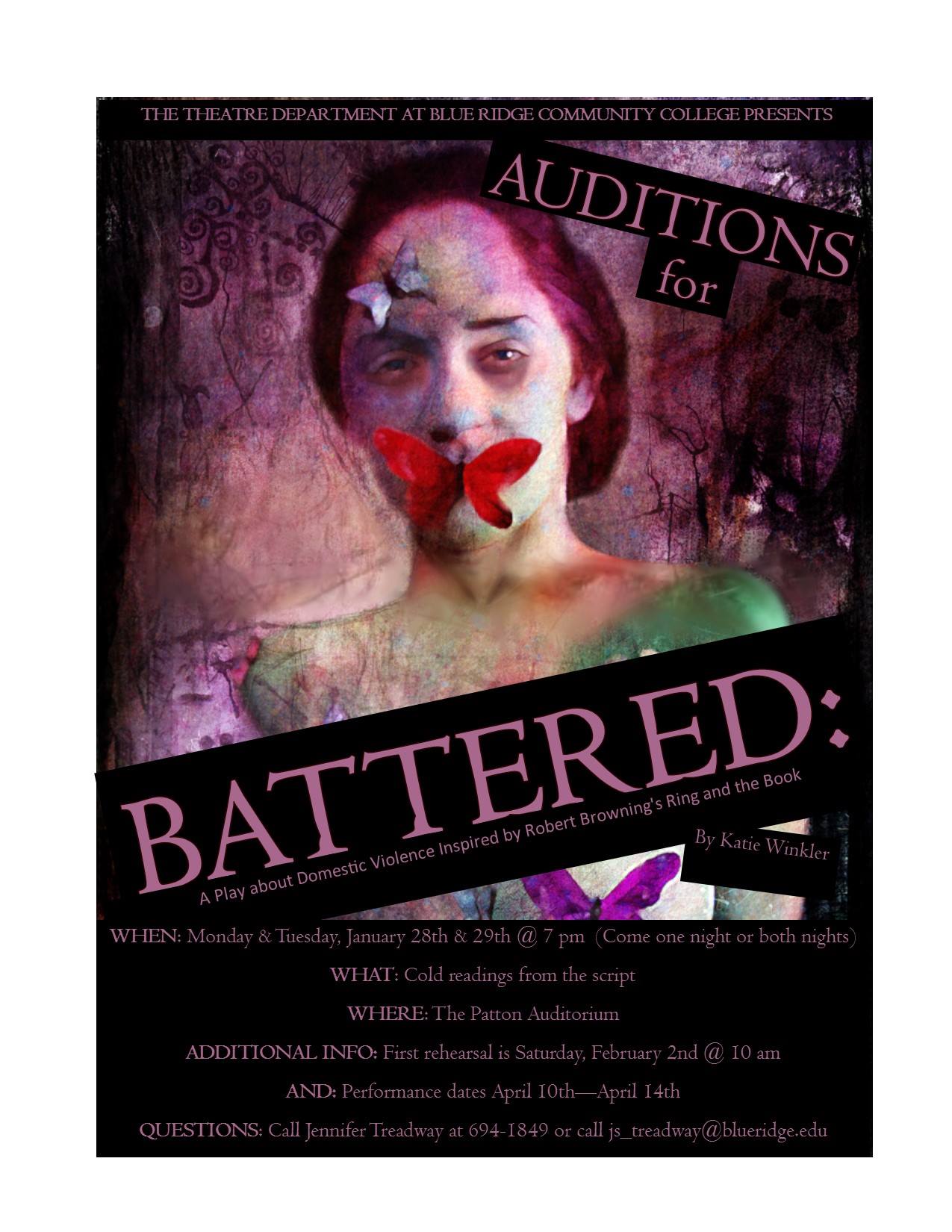
Even before 2014, I had become deeply involved in the theater department at my college as a writer, actor, director, dramaturg, and publicist. I also collaborated on writing screenplays for short films, one that won the 2008 Asheville 48-Hour Film Project Best Film called Serial Love. I wrote four plays that were produced at the college—a one-act comedy called Green Room, the musical A Carolina Story with music by a former student, Curtis McCarley, a faithful stage adaptation of Frankenstein by Mary Shelley, and a play about domestic violence inspired by Robert Browning’s The Ring and the Book called Battered. All four were fantastic teaching experiences as I collaborated with student actors and crew members when writing and revising the scripts.

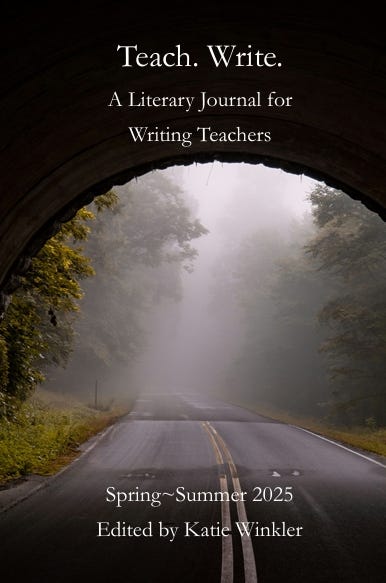
In 2017, I launched a literary journal called Teach. Write.: A Literary Journal for Writing Teachers, which now has its own website teachwritejournal.com and is a member of the Community of Literary Magazines and Presses. The latest edition is dedicated to the people of western North Carolina and those who came to help us following the devastation caused by Hurricane Helene.

So, you see, Hey, Mrs. Winkler was not only a place to rant, but also about the wonderful collaborations and incredible students I had over the years. I love teaching, and writing the blog, then editing the journal, gave me opportunities to express all the bad, good, and seriously screwed up things that were happening. It helped me survive those last years. Finally, however, I had to leave teaching, probably because I loved it too much. I just couldn’t take what was happening to it anymore. When the opportunity arose for me to retire a bit early, I took it, and I haven’t been sorry.

It’s been over a year and a half since I retired, and although I miss my colleagues and my students, I don’t miss the administrative hassles and definitely do not miss grading essays! In some ways, especially as I work on my memoir, Lessons: A Teacher’s Life, to be published this year or early next, I feel that I haven’t left. Also, my time as a Dramatists Guild Foundation Fellow helped me rewrite A Carolina Story, which had its beginnings at the college where I taught the bulk of my career. Next month, the new A Carolina Story will have a workshop reading at Hendersonville Theatre as part of their series New Works Readings: Page to Stage

The Beat Goes On.

Teach. Write. Spring/Summer 2025 is available online and in print

The 2025 Spring/Summer edition of Teach. Write. is dedicated to the people of Western North Carolina and to those who have come to their aid in the aftermath of Hurricane Helene as well as the numerous wildfires that have devasted our area. The themes of resilience and courage weave their way through the poems, stories, and essays.

In 2017, I started publishing the literary journal Teach. Write: A Literary Journal for Writing Teachers to showcase the work of teachers. I found throughout my career that seeking publication for my writing, allowing myself to be vulnerable by exposing my writing to the world improved both my writing AND teaching. It’s been a joy.

The cover of the Fall/Winter edition of Teach. Write. A statue of an angel with arm outstretched

Read for free online at the journal’s website–teachwritejournal.com or buy a print copy for $15.00 + shipping and handling by clicking here. Submissions are open for the fall/winter 2025 edition until September 1. I would love to see your work, especially if you are a teacher, but I am open to all. See submission guidelines here.

Getting Real, Folks

A few years ago, when I was still working at a small community college in western North Carolina, I was visiting my mother who lives in rural Alabama. Often times towards the end of my almost 40-year teaching career, I would be discouraged and, I’m sad to say, spent a great deal of time bellyaching about the work environment when I was talking with my mother. But this time, I was happily explaining how a new teaching idea (I can’t remember what it was) had positively affected my students. “Sometimes this teaching stuff works,” I said.

My mom and me about ten years ago–photo by Hannah Winkler

Then, after a moment of silence, my mother said, “I know you’re too busy right now, but when you retire, you really ought to write a book about teaching. You’re such a good teacher, Katie.” I teared up then just like I am right now because those words coming from my mother started healing the wounds from a dysfunctional workplace and dwindling societal respect for educators in general. Slowly, the first writing project of my retirement began to take shape in my mind. I would write a memoir of my life as a teacher, and it would be dedicated to my mother.

I actually began writing the book in the last year of teaching but didn’t get very far. The composing process has never come easily to me, and I struggled. However, once I retired and was freed from the stresses of teaching, especially the heavy grading load, the words just seemed to tumble out of me. I had forgotten why I went into teaching in the first place, but now, no longer fixating on the heavy course loads, bureaucratic frustrations, and student apathy, I began remembering the joy of being in the classroom, the challenges I overcame, and the educational adventures I experienced. I had a rough, rough draft in six months, half the time I had given myself to finish.

Happy me at the awards banquet!

Even though I only had a draft of the book, when I saw the opportunity to enter a contest for a full-length memoir that only required the first 2,500 words, I decided to enter since all of the top three awards would cover the fee to the conference that was sponsoring the contest. I thought I had a shot at 3rd place, but never imagined that I would win the memoir category that came with an additional prize of publication!

So, it is happening! The publisher has assigned my book an editor who happens to be just right for me, someone with community college teaching experience who was the first person to greet me at the conference with the words, “I love your work!”

Unlike composing, editing is a joy for me. I would tell my students this; they would just give me that you’re-such-a-nerd look, but I would protest. “No, no, no! You don’t understand. Revision and editing are at the heart of good writing. That’s when you get to manipulate the words, sentences, and paragraphs–add and subtract until you make the writing sing!”

I doubted that many believed me, so I started saving my students’ diagnostic paragraphs in a folder and handing them back on exam day when they wrote a final reflection paper comparing that first faltering writing to the final essay. Sometimes they would audibly express their surprise with a “It is better.” or even just “Wow!”

I cherished those days just as much as I cherish revising and editing my first book: Lessons: A Teaching Life–coming to a bookstore near you, or online, from Martin Sisters Publishing.

***

The cover of the Fall/Winter edition of Teach. Write. A statue of an angel with arm outstretched

Coming soon! The next edition of Teach. Write. I’m dedicating this edition to the indomitable spirit of those who have been impacted by the many natural disasters we’ve been experiencing around the world, especially those here in my region of Western North Carolina. Six months ago, Hurricane Helene tore through our area, causing massive damage and a loss of 106 lives. Now, due to the thousands of downed trees and dry weather, fires are blazing all over our region, including upstate South Carolina. And yet, the resilient spirit of our people stands.

The Spring/Summer 2025 edition of Teach. Write. will be up on my sister site on April 1. On that date, I will begin accepting submissions for the 2025 Fall/Winter edition, so take a look at my guidelines and send me your best work!

Validation: Two Books About Balancing Education and Training

Ned Scott Laff and Scott Carlson’s Hacking College: Why the Major Doesn’t Matter and What Really Does challenges contemporary ideas about higher education. The book takes a critical look at today’s overemphasis on majors and predefined academic tracks, instead promoting a more flexible and personalized approach to navigating college. The authors advocate for experiential learning, skill-building, and real-world readiness, encouraging students to “hack” their education by tailoring it to their unique goals and aspirations. They also emphasize uncovering “hidden intellectualism” and leveraging untapped opportunities in the workforce, offering practical advice for students to maximize their college experience in ways that extend beyond rigid curricula.

Reading Hacking College felt like a real validation of the methods I used during my time as a community college educator. Many of the principles the authors outline—like the importance of experiential learning and practical, career-focused assignments—aligned perfectly with the approach I took in my classes. In one of my English composition courses, for example, I required students to interview a professional in their desired field. This assignment wasn’t just about teaching research and communication skills; it was about connecting their academic work to the real world in a meaningful and practical way.

The results were inspiring. Many students said it was the highlight of the course, as they gained invaluable insight into their chosen professions. One student even walked away from the interview with a job! Assignments like this not only enhanced their communication and research skills but also made the value of liberal arts education more tangible.

During my years teaching freshman composition and advising students in associate degree programs, I saw firsthand the importance of integrating the “bread” of practicality with the “roses” of intellectual and personal growth—a balance Terry O’Banion captures so beautifully in Bread and Roses. While a few students arrived with clear goals and preparedness, the majority were either unprepared or had unrealistic expectations. Toward the end of my career, I noticed an increasing number of students seeking only the quickest path to a high salary or transfer to an elite school. Many questioned the value of courses, like English composition, that didn’t appear directly tied to their career goals.

To address this, I instinctively began infusing my curriculum with practical, real-world assignments like the interview project. This approach didn’t just help students see the value in what they were learning—it also created moments of clarity, confidence, and even opportunity, like the student who landed a job from their interview.

Unfortunately, I’ve watched with concern as the “roses” of liberal arts education are increasingly overshadowed by a narrow focus on workforce pipelines. Reflecting on my experiences with students—and on books like Hacking College and Bread and Roses—reminds me why this balance is so essential. Education should prepare students not just for successful careers, but for meaningful and enriching lives. I’m more determined than ever to advocate for this perspective and keep the conversation going.

Service is a dirty word

Photo by Pixabay on Pexels.com

Service is a dirty word
You may have to
Wipe inky hands
On a blackened rag
Beside a bottle
Of disinfectant
Left over
From Covid’s mandatory cleaning days
Long deemed
Useless by scientists
But not bureaucrats.

Photo by Enrico Hu00e4nel on Pexels.com

Service is a dirty word.
You may have to
Wipe down your desk
Of ceiling tile flecks
From above you
As workers pound on the old roof
Of a building
That appears new
To the press and politicians
who don’t see you
Back there, serving

Photo by Cori Emmalea Rodriguez on Pexels.com

Service is a dirty word.
You chose this filthy bed you lie in
You could have walked away.
You could have stayed so much cleaner if
You chose business or tech.
You really deserve that net decrease in pay.
For wanting, longing to serve.

Don’t you know?

Service is a dirty word.

NC Treasurer’s Communication: A Missed Opportunity

Photo by Leeloo The First on Pexels.com

Brad Briner, new NC state treasurer, said in his first newsletter to the constituents whom he is sworn to serve that he plans to raise premiums and implies there may be other changes to state employee health coverage before saying , “This isn’t the message I wanted to deliver in my first communication to Plan members….” Frankly, I don’t believe him. He has been quite animated in interviews during his campaign and after the election that he is eager to begin enacting his plan to cut drug benefits and raise premiums. 

Maybe those things need to be done or maybe not, Mr. Briner, but to say you  didn’t “want” to deliver this news as your first communication is disingenuous. This statement did not NEED to be your FIRST communication to us. Actually, your words reveal a definite lack of empathy for the human beings you are to be caring for. As a former English professor, I have some suggestions on how you might have better delivered this bad news.  

Photo by T Leish on Pexels.com

How about praising state employees and retirees, thanking us for our hard work and dedication as your first communication, saving the bad news for your second, third, or fourth? How about telling us that you’re honored to serve us before delivering the bad news?  This is a basic business writing technique I taught my community college students.

However, your very first words to the people you are about to deliver bad news to is not about honor and service or sorrow over how underpaid and overworked people are going to be asked to sacrifice even more. No, it’s about how “excited” you are to be in such an “impactful role.” So, I’m confused. You actually seem quite happy to deliver such news.You go on to support your argument by saying you “believe in transparency.” I do, too, but you can be transparent and still offer a little compassion for the thousands of state employees that will be affected by your actions. A bit of humility goes a long way, too.