Me receiving an Appy Inkwell Award for Best Memoir at the Appalachian Writer’s Conference, 2024
About this time last year, I found out that the opening pages of my teaching memoir, Lessons: A Teaching Life, won a contest sponsored by Martin Sisters Publishing, a small press in Barbourville, Kentucky. With the prize came eventual publication. My long year of revising, editing, and polishing began at the beginning of this year. At the end of July, I reached a milestone, finishing my personal revision and editing stage! Now, I’m working with my wonderful editor, Ryan Wineberg, to edit the book and ready it for the publisher. If all goes well, I hope to have my first book published in the first quarter of next year.
My grandfather when principal of Ridge Grove School (far right, back row)
One of the first things Ryan asked me to do was think about adding pictures, which for some reason, I had never thought about doing before. It’s been an interesting process and trip into my teaching roots, especially the pictures I have found of my own and my mother’s family, many who were educators. My grandfather, Gordon Dabbs, died before I was born, but through my mother I have learned what a great principal and physics teacher he was. My grandmother, Katherine, and her sister, Jane Leath, were also teachers as was my mother’s brother Eldridge Dabbs. My father was a principal, teacher, and coach. My mother taught English but spent the bulk of her career as a high school librarian, now retired for many years. My mother’s first cousin Judson Jones became a principal, too, and two of his daughters, Leah and Lori work in education; Lori has her doctorate like her daddy.
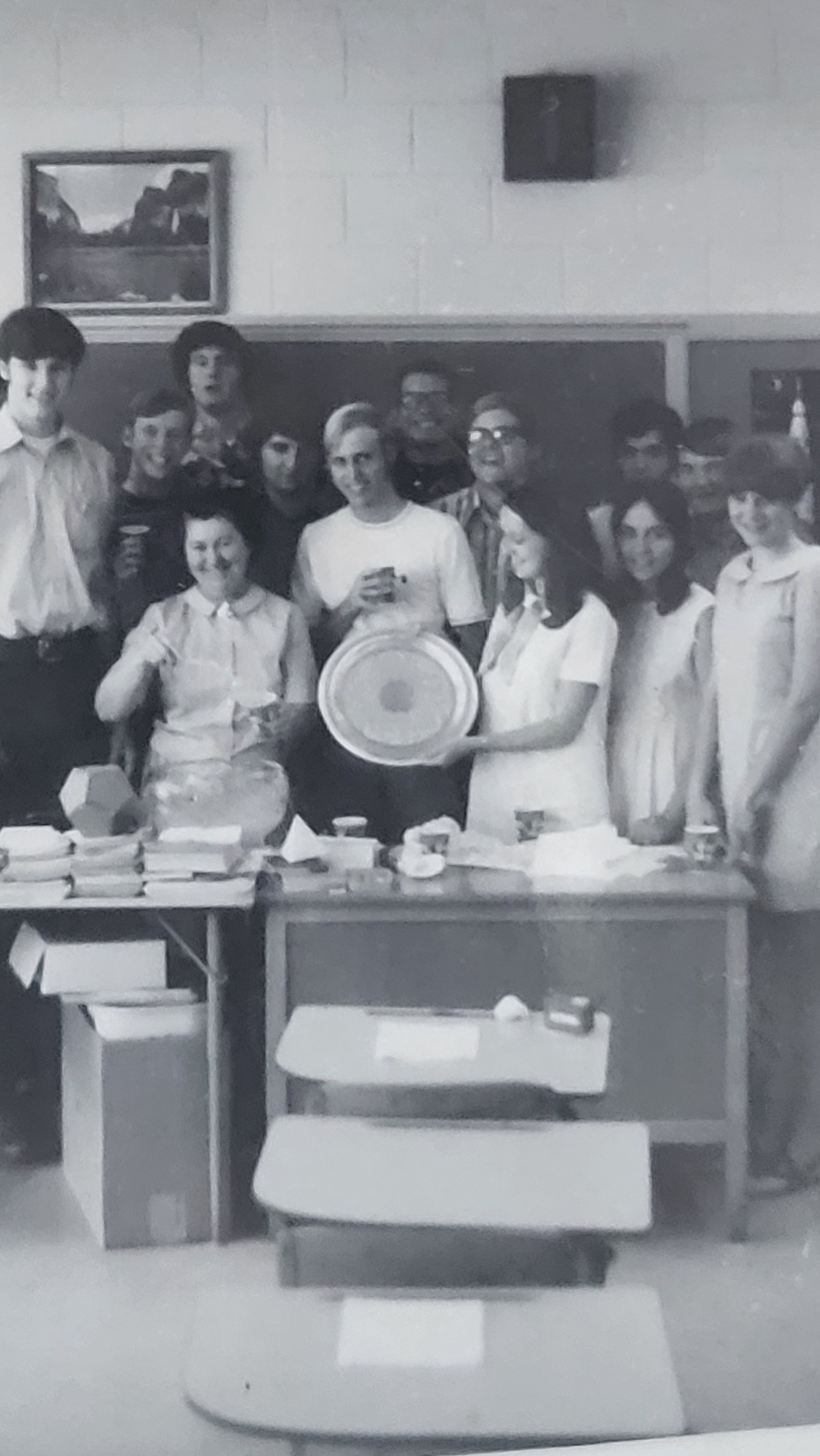
My grandmother with her first class at Lanett High School, Lanett, Alabama (front row, far right)
Great Aunt Jane at her retirement celebration (front row, far left)
It’s been great to look back and see pictures that represent this rich legacy that helped shape the value I put on education. For me and my family, it’s been priceless!
I will sure keep you all updated about the book’s progress. In the meantime, I’ll be traveling to the Appalachian Writers’ Conference again in September. Excited to go back and keep learning–as my dad always said, “I’m not going to retire. I’m going to refire!”
Rehearsal of the original A Carolina Story at Blue Ridge Community College, 2012–photo by Katie Winkler
I had the reading of the re-write of my play, A Carolina Story, that I worked on for a year during my time as a Dramatists Guild Foundation National Virtual Fellow. It was only a workshop reading at a local community theater, and it went well, but it felt a bit anti-climatic. I think I made it loom large in my mind and tried to make it a bigger “production” than it should have been, so I was bound to be a little disappointed, especially when I ended up with less time than I expected and had to cut out parts of the reading.
On the other hand, the actors who read for me were fantastic! Many of them were my dear friends and some of them had either directed or acted in the original version. They read so well, giving me the feedback and inspiration I needed. I don’t know what will happen with the play next, but the major revision is finished, it’s better, and the year of learning and revising and planning was not wasted.
I’m learning to get over myself. I have made many mistakes and will continue to make more, but I’m better for it. Each misstep is another opportunity to grow. I’m proud that I have not let my stupidity stop myself from trying and taking chances. One of the great things about being my age is that I’ve gotten close to not giving a rat’s patootie what people think about me.
I continue to make progress on my teaching memoir thanks to Ryan, the great editor Martin Sisters Publishing assigned me, although I do give my own hard work its due as well. I was stuck for a little while, I have to admit, struggling with structure and focus. I just couldn’t quite wrap my head around how to put the book together or where to put the emphasis, but suggestions from Ryan helped as. It looks like I will finish with my first big edit ahead of the deadline.
What else am I up to? Trying to live well–planning and going on trips, writing, reading, listening to audio books, spending time with my husband and daughter, laughing with people, trying to help them, trying to stay informed about current events without obsessing, trying to take care of my health, finding ways to stay calm and enjoy the time I have left on the planet.
And I remember. Working on a memoir means living with the past, including all of those mistakes I just talked about, and while some of it has been painful, much of it has been glorious. It’s been a good life and despite the hardships and disappointments of my teaching career, I never wanted to do anything else except write, and I have been able to do both for most of my life. That’s something, isn’t it? And I’m grateful.
Receiving the Appy Inkwell Award for Best Memoir at the Appalachian Writer’s Conference, 2024
In 2014, I started this blog as a way to stay sane as I became increasingly alarmed about the state of things at my institution, a small community college south of Asheville, North Carolina. Since 1995, I had taught English composition, developmental English, British literature, and creative writing. During the first decade or so, I had enjoyed blessed autonomy, trusted to develop my own curriculum that followed limited state and institutional guidelines. I liked it that way, and by all indications, I and other English instructors were effective teachers, especially when preparing students to be successful when they transferred to four-year institutions. We collaborated on the required freshman English classes, using the same textbooks and study materials, but we were still considered the experts when it came to our individual classes and pretty much left to create our own curriculum and assessments.
However, as online instruction and dual enrollment became more popular, the college administration as well as the state sought more and more standardization because, you know, it’s so much easier to collect data and dollars that way and aren’t those the only things that matter? I guess you can tell how I felt about the changes and my loss of academic freedom.
As that first decade of Hey, Mrs. Winkler moved on, I found myself feeling smaller and smaller as an employee, even though I was growing in my abilities and contributions to the college, including the development of four online literature classes—World Literature II (I believe the first online lit. in the state of North Carolina), British Literature I and II, and American Literature II. I also developed accelerated online classes for the two required freshmen English courses, making it possible for students dependent on financial aid to proceed through their courses more quickly.
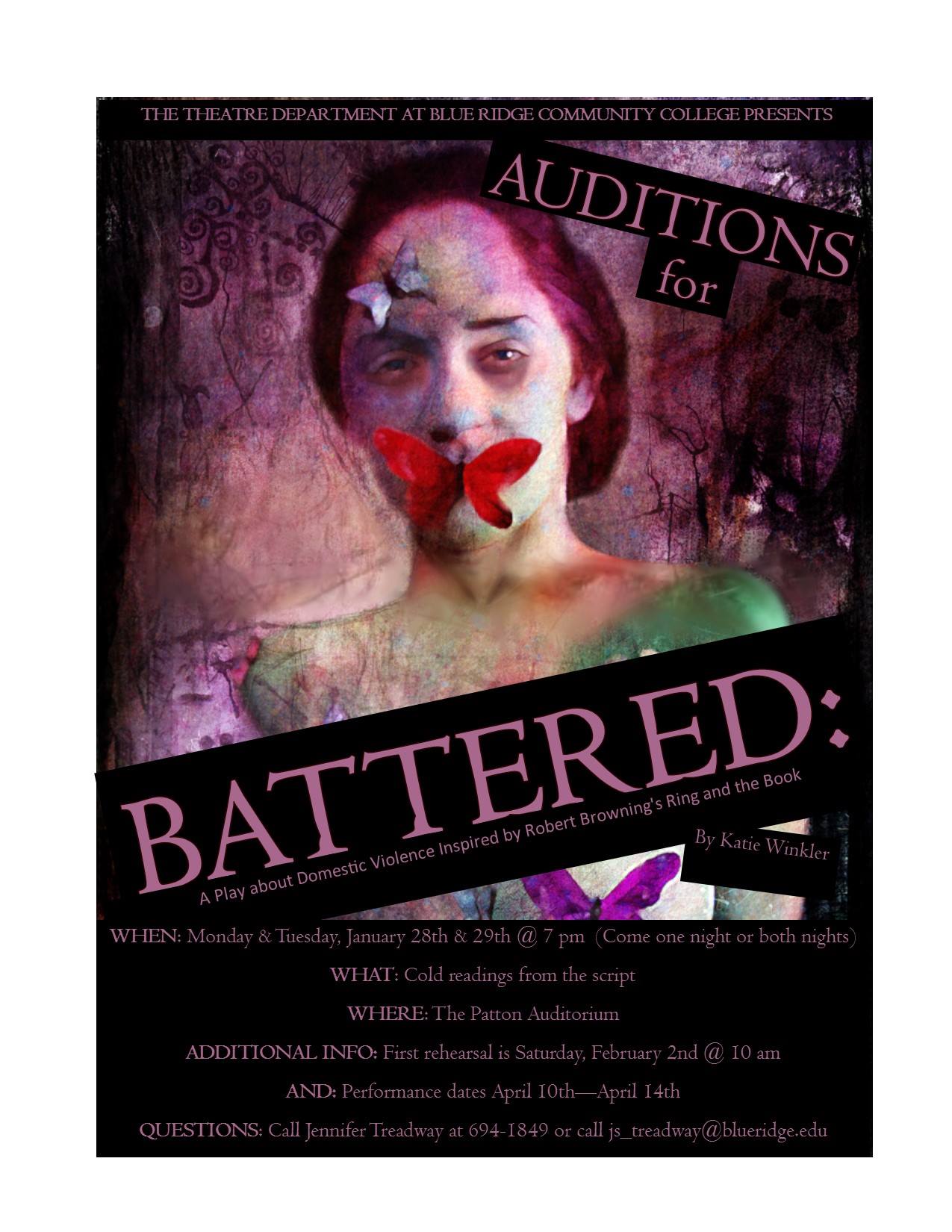
Even before 2014, I had become deeply involved in the theater department at my college as a writer, actor, director, dramaturg, and publicist. I also collaborated on writing screenplays for short films, one that won the 2008 Asheville 48-Hour Film Project Best Film called Serial Love. I wrote four plays that were produced at the college—a one-act comedy called Green Room, the musical A Carolina Story with music by a former student, Curtis McCarley, a faithful stage adaptation of Frankenstein by Mary Shelley, and a play about domestic violence inspired by Robert Browning’s The Ring and the Book called Battered. All four were fantastic teaching experiences as I collaborated with student actors and crew members when writing and revising the scripts.
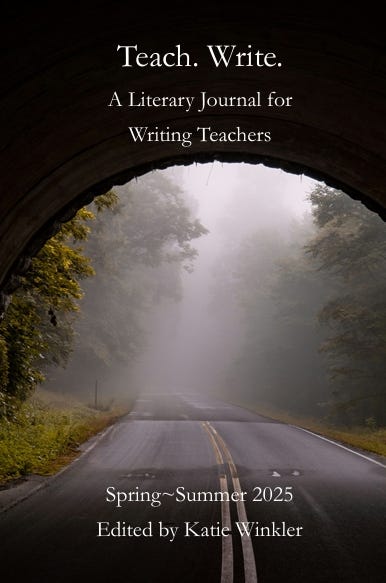
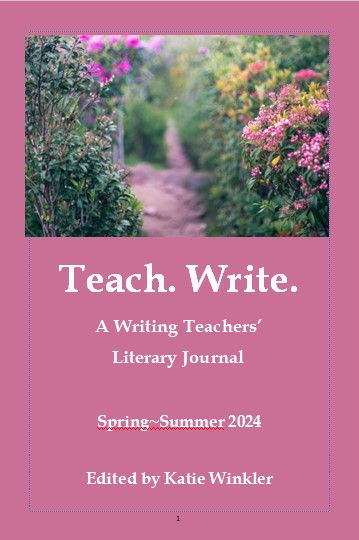
In 2017, I launched a literary journal called Teach. Write.: A Literary Journal for Writing Teachers, which now has its own website teachwritejournal.com and is a member of the Community of Literary Magazines and Presses. The latest edition is dedicated to the people of western North Carolina and those who came to help us following the devastation caused by Hurricane Helene.
So, you see, Hey, Mrs. Winkler was not only a place to rant, but also about the wonderful collaborations and incredible students I had over the years. I love teaching, and writing the blog, then editing the journal, gave me opportunities to express all the bad, good, and seriously screwed up things that were happening. It helped me survive those last years. Finally, however, I had to leave teaching, probably because I loved it too much. I just couldn’t take what was happening to it anymore. When the opportunity arose for me to retire a bit early, I took it, and I haven’t been sorry.
It’s been over a year and a half since I retired, and although I miss my colleagues and my students, I don’t miss the administrative hassles and definitely do not miss grading essays! In some ways, especially as I work on my memoir, Lessons: A Teacher’s Life, to be published this year or early next, I feel that I haven’t left. Also, my time as a Dramatists Guild Foundation Fellow helped me rewrite A Carolina Story, which had its beginnings at the college where I taught the bulk of my career. Next month, the new A Carolina Story will have a workshop reading at Hendersonville Theatre as part of their series New Works Readings: Page to Stage
A few years ago, when I was still working at a small community college in western North Carolina, I was visiting my mother who lives in rural Alabama. Often times towards the end of my almost 40-year teaching career, I would be discouraged and, I’m sad to say, spent a great deal of time bellyaching about the work environment when I was talking with my mother. But this time, I was happily explaining how a new teaching idea (I can’t remember what it was) had positively affected my students. “Sometimes this teaching stuff works,” I said.
My mom and me about ten years ago–photo by Hannah Winkler
Then, after a moment of silence, my mother said, “I know you’re too busy right now, but when you retire, you really ought to write a book about teaching. You’re such a good teacher, Katie.” I teared up then just like I am right now because those words coming from my mother started healing the wounds from a dysfunctional workplace and dwindling societal respect for educators in general. Slowly, the first writing project of my retirement began to take shape in my mind. I would write a memoir of my life as a teacher, and it would be dedicated to my mother.
I actually began writing the book in the last year of teaching but didn’t get very far. The composing process has never come easily to me, and I struggled. However, once I retired and was freed from the stresses of teaching, especially the heavy grading load, the words just seemed to tumble out of me. I had forgotten why I went into teaching in the first place, but now, no longer fixating on the heavy course loads, bureaucratic frustrations, and student apathy, I began remembering the joy of being in the classroom, the challenges I overcame, and the educational adventures I experienced. I had a rough, rough draft in six months, half the time I had given myself to finish.
Happy me at the awards banquet!
Even though I only had a draft of the book, when I saw the opportunity to enter a contest for a full-length memoir that only required the first 2,500 words, I decided to enter since all of the top three awards would cover the fee to the conference that was sponsoring the contest. I thought I had a shot at 3rd place, but never imagined that I would win the memoir category that came with an additional prize of publication!
So, it is happening! The publisher has assigned my book an editor who happens to be just right for me, someone with community college teaching experience who was the first person to greet me at the conference with the words, “I love your work!”
Unlike composing, editing is a joy for me. I would tell my students this; they would just give me that you’re-such-a-nerd look, but I would protest. “No, no, no! You don’t understand. Revision and editing are at the heart of good writing. That’s when you get to manipulate the words, sentences, and paragraphs–add and subtract until you make the writing sing!”
I doubted that many believed me, so I started saving my students’ diagnostic paragraphs in a folder and handing them back on exam day when they wrote a final reflection paper comparing that first faltering writing to the final essay. Sometimes they would audibly express their surprise with a “It is better.” or even just “Wow!”
I cherished those days just as much as I cherish revising and editing my first book: Lessons: A Teaching Life–coming to a bookstore near you, or online, from Martin Sisters Publishing.
***
Coming soon! The next edition of Teach. Write. I’m dedicating this edition to the indomitable spirit of those who have been impacted by the many natural disasters we’ve been experiencing around the world, especially those here in my region of Western North Carolina. Six months ago, Hurricane Helene tore through our area, causing massive damage and a loss of 106 lives. Now, due to the thousands of downed trees and dry weather, fires are blazing all over our region, including upstate South Carolina. And yet, the resilient spirit of our people stands.
The Spring/Summer 2025 edition of Teach. Write. will be up on my sister site on April 1. On that date, I will begin accepting submissions for the 2025 Fall/Winter edition, so take a look at my guidelines and send me your best work!
Service is a dirty word You may have to Wipe inky hands On a blackened rag Beside a bottle Of disinfectant Left over From Covid’s mandatory cleaning days Long deemed Useless by scientists But not bureaucrats.
Service is a dirty word. You may have to Wipe down your desk Of ceiling tile flecks From above you As workers pound on the old roof Of a building That appears new To the press and politicians who don’t see you Back there, serving
Service is a dirty word. You chose this filthy bed you lie in You could have walked away. You could have stayed so much cleaner if You chose business or tech. You really deserve that net decrease in pay. For wanting, longing to serve.
The Brandy Bar + Cocktails — Photo by usarestaurants.info
It’s getting real, y’all. This month I will begin the formal editing process of my teaching memoir, Lessons: A Teaching Life. If all goes well, the book will be published by the end of the year. I’ve been told it’s never too early to get the word out, so I signed up to read a short excerpt from the book at The Brandy Bar+Cocktails.
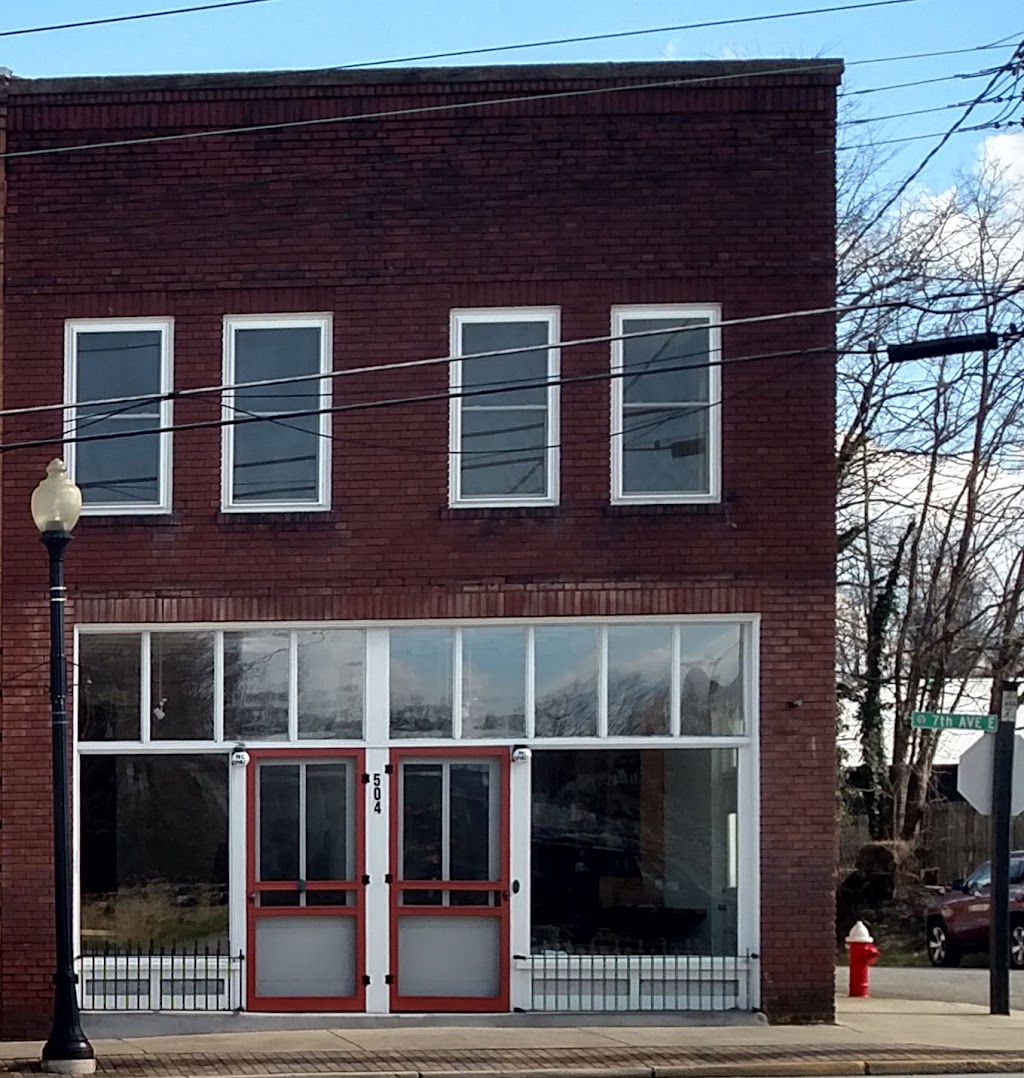
For the past several years, almost every month, the North Carolina Writers’ Network–Henderson County sponsors “In the Company of Writers” at The Brandy Bar. It’s great. The Brandy Bar is in an old building on historic 7th Avenue in Hendersonville, NC. Writers gather to hear a presentation by a local or regional poet, author, or playwright, followed by an open mic.
Last Wednesday, the evening began with signing up for the open mic and chatting with writer friends to the sound of blues tunes by guitarist Charlie Wilkinson and Hollywood Jonny. Next, came a marvelous presentation by local poet Tony Robles who read from his two volumes of poetry–Where the Warehouse Things Are and Thrift Store Metamorphosis. Tony moved us all as he read poems about the soul-healing power of physical work and the intrinsic value of everyday life and ordinary people. After the reading, Tony answered questions, offering insight into his work and telling us about the novel he’s working on, his first.
The Reading Room — Photo by usarestaurants.info
I was the first to read after Tony. A little nervous to follow such a great writer and eloquent speaker, but I felt so good afterward. One of the best things about reading a work in progress to an audience is when you get affirmation that your work has value. In my case, I also picked up on a few things I needed to revise, which I was hoping for. I used to tell my students to read their work aloud when they were revising and editing. One of the best ways to check for technical errors, sure, but also an opportunity to analyze word choice, sentence structure, and rhythm.
It was also a joy to hear the other readers. Some were writers I’ve come to know very well over my years of involvement with the Network, but I was happy to hear the fine work of writers I’d never met, including quite a few younger writers. In the company of writers is a good name for the event, one of my favorite places to be. Extra nice to be sitting in a comfortable chair sipping on a specialty of the house, Brandy Alexander.
Lava lamp collection by the bar–photo by usarestaurants.info
One of the most moving pieces came from a bearded man wearing a cap, tattoos covering his arms. He wrote about addiction and dealing with it. After the readings, he approached me and asked if I had ever taught at the University of North Carolina–Asheville. I said I had not, but I had taught at Blue Ridge Community College for 27 years.
His face brightened. He had been there, too. He asked about his teacher, my colleague who retired several years before me. I told him that I met with her regularly, that she was doing well and enjoying retirement. He wanted me to let her know that he was at UNCA finally finishing his degree, in English. “Tell her I’m a little late in getting it but I’m getting it.” I assured him I would let her know.
Once long ago, a student gave me a little wooden plaque shaped like a pencil that said, “Time and distance cannot erase the influence of a good teacher.” I think I’ll remind my friend of that when I tell her about meeting her grateful student while reading at The Brandy Bar.
In my last blog post, I wrote about attending the Appalachian Writer’s Conference held at Berea College, but what I couldn’t announce then is that I won first place in the memoir category of the Appy Inkwell Writing Awards sponsored by the conference. Part of the prize for first place is publication with Martin Sisters Publishing!
As I’ve written in other blogposts, I made completing my memoir one of major writing projects of my first retirement year and accomplished that, but the opportunity to enter the Appy Inkwell Awards came up unexpectedly when I went to register for the Appalachian Writer’s Conference. I worked on polishing the first 2,500 words of the book and was quite pleased with the results, but what a surprise!
I celebrated the first-year anniversary of my retirement on August 1 and on August 3 received the e-mail saying that I had won!! I was so happy to tell the good news to my 88-year-old mother, the person who inspired me to write my teaching memoir shortly before I retired. What a thrill!
The awards ceremony came after three days of making new writer friends and learning so much about the craft and business of writing at the conference. Truly an amazing experience. I also enjoyed walking around the beautiful Berea College campus, talking with college students (one of the things I miss about teaching), eating delicious food, and traveling around the Kentucky countryside. I especially enjoyed traveling to New Castle, KY into Wendell Berry country. He’s one of my literary heroes!
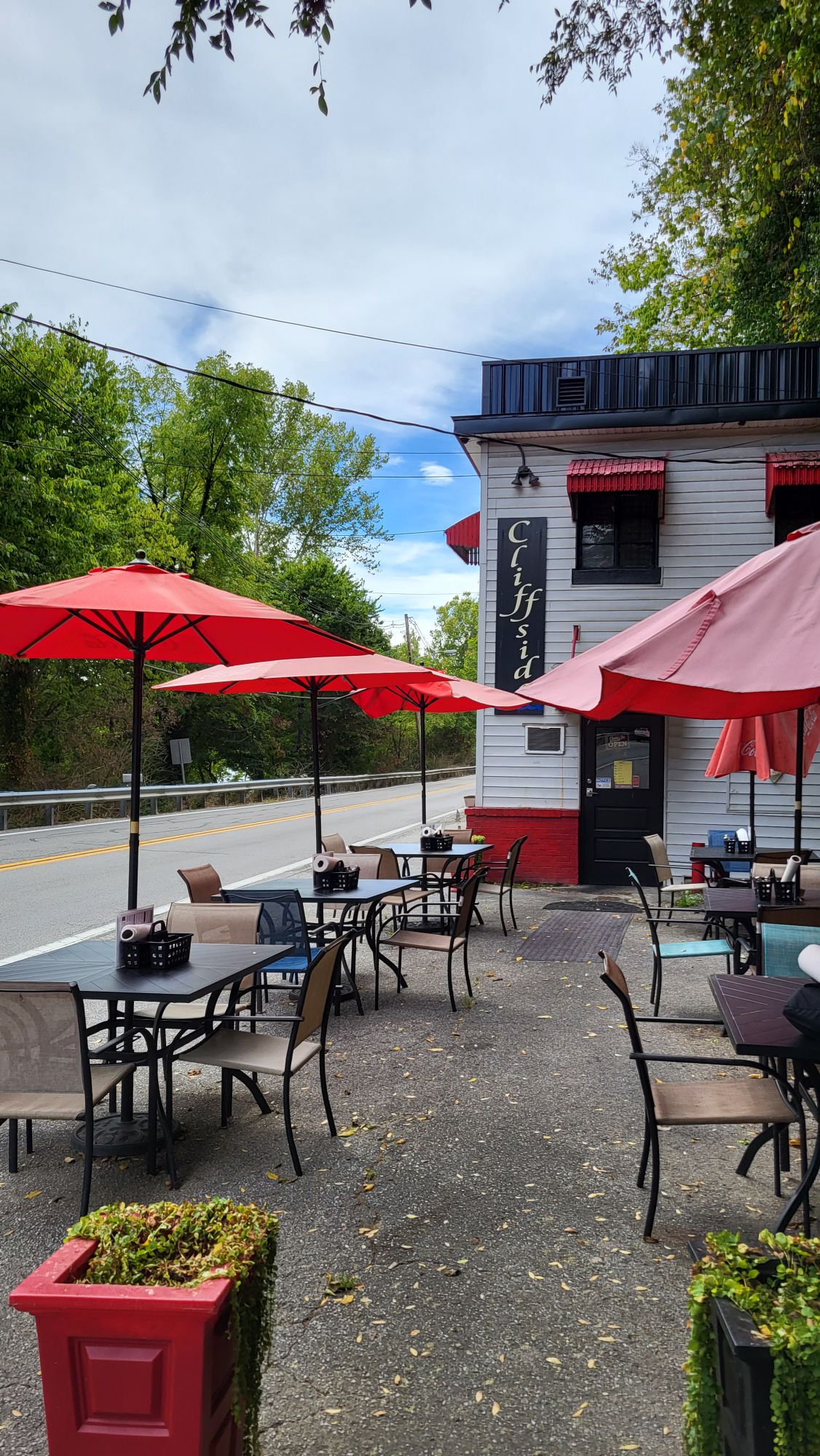
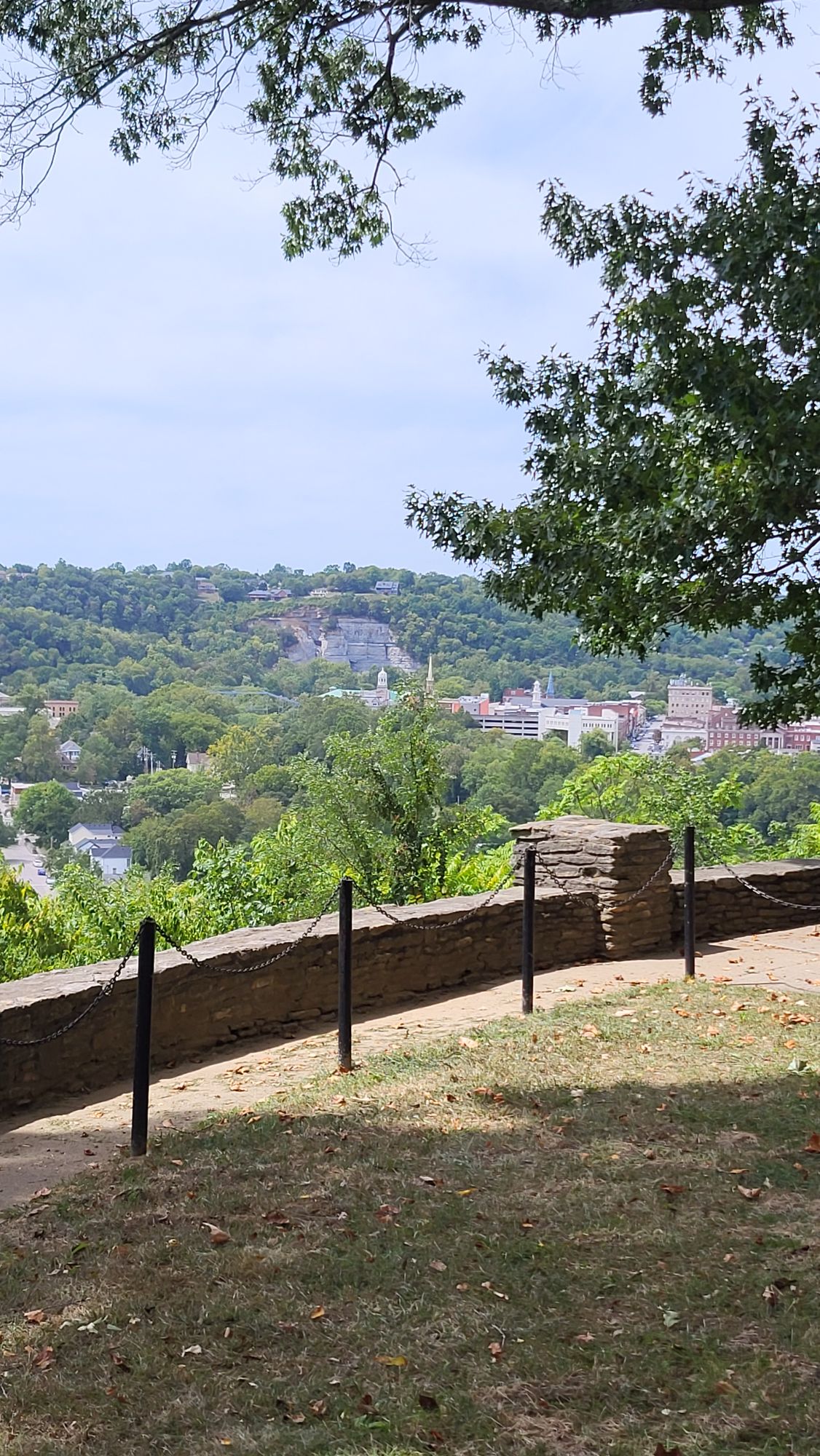
Visiting Frankfort, the capital of Kentucky was a delightful spontaneous adventure. I had a good meal at the Cliffside Diner, walked around the city and the grounds of the capitol and took a trip to the Frankfort cemetery located above the Kentucky River to see the grave of Daniel and Rebecca Boone.
That day alone, traveling around the rolling hills and farmland of Kentucky before the conference and the awards ceremony, was a precious time of reflection, thinking about my life and my career. I remember in undergraduate school how I arrogantly tacked a note to the bulletin board on my dorm room door that stated I would be “Future Teacher of the Year and Winner of the Nobel Prize for Literature.” I never accomplished the first and am unlikely to complete the second, but I have had a grand career as a teacher and a writer. I may be officially retired, but I’ll never stop being either one.
Draper Hall, Berea College — By Parkerdr – Own work, CC BY-SA 3.0
It’s getting real y’all!
On Monday, I leave for the Appalachian Writer’s Conference in Berea, Kentucky. It’s my first time going to Berea and the first time to this conference, so I’m excited. Two of my teacher friends attended and sing the praises of Berea College, which was the first integrated, co-educational college in the South and has not charged tuition since 1892. Wow! What a concept! The conference will be at the Historic Boone Tavern Hotel that stands on the grounds of the college.
What a great place to spend a week thinking about writing and higher education in the South as I work on my teaching memoir and attend sessions about composing, revising, editing, and understanding the business of writing. I also hope to take a trip up to New Castle, Kentucky to the Berry Center, dedicated to one of my favorite writers and educators, Wendell Berry.
Then, in October, as one of the highlights of my year as a Dramatists Guild Foundation National Virtual Fellow, I will finally get to meet the other fellows and our instructors face to face in New York City, where we will attend the Dramatists Guild Foundation’s annual gala among other activities. I have learned so much during this year and am so grateful for the opportunities to revise and add to my musical A Carolina Story and revisit my satirical work about education in Appalachia: CAMPUS. Getting to meet producers, agents, directors, and actors who are part of DGF is something I never dreamed possible until I became a fellow.
You can be sure that I will update you about both of these exciting adventures. Also, somehow, I will also edit and produce the 2024 Fall/Winter edition of Teach. Write., which now has a new subtitle: A Literary Journal for Writing Teachers. The publication date is still planned for October 1.
August 1, 2023, was my first official day of retirement. I left after 27 years of teaching at a small community college in western North Carolina. Officially, I retired early, but I say I ended my career right on time. Some may say that I was burned out or that I had quietly quit years before, and perhaps both are true. All I know is that I loved teaching, what it really is supposed to be, too much to keep trying to do it with little academic freedom or shared governance. I couldn’t remain in a place that cared more about enrollment and data than individual students and their learning.
Writing and editing, separate from the scads of e-mails I wrote and student writing I graded, are the things that kept me going the last few years of my teaching career. This blog, started in 2014, was the first place I regularly vented my frustrations at the negative changes I saw at my institution. But I also kept my spirits up by writing about teaching itself, some of my victories in the classroom, my memories of great teachers and wonderful teaching experiences I had.
Then, in 2017, after publishing another short story and having published dozens of theater reviews and feature articles for the local newspaper, I realized that risking rejection and criticism by putting my work out into the world not only helped me be a better writer, but it also made me a better writing teacher. I wanted to offer a special kind of professional development opportunity to other writing teachers and Teach. Write. was born. Editing Teach. Write. has been one of the joys of my life and is even better now that I have time to devote to its improvement.
However, even with the blog and the journal, the pressure was getting to me. The worst part of all was realizing how powerless I was to effect any change as I witnessed the autonomy that I had enjoyed at the beginning of my career begin to erode. So, I turned to a writing project that began as a musical but had laid dormant for several years–a satire called CAMPUS.
When it started getting particularly rough, I turned back to CAMPUS and decided, I think with the help of my wonderful daughter, that I wanted to turn my musical into a novel and keep the musical element alive by podcasting it with music. How? How would I do it? First, my daughter, a sound technician, did research on the best podcasting equipment, told my sweet husband, who bought the equipment for me as a Christmas gift. It wasn’t long before I was podcasting this crazy, satirical story about higher education at a small college in western North Carolina.
But not just any college. This enchanted campus has elves, gnomes, moon people, fairy godteachers, vampires, zombies, and a boojum–kind of an Appalachian yeti–oh, and a nazi. CAMPUS is definitely out there, but its weirdness has allowed me to say things I never could have said out loud otherwise. I produced about 13 episodes.
You can go and hear them at most podcasting platforms. Just search CAMPUS: A Novel That Wants to Be a Musical and you will find them. Don’t get too excited–the production value is low because I have no idea what I’m doing, but you know, I’m kind of proud of those episodes. I’m proud of myself for completing them, taking a chance. They helped me survive those last few years of teaching and the isolation of teaching during the worst of the pandemic years.
I want to get back to completing CAMPUS when I finish the other big writing projects on my plate right now, but until then, I will leave you with one of my favorite scenes from CAMPUS, when the discouraged, burned-out faculty makes their debut “Down at the Diploma Mill.”
DOWN AT THE DIPLOMA MILL
At that, in true musical fashion, a slow droning chant arose from across the quad as “They” began to come in. The slow heavy beat of the prison blues, the stomping of feet like the striking of a heavy hammer on a stake. THEM, teachers in ragged clothes and carrying old worn-out books came onto the quad. And they chanted:
ONCE WE WERE SOME BRIGHT YOUNG TEACHERS
ONCE WE WROTE ENGAGING LESSON PLANS
ONCE WE LOOKED INTO THEIR SHINING FACES
OUR STUDENTS WERE OUR INNOCENT LITTLE LAMBS
BUT NOW
BUT NOW
BUT NOW
CHORUS
WE’RE WORKIN’ DOWN AT THE DIPLOMA MILL
LOOKIN’ FOR SOME BRAIN CELLS TO KILL
WE NEVER MEANT IT TO BE THIS WAY
BUT WE GOT NOTHIN’ LEFT TO SAY
DOWN AT THE DIPLOMA MILL
ONCE WE HAD SOME GOOD IDEAS
ONCE WE TRIED TO CHANGE OUR WAYS
WE ALL SHUNNED STANDARDIZED TESTS
TRIED OUR BEST
TO NOT BE LIKE THE REST
BUT NOW
BUT NOW
BUT NOW
WE’RE WORKING
AT THE DIPLOMA MILL
WE’RE WORKING DOWN AT THE DIPLOMA MILL
LOOKIN’ FOR SOME BRAIN CELLS TO KILL
WE NEVER MEANT IT TO BE THIS WAY
BUT WE GOT NOTHIN’ LEFT TO SAY
DOWN AT THE DIPLOMA MILL
ASK AN ESSAY QUESTION
DO A PROJECT INSTEAD
BUT THE DEAN SAID IT WASN’T ASSESSMENT
WE SHOULD GET RETURN ON OUR INVESTMENT
IF IT’S NOT SOMETHING WE CAN CALCULATE
OR THAT’S EASY TO REGURGITATE
THEN IT’S SOMETHING YOU CAN’T DO
DOWN AT THE DIPLOMA MILL
The group begins to hum as they mount the stage and form a line of disgruntled burned out teachers. An old professor in a ragged tweed jacket with torn leather patches on the shoulder, holding a pipe comes to the mic. There is no sign of Dr. DAG. He’s gone off to Dog Hobble to that expensive restaurant only a few residents and the tourists can afford.
The old professor takes the mic as the group hums on. He speaks:
I’ll tell you what I want. Huh, come to think of it, what, exactly, do I want? I used to want to be published in exclusive journals, solicited to speak at prestigious conferences, overseas…in Europe…in Paris, all expenses paid. I wanted to be so valuable to the college I could thumb my nose at the presidents and VPs and deans and especially department chairs like Dr. C. J. Hamilton, who just had to lord over me his award-winning dissertation, the title of which he doesn’t let anyone forget– The Reawakening of Chartism and the Writings of Thomas Carlylse in the Post-Victorian/Pre-Edwardian Epoch.
Do you know what he said when I told him that I had my students all meet me at that great vegan restaurant in Asheville? He said it was stupid! Yeah. My innovative idea! A lot better than sitting around on a bunch of hard chairs in straight little rows listening to Dr. Hamilton drone on and on about Sartor Resartus and Queen Victoria’s increasing seclusion and her fat son’s sickening perversions.
My idea was great! We had a good meal, raised a few organic brews, and it was off to search for the famous O’Henry plaque embedded in the sidewalk near the cafe. We found it. I didn’t tell them that when O’Henry came to Asheville, he was a penniless drunk. How could I tell a group of 20-somethings in a creative writing class that I knew all their dreams would come to nothing?
But then we all drove together over to the Grove Park Inn to find the F. Scott Fitzgerald room. They all wanted to see the place where Fitzgerald didn’t write while he waited for Zelda to slowly lose her mind. We found the room, but I think we had all underestimated the effect of that many beers, organic or not, on our critical thinking skills. We had a hard time finding the room, and when we did and got in there… How did we get in there?
The concierge wasn’t too happy that we barged in on those German tourists. At least one of them was German because I recognized certain select vernacular. Anyway, before the burly one threw us out, I did get a glimpse around the room, a nice room, but ordinary, nothing special about it at all really. I mean why should there be? Fitzgerald just sat there, day in and day out, not writing and drinking himself into mind- numbing oblivion. On second thought, although I can’t tell you what I want, I can tell you what I don’t want. I don’t want to do this anymore.
The Foundation is now an independent organization but was an arm of the Dramatists Guild of America, which I have been a member of since 2006 when I applied. I submitted my one-act play Green Room, a social satire that takes place in the green room of a sleazy talk show. The play had been produced at Blue Ridge Community College in Flat Rock, North Carolina, where I taught for 27 years and from where I retired Aug 1 of last year.
The Foundation continues to strongly support Dramatists Guild members, and I receive regular communications from both groups. Towards the end of my final year of teaching, the Foundation announced it was offering, for the first time, a national virtual fellowship for Dramatists Guildmembers living outside of the New York area. Being accepted was indeed a long shot, but with the help of my theater friend and mentor at the college, who had directed all of the four plays I had produced there, I decided to apply.
I submitted sample pages and music from my play A Carolina Story, applying for a position as a musical theater fellow. The play, a re-telling of the Story of Job set in Western North Carolina during the depression, had been produced at Blue Ridge about ten years ago, but I have long wanted to revise and revive it. I also thought it was the best fit for the national fellows program as it represents Appalachia and its unique often misrepresented culture. Quite a few months went by, my retirement began, and I thought nothing more about the fellowship. Then, in November I found out I was a finalist, by December, I was in!
Since January, the fellows from all over the country have been meeting for two-hour workshops as well as critiquing each other’s work and encouraging each other. I have exchanged my play with four talented playwrights so far, learning so much from just reading their works, but also getting invaluable feedback about my play. Best of all is being around people who are so different but are united by the love of words and the theater.
Being a fellowhas put me back in the position of a student but has also allowed me to use the teaching skills I worked so hard to develop as a college instructor, especially when giving feedback to the other fellows. Discussing my work with other professional playwrights was at first intimidating; I thought I was out of my league, but now I realize that although my play needs improvement, it holds its own. It has promise.
I am honored to be a part of the Dramatists Guild Foundation’s inaugural 2024-2025 National Virtual Fellowship program and congratulate the Foundation on receiving its well-deserved TONY!