To Become a “Miracle Worker” Too

Miracle worker Anne Bancroft and Patty Duke in 1962’s “The Miracle Worker” by William Gibson When I was a young girl in the 60’s, I loved to watch old movies on Saturday afternoon. Some of these movies made a deep impact on me for one reason or another. I remember watching one of my first Shakespeare plays on Saturday morning–the 1935 version of Midsummer Night’s Dream starring Olivia de Havilland as Hermia, Andy Rooney as Puck and James Cagney, yes, James Cagney, as Bottom. I didn’t know any of those actors then, but I was fascinated by their actions. I barely understood a word of what was said but I was mesmerized by the words. So many movies during those halcyon days, when my viewing choices may have been fewer but have rarely been better, helped form my love not only of film but also of story telling and the theater, psychology and human development, justice and mercy–movies like Citizen Kane and Rebecca, Stage Door and All about Eve, To Kill a Mockingbird and 12 Angry Men. 

However, there is one movie that told a story which stands out above the rest in my mind, a story that helped solidify a desire that was already growing in me before I was a decade old–the desire to teach. That story is told in the 1962 film The Miracle Worker, the story of Helen Keller and her teacher Annie Sullivan. I can’t remember a time I didn’t want to be a teacher, but watching Annie struggle to teach Helen, to give some meaning to the child’s dark and silent life by giving her the gift of language and in return seeing her own life change from dark to light, caused the stirrings of desire to leap into a consuming passion.

I was reminded yesterday of this great story and its impact on my career choice when I went to see our local community theater’s production of William Gibson’s play. I’ve seen it several times over the years and the movie many times, but something about the intimacy of the small theater and the fine acting by my friend who was playing Annie and another friend’s young daughter who played Helen, brought back the force the story and its impact on my life in a way I hadn’t felt in many years. This time, however, I have been a teacher for thirty years, a bit jaded about my profession, especially these days, especially in North Carolina, but watching Helen’s face at the water pump as the water flows over her hands and she finally understands what words are, seeing Annie’s face when Helen comes to her with her new found knowledge and signs that special word “teacher” renewed my love of teaching.

One passage in particular especially rang true to me last night. In the scene Annie is discouraged because she has brought Helen to the threshold of understanding language, has struggled mightily to bring her there, but words are still just a finger play to Helen and time is running out. Annie looks down at the deaf, blind and mute child with such yearning and says these words:

I wanted to teach you—oh, everything the earth is full of, Helen, everything on it that’s ours for a wink and it’s gone, and what we are on it, the—light we bring to it and leave behind in—words, why, you can see five thousand years back in a light of words, everything we feel, think, know—and share, in words, so not a soul is in darkness, or done with, even in the grave. And I know, I know, one word and I can—put the world in your hand—and whatever it is to me, I won’t take less!

Is it any wonder that even way back when I was not much older than Helen was that day the world opened up to her, that my world opened up to me? That day I knew what I wanted to do–help people understand the beauty and power of words. When I got a little older, one of the first biographies I read was Helen Keller’s autobiography, “The Story of My Life.” I chose that book because I had seen the movie and been so intrigued by Annie Sullivan and how it must feel to teach a child. Reading the story from Helen’s perspective fueled my passion for teaching. In this passage Helen describes that day at the water pump:

I stood still, my whole attention fixed upon the motions of her fingers. Suddenly I felt a misty consciousness as of something forgotten–a thrill of returning thought; and somehow the mystery of language was revealed to me. I knew then that “w-a-t-e-r” meant the wonderful cool something that was flowing over my hand. That living word awakened my soul, gave it light, hope, joy, set it free! There were barriers still, it is true, but barriers that could in time be swept away.*

I left the well-house eager to learn. Everything had a name, and each name gave birth to a new thought. As we returned to the house every object which I touched seemed to quiver with life. That was because I saw everything with the strange, new sight that had come to me. On entering the door I remembered the doll I had broken. I felt my way to the hearth and picked up the pieces. I tried vainly to put them together. Then my eyes filled with tears; for I realized what I had done, and for the first time I felt repentance and sorrow.

I learned a great many new words that day. I do not remember what they all were; but I do know that mother, father, sister, teacher were among them–words that were to make the world blossom for me, “like Aaron’s rod, with flowers.” It would have been difficult to find a happier child than I was as I lay in my crib at the close of that eventful day and lived over the joys it had brought me, and for the first time longed for a new day to come.

Some people struggle to know what to do with their lives, to find themselves, but I knew long ago as a little girl watching TV on a Saturday afternoon, when I could have been outside playing, that some day I would be a teacher. As much as I have wanted to escape my destiny over the years, it’s clear that I am where I belong, doing what I was born to do. What William Wordsworth said is true, “The child is father of the man.”

Mother of the woman, too.
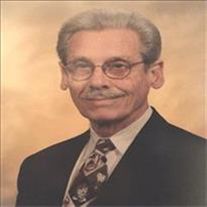
“The Idea of idea of a University” Still Rings True–An Unexpected Eulogy for Dr. Grady Joe Walker: Everything Old is New Again, Part II

DrGradyJoe-Walker-1417624164

Dr. Grady Walker, Phd

I’ve been planning to write a blog concerning the great educational treatise “The Idea of a University” by John Henry Cardinal Newman since early December, but with the rush of finishing the semester, traveling and merry-making during the holiday, I haven’t gotten around to it until now. Planning to write, I did a little research, as I am wont to do, and came across the obituary of Dr. Grady Joe Walker, the professor at Oral Roberts University who introduced me to the work of Newman and ignited my great love for 19th Century British literature in the Victorian Era course he taught.

But Dr. Walker was not only a teacher, he was also a great mentor to his students. He engaged them on many levels, especially as faculty advisor for the literary magazine and the English Club. He even opened up his beautiful homes to us. Dr. Walker liked to buy fine old homes in disrepair, fix them up, replant their gardens, fill them with antiques and then sell them. During this process he would invite students over for club meetings and Christmas parties. Those meetings were such fun! After a tour of the house, where he would show us all the different rooms furnished with incredible antiques he purchased on trips to Europe, Dr. Walker would serve all this great food and we would eat and laugh as well as talk about literature and writing. Sometimes Dr. Walker invited a writer to come and read his or her work to us. Sometimes we read our own work or read from a favorite work of ours. He made us all feel important–that our ideas mattered.

I remember Dr. Walker’s Victorian literature course to be one of the most challenging that I had as an undergraduate. The class was small, the reading load demanding, but by that time I had learned that if I didn’t read, I was going to be greatly embarrassed in Dr. Walker’s class and for me during that time avoiding embarrassment was one of my primary motivations. (Oh, how times have changed.) So even though the reading was difficult for me, I read the excerpts from Newman’s seminal work on education closely, and that work quite literally changed my life. After I read it, I knew I wanted to be the kind of teacher Newman was, one who didn’t just teach a subject, but taught her students how to think and strove to instill in them a love of learning for its own sake.

Here are a few of my favorite quotes from Newman’s work that still resonate with me to this day, especially now as the country seems to be moving away from valuing the study of the liberal arts:

  • I have said already, that to give undue prominence to one [discipline] is to be unjust to another; to neglect or supersede these is to divert those from their proper object. It is to unsettle the boundary lines between science and science, to disturb their action, to destroy the harmony which binds them together. Such a proceeding will have a corresponding effect when introduced into a place of education. There is no science but tells a different tale, when viewed as a portion of a whole, from what it is likely to suggest when taken by itself, without the safeguard, as I may call it, of others (Discourse 5.1).
  • Hence it is that his education is called “Liberal.” A habit of mind is formed which lasts through life, of which the attributes are, freedom, equitableness, calmness, moderation, and wisdom (Discourse 5.1).
  • Cautious and practical thinkers, I say, will ask of me, what, after all, is the gain of this Philosophy, of which I make such account, and from which I promise so much….I am asked what is the end of University Education, and of the Liberal or Philosophical Knowledge which I conceive it to impart: I answer, that what I have already {103} said has been sufficient to show that it has a very tangible, real, and sufficient end, though the end cannot be divided from that knowledge itself. Knowledge is capable of being its own end. Such is the constitution of the human mind, that any kind of knowledge, if it be really such, is its own reward….I would maintain, and mean to show, that it is an object, in its own nature so really and undeniably good, as to be the compensation of a great deal of thought in the compassing, and a great deal of trouble in the attaining (Discourse 5.2).
  • But education is a higher word; it implies an action upon our mental nature, and the formation of a character; it is something individual and permanent, and is commonly spoken of in connexion with religion and virtue. When, then, we speak of the communication of Knowledge as being Education, we thereby really imply that that Knowledge is a state or condition of mind; and since cultivation of mind is surely worth seeking for its own sake, we are thus brought once more to the conclusion, which the word “Liberal” and the word “Philosophy” have already suggested, that there is a Knowledge, which is desirable, though nothing come of it, as being of itself a treasure, and a sufficient remuneration of years of labour (Discourse 5.6)
  • The artist puts before him beauty of feature and form; the poet, beauty of mind; the preacher, the beauty of grace: then intellect too, I repeat, has its beauty, and it has those who aim at it. To open the mind, to correct it, to refine it, to enable it to know, and to digest, master, rule, and use its knowledge, to give it power over its own faculties, application, flexibility, method, critical exactness, sagacity, resource, address, eloquent expression, is an object as intelligible…as the cultivation of virtue, while, at the same time, it is absolutely distinct from it (Discourse 5.9).

And my favorite passage of all:

  • I say, let us take “useful” to mean, not what is simply {164} good, but what tends to good, or is the instrument of good; and in this sense also…I will show you how a liberal education is truly and fully a useful, though it be not a professional, education. “Good” indeed means one thing, and “useful” means another; but I lay it down as a principle, which will save us a great deal of anxiety, that, though the useful is not always good, the good is always useful. Good is not only good, but reproductive of good; this is one of its attributes; nothing is excellent, beautiful, perfect, desirable for its own sake, but it overflows, and spreads the likeness of itself all around it. Good is prolific; it is not only good to the eye, but to the taste; it not only attracts us, but it communicates itself; it excites first our admiration and love, then our desire and our gratitude, and that, in proportion to its intenseness and fulness in particular instances. A great good will impart great good. If then the intellect is so excellent a portion of us, and its cultivation so excellent, it is not only beautiful, perfect, admirable, and noble in itself, but in a true and high sense it must be useful to the possessor and to all around him; not useful in any low, mechanical, mercantile sense, but as diffusing good, or as a blessing, or a gift, or power, or a treasure, first to the owner, then through him to the world. I say then, if a liberal education be good, it must necessarily be useful too (Discourse 7.5).

Don’t let anyone dissuade a student from studying what he or she wants to study. Don’t ask of your daughter or son, what kind of job will you get with that degree? Ask instead, are you interested enough in this subject to study in college to learn how to think and get a good liberal arts education? If the answer is “yes,” then that education will be well worth it and that student’s life will be made richer–better.

Thanks to Dr. Grady Walker and other professors like him, my life has been made better by my education–more than simply a path to a job.

Here’s a link to the whole work if you would like to read it. I hope you will.  http://www.newmanreader.org/works/idea/