Comma Lessons

An excerpt from the rough draft of my upcoming book, Lessons: A Teacher’s Life:

Long story ahead, but it will relate to commas, eventually, I promise.

Photo by Smntha.Mntsr on Pexels.com

I know how incredibly blessed I am by having my education provided for me. When I went to a private, Christian university for undergraduate degrees in English and German, I went tuition free because both my parents worked for the university. My mother was a librarian, first in acquisitions and then in special collections, and my father, after he received his master’s in theology, became a representative, which basically meant that he was an itinerant preacher–moving around the southeastern states and visiting people who supported the ministry that supported the university. One of the benefits of working at the university for at least two years was free tuition for your children.

 My parents didn’t make that much money, so this benefit made it possibly for my older brother and me to go to college. For the first part of my time there, I lived at home with my parents, but when they moved back to Alabama to be closer to their own aging parents, I lived in the dormitory. My grandmother and great aunt paid for my room and board. I carried two jobs and paid for the upkeep on my vehicle, gas, and books, so I got off easy. 

Photo by Pixabay on Pexels.com

Then, when I went to Auburn University two years later, it was my grandmother and great aunt who paid my tuition. They had both been long time educators themselves who had risen from poverty because of their teaching degrees and knew better than most the value of an education; they helped all their grandchildren, nieces, and nephews at one time or other.  At Auburn, I once again lived with my parents, paid for my books by working horrible jobs (more about this later) and never had to take out a loan or apply for scholarships. 

My master’s in education at Western Carolina came quite a bit later, but once again, I was blessed. I had been applying for teaching jobs as soon as my husband John and I decided to move to North Carolina, and although I had already become certified to teach 8-12 grade English and German, I couldn’t get a job, even after John started working as an ultrasound technologist at a small hospital south of Asheville. I had several interviews in several counties but no go. 

On a whim, I decided to apply for graduate school at Western Carolina University in Sylva, about 60 miles from our home south of Asheville. I was accepted but didn’t think I would be able to go since we were newly married, newly moved–my husband with a new job fresh out of ultrasound school, and me without a job at all. I wouldn’t be able to afford the out-of-state tuition. We were hoping to buy a house soon on top of all of that. I had signed up to do some substitute teaching, $50 a day, and rarely worth it. You know how kids teach substitutes. 

Photo by Element5 Digital on Pexels.com

But, probably less than a week after I got my acceptance letter, I received another letter from the English department asking if I would come in for an interview. I guess my five years of high school teaching experience and the emergency need for freshman composition instructors made me a good candidate for receiving a graduate assistantship. My out-of-state tuition fees would be waived; my stipend was enough to pay my tuition, books, and the gas it would take to drive from Hendersonville to Cullowhee. 

It was settled. I was going to graduate school. 

Finally, we get to the commas. Well almost. 

The first semester I was required to take a course called “Teaching Rhetoric and Composition”–a down and dirty English composition teaching course. Despite my having taught for five years and having had several teaching courses at Auburn while I worked on my English Education degree, I had to take the course. All graduate assistants were required to take it, and although a bit miffed at first, I soon found the course useful and learned quite a bit.

One of the things I learned, I’ve written about at length in this blog–The Five Easy Ways to Improve Your Writing. Those ideas came from a visiting lecturer in the rhetoric course.

Photo by Polina Tankilevitch on Pexels.com

The other part of that first semester was working in the university’s writing center. My job was to tutor students as they came in to work on their essays. I stayed very busy in the center, especially because of Western’s CC program. I forget what CC stands for, but essays in any non-English class that did not meet basic college-level writing requirements received a CC. If students received two CC’s, they had to take a developmental English course that was notoriously hard to pass, and if the student did not pass, then they were suspended. Quite a few students, therefore, would come in to the Writing Center after the first CC to avoid that grammar class. 

The woman who ran the center was one of the best teachers I ever had. She taught by example. I would listen as she tutored students, helpful and patient but never overhelping, even when sorely tempted. Plus, she had all sorts of materials available to help students and gave me permission to take and use any materials as long as I credited the center. One of the most used handouts at the center was the director’s six simple comma rules. I used this handout as the base of my comma lecture for years because the rules were easy to understand, using little grammatical terminology, and the examples illustrated each rule well. 

Photo by Ivan Samkov on Pexels.com

I’m afraid that handout is only in my mind now, but I used some form of those basic rules throughout my tenure as a community college instructor. It was just always the easiest for my students to grasp in the triage-type grammar teaching that I found myself doing. I added the comma rules to my editing workshop worksheet that I gave to my students when they were preparing their final manuscripts for grading. Here’s what they boiled down to:

Use commas

  1. to separate items in a series of three or more
  2. to set off introductory material
  3. around words interrupting the flow of thought
  4. between complete thoughts joined with a conjunction (if two complete thoughts are joined with just a comma, the writer has a comma splice—major grammar error)
  5. with direct quotations
  6. with everyday material such as dates and addresses

Although I tried to keep grammatical terminology to a minimum, I did use some, so at the beginning of the lesson, I would remind students of some basic terms: 

  • Noun
  • Subject 
  • Verb
  • Coordinating conjunctions (FANBOYS)
  • Independent clause 
  • Dependent clause. 

After the review, I went through each of the six comma rules, giving examples of each. If time was short, I would just cover the first four. 

As a warmup to the lesson, I would try to engage students by using another cool example I learned in grad school.  At the beginning of class, without saying anything else, I would write the following sentence on the board: 

A woman without her man is nothing. 

I asked the students to write the sentence down and add two commas. I gave a minute to complete that and then would ask for volunteers. Often, here in the South at a small community college where sexism is alive and well, students, both male and female, would answer, “A woman, comma, without her man, comma, is nothing.” 

Of course, I would challenge them, tell them there was another solution: A woman, comma, without her, comma, man is nothing. One comma, one comma, I would say, totally changes the meaning of the sentence. That’s how important commas are, I said. 

Then I would begin. 

Rule #1 –Items in a series–First because it was usually the comma rule that students were most familiar with. 

I like apples, bananas, and oranges. 

I explained that if you have three or more items in a series, then you need to add commas between the items. 

I use the Oxford comma and only talked about the option of leaving that remaining comma out if a student brought it up. Commas are confusing enough to students, especially those in developmental classes, so I tried not to complicate things unnecessarily. 

Rule #2–Two independent clauses joined with a coordinating conjunction. I would give an example: 

The dog ran after the cat, but the cat held its ground and fought back. 

It is good to include a compound sentence that needs a comma and another coordinating conjunction that does not need to be separated from the rest of the sentence so that you can explain the difference. 

I explained that you have two independent clauses, reminding them that the only seven words that can join two complete sentences together are the FANBOYS, the coordinating conjunctions: for, and, nor, but, or, yet, so. In the case of this example, you have two complete sentences (independent clauses) joined with but, one of the fanboys, so you need the comma, I would tell them. 

I asked students if they see another conjunction. They would usually find the and. I asked, Why do we not use a comma here? Often times they didn’t answer, so I would ask if there were a complete sentence on either side of the conjunction. No. Then, there is no need for a comma. 

Rule #3–Commas after introductory material. I would explain that you need a comma after words, phrases, and clauses that come before the main clause and give examples:

  • Nevertheless, I left the room and never returned–nevertheless is a conjunctive adverb that modifies the whole sentence, so it needs to be set off by a comma.
  • In the middle of the night, Julia heard a loud bang. In the middle of the night are two prepositional phrases coming before the main clause, so you need a comma to notify the reader that the two phrases are coming before the main clause. 
  • As John was reading the book, he realized that he had read it before. As John was reading the book is a dependent clause–he realized that he had read it before is the main clause, so you need a comma after the dependent clause. 

Rule #4–Anything that interrupts the flow of thought. The next rule is super simplified, but usually this explanation helped students get the commas right without getting bogged down in too much grammar, especially restrictive and non-restrictive clauses. Oh, Lord, don’t go there. I explained that you need commas (most of the time) around words, phrases and clauses that interrupt the flow of thought in the sentence. Alternatively, I said that if you can pull the word, phrase, or clause out of the sentence and the sentence still makes sense, then you need commas around that word phrase or clause. Then, once again, I gave examples:

  • The new owners, sadly, declined to renew the flood insurance on their house.
  • The cat, along with its four siblings, were left in a box on the side of the road.
  • The man, who is standing over there in a red shirt, is my partner. 

Note: This lesson is most effective if spread over two class periods, so there is enough time to answer questions, show more examples, or put students into groups to practice. One exercise I liked to do with students is have them write sentences that use the different comma rules but leave the commas out, exchange papers, and correct each other’s sentences.

I guess, I’m weird, but I really loved comma lesson day. It was pure unadulterated, nobody-could-accuse me-of-indoctrination day, except for that “woman without her man” sentence, of course. Might be too engaging for today’s classroom.

Another reason I’m glad to be retired.

Teaching, Writing, and Relationships

Photo by Mikhail Nilov on Pexels.com

I am writing a book about teaching. It’s non-fiction, but other than that, I’m not sure how to describe it. It’s part memoir and part teaching methods to begin with. In many ways, it is also like my blog–musings and mutterings about my life’s work.

I don’t mind telling you, I’m struggling. It’s not writer’s block. Oh, no. I’m not sure I believe in writer’s block anymore anyway. The only way I’ve ever written anything of any length is to write six days out of seven. The biggest excuse for not turning in work I heard over my years of teaching was some form of “I’ve got writer’s block, Mrs. Winkler.” It’s hogwash, I would tell them. Well, no, I wouldn’t say it that way. After 40 years of teaching, one learns how to spin. I would dress it up with the appropriate metaphor, analogy, etc., but in the end my student was more than likely procrastinating and not even trying to write.

Photo by Yan Krukau on Pexels.com

You can’t write anything, if you don’t write something. Hmmm, that’s pretty good. I wonder if I ever used that one in class.

So, again, no. It’s not writer’s block. The first day of my official retirement, August 1, I set a daily average quota for the book in order to finish a rough, rough draft by the end of the year. I’m well ahead of schedule in that regard; I haven’t had trouble writing pages and pages and pages. Because I’m not plotting (I’m a terrible plotter), the words, stories, feelings, and ragings about my life in teaching just pour out.

Photo by Mikhail Nilov on Pexels.com

Frankly, my struggle is having a point. But, no, it’s not that either–I have so many points, so many things I want to say about teaching, that the book is just a hodge podge of memories interspersed with my concerns (aka fears) about what is happening in education, especially higher education in America, especially here in North Carolina.

Sometimes, I think I’m writing two books, but if I want to keep the memoir part intact, the part that reflects who I was as a teacher, how I changed, and why teaching was more than a career, if I want to do that, then maybe this mishmash of a book is exactly what I want to write.

However, I still feel that the book needs to have a central theme, something on which to hang all the dangly pieces, and entice the reader to hear what I have to say. Also, even though it faces the truth about the educational perils of our time, I want the book to be, overall, positive in its outlook as it promotes the intrinsic value of education.

I think I’ve got it now–at least the germ of an idea.

Relationships.

Photo by Kampus Production on Pexels.com

Education begins and ends with relationships–between student and teacher, yes, but it doesn’t end there–also between student and family, family and teacher, teacher and other teachers, teachers and administrators, administrators and staff, staff and students, staff and teachers, and civic leaders, business owners, the community at large, and, okay, you get it. Success in education depends on the health of all these relationships. I think my book already reflects that, but I want to strengthen that theme in revision.

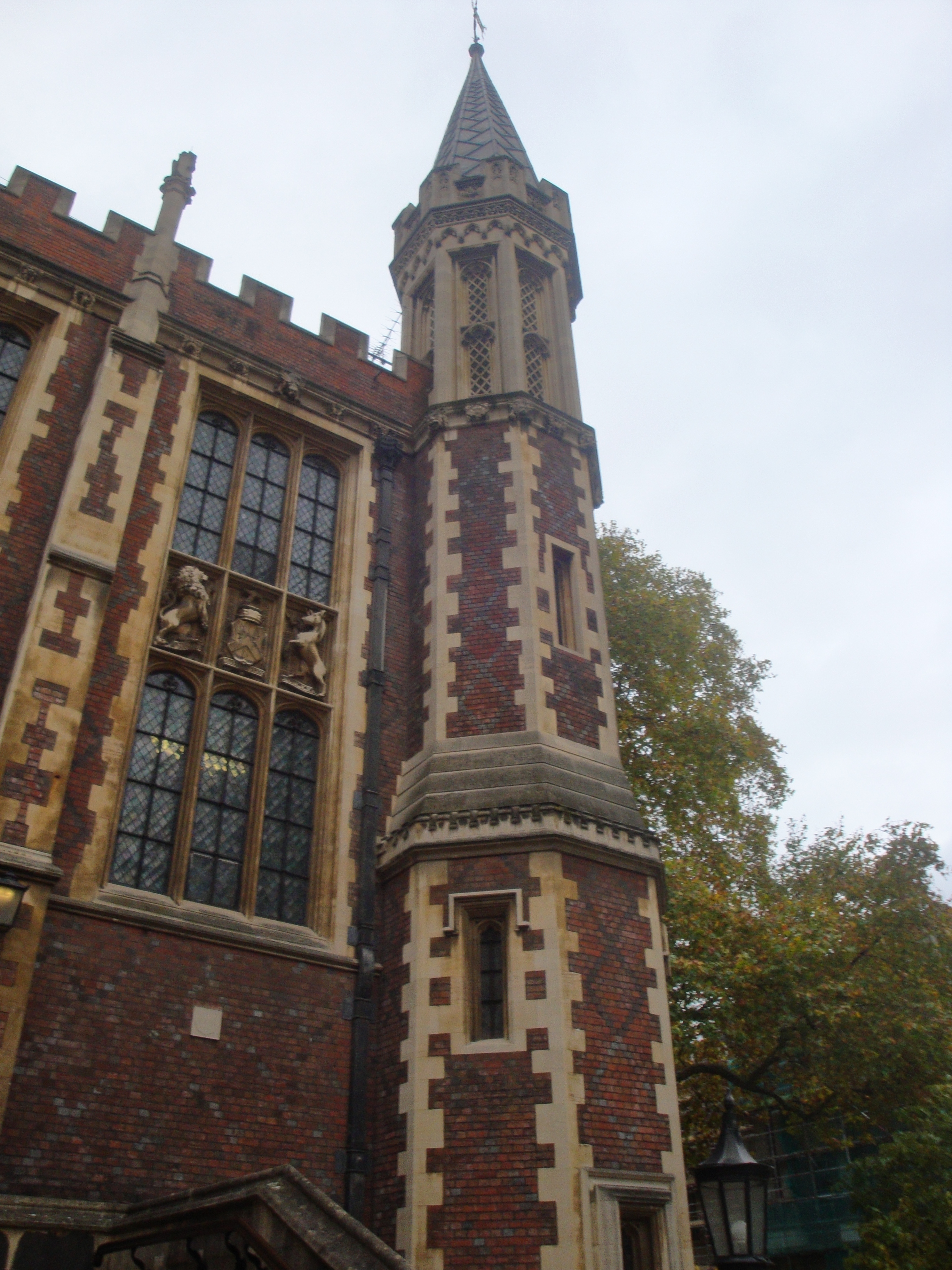
One of the spires of Lincoln’s Inn, London, October 2015 photo by Katie Winkler

So far, my book not only reflects some of these personal relationships, but also the relationships between events of my life and teaching. A large chapter in the book, for example, is showing how my travels in America and Europe reflected themselves in my teaching. I also want to talk about the relationship between socio/cultural shifts and the classroom, how I had to adapt my lessons to new trends (after I got over being furious about them).

I’m not sure. I’m still struggling, but I’m not blocked. I’m not discouraged. I am practicing what I preached all of those years: “Just get started. Vomit.” Yes, I said vomit–always got their attention. “Vomit it all out on the paper and then start cleaning up through revision and editing.” That’s where the heart of good writing lies.

More about that later.

Other than writing the book, I have also been putting together the fall/winter 2023 edition of Teach. Write.: A Writing Teachers’ Literary Journal, which will publish Oct. 1. As I mentioned in my last post, the journal has its own website now! The spring/summer edition is there as well as submission guidelines and some other information. Why not take a look? Just go to teachwritejournal.com.

Retiring?

Mrs. Winkler photo by Scott Treadway at Treadshots.com

So, it’s true. Retirement after almost 40 years of teaching English composition is, number 1, freaking awesome! Not having the constant class planning and paper grading has been true freedom for me. I guess I didn’t realize what a huge chunk of my life was wrapped up in doing those two things. Even in the summer when I wasn’t teaching, I was still spending on average a couple of hours each day tweaking old assignments, writing new ones, and updating online material (necessary but oh so tedious), among other college-related things I would just as soon forget.

The second true thing is that I have planned way too much for the first few months. So many people told me that I would be busier than ever when I retired, but I didn’t believe it could be true.

It is.

Here are a few of things I’m working on:

  • A teaching memoir–this is highest on my list because my 87-year-old mother suggested it, and I love the idea. I am ahead of schedule, even though I’m not writing at least six days a week as I promised myself I would. That said, when I do write, the words just flow out, and I’m averaging over my quota per day.
  • Writing blogposts more often. My goal is to write a post, on average, once a week. I am quickly learning that I won’t be able to write on the same day every week. My schedule is too unpredictable, but if I write four posts a month, I’m going to feel pretty darn good about myself.
  • Applying for membership in the Community of Literary Magazines and Presses (CLMP). I told myself that once I retire, I want to improve the quality of my literary magazine Teach. Write.: A Writing Teachers’ Literary Journal. Then, I discovered CLMP, and I knew becoming a part of this organization would help me reach my goal.
  • The first step in being approved for membership in CLMP is developing an independent website for Teach. Write. I have already launched the new site, but there isn’t much content yet, so I am taking some time several days a week to work on that project.
  • Launching the next edition of Teach. Write. on October 1. Still on schedule to launch the new edition on the new site!!
  • Writing and submitting new short fiction. I’ve written and submitted one new story for a contest already and submitted one other story that I love but still hasn’t found a home. I think it is important to keep submitting my shorter works while I’m working on this long non-fiction project.
  • Thinking about my next play project–just thinking about it. I have two plays in mind–one is an adaptation and the other is original. At this point, I’m just re-reading the novel I’m thinking of adapting and doing some minor research on the original play idea.

These are only my writing and teaching-related activities. Despite all I’m doing as a writer/teacher, I don’t feel as stressed because I know I don’t have to do them. Also, because those two huge responsibilities–planning classes and grading papers–are no longer looming, I have time to do all the things I’ve been able to barely do and do them better. At least, I’m trying to do them better.

Yes, retirement suits Mrs. Winkler very well.

Photo by Nathan Martins on Pexels.com

Read. Write.

photo by Katie Winkler

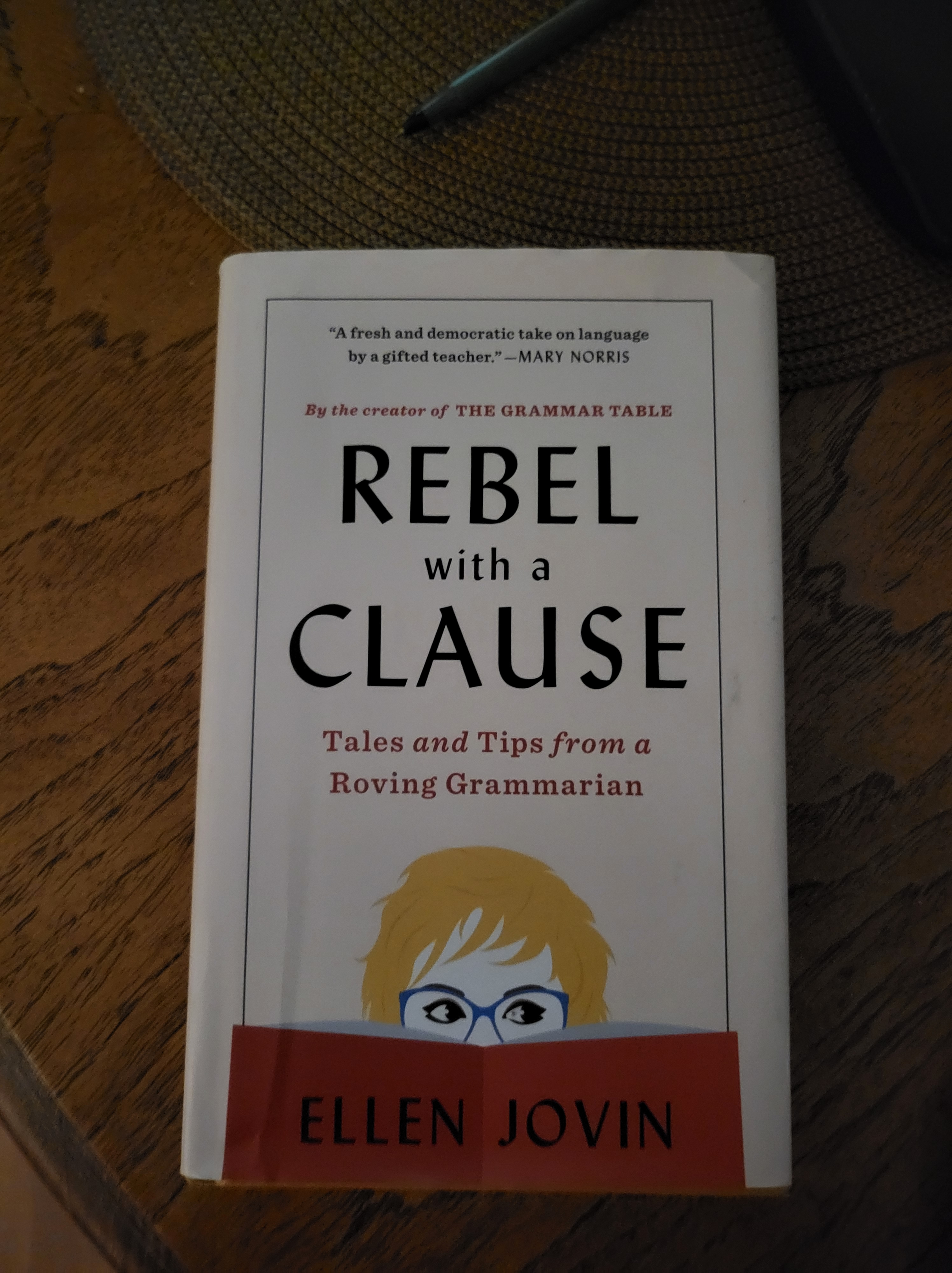
Just finished reading one of the gift books (pictured above) that a dear friend and former colleague gave me my last day at work. It is simply charming and a perfect choice for a woman who has retired from teaching English but will always love grammar.

That’s right. I said it. I love grammar, always have. I remember when I was in high school VOLUNTEERING to take an advanced grammar class because even then I felt drawn to grammar for some strange reason. Side note: Isn’t amazing that a high school in Jenks, Oklahoma, outside of Tulsa, would be able to fill an advanced grammar class?

With its in-depth discussion of parts of speech and detailed diagrams of complex sentences like the Preamble to the Constitution, that grammar class cemented my love and affinity for all aspects of language, including what I used to think most people found uninteresting and mundane. However, Ellen Jovin’s social experiment offers proof that many people find grammar not only interesting but often worth debating–seriously.

Jovin indicates in her introduction that she left her New York City home in the fall of 2018 armed with a folding table, a sign that reads “Grammar Table,” several English language handbooks, and a husband–to record each grammar session for a documentary that is now in post-production. By the time the book was published in 2022, the duo had visited 47 states, missing only Alaska, Hawaii, and Connecticut. I know what you’re thinking, why Connecticut? I mean, it’s right there! In the witty style that suffuses the book, Jovin explains that they were hungry for pizza, got caught up enjoying it, and called it a day without setting up the table. Then came Covid.

Jovin went ahead and wrote the book. Good for her! Each chapter discusses “hot” grammar topics at the table, beginning with one that scorches, the Oxford comma. You know the one–“eats, shoots, and leaves” or “eats, shoots and leaves?” Her measured response to even those who feel most strongly pro or con, mainly pro, is another hallmark of the book. I love the way that Jovin finds a way to smooth the ruffled feathers of even the staidest visitors to her table.

Some of my favorite topics include participles, gerunds, punctuation of all sorts, homophones, and possessive apostrophes. Foremost, I found validation as I was in agreement with this grammar expert in almost every case and can remember explaining concepts in a similar way to my students over the years. Jovin uses example sentences and draws little diagrams and simple drawings as aids, just like I did, and they work! Just like they did for me. To use a southernism–It just tickles me.

Photo by Vlada Karpovich on Pexels.com

Her style and organization have inspired me as I continue to work on my own writing project, a memoir of my career as an educator. Like her I don’t want to write in chronological order but topically, showing how my life experiences have impacted the classroom. I also want to infuse humor and introduce interesting, quirky characters into the work as she does. I want it to be entertaining as well as informative. I want to teach and write, just like I ask others to do.

~~~~~~~~~~~~~~~~

Speaking of Teach. Write., if you have anything you would like to submit for this edition, then the deadline is fast approaching–September 1. The fall/winter edition will publish on Oct. 1, and I will reopen for submissions at that time. I have some great pieces to share with you in this new edition, so stay tuned for more information.

Process over Product

Photo by Canva Studio on Pexels.com

Years ago, when I used to be encouraged to attend conferences, I worked with the head librarian at my college to develop a presentation called “Process, not Plagiarism” that addressed the growing concern English faculty had over the proliferation of plagiarized essays that we were seeing following the advent of the World Wide Web. More and more, students were able to easily copy and paste material from the sources they found on their topics. Plagiarism was rampant.

The thesis of our presentation was that rather than a punitive approach, zero tolerance policies, harsh penalties, and other such punitive measures, faculty might be better served to focus on the research and writing process as opposed to the actual essay itself.

We began our presentation by showing a short film called “Copy Cops,” intended to engage our audience and make our point in a lighthearted, entertaining way. Making the film was an educational experience for our students and was a project that I still remember fondly. Several IT guys helped my friend who headed the drama department and I with the filming and editing. The librarian’s husband, a professional sound technician, also lent a hand. Students from the drama department acted out the script I wrote.

Photo by Pixabay on Pexels.com

The film opens with our cop pulling up to the college’s main building in a police cruiser, borrowed from the college’s law enforcement training program. He has his blue lights blazing and hop outs declaring that he got a plagiarism call. “Must be research paper time,” he says. Then, we see him sneaking down the dark hallway, crashing through the door. Three students who are typing away, stop and look up. Caught red handed.

Our cop interrogates each perp–the first one was trying to buy a paper off the internet–blatant plagiarism. The cop says, “Don’t you know we have software to pick that up.” The second plagiarist claims “I changed around a few words, so it’s okay.”

“No!” says the cop. He explains that he has committed mosaic plagiarism. The student bows his head in disgrace. The final plagiarist is a sad case, according to the cop. She had, she says, “50 MLA citations at the end” of her paper, but the cop explains that she also must have citations within the essay to show where she used which sources.

Photo by MART PRODUCTION on Pexels.com

“But, I didn’t know,” she cries.

Our compassionate cop feels for her but arrests her anyway, along with the other violators of one of academia’s most serious offenses. As he puts her into the patrol car, he laments, “Ignorance of the law is no excuse.”

Showing the video at the presentation set the perfect tone. Of course, it is ridiculous to consider plagiarism the kind of crime we can or should prosecute. Trying to contain the uncontainable is academic folly. What is needed, I would tell my audience, is preemption.

Then, the librarian and I would go through the methods we used to help preempt. Here are a few we would discuss in our sessions:

  • Develop research questions. Instructing the students to develop specific research questions helps focus the research and prevents students from writing researched essays that are too generic and easily plagiarized. In the last decade of my teaching, I required students to develop research questions that were specific to our college or one of the communities that the college served. This method worked particularly well in helping reduce plagiarism. Even if I couldn’t prevent the student from plagiarizing, the essay would usually receive a poor grade because it was too vague and general, not within the parameters of the assignment.
  • Multiple trips to the library accompanied by the instructor and the librarian. The more the instructor can observe the students work, the better. Also, our librarians were always looking for sources to help students once they knew what was needed.
  • Grade each step of the research process. Of course, I would offer low stakes assignments that gave their averages a boost but took little effort to grade. In exchange for a little extra work, I had continual contact with the students’ essays and could be aware of the progress each student was making.
  • Require an annotated bibliography. In the last few years, I shortened the length of the research paper and lowered the number of required sources from ten to six; however, three of the six sources had to be found in the college library’s databases, two had to be websites relevant to their specific local topics, like local news and government sources. The MLA citation included the information that would show the students were using the college’s resources. In addition, the annotations had to be more than a summary of the source. Students had to explain how they might use the source in the essay.
  • Require students to interview at least one local expert. This is a great way to observe the students’ progress as well as help engage students. Over the years, I have observed the wonderful effects interviews have had on students.

For example, once I had a student who was from a poor family and never could afford to go to the famous Biltmore House when he was growing up, but because he was interested in interior design and architecture, he had decided to write about how Christmas was celebrated at the Biltmore House. He wasn’t sure who to interview. I suggested contacting public relations, explaining his assignment, and seeing if someone there would have time for an interview.

Photo by Ray Strassburger on Pexels.com

“Can I do that?” he said.

“Of course, you can,” I assured him. “The worse they can say is ‘No’.”

The next class period, he came in with a huge smile, saying that he called and scheduled an interview with the head florist. I was so excited for him as we worked in class that day preparing the interview questions. And even more excited when, after the interview, he explained what had happened the day he went to mansion.

He was nervous when he went up to the gate house, he began. He had been told to give his name to the security guard who would tell him what to do. My student did as he was told and after the guard marked his name off the list, he was instructed to drive straight up to the house and park in the employee parking lot, which he did. The head florist greeted him warmly and proceeded to give him a 45-minute interview. Not only did she answer his questions, but she had a folder of materials for him to use on his essay, including photocopies of an article from Southern Living about the Biltmore House at Christmas and a copy of an actual purchase order for the mansion’s Christmas supplies from the time when the Vanderbilts lived there in the late 19th and early 20th centuries.

Photo by Valeria Vinnik on Pexels.com

After the interview was over and the florist had given him multiple souvenirs from the gift shop, she asked my student, “Would you like to see the house?” He was ecstatic. It was more than he ever thought possible when he worked up the courage to make the call to the public relations office. After about a half hour tour of viewing and explaining the floral designs and other Christmas decorations at America’s largest privately owned home, the florist explained that she had another appointment, but she wanted him to stay at the house and tour the gardens as long as he liked, that he was her guest. She also told him to please be sure to send her a copy of his essay once he finished and to let her know if he had any more questions.

Over the years, I often told that story to my students, and to audiences of my “Process, not Plagiarism” presentation. They were eager to hear many more “Biltmore” type experiences that helped engage my students in the process of researching their topics. I still believe, even in these days of artificial intelligence and its implications for teaching composition, if students are truly interested in what they are writing about, they will be far less likely to plagiarize. What’s more, many of my students have come away with a life-changing experience because the focus was not on the final essay but on finding something they were really interested in and learning how to write about it well. Writing a researched essay can then become not about the end product but the process–the journey of discovery.

Photo by Mikhail Nilov on Pexels.com

Back to School?

For the first time in 27 years, I did not go back to work today. July 28, I said goodbye to the community college where I developed curriculum for and taught, at one time or another, English composition, developmental reading and writing, creative writing, and business English as well as American and British literature. Some of my other duties over the years included advising and registering students each semester, regularly writing the weekly BRCC column that appeared in the local paper, serving as the faculty council chair for two years, writing plays, screenplays, and press releases as well as frequently appearing in productions for the college’s drama department. Those last few things were less responsibilities and more for the sheer joy of it.

I was also interested in online learning and one of the first instructors to teach online. Unlike many of my colleagues, I enjoyed engaging in new educational technology and preferred teaching some classes online. For about a ten year period, I frequently attended state and national conferences to share what I was learning about using technology more effectively in English classes.

Another thing that I did all those years was ask questions. I asked a lot of questions that were rarely answered, not to my satisfaction anyway, and led to me getting a reputation as a “trouble maker.” But honestly folks, I just asked questions. Honest questions.

Truth be told, since I’m still trying to be honest, although I felt many administrators’ displeasure, no one every really tried to overtly interfere with what I did in the classroom. I’m not sure why that is, except maybe I earned my high school nickname, Bulldog, for a reason. Hey, maybe I was just a really good teacher. I like to think I was. No, the pressure on me was much more subtle—patronizing condescension, gradual marginalization, simple avoidance.

Oh, well.

For the bulk of my career, I loved my work despite the occasional bureaucratic and administrative headaches because I felt like I was a vital part of the college, that I mattered more than a body to cover the classes that needed to be covered, record grades, or register students so the college could reach new statistical highs and claim bragging rights. Towards the end, and one reason I retired early, I just didn’t think I mattered anymore. Worse, I couldn’t continue to watch the people in power care less and less about my students beyond the data their presence produces.

So today, I begin again and go back to a different kind of school, one with a curriculum of my own design, that will guide these early years of my “refirement” (see my last blogpost) because I still have much to learn and many questions…so many questions.

Come back next week and see what questions Mrs. Winkler is asking now!

Refire, not Retire!

My father always said, in his loveably corny way, that he wasn’t ever going to retire, but refire! I think I will take his mantra as I embark on this new phase of my life. I have taken a few days to just re-evaluate things and decide what I want to spend my time doing.

So much of my time the last 55 years and more has been about getting an education or being an educator that it is going to take time to learn how to focus on other things, but I’m eager to try. I am already loving the freedom to order my life according to what is important to me, not my teachers or my employers.

Where to begin? Sheesh, now that it comes down to it, I’m having trouble even putting anything down. I know I want to spend more time with my family without annoying them, and I want to do things for them without hovering or being bossy.

But when it comes to the non-essentials, I guess the first thing I want is to write. I know that! Of course, I will continue writing this blog—my goal is to write a post once a week. But more than that, I want to start marketing the blog more and learn more about the business side of blogging and up my game a bit in that department. So, I guess I will be going back to school in that sense, but again, I want to do it. Nobody can make me anymore. Or voluntell me!!

It’s been a year since I worked on my podel (podcasted novel) Campus: A Novel That Wants to Be a Musical, so I want to pick that back up. I think I will shoot for one episode a month and try to increase that gradually. I want to improve the quality of the productions as well, which I am looking forward to doing.

My podcasting set up thanks to husband and daughter

I have already started working on the book that my mother suggested I write—a memoir of my teaching career. My goal is to finish by the end of the year, which means averaging about 600 words a day, so I’m on track. I am pleased with the format I’ve chosen and the writing is coming so much easier now that I am not spending so much of my summer vacation days planning my classes for the fall semester.

Spending more time with each edition of Teach. Write., the literary journal I founded, edit, and publish, is also something I want to do. I feel like I have made small improvements since the first edition in 2017, but I have always felt rushed to get each edition out. I am glad that retirement will afford me more time to work on this passion project.

First edition of Teach. Write.

So many other things I want to do, but I never want to forget that I also want to leave room in my life to be less busy, to listen more, read more, and have times like today to just sit on a porch in Alabama with a cup of coffee on a cool summer morning before the day heats up, listen to the collared Eurasian doves coo, pet a soft German shepherd puppy, and talk about life with my baby brother.

It’s a good life.

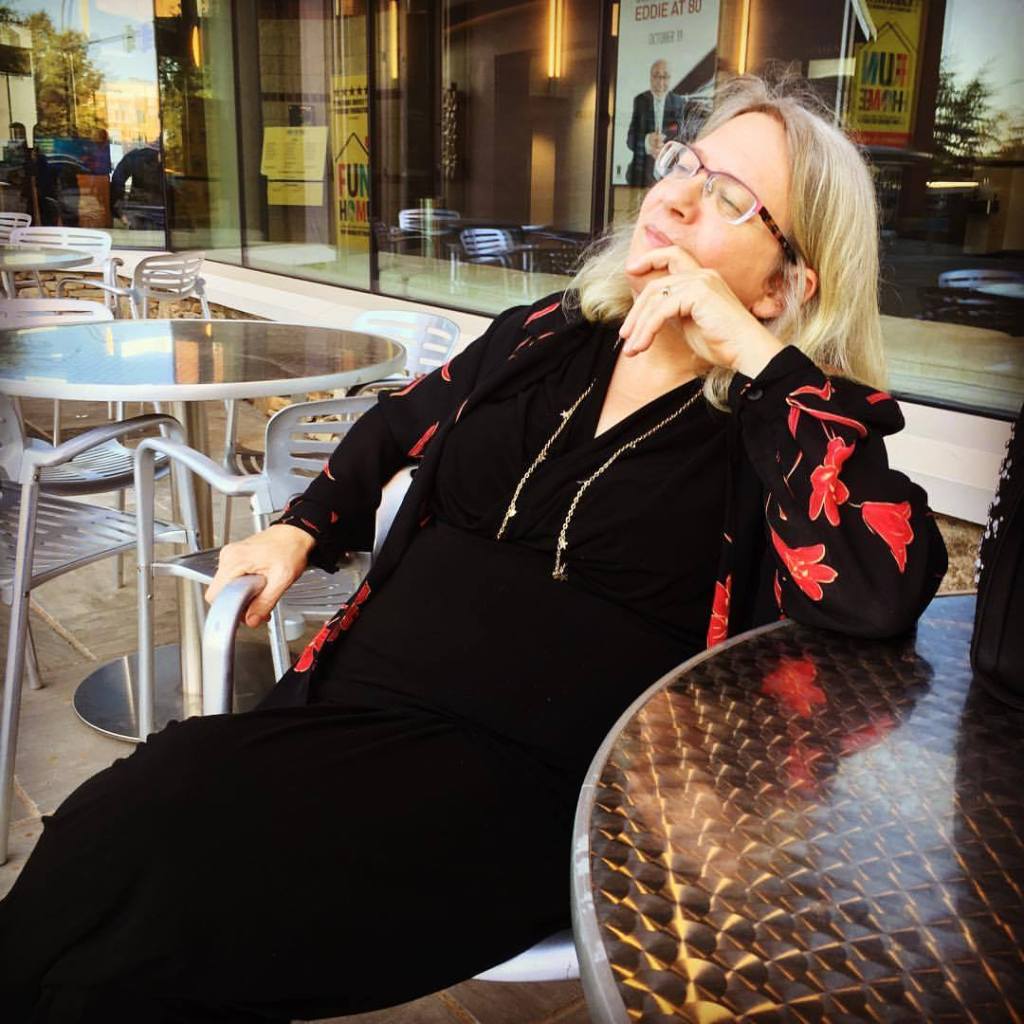
Me several years ago before seeing a play at the Peace Center in Greenville, SC.

If You Ask Me…

Photo by Leeloo Thefirst on Pexels.com

When state performance measures came out this year and the Credit English Success (p.7) rate was below the average band, my first instinct was to become defensive. “It’s not my fault!” I wanted to scream and quickly blame someone else. Another instinct was to point the finger at society’s focus on data. However, after the initial flare up of self-protection, I calmed down and began to reflect more completely on the entirity of the report, which helped to put things into perspective. I want to be prepared to offer suggestions for improvement should anyone ever show any interest in what a retiring English educator with 33 years of experience thinks.

Although our college is considered below average in Credit English Success, we are above average in College Transfer Success (p. 17.) This is encouraging to me because it says that despite extraordinary circumstances such as the pandemic with its accompanying economic and cultural effects, our students who transferred to four-year institutions were well-prepared to continue their education.

Another encouraging factor is that while we are below the average band, only by .03 index points, I know we, and I don’t mean just the English department, I mean the entire college, WE can do so much more to help our students perform better in their English classes. One thing is already in the works, and that is a push to encourage, or even to require, students to take their English classes early in their programs. However, there is more that we as a college can do to help improve College English Success. Here are a few ideas:

Photo by Min An on Pexels.com
  • Normalize high standards for reading and writing. If students heard from every instructor across divisions how important reading and writing well is to success in school and the workplace, and if instructors incorporated more reading and writing assignments in all classes, our scores would go up.
  • Improve the writing assessment skills of instructors. Although most instructors have advanced degrees in their subject area and are experts in writing within their discipline, few have had any formal education on how best to assess reading and writing skills. Understanding ways to incorporate reading and writing assessments within instructors’ particular divisions based on the writing assessment techniques already used in the college’s English department would be a way to permeate all programs with a consistent standard without violating any instructor’s academic freedom. Topics of professional development could include

  • incorporating vocabulary and other reading lessons into any course
  • adding consistent writing criteria into advanced grading methods such as rubrics, checklists, and marking guides.
  • composing engaging writing assignments with clear instructions.
  • teaching best practices of composition teachers and explore how to translate these techniques into the non-English classroom
  • how to save time when grading written assignments while maintaining high standards of written communication
  • Promote the importance of communication skills throughout the College, maybe even plan special events that highlight the importance of reading and writing in all disciplines. Many organizations are eager to partner with community colleges, groups such as PEN America and the National Writing Project that declares, “Writing is essential to learning, critical thinking, and active citizenship” (NWP).
Photo by Andrea Piacquadio on Pexels.com
  • Across the campus, teach not only students but also faculty and staff the importance of strong reading and writing skills for school and for the workplace. Here are just a few facts.
    • Reading well improves the ability to follow instructions, and reading complex texts, like literature, peer-reviewed scholarly articles, and professional journals, increases critical thinking, a skill highly prized by today’s employers according to World Economic Forum.
    • An August 2022 article from Business News Daily, reports on the professional benefits of reading books, fiction as well as non-fiction, including fostering empathy and creativity as well as developing problem-solving and cognitive skills. According to the article, reading can even lessen stress and build perseverance, skills students definitely need now and in the future. Imagine if all instructors were curating interesting and engaging readings for their students. They would be expanding their knowledge of their own disciplines while encouraging their own students to develop their reading skills.
    • The importance of strong communication skills in the workplace continues to be of high importance in 2022 as reported by major educational institutions like Harvard and MIT as well as career-seeking sites, such as Indeed, Monster, Zip Jobs, and Linked In.
Photo by Last Chwezi on Pexels.com

  • Another thing we can do to work on the problem is to develop a college-wide system for remediating students who need extra help with their writing. For example, when I was a graduate student at Western Carolina University low these many years ago, I worked as a graduate assistant in the Writing Center. I would often tutor students who had received a “CC” on their essays in a course other than English. I can’t remember what CC stands for after all of these years, but I do remember that professors gave CC’s to essays that did not meet basic college-level English standards. Students who received two CC’s would be enrolled at no expense in a remedial English program. The word was that no student wanted to endure that class, so they would come to the Writing Center for help. I remember receiving a thank you note from one grateful student whose scores on all of his essays improved upon just a few visits to the Writing Center. Our college might do something like this–develop a system to identify students in non-English classes who have writing issues and allow them to complete revisions for a higher grade only if they visit the Student Success Center to work on that revision. We already have a referral system in place, but if all instructors could be more proactive in addressing the need to improve writing skills campus-wide, then our success rates would increase.

Just a few ideas of what the college as a whole could do to improve our English scores. Next time on Hey, Mrs. Winkler I’ll offer some suggestions on ways the administration can help English faculty as they struggle to help improve retention and success for our students.

Even if they don’t ask me.

Tale End of the Baby Boomers

I stated in my last blog that I would review the book my daughter gave me for Christmas, but I’m going to put that off. Recent events at work have caused me to revisit some “teachable moments” in my past that have shaped me as an educator and a human. But come back for the review. The Dictionary of Obscure Sorrows is a little book packed full of wistful wisdom.

My parents on their honeymoon in New Orleans–December 1955

And now, here’s a little bit more about Mrs. Winkler back when she was Ms. Whitlock.

I was born in 1960, towards the end of the Baby Boomer generation. Kinda awkward I’m finding, especially as a woman. Unlike some women born in the ’40s and ’50s, I inherited some of the privileges that had been denied them but still had, and have, a long way to go, baby.

At least I could open a bank account.

Yes, that’s right.

Writing for the financial website Spiral, LeBach Pham writes that although women had been financiers in America throughout its history, it was not until the ’60s that banks could no longer legally keep a woman from opening an account. (Pham). I was 14 when women obtained the right to open a credit card account or to take out a mortgage on their own thanks to the Equal Credit Opportunity Act, although I wasn’t ready to have a credit card until I was well into my 20’s.

I suppose in my early years, I took for granted some of the privileges that many women, especially college-educated women, had fought so hard for. Part of the reason, I suppose, is because my wonderful parents were both fierce supporters of education. I remember one of my favorite family pictures before my younger brother was born is my father, smiling, seated in the middle of the picture with me, the youngest at the time, about two or three I think, on his knee, then, my gap-toothed brother and my sister, the oldest, standing on either side of him. Behind my father, arms reaching out and resting on her children’s shoulders as if to cover her whole family, is my mother, in her full regalia, having just graduated with her BA in English from Auburn University.

After graduating from Lanett High School in Lanett, AL, my mother, who wanted to see a bit more of the world than the little cotton mill town where she was widely known as the principal’s daughter, headed out to Shawnee, OK, to attend Oklahoma Baptist University. For her day, it was a bold move, I think, to attend a university over 800 miles west of her protective home.

Photo by cmonphotography on Pexels.com

My mother tells the story of how she arrived by train that first year and walked with her bag toward the campus to see it covered in black. As she got closer she realized what she was seeing a giant swarm of locusts. Big black and gold locusts. She said she couldn’t move without stepping on one. I couldn’t imagine anyone staying after that introduction, but mom did and went back the next year, even after falling in love with my dad, whom she had known all through school but never dated until that summer after her first year in college.

She had promised my grandparents she would go back one more year and she did. But it wasn’t until after marriage and the birth of her first three children that my mother finished her degree at Auburn University, with my dad’s full support and encouragement

I remember going far away from home, too, when I was right out of undergraduate school. I went to Oral Roberts University during the 900-foot Jesus years. You had to be there. Nevertheless, I feel I got a good education at ORU. Yes, I had to take a course called Holy Spirit in the Now, but I also took Survey of the Old Testament and Survey of the New Testament. Those two courses have served me well as a student and teacher of literature, especially at a community college in the buckle of the Bible belt.

Photo by Pixabay on Pexels.com

My first teaching assignment was at a small church-affiliated school in Aliquippa, PA, outside of Pittsburg. Until I was flown up to the school for an interview, I had never been anywhere near Pittsburg, had no relatives there, and knew no one, but, just like my mother, I saw it all as a grand adventure. The school was small, and I taught three levels of English and two levels of German.

Turned out it was rather out of the mainstream theologically, but I did not become aware of this until after I took the job, even though I asked specifically about the church’s and school’s doctrine during the interviews. For example, although I had hauled all my German Christmas materials with me and moved them into my little attic apartment, I wasn’t able to use them because the church was vehemently anti-Catholic and did not believe in practicing any of the “pagan” holidays, so I just kept my copies of “Stille Nacht” in my files at home.

At the very first faculty meeting I attended, soon after I was introduced, our principal announced that he wanted all of the teachers to incorporate into our curriculum the support of prayer in public schools. He looked at me and the one other English teacher and said, “You will have your students write letters to their congressmen in support of prayer in schools. I will give you a sample letter I want them to follow”

Without hesitation, I said, “No, I won’t be able to do that.” He looked shocked. I looked around the room and the other teachers, especially the women, seemed shocked as well. I felt that I needed to explain. “I will discuss writing persuasive letters to our congressmen and create an assignment, but I want my students to write about the issues that are important to them and formulate their own letters.”

Everyone seemed still surprised.

Photo by cottonbro on Pexels.com

“Of course, if they want to write and send letters to their congressmen about prayer in schools, then I will assist them in editing the letters, but I can’t require them to write those letters.”

Silence.

A silence that spelled trouble for me from then on.

And yet, several of my fellow teachers, all women, came up to me after that faculty meeting and thanked me. They called me brave. It was my turn to be surprised. I didn’t feel particularly brave, just strong in my convictions that teaching writing didn’t have anything to do with religion or politics, no matter where I was teaching.

I remember speaking up again a few months later when I found out that the single male music teacher was making more money than I was. He had let it slip when he was hitting on me. I was appalled (at both) He had less education, fewer responsibilities–I had five preps in two disciplines, morning duty, lunchroom and afternoon duty as well as serving as assistant soccer coach and theater director. He had his classes, four I think, including band and choir practice.

I marched down to the principal’s office and just asked him–Why is so-and-so making more money than me? The answer–“Some day he will have a family to provide for.”

My turn to be shocked.

I may have been able to open a bank account when I taught in PA at that small private school, but I certainly didn’t make much money to put into one.

I did go back another year, believe it or not, partly because I had been promised a raise (although it never materialized), and partly because I had a long talk with my very wise daddy who had seen growth in me that first year and just felt I should go back. He wasn’t sure why. Always trust the instincts of someone who loves you, I thought then and still do. But the biggest reason I went back was pure orneriness, I reckon. Yeah, I thought, you fellers are going to have to deal with an uppity southern woman one more year.

At the end of that year, after I faced the fact that I couldn’t afford to live on the salary I was making, I began to enjoy the fruits of my labors. I started dating, Mr. Winkler–the best man that I know and as wise as my sweet daddy.

I came back South to get my second degree at Auburn University. Mr. Winkler, followed me down South a year later, and after I finished my degree and started working for Floyd County Schools in Rome, GA, I became Mrs. Winkler and have never regretted it one bit almost thirty-three years later.

However, while I was still Ms. Whitlock, teaching English and German at two high schools in the county, I still felt that “in-between” feeling, although I did enjoy some privileges denied me at the private school –being paid on a state teaching salary schedule at least. This meant I was supposed to be paid as much as a man, but I noticed that most of the male teachers also had paid coaching positions at the school, while I was assigned assistant soccer coach as one of my regular duties–no extra paycheck came with that.

Photo by Pixabay on Pexels.com

But, I was making a decent salary at least, enough to even open a credit card account and take out my first loan to buy a new car. This time the inequities were more subtle, but very much there. For example, at one of the high schools where I taught, I had the star football player in my class–he was the kicker for the team. Now, I am no football expert, but my father had played football for Auburn and been a football coach so I knew enough to know, after watching a couple of games, that this kid was, well, not very good.

However, he and the administration felt differently about his abilities I guess.

One day in class, the students were working on an assignment, and I looked up to see that our star football player was putting a small paper cup under his desk. I walked toward him, and the cup fell over, spilling out a disgusting black liquid. Tobacco usage of any kind, including chew, even in that rural part of a Georgia county, was strictly forbidden; the faculty had been strongly reminded of that in a recent memo from the principal. So, I called the kid on it. He claimed it wasn’t his cup. “I saw you put the cup under your desk,” I said and wrote him up for detention.

Later that day, I was summoned to the principal’s office. The principal had barely spoken to me before that day. “You’re new here,” he said, “so you may not know that so-and-so is our starting kicker and an important member of the team.”

“Oh, I’m aware that he’s on the team, but I saw him put a cup full of tobacco spit under the desk. It fell over, and he refused to clean it up, so I wrote him up for a detention.”

“Did you actually see so-and-so spit in the cup?”

“No, I suppose I didn’t.”

“He says he didn’t spit in that cup. That he was covering for his buddy.” I tried to continue my argument but was cut short. The principal said, “I’m going to rescind this detention because you didn’t actually see so-and-so spit in the cup, and if he gets one more detention, he will have to sit out a game, and he’s too important to the team.”

I knew it would be better for me to say nothing, and I knew it probably would do no good at all to say anything, but just like in PA, I couldn’t help it, I spoke out. “Okay, I suppose you are going to do this no matter what I think, but I will tell you that word is going to get around quickly that I have no authority in my own classroom, and I am going to have more and more trouble.”

Photo by Pixabay on Pexels.com

That my prediction came true has never given me any comfort.

And yet, over thirty years later, I am still speaking out about the dangers of administrators ignoring the ramifications of taking authority away from the teacher in the classroom. I’m still predicting how that loss of authority is chipping away at the academic integrity of our schools, colleges, and universities.

But who am I? A little, mouthy Southern woman–just another boomer on the verge of retirement.

I DID IT!

My Official NANOWRIMO Certificate

On November 28, I completed National Novel Writing Month (NANOWRIMO) by writing 50, 453 words. I exceeded my goal with two days to spare!! Now, I didn’t write a novel, and it isn’t a complete rough draft, but it is quite a leap forward on my newest major writing project–a book about some of my travels and how they have affected my teaching.

So, I’m not nearly finished, but I must say that I’m allowed to take some pride in this accomplishment I think because I have also been grading like no tomorrow, and organizing, and traveling to see family, and attending the North Carolina Writers’ Network conference in Raleigh, and enjoying Thanksgiving with family and friends.

50, 453 words.

Not bad, Mrs. Winkler.

Not bad at all.