To Become a “Miracle Worker” Too

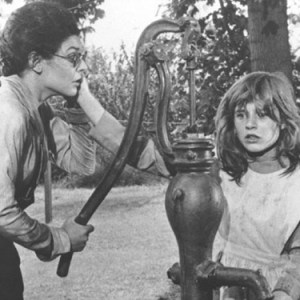
Miracle worker Anne Bancroft and Patty Duke in 1962’s “The Miracle Worker” by William Gibson When I was a young girl in the 60’s, I loved to watch old movies on Saturday afternoon. Some of these movies made a deep impact on me for one reason or another. I remember watching one of my first Shakespeare plays on Saturday morning–the 1935 version of Midsummer Night’s Dream starring Olivia de Havilland as Hermia, Andy Rooney as Puck and James Cagney, yes, James Cagney, as Bottom. I didn’t know any of those actors then, but I was fascinated by their actions. I barely understood a word of what was said but I was mesmerized by the words. So many movies during those halcyon days, when my viewing choices may have been fewer but have rarely been better, helped form my love not only of film but also of story telling and the theater, psychology and human development, justice and mercy–movies like Citizen Kane and Rebecca, Stage Door and All about Eve, To Kill a Mockingbird and 12 Angry Men. 

However, there is one movie that told a story which stands out above the rest in my mind, a story that helped solidify a desire that was already growing in me before I was a decade old–the desire to teach. That story is told in the 1962 film The Miracle Worker, the story of Helen Keller and her teacher Annie Sullivan. I can’t remember a time I didn’t want to be a teacher, but watching Annie struggle to teach Helen, to give some meaning to the child’s dark and silent life by giving her the gift of language and in return seeing her own life change from dark to light, caused the stirrings of desire to leap into a consuming passion.

I was reminded yesterday of this great story and its impact on my career choice when I went to see our local community theater’s production of William Gibson’s play. I’ve seen it several times over the years and the movie many times, but something about the intimacy of the small theater and the fine acting by my friend who was playing Annie and another friend’s young daughter who played Helen, brought back the force the story and its impact on my life in a way I hadn’t felt in many years. This time, however, I have been a teacher for thirty years, a bit jaded about my profession, especially these days, especially in North Carolina, but watching Helen’s face at the water pump as the water flows over her hands and she finally understands what words are, seeing Annie’s face when Helen comes to her with her new found knowledge and signs that special word “teacher” renewed my love of teaching.

One passage in particular especially rang true to me last night. In the scene Annie is discouraged because she has brought Helen to the threshold of understanding language, has struggled mightily to bring her there, but words are still just a finger play to Helen and time is running out. Annie looks down at the deaf, blind and mute child with such yearning and says these words:

I wanted to teach you—oh, everything the earth is full of, Helen, everything on it that’s ours for a wink and it’s gone, and what we are on it, the—light we bring to it and leave behind in—words, why, you can see five thousand years back in a light of words, everything we feel, think, know—and share, in words, so not a soul is in darkness, or done with, even in the grave. And I know, I know, one word and I can—put the world in your hand—and whatever it is to me, I won’t take less!

Is it any wonder that even way back when I was not much older than Helen was that day the world opened up to her, that my world opened up to me? That day I knew what I wanted to do–help people understand the beauty and power of words. When I got a little older, one of the first biographies I read was Helen Keller’s autobiography, “The Story of My Life.” I chose that book because I had seen the movie and been so intrigued by Annie Sullivan and how it must feel to teach a child. Reading the story from Helen’s perspective fueled my passion for teaching. In this passage Helen describes that day at the water pump:

I stood still, my whole attention fixed upon the motions of her fingers. Suddenly I felt a misty consciousness as of something forgotten–a thrill of returning thought; and somehow the mystery of language was revealed to me. I knew then that “w-a-t-e-r” meant the wonderful cool something that was flowing over my hand. That living word awakened my soul, gave it light, hope, joy, set it free! There were barriers still, it is true, but barriers that could in time be swept away.*

I left the well-house eager to learn. Everything had a name, and each name gave birth to a new thought. As we returned to the house every object which I touched seemed to quiver with life. That was because I saw everything with the strange, new sight that had come to me. On entering the door I remembered the doll I had broken. I felt my way to the hearth and picked up the pieces. I tried vainly to put them together. Then my eyes filled with tears; for I realized what I had done, and for the first time I felt repentance and sorrow.

I learned a great many new words that day. I do not remember what they all were; but I do know that mother, father, sister, teacher were among them–words that were to make the world blossom for me, “like Aaron’s rod, with flowers.” It would have been difficult to find a happier child than I was as I lay in my crib at the close of that eventful day and lived over the joys it had brought me, and for the first time longed for a new day to come.

Some people struggle to know what to do with their lives, to find themselves, but I knew long ago as a little girl watching TV on a Saturday afternoon, when I could have been outside playing, that some day I would be a teacher. As much as I have wanted to escape my destiny over the years, it’s clear that I am where I belong, doing what I was born to do. What William Wordsworth said is true, “The child is father of the man.”

Mother of the woman, too.

Got to Post This–Satire from The Onion

Busy with catching up after the Ice Storm of 2015, so I’m going to pass on this satire from “The Onion” as my blog post for today. Although it refers to K-12, it relates to higher education too. One thing I’ve noticed is that fewer and fewer of my students are planning to be teachers. They tell me it’s less the low pay and more the lack of respect and the increasing amount of bull that teachers have to put up with that is keeping them away from the profession, especially in North Carolina.

http://www.theonion.com/articles/new-education-initiative-replaces-k12-curriculum-w,38048/?utm_source=Facebook&utm_medium=SocialMarketing&utm_campaign=LinkPreview:1:Default

Teaching Online–I Think I Like It


Kind of Fun to Teach Online

Kind of Fun to Teach Online

When I first started teaching online I found distance learning far inferior to traditional. Teaching has always been so interactive for me, so I didn’t see how I could capture the same dynamic in an online environment. I have found that I was absolutely right. The two environments are vastly different and require distinct teaching styles. However, that does not mean teaching online can not be as effective as teaching in the traditional classroom, and at times, I find online classes to be the better way to teach literature.

Of course, I have been teaching 200-level literature classes online for quite a few years and have had the freedom to develop my courses the way I see fit. I also am blessed at my college with an incredible distance learning support staff that have helped me solve problems and supplied me with the technological skills I need to continue improving my classes and lessening my grading load.

Earlier this semester, I presented a session on teaching 200-level courses online at the North Carolina Community College’s annual conference in Raleigh and thought I would share some of the information I presented there:

Course Structure

  • Provide Students with Resources, including
    Examples, in Folders
  • Number Assignments
  • Provide Due Dates in Multiple Places
  • Post a welcome Letter and/or Video
  • Use multiple Avenues of Communication

Assignments–Combine Traditional and Non-Traditional

   Traditional

  • Lecture (video or audio taped)
  • Class Discussion (through Discussion Forums,  On-line Chats and Skype)
  • Written assignments (reader responses, essay tests, literary analysis

   Non-Traditional

  • On-line Reading Quizzes
  • Kaltura Assignments
  • Audio/Video Response
  • SCROM Packages
  • Online Presentations

Some of My Favorite Assignments

  • Creative Projects
    • Rewriting a scene from Beowulf using a different perspective
    • Writing a Japanese Chain Poem
    • Writing a poem in the style of one of the Romantic Poets
  • Film and Video
    • Film Assignments—Watching a Modern British Film
    • Youtube videos
      • Resources
      • Assignments
  • Kaltura Assignments (For Moodle Users)
    • Lectures
    • Directions
  • Travel Project–My All-Time Favorite
    • $10,000 imaginary dollars to spend on the trip
      of a lifetime!!!
    • 20% of the grade in this course
    • Choose author and/or work to research
    • Annotated Bibliography
      • Scholarly
      • Related to author, work and countries associated with both
      • Should not be purely biographical
      • Research the places in the work, too
    • Travel Itinerary Presentation
      • Powerpoint or some other software
      • post on Travel Project Forum for all students to see 1
      • 14-day itinerary of a literary tour
      • I provide detailed examples of the annotated bibliography and the presentation.

If you would like more information about any of the above information, just contact me here at “Hey, Mrs. Winkler!” I’ll be glad to share.

On my next blog, I’ll discuss some advanced grading methods I use online to help with the heavy grading load that can be generated when teaching upper level online classes


Today Is What It’s All About

Yesterday, I was discouraged, but today is a new day. Why? I went to rehearsal of my college’s new play. We’re performing a stage version of the movie Clue that is based on the old sleuthing board game so many of us know and love. The movie has an all-star cast, including the late great Eileen Brennan, Tim Curry (of Rocky Horror Picture Show fame), the fabulous Madeline Kahn, Christopher Lloyd, Michael McKean, Martin Mull and Lesley Ann Warren.

At auditions, there were so many fine actors that our director, head of the drama department, decided to have understudies for some of the roles, include a “household staff” that will serve as entertainment between scenes and then get their shot at the big roles during two additional shows. Great idea, and it’s what directors who are primarily good educators at community colleges do–make their lives much more complicated for the sake of their students as well as the community members who are also significant stake holders in their college.

Today’s rehearsal reflects what community colleges are all about–play production students coming early and staying late to work on the set, more seasoned actors helping the newer ones, agreeing with the director without argument, offering suggestions, happy to have them accepted or not, the director’s quick and non-embarrassing corrections when new actors make mistakes, each actor creating a story for his or her character, an occasional harmless joke, the joys of physical humor leading to laughter and a true knowledge of an art form that only comes with actually getting up and doing it.

This is educational theater and the essence of what liberal arts is all about–following directions, creative problem-solving, collaborating and creating. I’m so glad to once again be a part of it.

Also, today–my positive day–I want to give a shout out to the colleagues, support staff, administrators and students who helped me so much during this past discouraging week. I complain sometimes, but I truly just want to make things better for my fellow instructors and my students, especially my students. Nevertheless, I want to find more time to praise the people I work with who also have the welfare of all of our students foremost in their minds. I also appreciate those students and friends who have reached out to me this week, offering me respect and encouragement. Thanks, guys–you know who you are.

Why Devaluing Teachers Hurts Everyone

This article by Peggy Wuenstel of Marquette University certainly expresses my feelings

pwuenstel's avatarThe Marquette Educator

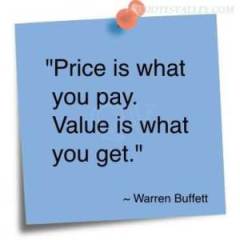
price-is-what-you-payBy Peggy Wuenstel — I have been spending many angst filled evenings over the last two years, trying to get a sense of when things went off the rails.

I have been in this business for 30 years. There are some things that I knew back at the beginning that are still true today. Teaching is hard work. Educating children is a team sport. You will never get rich working in public education if your bank account is the measure of your success. The days will be long and the summers will be short. The intangibles will always trump the measurable in making you feel like you earn your paycheck, and even though it’s not all about the kids, it is certainly mostly about the kids.

Some things have changed radically, at least here in Wisconsin.

Showing up every day, doing the best you can, keeping your skills current, and…

View original post 819 more words

It Matters

Yes, dear student, it matters that you capitalize the personal pronoun “I” and that you use salutations in your e-mails. It matters that you refrain from keeping your cell phone on your desk and looking at it every few seconds during the lecture. It matters that you do not use the time I give you on the computer to write personal e-mails and post on facebook.

Yes, dear support staff member, it is important that you knock and ask permission to enter the room when I am conducting class, that you do not speak to me disrespectfully in front of my students when I question the timing of repairs on the classroom printer. It matters that you recognize the most important thing our college does is hold classes and that all classes are important, even, perhaps especially, developmental classes.

Yes, dear administrator, it matters that you allow me to explain my position before you summarily dismiss my request, that you do not raise your voice and speak to me in a derisive tone, but speak to me as a fellow educator, someone who has the best interest of students at heart.

Yes, dear me, it matters what you do, even when it isn’t acknowledged, even when you are treated unfairly, even though you aren’t perfect and make mistakes. What you do matters and it matters that you care so deeply. It matters

Today is a Different Reality

A kindred spirit!

Lisa Chamberlin's avatarFrogs in Hot Water

This is the start of a new quarter at my community college and we, like many, are mired in budget issues, enrollment issues, hiring crises, etc.  You know, the usual kerfluffles that make up higher ed.  To escape the quagmire, I look for inspiration among my super smart writer-type friends who add their thoughts about leadership, learning, and other areas I am interested to the blogosphere.

Yesterday, I read a post on Marcia Conner’s blog that has stuck with me all day – I even forwarded it to my dean. (By the way, if you aren’t following Marcia, you should be).

The full post is here, but the part that hooked me is this (written by Garry Ridge, CEO of the WD-40 company):

“You have to separate those responsible for today from those responsible for tomorrow.” A light went off in my head as I realized the implications for WD-40. The company…

View original post 162 more words

So Frustrated I Can’t Write Much, So I’ll Let Tom Hanks Speak for Me

Today, I’m feeling once again minimized, like my efforts to educate people in my community, to try and instill in them not just skills but a love for learning and a desire to be a lifelong learner, to be a thinker, is seen by some people in power to be a waste of people’s time, that College Transfer Programs leading to four years degree are at best excessive and at worst wasteful.

So I come back to my office feeling a little depressed–go figure. Most people have gone home, but I have to type up a reading comprehension test for one of my classes tomorrow. I hate giving reading comprehension tests, but see, my students don’t read their assigned texts–as a whole they don’t do anything unless they get a grade for it. They don’t understand what it means to be educated and very few have any desire to be. I don’t blame them. They are products of a society that has people in power who seem to think that all education needs to be directly measurable, so they naturally do not understand what it means to read something because it will help them understand the material better, because it will help them write their papers better if they apply what they read. Oh no, if the reading does not have the price tag of a grade, then few students will do it. The idea of learning for learning’s sake is alien to them because it is alien to most of the people all around them, a product of the instant world to which they’ve become accustomed.

Anyway, so I haven’t started that quiz yet. Why? In my inbox was this wonderful article by Tom Hanks appearing in the New York Times that made me feel so much better. Did you know that Tom Hanks got a really good liberal arts education at a community college? Yep. So here it is: http://www.nytimes.com/2015/01/14/opinion/tom-hanks-on-his-two-years-at-chabot-college.html?emc=edit_ty_20150114&nl=opinion&nlid=69971608

Read it and then hear me saying, “What he said.” That’s my blog for today.

10 Ways Being a Theatre Major Prepared Me for Success

Take that, you know who!

Tom Vander Well's avatarWayfarer

Studying lines for a production “The Servant of Two Masters”

I have a confession to make. I was a theatre major in college (yes, complete with the snooty but appropriate “re” spelling). I’ll wait for you to stop snickering. Judson University (it was Judson College when I attended), the small liberal arts college outside of Chicago labeled the major course of studies as “Communication Arts” which is what I tend to put on resumes and bios because I realize that “theatre major” tends to elicit thoughts such as “Do you want fries with that?”

When I chose my major, I had no pipe dreams about becoming a professional actor. I did it because more than one wise adult had advised me that my actual major in college would have less impact on my eventual job search than having the actual degree. “Study what you love” I was told, “not what you…

View original post 1,787 more words