Quit Dissing College!!

Photo by Pixabay on Pexels.com

Poor college!!! Seems like every Tom, Dick, and Henrietta is taking a pot shot at you these days. I know, I know, you can be expensive, especially if people get sweet-talked into taking on college loans (Don’t do it unless you absolutely have to!). Also, some classes and professors will be really sucky at your place. People can be downright mean, too. Plus, students can get in a lot of trouble given the kind of freedom that you bring. Don’t forget, you forced me to question my core beliefs. Yes, I didn’t abandon those beliefs, but admit it, I did question them, loudly and a lot.

But…

Photo by Keira Burton on Pexels.com

Is it just me, or did you, along with a supportive family and friends, help me find my way through my late teens and early twenties? Did you help me forge positive, meaningful relationships with people from other cultures and countries with varying backgrounds and values? I think it was you who qualified me for a fulfilling career as an English and German teacher at the high school and college level. During my working years, you helped me provide a strong high school education for my child and made it possible for me and my husband to pay for her now debt-free education (two degrees). You allowed me to contribute to a pension plan that means I can enjoy a financially secure retirement.

Because of you, in undergraduate school at a Christian university, I traveled to Europe for six weeks, studying German and history. I visited West Berlin when it was still trapped within a wall, but somehow still free because of what my country, along with England and France, did for that city. I laid hands on the graffiti-laden free side of that wall and was thankful to be a citizen of a nation that saw the value in maintaining the democracy of a country with which it had so recently been at war.

Photo by Ann Buht on Pexels.com

Because of you, I visited Christians in East Berlin who were trapped outside the wall by an oppressive communist regime that would not let them worship freely. Yes, older people could go to church, but their every movement was monitored by the Stasi, the East German secret police, and younger people were prevented, by law, from attending church. And yet, in those few hours in the East, I witnessed the bravery of those who longed for freedom–an old woman who shook the hands of every student and said in broken English, “Tell them we have no freedom here. Tell them we have no freedom here. Tell them we have no freedom here.” The young people in their teens and twenties who traveled two-by-two just to meet, in secret, a group of American Christians, tell them their stories, and fellowship with them.

Because of you, I was able to spend the second half of my German trip in Tübingen to visit my brother who was studying theology there. I lived in the international dorm and traveled into the city, learning the mass transit system (new to me), eating at the Mensa (student cafeteria), visiting the old castle where my brother preached his first sermon to an intimidating crowd of professors, and sitting in on lectures about biblical archeology, some of which I could actually understand! We punted flat boats on the Neckar River, took walks into the forests, and had picnics with my brother’s friends. We took a train to Munich to hear The Rolling Stones at the Olympic Stadium and hitchhiked the way back (not recommended these days but safe back then).

Photo by Pixabay on Pexels.com

Only because of you could I have afforded this trip. You didn’t pay for it outright, but you supplemented it, enriched it with quality faculty members who had the knowledge to plan our trip in order to give us the best educational and personal experiences possible. I also learned how to work for what I wanted, taking on two jobs and saving to raise the funds.

I had so many other wonderful experiences during my college years because of the support you offered, and I have gotten so much more out of my experiences since then because of you, but you also gave me a chance to make a living doing what I love to do–teach. The data shows that you give many people that opportunity–people with a bachelor’s, master’s, professional, or doctoral degree still make more on average AND have lower unemployment than those with a two-year degree or less, according to the Bureau of Labor Statistics using 2022 data. You give so many of us so many opportunities we wouldn’t have without you.

Photo by olia danilevich on Pexels.com

I know you’re not perfect. Far from it. You have so many problems that more and more people are saying you’re not worth it. But you are!! Even though I realize you are not right for everybody–my own husband went to trade school to study x-ray and ultrasound technology, which has led to a great career for him. But for me, you made the difference despite the drawbacks. College, you have enriched my life more than I can say in one brief post. I can keep writing about you and the lessons you taught for at least the length of one book.

Oh, I think I will.

How about that for a segue? I hope to finish the rough draft of my educational memoir “Lessons” by the end of the year. I will keep you updated about the progress and maybe spin some more tales as I’m working on the book.

Also, the journal I edit and publish, Teach. Write., is open for submissions until March 1. The 2023 Spring/Summer edition is to be published on April 1. See the submission guidelines at teachwritejournal.com.

AI and the Changing Composition Classroom

Photo by Tara Winstead on Pexels.com

Many instructors are fearful about artificial intelligence and what it will do to student writing in freshman composition classes. I understand their concern, especially with the recent announcement about changes in Open AI’s leadership; however, it seems to be clear that AI is here to stay and is quickly changing the school and workplace landscape. Composition instructors, therefore, have a choice. Fight a losing battle or change the way they teach so as to meet the needs of students and their future employers.

If I were still in the classroom, I would seek to use AI in constructive ways. Indeed, AI may prove to be a boon to overloaded, overworked, and overwrought composition teachers, helping them deal with the heavy courseloads they are given. The answer, as indeed in most things, is engagement. Have a curious and playful attitude when using AI in the classroom, discussing the ethical implications along the way.

One assignment I thought might be useful is to introduce a common topic that students in general might find relevant to their lives. Work together as a class to come up with one or two paragraphs produced by Chat GPT. Then, discuss the positive and negative aspects of the paragraphs. Also, teachers might want to pursue a discussion of the ethical considerations of students using AI. When would it be appropriate to use it? When would it be harmful? Why would it be counterproductive to submit a purely AI-written essay in any college classroom?

Photo by Airam Dato-on on Pexels.com

I asked Chat GPT to come up with a couple of paragraphs on the topic of pros and cons of mandatory classroom attendance for college students. At first Chat GPT just gave me lists of pros and cons, which seems to be its favorite style of writing, so I asked it to write the pros and cons in paragraph form. Here’s what it gave me:

College Classroom Attendance: Striking a Balance

The debate over mandatory attendance in college classrooms revolves around finding a delicate equilibrium between engagement and autonomy. On the positive side, compelling students to attend classes can create an environment conducive to active learning. In-class discussions, real-time feedback from professors, and collaborative projects thrive when students are consistently present. The communal aspect of the classroom, where ideas are shared and debated, contributes to a rich educational experience. Furthermore, mandatory attendance fosters a sense of responsibility and discipline, essential skills that students carry into their professional lives. The structure imposed by attendance policies can guide students in time management and the establishment of a routine, skills that are beneficial beyond the college environment.

However, the cons of mandatory attendance are not to be overlooked. College is a time for individuals to explore their independence and learning styles. For some, this involves engaging with course material independently, through readings, research, and self-directed study. A rigid attendance policy may stifle this autonomy, impeding students from developing the self-discipline needed for lifelong learning. Additionally, external obligations such as work commitments or family responsibilities may clash with a strict attendance policy, putting undue stress on students. In such cases, the emphasis on attendance becomes a hindrance rather than a facilitator of learning. Moreover, there’s a risk that attendance policies incentivize mere compliance rather than genuine intellectual curiosity. Students might attend classes to fulfill a requirement, but the focus on attendance metrics does not guarantee a meaningful engagement with the subject matter. Striking the right balance between encouraging attendance and respecting individual learning styles and circumstances is a nuanced challenge for educators.

Photo by Yan Krukau on Pexels.com

I would hope some of the following points would come up in our discussion:

  • Paragraphs are well-written with few writing errors.
  • A strong thesis statement begins each paragraph.
  • The paragraphs are well-organized and uses effective transitions.
  • The paragraph is logical and makes good arguments for and against mandatory classroom attendance.
  • One issue is the phrase “there’s.” I teach my students to avoid contractions and the use of the expletive “there is.”
  • The diction in general is too formal and sounds rather pretentious for a college-level paper. Really need to get rid of “incentivize” in the second paragraph. Yuck!
  • The paragraphs need to be fleshed out with specific examples and details, preferably from the writer’s own experience, some things that show the pros and cons more clearly and make the paragraphs more interesting to read. With good examples, these two paragraphs could be the basis for an entire essay.
  • Use this opportunity to talk with students about the importance of developing their own unique voice.

Another great thing to do would be to see if any students disagree with Chat GPT. What do students think about the logic presented in these paragraphs? Encourage students to “argue” with Chat GPT or “defend” it. Maybe have a classroom debate about mandatory classroom attendance. What ideas did the classroom come up with that Chat GPT didn’t include?

Photo by Markus Winkler on Pexels.com

Another idea is to help students brainstorm ideas about topics that they are interested in, a process that is not always easy, I found. But asking relevant questions like how to pay for college without going into debt or managing mental health without medication might spark a student’s interest and inspire them to THINK FOR THEMSELVES.

How about even being brave and venturing into controversial topics, like the difference between banning and challenging books in public schools, transgender rights, universal health care, and Black history studies. Yes, I know, it can be scary, and administrators may not thank you, but remember that college is meant for adult learners, many of whom are already wrestling in the real world with all of these topics. Furthermore, using AI may help remove some of the fallacious reasoning some students use when writing about sensitive topics. In fact, try using Chat GPT to start a discussion about fallacies of logic.

The main idea is to get them to realize that all good writing needs their real-life experiences and their own critical thinking to add interest, for the reader, sure, but especially for themselves because writing that the writer doesn’t care about will be dry as toast and not worth anyone’s time. Give students confidence in their own ideas through lively, mediated debate, and then ask them to write, by hand, if possible, right there in front of you.

Photo by William Fortunato on Pexels.com

The old-fashioned way.

NCWN Fall Conference Was Inspiring

Total honesty. I wasn’t really looking forward to the North Carolina Writers’ Network fall conference as much as I have in the past. I’m not sure why, but I think the main reason was my inner critic. I guess sometimes I don’t think I deserve to call myself a writer. I know I am one, but, oh, I don’t know what I mean. I think I should have had a book published by now, I suppose. I have had many short stories published. I’ve had four plays produced, I blog, I edit and publish a journal, but….

But, but, but, but…why do I do this to myself?

Anyway, this is the way I had been talking to myself BEFORE the conference.

First, thing, though, I saw two writer friends whom I hardly ever see except at writing conferences. We talked about our writing, got caught up on life events, our families. We ate several of our meals together and chatted about what we learned from the sessions we attended. I always feel so much better when I get together with other writers. They get me. So, they totally understood why I was so happy to find out that my play “A Carolina Story” made it to the finals for the Dramatists Guild Foundation’s Virtual Musical Theatre Fellowship.

I was also glad I went because of the quality faculty. All my sessions were led by people with the knowledge, experience, and wisdom that I was looking for. Most memorable was the session on writing books of essays led by Patrice Gopo because it helped me get a breakthrough about how I want to structure Lessons, the teaching memoir/methods book that I’m working on. I can’t wait to read her book Autumn Song to see how she applied the techniques described in her session.

Another great thing that happened is I met one of my contributors. He walked up to me and introduced himself, saying how much he appreciated my acceptance of his work for the last edition of Teach. Write. Especially meaningful was how he thanked me for giving teachers an outlet for their work. Man, made me feel good.

Finally, I just had fun. I was relaxed. It was the first conference I attended without having to worry about checking work e-mail in between sessions or getting behind in planning classes, maintaining online courses, or grading essays. It was glorious to use my break just to walk around the little lake by the conference hotel on a glorious autumn day.

If you’ve never heard of the North Carolina Writers’ Network, then I encourage you to check it out. You don’t have to live in North Carolina to be a member. The thing I like most about it, as I rediscovered this past weekend, is that it is a true network of writers, and more than a few teachers, who teach and learn from each other, who understand the struggles and triumphs of the writing life.

Comma Lessons

An excerpt from the rough draft of my upcoming book, Lessons: A Teacher’s Life:

Long story ahead, but it will relate to commas, eventually, I promise.

Photo by Smntha.Mntsr on Pexels.com

I know how incredibly blessed I am by having my education provided for me. When I went to a private, Christian university for undergraduate degrees in English and German, I went tuition free because both my parents worked for the university. My mother was a librarian, first in acquisitions and then in special collections, and my father, after he received his master’s in theology, became a representative, which basically meant that he was an itinerant preacher–moving around the southeastern states and visiting people who supported the ministry that supported the university. One of the benefits of working at the university for at least two years was free tuition for your children.

 My parents didn’t make that much money, so this benefit made it possibly for my older brother and me to go to college. For the first part of my time there, I lived at home with my parents, but when they moved back to Alabama to be closer to their own aging parents, I lived in the dormitory. My grandmother and great aunt paid for my room and board. I carried two jobs and paid for the upkeep on my vehicle, gas, and books, so I got off easy. 

Photo by Pixabay on Pexels.com

Then, when I went to Auburn University two years later, it was my grandmother and great aunt who paid my tuition. They had both been long time educators themselves who had risen from poverty because of their teaching degrees and knew better than most the value of an education; they helped all their grandchildren, nieces, and nephews at one time or other.  At Auburn, I once again lived with my parents, paid for my books by working horrible jobs (more about this later) and never had to take out a loan or apply for scholarships. 

My master’s in education at Western Carolina came quite a bit later, but once again, I was blessed. I had been applying for teaching jobs as soon as my husband John and I decided to move to North Carolina, and although I had already become certified to teach 8-12 grade English and German, I couldn’t get a job, even after John started working as an ultrasound technologist at a small hospital south of Asheville. I had several interviews in several counties but no go. 

On a whim, I decided to apply for graduate school at Western Carolina University in Sylva, about 60 miles from our home south of Asheville. I was accepted but didn’t think I would be able to go since we were newly married, newly moved–my husband with a new job fresh out of ultrasound school, and me without a job at all. I wouldn’t be able to afford the out-of-state tuition. We were hoping to buy a house soon on top of all of that. I had signed up to do some substitute teaching, $50 a day, and rarely worth it. You know how kids teach substitutes. 

Photo by Element5 Digital on Pexels.com

But, probably less than a week after I got my acceptance letter, I received another letter from the English department asking if I would come in for an interview. I guess my five years of high school teaching experience and the emergency need for freshman composition instructors made me a good candidate for receiving a graduate assistantship. My out-of-state tuition fees would be waived; my stipend was enough to pay my tuition, books, and the gas it would take to drive from Hendersonville to Cullowhee. 

It was settled. I was going to graduate school. 

Finally, we get to the commas. Well almost. 

The first semester I was required to take a course called “Teaching Rhetoric and Composition”–a down and dirty English composition teaching course. Despite my having taught for five years and having had several teaching courses at Auburn while I worked on my English Education degree, I had to take the course. All graduate assistants were required to take it, and although a bit miffed at first, I soon found the course useful and learned quite a bit.

One of the things I learned, I’ve written about at length in this blog–The Five Easy Ways to Improve Your Writing. Those ideas came from a visiting lecturer in the rhetoric course.

Photo by Polina Tankilevitch on Pexels.com

The other part of that first semester was working in the university’s writing center. My job was to tutor students as they came in to work on their essays. I stayed very busy in the center, especially because of Western’s CC program. I forget what CC stands for, but essays in any non-English class that did not meet basic college-level writing requirements received a CC. If students received two CC’s, they had to take a developmental English course that was notoriously hard to pass, and if the student did not pass, then they were suspended. Quite a few students, therefore, would come in to the Writing Center after the first CC to avoid that grammar class. 

The woman who ran the center was one of the best teachers I ever had. She taught by example. I would listen as she tutored students, helpful and patient but never overhelping, even when sorely tempted. Plus, she had all sorts of materials available to help students and gave me permission to take and use any materials as long as I credited the center. One of the most used handouts at the center was the director’s six simple comma rules. I used this handout as the base of my comma lecture for years because the rules were easy to understand, using little grammatical terminology, and the examples illustrated each rule well. 

Photo by Ivan Samkov on Pexels.com

I’m afraid that handout is only in my mind now, but I used some form of those basic rules throughout my tenure as a community college instructor. It was just always the easiest for my students to grasp in the triage-type grammar teaching that I found myself doing. I added the comma rules to my editing workshop worksheet that I gave to my students when they were preparing their final manuscripts for grading. Here’s what they boiled down to:

Use commas

  1. to separate items in a series of three or more
  2. to set off introductory material
  3. around words interrupting the flow of thought
  4. between complete thoughts joined with a conjunction (if two complete thoughts are joined with just a comma, the writer has a comma splice—major grammar error)
  5. with direct quotations
  6. with everyday material such as dates and addresses

Although I tried to keep grammatical terminology to a minimum, I did use some, so at the beginning of the lesson, I would remind students of some basic terms: 

  • Noun
  • Subject 
  • Verb
  • Coordinating conjunctions (FANBOYS)
  • Independent clause 
  • Dependent clause. 

After the review, I went through each of the six comma rules, giving examples of each. If time was short, I would just cover the first four. 

As a warmup to the lesson, I would try to engage students by using another cool example I learned in grad school.  At the beginning of class, without saying anything else, I would write the following sentence on the board: 

A woman without her man is nothing. 

I asked the students to write the sentence down and add two commas. I gave a minute to complete that and then would ask for volunteers. Often, here in the South at a small community college where sexism is alive and well, students, both male and female, would answer, “A woman, comma, without her man, comma, is nothing.” 

Of course, I would challenge them, tell them there was another solution: A woman, comma, without her, comma, man is nothing. One comma, one comma, I would say, totally changes the meaning of the sentence. That’s how important commas are, I said. 

Then I would begin. 

Rule #1 –Items in a series–First because it was usually the comma rule that students were most familiar with. 

I like apples, bananas, and oranges. 

I explained that if you have three or more items in a series, then you need to add commas between the items. 

I use the Oxford comma and only talked about the option of leaving that remaining comma out if a student brought it up. Commas are confusing enough to students, especially those in developmental classes, so I tried not to complicate things unnecessarily. 

Rule #2–Two independent clauses joined with a coordinating conjunction. I would give an example: 

The dog ran after the cat, but the cat held its ground and fought back. 

It is good to include a compound sentence that needs a comma and another coordinating conjunction that does not need to be separated from the rest of the sentence so that you can explain the difference. 

I explained that you have two independent clauses, reminding them that the only seven words that can join two complete sentences together are the FANBOYS, the coordinating conjunctions: for, and, nor, but, or, yet, so. In the case of this example, you have two complete sentences (independent clauses) joined with but, one of the fanboys, so you need the comma, I would tell them. 

I asked students if they see another conjunction. They would usually find the and. I asked, Why do we not use a comma here? Often times they didn’t answer, so I would ask if there were a complete sentence on either side of the conjunction. No. Then, there is no need for a comma. 

Rule #3–Commas after introductory material. I would explain that you need a comma after words, phrases, and clauses that come before the main clause and give examples:

  • Nevertheless, I left the room and never returned–nevertheless is a conjunctive adverb that modifies the whole sentence, so it needs to be set off by a comma.
  • In the middle of the night, Julia heard a loud bang. In the middle of the night are two prepositional phrases coming before the main clause, so you need a comma to notify the reader that the two phrases are coming before the main clause. 
  • As John was reading the book, he realized that he had read it before. As John was reading the book is a dependent clause–he realized that he had read it before is the main clause, so you need a comma after the dependent clause. 

Rule #4–Anything that interrupts the flow of thought. The next rule is super simplified, but usually this explanation helped students get the commas right without getting bogged down in too much grammar, especially restrictive and non-restrictive clauses. Oh, Lord, don’t go there. I explained that you need commas (most of the time) around words, phrases and clauses that interrupt the flow of thought in the sentence. Alternatively, I said that if you can pull the word, phrase, or clause out of the sentence and the sentence still makes sense, then you need commas around that word phrase or clause. Then, once again, I gave examples:

  • The new owners, sadly, declined to renew the flood insurance on their house.
  • The cat, along with its four siblings, were left in a box on the side of the road.
  • The man, who is standing over there in a red shirt, is my partner. 

Note: This lesson is most effective if spread over two class periods, so there is enough time to answer questions, show more examples, or put students into groups to practice. One exercise I liked to do with students is have them write sentences that use the different comma rules but leave the commas out, exchange papers, and correct each other’s sentences.

I guess, I’m weird, but I really loved comma lesson day. It was pure unadulterated, nobody-could-accuse me-of-indoctrination day, except for that “woman without her man” sentence, of course. Might be too engaging for today’s classroom.

Another reason I’m glad to be retired.

Those Who Can’t, Teach

Photo by JESHOOTS.com on Pexels.com

George Bernard Shaw’s 1903 play Man and Superman gave us the infamous saying, “Those who can, do; those who can’t, teach,” which has long been used to disparage teachers. Of course, it isn’t true. Many of the greatest thinkers and doers have been teachers: Albert Einstein, George Orwell, Alexander Graham Bell, and Robert Frost; Maya Angelou, Stephen King, and Steve Wozniak, co-founder of Apple. In addition, presidents John Adams, Lyndon Johnson, Jimmy Carter, and Barack Obama were also teachers.

Shaw’s maxim is silly, perhaps intentionally so, but the saying persists in more than a few people’s minds: teachers are those who have failed to reach their desired vocational goals and are forced, because of inability, to “settle” for teaching. For arguments sake, let’s say it’s true: Community college instructors are second rate. Most of them don’t even know their subject very well. They weren’t able to get a “real” job in what they went to school for, so they teach. Blah. Blah. Blah.

Photo by Andrea Piacquadio on Pexels.com

I hear all of that, and then, I get confused. I mean, during the pandemic, the hue and cry was open the schools back up! Students need in-class instruction with faculty in order to truly learn. Open the schools! Online classes aren’t good for students. We want teachers to find better ways to teach online. We want faculty to immediately pivot to effective, engaging online learning, even though many of them have never taught online because they know teaching face-to-face is more effective.

Photo by Vlada Karpovich on Pexels.com

Then, after the pandemic, it was students want more online classes! It’s more convenient. Let’s severely limit the time in seated classes because that’s the demand, even though our faculty is telling us that we should go back to more seated classes, especially for developmental students. Or–we don’t want these liberals teaching us or our kids. We honored and trusted them during the pandemic, or said we did, but we don’t trust or honor them now. We want to tell teachers what and how to teach even though we know little or nothing about the subjects they are teaching or about the art and science of teaching itself. Of course, we don’t want to do the actual teaching because who wants to do that thankless, low-paying job? Only someone who can’t do, right?

So, if teachers can’t do, then why is the world asking them to do so much? I’ll tell you why–because teachers are willing to do it. Hell, some of them even love doing it!

Photo by Yan Krukau on Pexels.com

Here is the thing about quality instructors and professors, even if they aren’t capable of being at the top of the professions they teach: they are willing to go into the classroom day in and day out to do their duty–helping students reach their personal and career goals. The classroom teacher is the grunt of the academic world, following orders and taking the risks for the sake of their students with little hope of reward. Yes, those who become tenured professors may see good salaries or if they are in a “high demand” area such as nursing or engineering, but many of the least paid general education instructors take the brunt of the criticism from students, parents, and administrators, even fellow instructors, because they teach the gateway classes like math and English that are often the hurdles that many community college students have trouble getting over.

Maybe teachers can’t do the one thing society values more than anything, making a lot of money, but the good community college teachers, the true teachers, do one thing that many are not willing to do these days. They show up.

Photo by cottonbro studio on Pexels.com
  • creating new lesson plans
  • learning and using new educational technology
  • enforcing academic integrity, when allowed
  • entering the classroom daily without tenure, sometimes without contracts
  • continuing despite unclear or unfollowed policies and procedures
  • going on despite constant criticism and little praise
  • enduring someone else’s idea of professional development
  • sticking with it in the midst of distrust
  • risking their livelihoods with few administrators whom they can turn to for support

Yes, they show up every day for people who often ignore them, despise them, or even mistreat them.

Photo by Kampus Production on Pexels.com

Many are choosing not to stay, and who can blame them? Others are staying, but any passion they had has cooled. Teaching has just become a job. However, I have found that more than a few, dare I say many, soldier on and fight, wondering to what purpose–until that student comes along–the one who stops by the office to ask a question, who brings an essay in to be honestly reviewed, who stays in the writing center until the knowledge breaks through. Once and a while, a teacher can make a class smile or laugh and learn all at the same time. Then, it is a good day.

Why do they do it? Why do they keep on keeping on?

The good teacher answers: “I can’t do much, but tomorrow, I am willing to walk into that classroom again and teach, because that is something, by God, I can do.”

And do well.

Photo by Katerina Holmes on Pexels.com

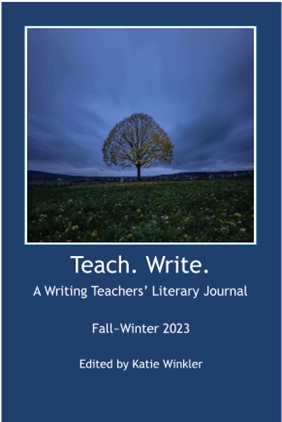
Print Version of Fall~Winter 2023 Teach. Write. Now Available

Teach. Write.: A Writing Teachers’ Literary Journal is now available in print. If you are interested in purchasing a copy, click here. The online version is available now at my sister site, teachwritejournal.com. I am now open to submissions for the spring/summer 2024 edition. If you are interested in submitting, please see my submission guidelines.

Katie Winkler on Roosevelt Island–photo by Hannah Winkler

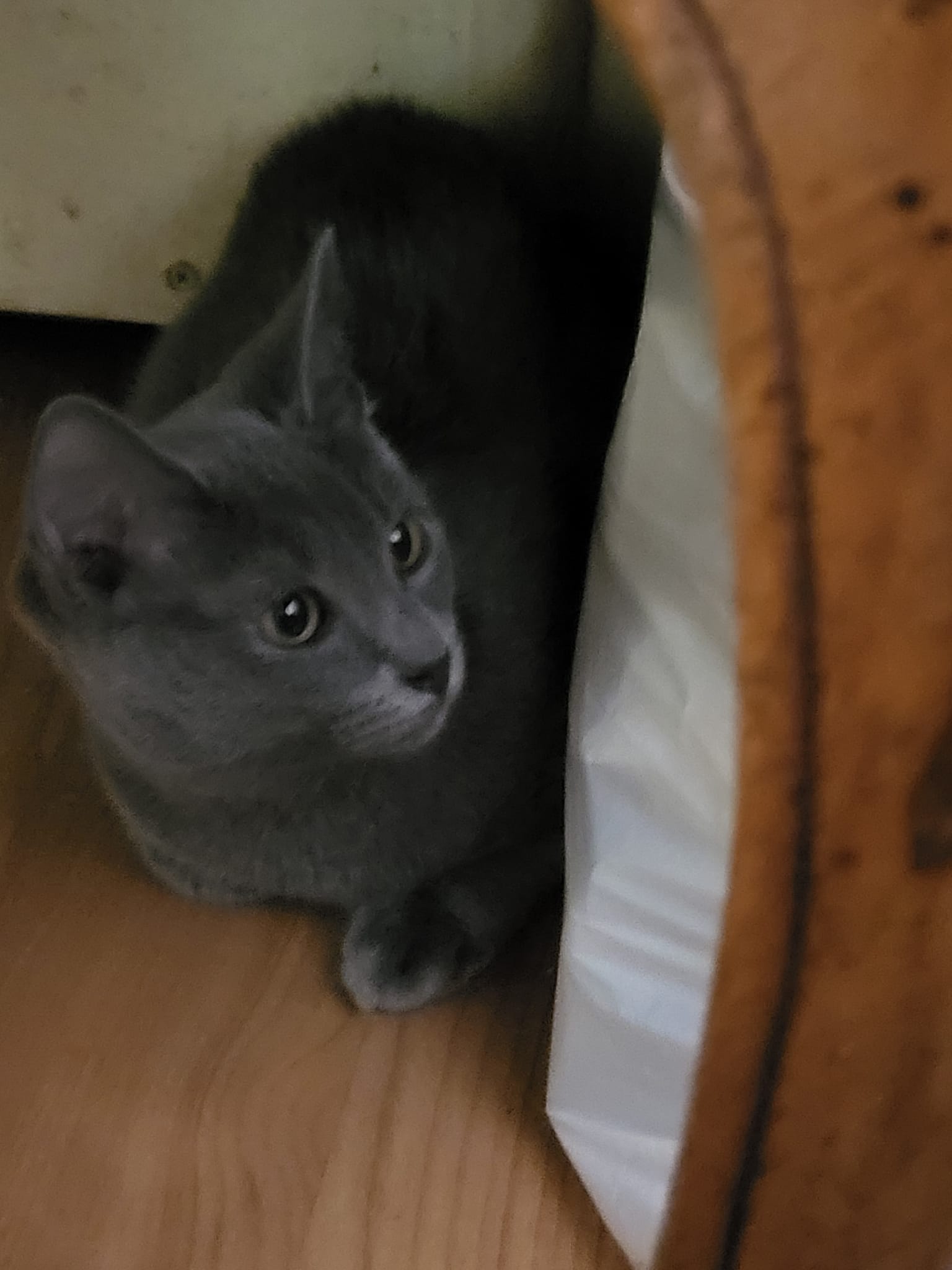
I haven’t written much since I’ve been busy with the journal, writing my teaching memoir, traveling to New York City for the first time, spending time with family, and welcoming a new fuzzy family member into our home, but I have much to write about, so I will be back soon with more musings and mutterings about education in the South.

Flint
photo by Katie Winkler

New edition of Teach. Write. out tomorrow

Since the fall of 2017, I have edited and published a literary journal designed specifically for composition teachers. Although I am open for submissions that follow the guidelines from anyone, anywhere, my emphasis has always been on writing that explores the art of teaching. I love to have the opportunity to build up teacher/writers like me, who have had limited time to write and market their own work because they are so busy helping their students learn how to write.

The 2023 fall~winter edition of Teach. Write. comes out tomorrow, continuing the tradition of showcasing the work of teachers and the art of teaching, along with other work that I hope simply inspires all to enjoy well-crafted and timely stories and poems. This edition, however, now that I have more time to work on improving the journal, has resulted in some changes:

  • Membership in the Community of Literary Magazines and Presses. See the journal’s page at clmp.org
  • New website–teachwritejournal.com–where you will be able to access the new edition tomorrow, October 1.
  • Largest edition ever, representing almost 50 regular and new contributors from around the country and the world.
  • More editing time has, I hope, resulted in a more polished and professional edition.
Photo by Susanne Jutzeler, suju-foto on Pexels.com

When I first started Teach. Write., the journal was primarily an escape from the pressures of teaching composition and literature at a small community college in an increasingly contentious bureaucratic environment where I was experiencing the slow erosion of the autonomy I had at first enjoyed. I’m not escaping anymore. I’m fighting.

Teach. Write. is my Sting.

It’s only a rusty dagger gripped by a little old warrior, but she is inspired and empowered by those, represented in her journal, who love words and stories, rhyme and rhythm, form and style. She is dedicated to those who care about sharing that love with others, especially students, in a world that is strangely hostile to their profession at times but one that needs those who practice the art of teaching more than ever.

Teaching, Writing, and Relationships

Photo by Mikhail Nilov on Pexels.com

I am writing a book about teaching. It’s non-fiction, but other than that, I’m not sure how to describe it. It’s part memoir and part teaching methods to begin with. In many ways, it is also like my blog–musings and mutterings about my life’s work.

I don’t mind telling you, I’m struggling. It’s not writer’s block. Oh, no. I’m not sure I believe in writer’s block anymore anyway. The only way I’ve ever written anything of any length is to write six days out of seven. The biggest excuse for not turning in work I heard over my years of teaching was some form of “I’ve got writer’s block, Mrs. Winkler.” It’s hogwash, I would tell them. Well, no, I wouldn’t say it that way. After 40 years of teaching, one learns how to spin. I would dress it up with the appropriate metaphor, analogy, etc., but in the end my student was more than likely procrastinating and not even trying to write.

Photo by Yan Krukau on Pexels.com

You can’t write anything, if you don’t write something. Hmmm, that’s pretty good. I wonder if I ever used that one in class.

So, again, no. It’s not writer’s block. The first day of my official retirement, August 1, I set a daily average quota for the book in order to finish a rough, rough draft by the end of the year. I’m well ahead of schedule in that regard; I haven’t had trouble writing pages and pages and pages. Because I’m not plotting (I’m a terrible plotter), the words, stories, feelings, and ragings about my life in teaching just pour out.

Photo by Mikhail Nilov on Pexels.com

Frankly, my struggle is having a point. But, no, it’s not that either–I have so many points, so many things I want to say about teaching, that the book is just a hodge podge of memories interspersed with my concerns (aka fears) about what is happening in education, especially higher education in America, especially here in North Carolina.

Sometimes, I think I’m writing two books, but if I want to keep the memoir part intact, the part that reflects who I was as a teacher, how I changed, and why teaching was more than a career, if I want to do that, then maybe this mishmash of a book is exactly what I want to write.

However, I still feel that the book needs to have a central theme, something on which to hang all the dangly pieces, and entice the reader to hear what I have to say. Also, even though it faces the truth about the educational perils of our time, I want the book to be, overall, positive in its outlook as it promotes the intrinsic value of education.

I think I’ve got it now–at least the germ of an idea.

Relationships.

Photo by Kampus Production on Pexels.com

Education begins and ends with relationships–between student and teacher, yes, but it doesn’t end there–also between student and family, family and teacher, teacher and other teachers, teachers and administrators, administrators and staff, staff and students, staff and teachers, and civic leaders, business owners, the community at large, and, okay, you get it. Success in education depends on the health of all these relationships. I think my book already reflects that, but I want to strengthen that theme in revision.

One of the spires of Lincoln’s Inn, London, October 2015 photo by Katie Winkler

So far, my book not only reflects some of these personal relationships, but also the relationships between events of my life and teaching. A large chapter in the book, for example, is showing how my travels in America and Europe reflected themselves in my teaching. I also want to talk about the relationship between socio/cultural shifts and the classroom, how I had to adapt my lessons to new trends (after I got over being furious about them).

I’m not sure. I’m still struggling, but I’m not blocked. I’m not discouraged. I am practicing what I preached all of those years: “Just get started. Vomit.” Yes, I said vomit–always got their attention. “Vomit it all out on the paper and then start cleaning up through revision and editing.” That’s where the heart of good writing lies.

More about that later.

Other than writing the book, I have also been putting together the fall/winter 2023 edition of Teach. Write.: A Writing Teachers’ Literary Journal, which will publish Oct. 1. As I mentioned in my last post, the journal has its own website now! The spring/summer edition is there as well as submission guidelines and some other information. Why not take a look? Just go to teachwritejournal.com.

Retiring?

Mrs. Winkler photo by Scott Treadway at Treadshots.com

So, it’s true. Retirement after almost 40 years of teaching English composition is, number 1, freaking awesome! Not having the constant class planning and paper grading has been true freedom for me. I guess I didn’t realize what a huge chunk of my life was wrapped up in doing those two things. Even in the summer when I wasn’t teaching, I was still spending on average a couple of hours each day tweaking old assignments, writing new ones, and updating online material (necessary but oh so tedious), among other college-related things I would just as soon forget.

The second true thing is that I have planned way too much for the first few months. So many people told me that I would be busier than ever when I retired, but I didn’t believe it could be true.

It is.

Here are a few of things I’m working on:

  • A teaching memoir–this is highest on my list because my 87-year-old mother suggested it, and I love the idea. I am ahead of schedule, even though I’m not writing at least six days a week as I promised myself I would. That said, when I do write, the words just flow out, and I’m averaging over my quota per day.
  • Writing blogposts more often. My goal is to write a post, on average, once a week. I am quickly learning that I won’t be able to write on the same day every week. My schedule is too unpredictable, but if I write four posts a month, I’m going to feel pretty darn good about myself.
  • Applying for membership in the Community of Literary Magazines and Presses (CLMP). I told myself that once I retire, I want to improve the quality of my literary magazine Teach. Write.: A Writing Teachers’ Literary Journal. Then, I discovered CLMP, and I knew becoming a part of this organization would help me reach my goal.
  • The first step in being approved for membership in CLMP is developing an independent website for Teach. Write. I have already launched the new site, but there isn’t much content yet, so I am taking some time several days a week to work on that project.
  • Launching the next edition of Teach. Write. on October 1. Still on schedule to launch the new edition on the new site!!
  • Writing and submitting new short fiction. I’ve written and submitted one new story for a contest already and submitted one other story that I love but still hasn’t found a home. I think it is important to keep submitting my shorter works while I’m working on this long non-fiction project.
  • Thinking about my next play project–just thinking about it. I have two plays in mind–one is an adaptation and the other is original. At this point, I’m just re-reading the novel I’m thinking of adapting and doing some minor research on the original play idea.

These are only my writing and teaching-related activities. Despite all I’m doing as a writer/teacher, I don’t feel as stressed because I know I don’t have to do them. Also, because those two huge responsibilities–planning classes and grading papers–are no longer looming, I have time to do all the things I’ve been able to barely do and do them better. At least, I’m trying to do them better.

Yes, retirement suits Mrs. Winkler very well.

Photo by Nathan Martins on Pexels.com