Upon Re-Reading Animal Farm

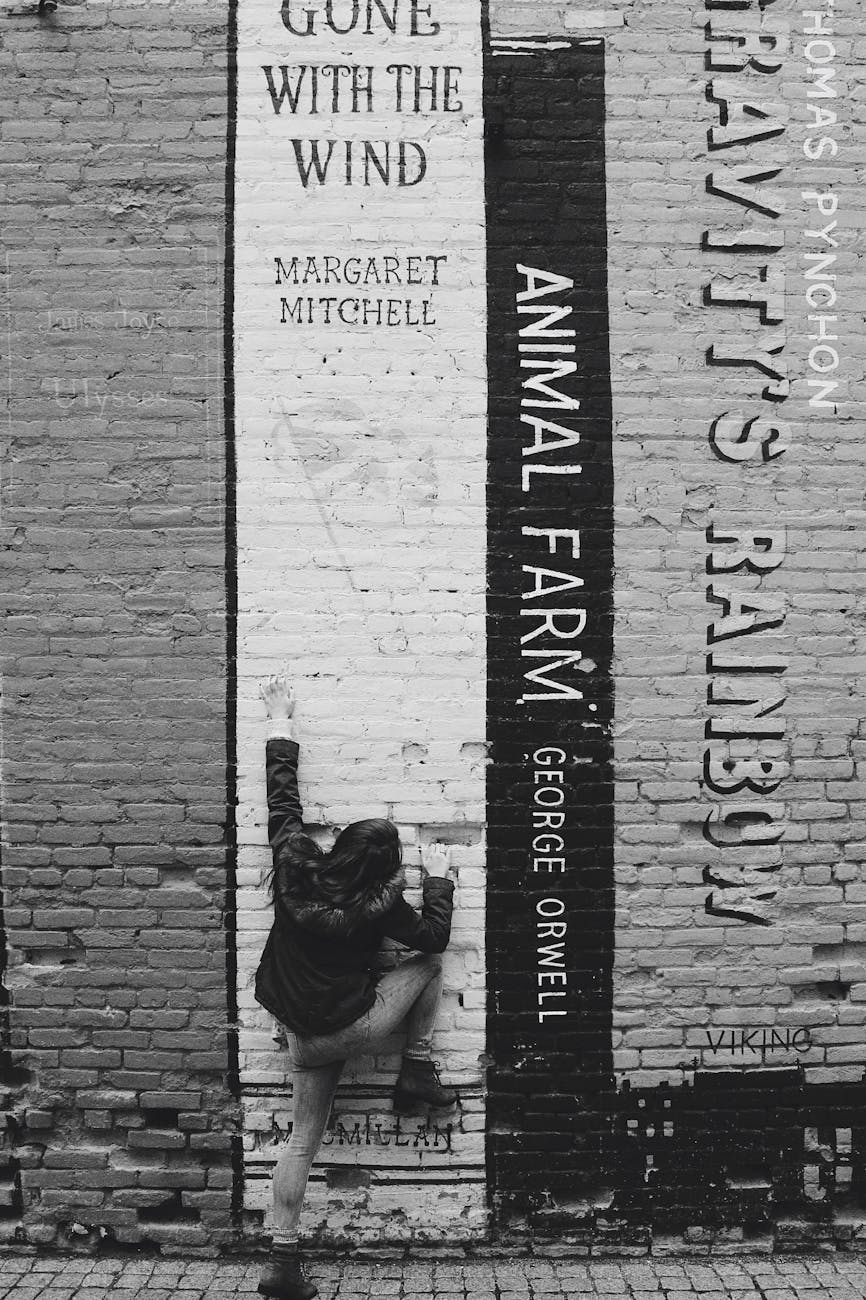
Photo by Anna Taylor on Pexels.com

I recently re-read Animal Farm, by George Orwell and it’s just as relevant and powerful as when I first encountered it in middle school. Orwell’s tale of rebellion and betrayal stirred something in me even then. I didn’t yet know the term “satire,” but I could feel its force. I knew Orwell wasn’t just telling a story about animals—he was warning us about power, manipulation, and the fragility of truth. That moment was a leap forward in my educational growth. It was the first time I understood that stories could say one thing on the surface and something entirely different underneath.

That breakthrough didn’t happen in isolation. Just before reading Animal Farm, I had participated in the Junior Great Books® program at my middle school. I remember sitting in a circle with a few kids from different classes, discussing a boxed set of stories and folk tales from around the world. Our teacher guided us with open-ended questions, but the magic came from the conversations themselves. That program didn’t just introduce me to literature—it taught me how to think about it.

Girl in library behind a circle of books
Photo by Ying Ge on Unsplash

The Great Books Foundation was founded in 1947 by Robert Maynard Hutchins and Mortimer Adler, visionaries who believed that meaningful conversation around classic texts should be accessible to everyone—not just scholars. In 1960, the Foundation launched the Junior Great Books program that still brings that same spirit of inquiry to younger readers like it did me all those years ago.

I still remember the African folk tales that spoke to me—stories rich with wisdom, humor, and moral complexity. They opened my eyes to cultures beyond my own and taught me that stories could carry truths across time and geography. That foundation prepared me to meet Orwell’s satire with curiosity and insight. The Junior Great Books program had already primed me to ask questions, to listen to others’ interpretations, and to trust my own instincts. Reading Animal Farm so soon after that gave me the tools to recognize manipulation, to question authority, and to appreciate the power of language—not just in literature, but in life.

Photo by Blue Arauz on Pexels.com

Today, I see Animal Farm challenged in some circles, dismissed as “pro-communist” by those who never learned to read it as satire. That misunderstanding underscores why programs like Junior Great Books matter. They don’t just teach kids to read—they teach them to think. To question. To recognize nuance. And in a world where critical thinking is more vital than ever, I’m deeply grateful for the education I had.

I still have that boxed set of Junior Great Books. It’s a little worn, but it reminds me of the moment I first learned to read between the lines—and how that skill has shaped everything I’ve done since. Animal Farm was the spark, but the Great Books program gave me the lens. And for that, I’ll always be thankful.

Curious about the legacy of Junior Great Books and the Shared Inquiry method that shaped generations of readers? Learn more about the Great Books Foundation’s mission and history here.

A Classic Education Is Utilitarian

Fun Medical MGD© (2)

At our college’s tutoring center, a colleague and I struggled this past week to help a nursing student understand how to diagram sentences using traditional, Latin-based sentence diagramming methods. The student, a non-traditional-aged student coming back to work on a third degree, was frustrated on multiple levels because not only was she having difficulty with the concepts, especially having been away from anything close to grammar for several decades, she was also having difficulty understanding why she was being asked to diagram sentences in the first place as she sees no practical purpose for it. She’s not alone.

Even in my own composition classes, I have abandoned formal traditional diagramming of sentences in favor of a more informal approach, reminiscent of a structural linguistic method of diagramming, breaking a sentence up based on the functions of the words, phrases, and clauses with a minimum of grammatical terminology.

It is not, however, that I find traditional sentence diagramming a waste of time, and I support its use in the classroom for two main reasons:

  • Diagramming helps students understand the functions of words separate from the appearance of the word, such as verbals, which look like verbs but do not function as verbs.
  • Diagramming helps develop critical thinking skills, which is one of the primary functions of higher education

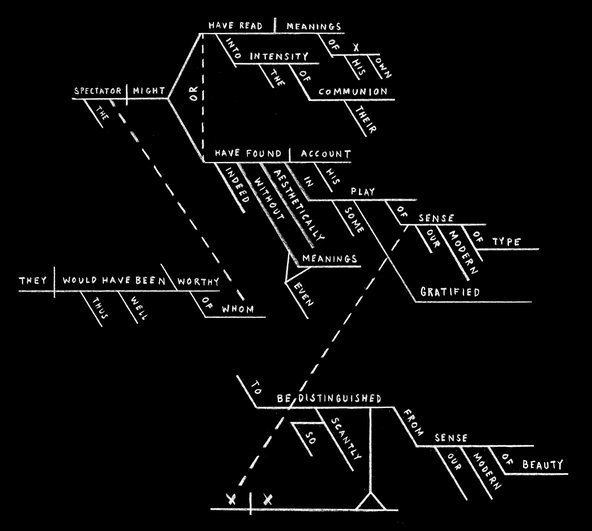
Kitty Burns Florey, author of Sister Bernadette’s Barking Dog: The Quirky History and Lost Art of Diagramming Sentences, eloquently explains the value of diagramming in her New York Times’ article from 2012, “Taming Sentences,” She writes that diagramming helps us think more clearly about what we are writing, and even if it doesn’t do a thing for our writing, it is at the very least, a puzzle that is good exercise for the brain, honing our critical thinking skills.

As a fascinating example, Florey diagrams a compound/complex sentence from Henry James’s The Golden Bowl:

draft-diagram1-tmagArticle-v2

Of course, I find all of this exciting and interesting, not so our struggling nursing student, who sees diagramming as wasted effort because she sees no application for it. I tried to explain that it was like doing drills for an athlete–the athlete may not do the drill during a race or game or match but, by exercising, will be developing the muscles he or she needs to be competitive. My colleague tried to equate the student’s love of reading to the exercise of diagramming–the student does not NEED to read. What she reads has no immediate application to nursing, but reading exercises the brain, which will help her be a better writer, and a better nurse.

Our student didn’t buy it. But because she is a good student and wants to do well, she listened to our explanations and, I believe, we did help her understand better. She even said that she wanted to come back to the tutoring center to get more help on another day.

We’ll be there.

***

Here are some more articles I hope to share with our student that discuss how important it is for nurses to critically think and write well: