In North Carolina, as in many other states, those who teach in kindergarten through twelfth grade are required to meet certain qualifications to teach in the public schools. Being a certified teacher means
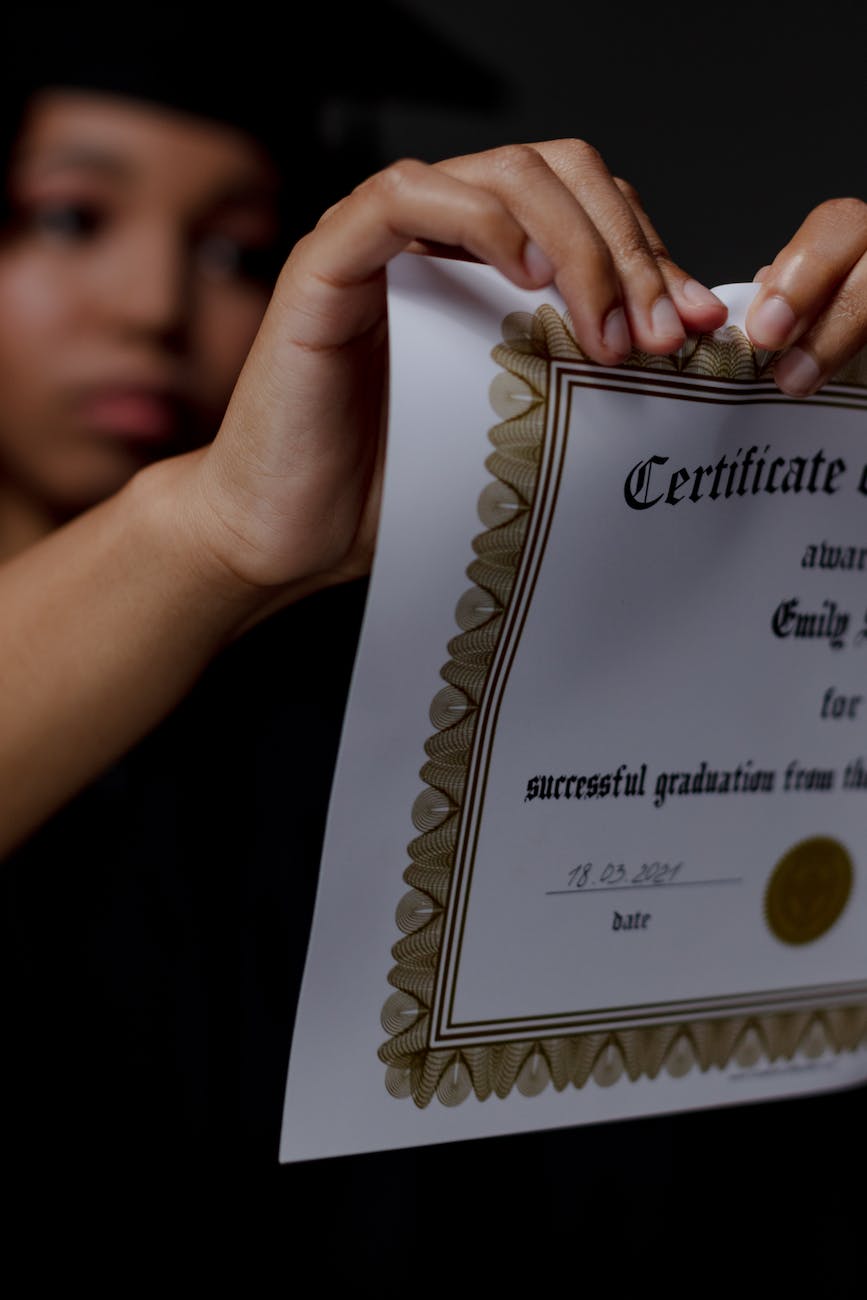
- Receiving a bachelor’s degree, including certain courses in education, depending on the institution. Appalachian State University, for example, requires 44 credit hours of general education for its English Education (secondary) degree, plus 24 hours of education courses, including
- Completing, in addition, three credit hours of a foreign language, and of course, to teach English a student teacher must have a significant number of courses in the subject area, 43 credit hours, including six hours of British literature, six hours of American literature, six hours of world literature, three hours of Shakespeare, three hours of literary criticism, genre studies, or creative writing, nineteen hours in language, writing, and pedagogy, as well as two cognate courses, Psychology Applied to Teaching and Reading Instruction in the Senior High School, for a total of 120 credit hours. All of these courses require a C or better to count towards the degree. The average cost of a degree at App State is close to $48,000.
- Passing two national standardized tests including the Praxis Core Academic Skills Test (required to enter most education programs) and the Praxis II test for every subject area to be certified. These tests are administered by the very large, supposedly non-profit Educational Testing Service (ETS), which has been widely criticized for the monopoly it holds on testing for teachers and students and for its continued non-profit status despite its huge profit margin (OlixAlex) Potential teachers pay out of pocket $90 to $210 for each exam.
- Maintaining Licensure is also required. Every five years North Carolina English teachers must have completed either eight Continuing Education Units (CEUs) or 80 clock hours of professional development to maintain their certification. Most teachers pay for CEUs out of pocket.
Question for the North Carolina Public School System:
Why does North Carolina require certification for K-12 teachers when there are two major groups of non-certified teachers, not counting private school teachers, who can teach freely in North Carolina but are not required to have the same qualifications as K-12 public school teachers?
The first group I will discuss is parents. Here are the requirements to teach children between seven and sixteen in a North Carolina homeschool, according to the North Carolina Department of Non-Public Education Homeschool Handbook:
- A high school diploma or its equivalency, no minimum GPA is mentioned.
- A notice of intent to operate a homeschool
- Operation under either Part 1 or Part 2 of Article 39 of the G.S. 115C as a religious or
non-religious school - Operation of the school on a regular schedule for at least nine calendar months, excluding
reasonable holidays and vacations. Who checks this? - School disease immunization and annual attendance records for each student, although the parent is the one maintaining these records and there’s little oversight
- Administration of a nationally standardized achievement test administered annually to each student. Parents get to choose which test from a recommended list, and not all of these exams require a proctor. There is no minimum score required.
- Notification to DNPE when the school is no longer in operation
That’s it, folks! Oh, the state encourages those who homeschool to talk to professional educators from time to time, but this, of course, is voluntary, because, I mean, what do those certified teachers know?
The other group that is not required to achieve and maintain certification is community college instructors teaching dual-enrolled students. I was a relatively rare community college instructor who had taught at the high school level and been certified to teach grades 6-12. At one time or another I was certified to teach English and German in Alabama, Georgia, Ohio, Colorado, and North Carolina. Although instructors must have a minimum of a master’s degree in their subject area, few of them have had education courses or have studied adolescent psychology and classroom management because most of them never dreamed, not older faculty anyway, that they would be forced to teach 14-, 15-, and 16-year-old high school students.
And yet, more and more, not only are community college faculty expected to teach high school students within their classes on campus, but also online classes, and even in the high school itself. That’s right. More and more full-time college instructors are expected to leave the college campus and go to the high school to teach high school students exclusively, regardless of their level of training, experience, and comfort working with large groups of young teenagers in a high school environment. Believe me, teenagers in groups can be intimidating and even cruel. Not everyone can handle it. I couldn’t.
That’s one of the reasons I left teaching high school and got a job at a community college where I was happy until I was forced to teach large groups of young teenagers again. I retired early for a lot of reasons: teaching more and more high school students who were not prepared academically or emotionally for college-level work was one of the big ones. Don’t even get me started on the pressure from parents and administrators to lower academic standards for high school students.

One-on-one or in groups of two or three, I did just fine, they did just fine, especially if the parents allowed the students to navigate the course as a college student should, without interfering. I love teaching teenagers under those circumstances. However, I know my strengths, and teaching groups of teenagers is not one of them. Dealing with parents, no matter how well-intentioned, is also not one of my fortes. However, it didn’t matter how many times I talked to the administration about how faculty were more and more frustrated with teaching high schoolers in large numbers and having to go to the high school to teach. Because the college is making money, because high schools and parents are saving money, this dubious educational process continues. In the end, it’s the high school students who lose sometimes two years of life experience they could have had learning to be independent thinkers if society would only think about the students first and find better ways to lower the costs of higher education.
Do you see what the problem is? It’s the incongruity. The state puts so much emphasis on testing and licensure, so much seeming concern about the qualifications it has for teacher education. “We only want the best, fully vetted teachers for our kids,” they opine. Except when it’s politically or socially inconvenient for the powers that be to have standards and fully vet the teachers. Or fully pay them.
Side Note: Of course, certification isn’t the answer either. Little supervision happens with any licensure program because it’s mostly bureaucratic hoops to jump through to provide data so politicians, school administrators, and the public can pretend they care about the quality of instruction. In reality, very few people truly care about the quality of education students receive, says the cynical retired community college instructor.

I can see the political gears turning: “Oh, I know, more people are mad at the schools and teachers than ever. They think their kids are being indoctrinated, so let’s take money away from the public schools that require teacher certification and give it to parents so they can start homeschools that have few standards, where the “teacher” only has to have a high school diploma or equivalent and the students have no minimum score to reach on a yearly national exam that may or may not have an outside proctor to administer it.”
And then there are the dual enrollment programs, Career and College Promise in North Carolina, Again, because it’s convenient and saves money, got to save the money even if it is bad for education, let’s just throw our oh so important teacher education courses out the window and toss our unprepared college instructors into the high school classroom, those who never planned to teach high school and often resent having to teach an age group that they may not have the aptitude, or attitude, to teach.
Oh, we’re so worried about those big bad liberal high school teachers out there that we want to pull our kids out of the public school and homeschool them, but by golly, if I’m gonna save some bucks on the kid’s college education, then let the indoctrination by those free-wheelin’, gender pronoun talkin’ professors begin.

Or not.
“If I don’t want my 15-year-old kid, who is going to bypass her first two years of real college, reading To Kill a Mockingbird, then I’ll just march down to that college and complain to the president.” Or “I don’t want my child feeling bad about slavery, so I’m just going to ask the professor not to make my baby read that slave narrative. The teacher just has to give him an alternate assignment. I mean, we just skipped all the history and literature that made us feel icky when we homeschooled him, and he still graduated.”
Of course, he did. Aren’t you so proud? Let’s just see how everything pans out when your baby wants to become a teacher (you should talk him out of it) and has to pay for and take the Praxis I exam and pass with a minimum score in order to get into the education program. Of course, I hear there are lots of Praxis prep courses he can take, only $399–a steal.


 Hey, Mrs. Winkler!