Where to Begin?

With Mom in front of the art museum on the campus of Auburn University, our alma mater, circa 2014

My mom died. How can I begin a review of my year any other way? At 89, she held her own through winter, spring, and summer. Then, in late August, she broke her leg, and the end began. The surgery went well, and she was sent to rehab, so I felt secure enough to attend the Appalachian Writers Conference in Berea, Kentucky. I was eager to meet with the editor of my teaching memoir—the book my mother had inspired.

Draper Hall on the campus of Berea College–photo by Katie Winkler

The conference was wonderful until the last day, when I was called to the front desk. My mind leapt to my mother. She was fine—but my new car wasn’t. A storm had blown through, and branches had crashed onto it. It was still drivable, so I left early, hoping to get it repaired before our long-planned trip to the south of France.
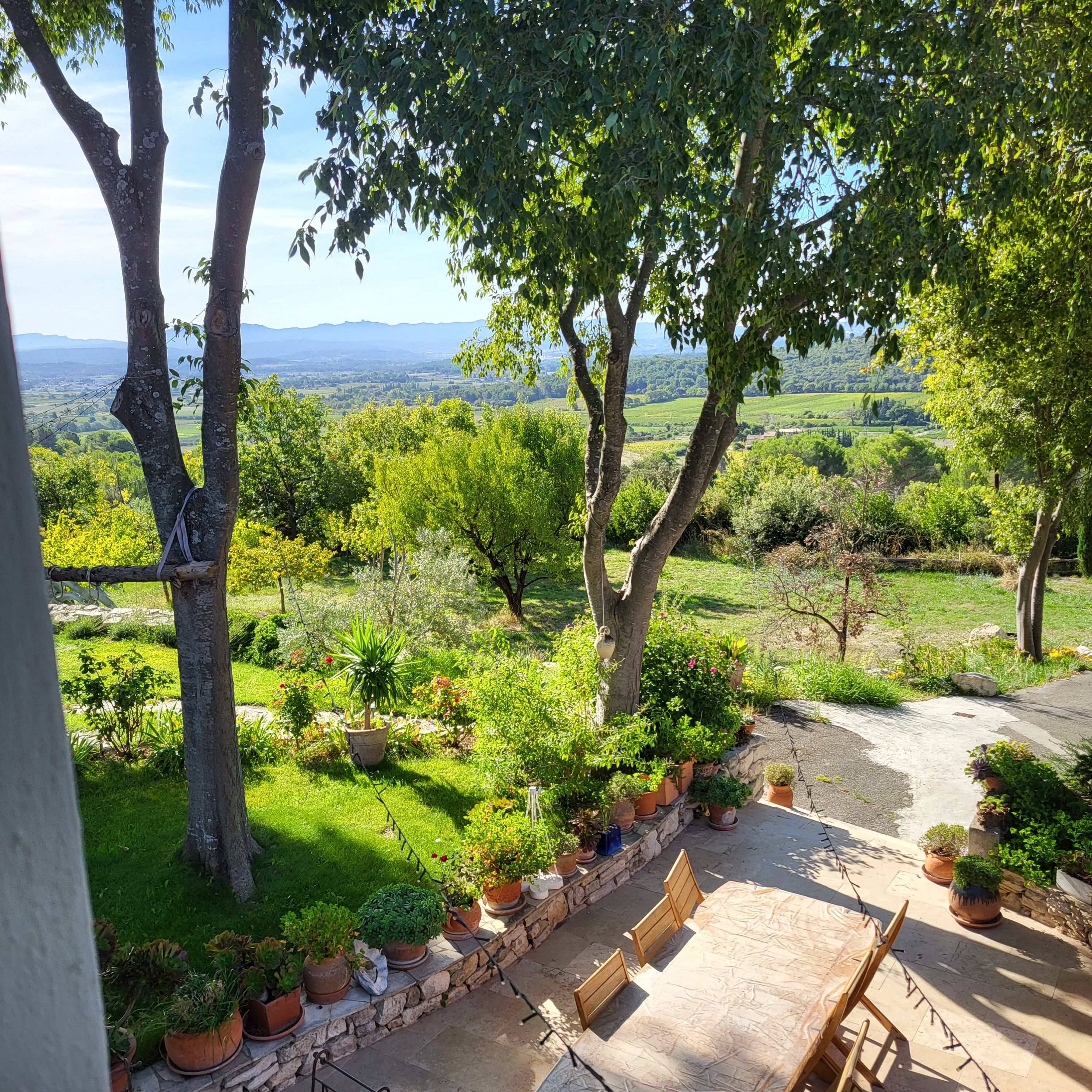
The view from our bedroom window in Provence, photo by Katie Winkler

Despite everything, my husband, daughter, and I went ahead with the trip, meeting my brother and his family at there home in Germany for a few days before traveling on to Provence to a villa with views of Cézanne’s mountains. We swam, ate outside, hiked, and celebrated our daughter’s thirty-first birthday. But worry about Mom followed us. Midway through the trip, my brother—the primary caregiver—called to say she’d been moved from rehab back to the hospital with an upper GI bleed. For days she bounced between ICU and a regular room until the bleed was finally stopped. She returned to rehab, and things seemed to settle.

When we got home, my brother became ill; it was clear I was needed. My husband and I drove to Alabama—my car’s smashed roof and all. I spent my days at the rehab center while he went back home to arrange repairs. At the same time, I continued to edit my memoir, desperately searching for a nursing facility for Mom. She had made so little progress, and because she’d been in and out of the hospital, she still hadn’t seen her surgeon. Yet the insurance company was pressuring rehab to discharge her. I researched, wrote emails, made calls, filed appeals—leaning on every skill I’d honed as a teacher. I didn’t think I could do it. Not alone.

Meanwhile, Mom wasn’t improving. When she finally saw the surgeon, she was cleared to put weight on her leg, but back at rehab, little effort was made to help her. She was uncomfortable, bored, and deeply unhappy. I felt guilty for keeping her there through the appeals, but we had no other options.

Eventually, she came home.

I won’t describe that long week and a day in detail. It was the hardest time of my life, but I have no regrets. Caring for my mother as I once cared for my own child brought us closer than we had been in years. Thanks to my brothers, my husband, my daughter and her boyfriend, as well as two wonderful caretakers, we made it through.

Mom was lucid until the end, and we had one last extraordinary conversation. She woke, looked at me, and said, “Everyone would be better off if I was gone.” I told her how sorry I was that she had to endure so much, but that her life still had meaning—real meaning. I told her how much I had grown by going through this with her, how close I felt to her and to everyone in my life. I reminded her that she had been able to say goodbye to dear friends, that she had one more week at home, as hard as it was. I told her I was a better person because of what we had been through together.

Despite the pain, confusion, sleeplessness, and fear, we found ways to laugh, to pray, to watch our mystery shows, to savor warm cream of wheat and ice-cold Italian ice, to forgive and be forgiven, to love each other a little while longer.

But her knee pain worsened, the C-diff infection persisted, and by Saturday—when I had arranged 24/7 care so I could go home for a week—she was back in the hospital. She was stabilized, and there was no indication of immediate danger. The plan was for her to return home to the caregivers I trusted. My husband and I drove home late Saturday. Sunday I went to church. Monday morning I called her nurse. No significant changes.

Monday night, the doctor called. The nurse had gone in to check on her, found her unresponsive, tried to revive her. She was gone. It was the end of a life well-lived. The end of pain and helplessness.

As this last day of 2025 comes to a close, I find myself holding both the ache of this year and the unexpected grace woven through it. I lost my mother, yet in her final days we found a depth of love and understanding that will stay with me always. Her life shaped mine, and her last week changed me in ways I’m still discovering. As the new year begins, I don’t pretend to know what healing will look like, but I do know this: the legacy she left—her strength, her curiosity, her stubborn hope—will walk with me into whatever comes next.

And that is where I will begin again.

I’m still here!

Me receiving an Appy Inkwell Award for Best Memoir at the Appalachian Writer's Conference, 2024
Me receiving an Appy Inkwell Award for Best Memoir at the Appalachian Writer’s Conference, 2024

About this time last year, I found out that the opening pages of my teaching memoir, Lessons: A Teaching Life, won a contest sponsored by Martin Sisters Publishing, a small press in Barbourville, Kentucky. With the prize came eventual publication. My long year of revising, editing, and polishing began at the beginning of this year. At the end of July, I reached a milestone, finishing my personal revision and editing stage! Now, I’m working with my wonderful editor, Ryan Wineberg, to edit the book and ready it for the publisher. If all goes well, I hope to have my first book published in the first quarter of next year.

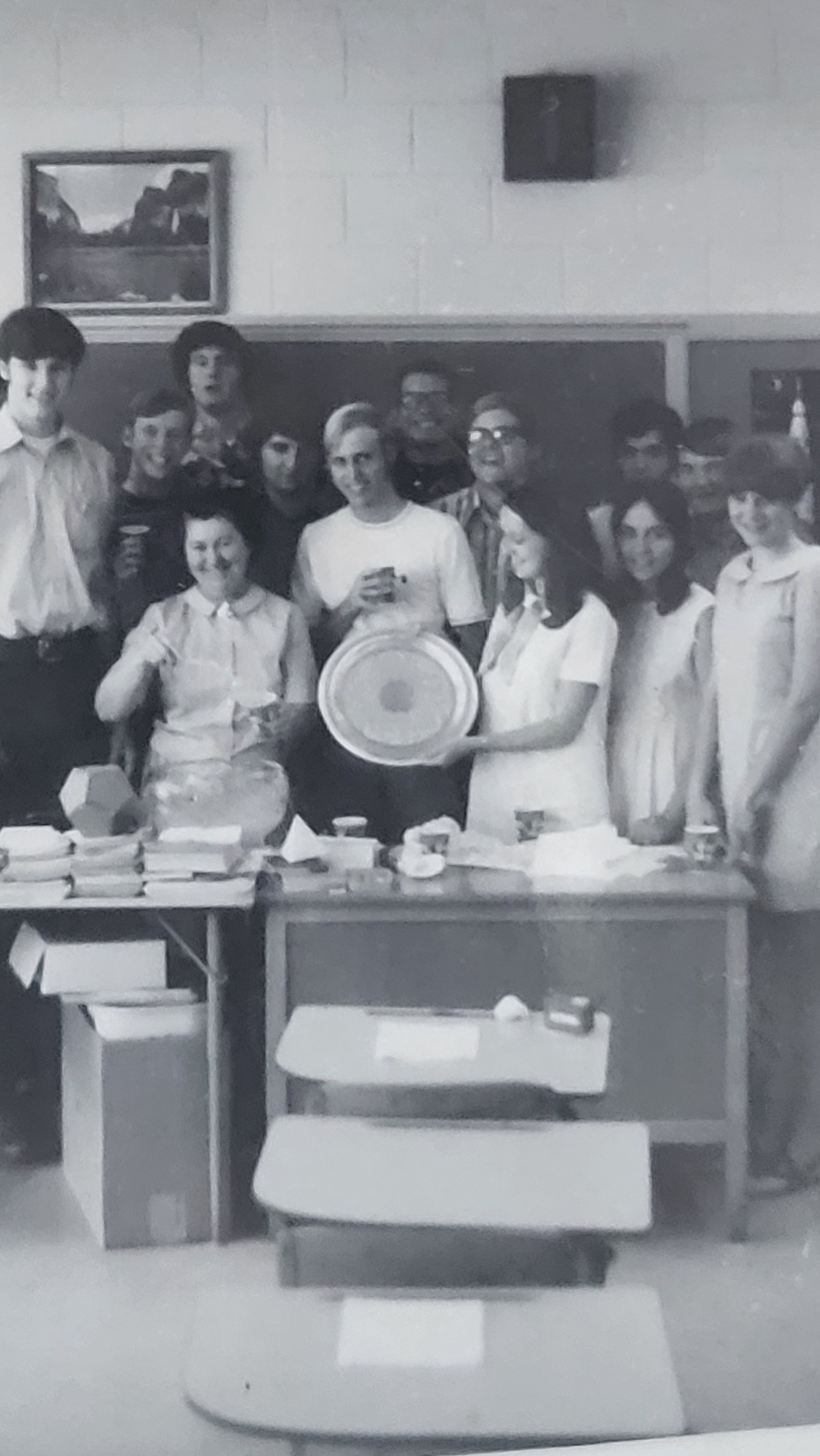
My grandfather when principal of Ridge Grove School (far right, back row)

One of the first things Ryan asked me to do was think about adding pictures, which for some reason, I had never thought about doing before. It’s been an interesting process and trip into my teaching roots, especially the pictures I have found of my own and my mother’s family, many who were educators. My grandfather, Gordon Dabbs, died before I was born, but through my mother I have learned what a great principal and physics teacher he was. My grandmother, Katherine, and her sister, Jane Leath, were also teachers as was my mother’s brother Eldridge Dabbs. My father was a principal, teacher, and coach. My mother taught English but spent the bulk of her career as a high school librarian, now retired for many years. My mother’s first cousin Judson Jones became a principal, too, and two of his daughters, Leah and Lori work in education; Lori has her doctorate like her daddy.

My grandmother with her first class at Lanett High School, Lanett, Alabama (front row, far right)
Great Aunt Jane at her retirement celebration (front row, far left)

It’s been great to look back and see pictures that represent this rich legacy that helped shape the value I put on education. For me and my family, it’s been priceless!

I will sure keep you all updated about the book’s progress. In the meantime, I’ll be traveling to the Appalachian Writers’ Conference again in September. Excited to go back and keep learning–as my dad always said, “I’m not going to retire. I’m going to refire!”

Teaching Again

All they did was ask me to do a 15-minute devotional at my church’s drama camp, 3rd-8th graders and young high school and college-aged counselors, but I felt like I was back in the classroom again. The camp leader said I should talk about perseverance and use our verse for the week–James 1: 2-4.

2 Consider it pure joy, my brothers and sisters,[ a] whenever you face trials of many kinds, 3 because you know that the testing of your faith produces perseverance. 4 Let perseverance finish its work so that you may be mature and complete, not lacking anything.

I was ridiculously excited to put together this little lesson. Just like in the old days, I tried to consider my audience–a wide range of ages, more girls than boys, artsy theater kids, not easy to engage–a challenge. Yes!

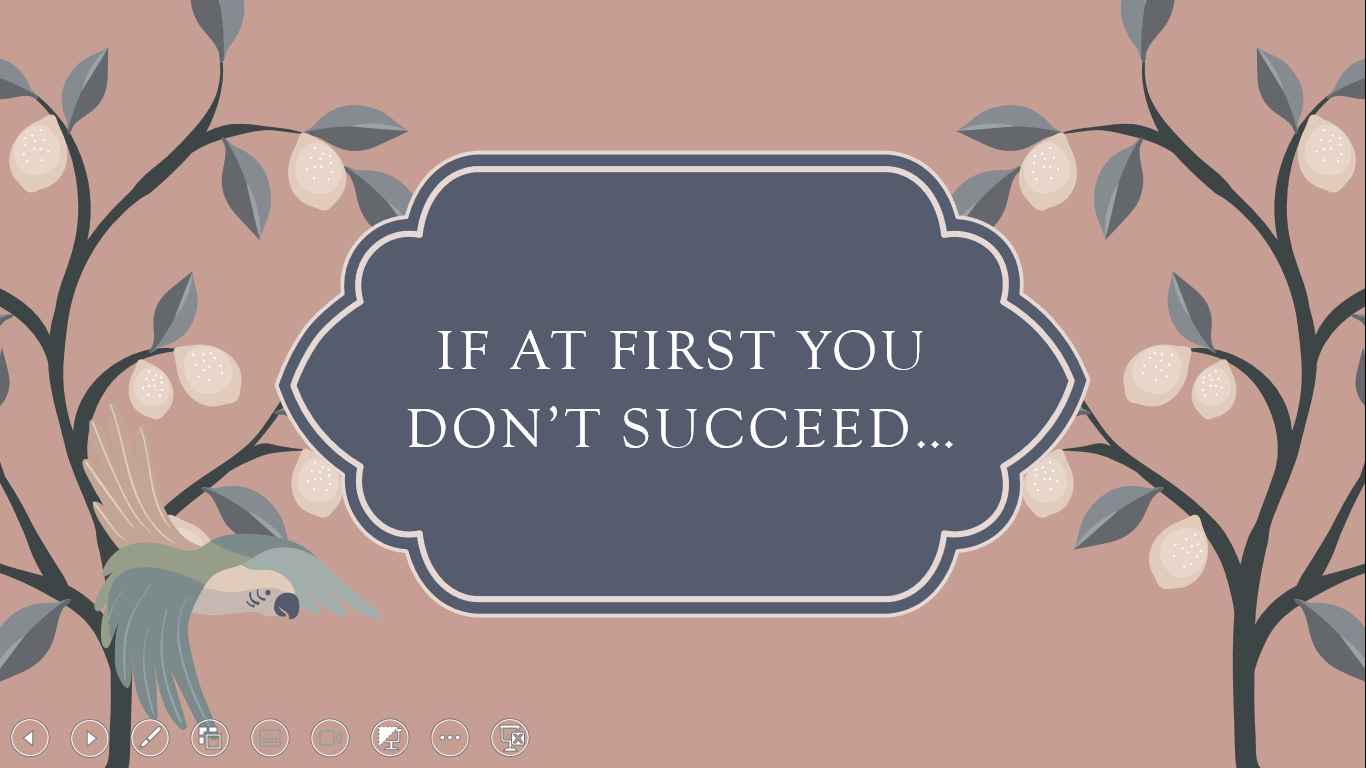
The first think I did was choose a PowerPoint theme with some interesting graphics and give my talk a title. I chose a presentation template called Pheasant and called it “If at first you don’t succeed.” I know what you’re thinking, PowerPoint is so passe, how can that engage? What a corny title, how will that grab kids’ attention? I didn’t know how. I just went with my gut–just like in the old days.

First thing good teachers do is review, right? So, I reviewed the verse, emphasizing how perseverance helps us grow. Then, as an example, I did research on some young actors who went through adversity before they made their breakthroughs and settled on Millie Bobby Brown, who started trying to get commercials and roles at a very young age. She and her family were about to give up when she got the role of Eleven in the hit Netflix series Stranger Things, for which she won a Screen Actors Guild Award. My thinking was that trying to get roles and failing would resonate with kids who the day before had auditioned for the little plays we would do at the end of the week. Not all of them received the roles they had set their hearts own. My strategy worked. This rowdy bunch of kids were quiet, listening, engaged.

Next came the question for the audience: Have you ever failed at something? Raise your hand. Many of them raised their hands? Give me one word to describe how you felt? The answers came–sad, depressed, bad, heart-broken, mad. Just as in my classrooms before, I wanted my talk to be interactive. I continued to ask questions of the group as we proceeded.

The camp leader had asked me to share a little about my background as a playwright and writer, so in this context, I decided to share about my failures–how in 40 years of working to be published I had about 30 short stories published and four plays produced at a community college. If that sounds like a lot, I said, it isn’t. After about ten years I quit counting my rejections. I had reached 200 by then and since then had had hundreds more.

By this time, I could have heard a pin drop. I had them! I told them that none of that mattered. That success as a writer, an actor, a musician, is in the doing. I told them that I express my heart through my writing and need to write. I can’t not write, I told them. The striving and the working to become better and better makes the tangible successes that much sweeter.

Now was time for the pièce de résistance

I showed a short video of when Heather Dorniden, now Kampf, raced in the 600m, fell flat on her face, got up and came back to win the race. This part of the talk especially seemed to speak to the older girls; some of them were athletes, some had seen the clip before. But all the kids were mesmerized. You can see the race for yourself:

I had done some further research on Kampf and found an interview where she explained in more detail about the race and some of her experiences, good and bad, that happened in her running career after that incredible race. When I explained Heather’s background and the victories and hardships throughout her career, the point was made. The last slide read:

I don’t know if those drama campers will remember my talk, but I will never forget how this old, retired teacher felt that familiar fire as I looked into those young faces and could see hope and inspiration there. No, I don’t want to go back to grading endless comparison essays in overcrowded online classes or deal with all the bureaucratic and political crap I had to put up with over the years, but I sure do miss that feeling.

It was good to get it back once again, even if just for fifteen minutes.