Looking Glass Rock Writers Conference

IMG_1074

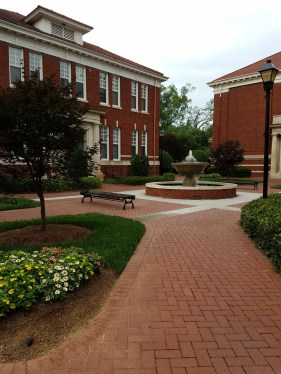
School’s out for summer, so I’m here, sitting on the front porch of the admin building that you see in the picture above on the campus of beautiful Brevard College in Brevard, North Carolina, to attend the Looking Glass Rock Writers Conference. I will be attending fiction workshops lead by  Jane Smiley, author of the Pulitzer Prize-winning novel A Thousand Acres.

Attending at least one writers conference each summer has become one of my goals, and LGRC falls at the perfect time, right at the beginning of my summer. My hope is that this conference will jump start my ambitious writing plans for my time off teaching. My wish is to finish the novel that I will be working on here at the conference AND complete my new play, an adaptation of Robert Browning’s “Ring and the Book.”

As if that isn’t enough, I will also be launching my literary publication, Teach. Write. In September. I am still accepting work for the venture, so if you are, or ever been a teacher of English composition, then you are eligible to submit to Teach. Write. 

Go to this link for more information: Teach. Write Submission Guidelines. Deadline for submissions is July 1. I would love to see your work.


IMG_1068

School’s Out for the Summer!

school's out

School’s out for summer! Back in June of 1972, I never would have believed that I would see Alice Cooper singing his anthem of teen rebellion with a bunch of muppets? But look!

https://youtu.be/vmewc2Uqon4

I’m just enough of a rebel to kind of like this, even as a teacher of English, although I don’t think anyone has ever exactly seen me as a typical English composition teacher. I know I haven’t.

And yet, I might be more ordinary than I like to think because I can’t stop writing and revising and editing. That’s why I’m here at the computer on my first official work day off for the summer — writing.

Yes, it is going to be a writing summer that’s for sure, and I’m starting it out with a bang! First of all, later this week I will attend the Looking Glass Rock Writers Conference at Brevard College. My instructor is Pulitzer Prize-winning novelist, Jane Smiley. I’m, to put it mildly, stoked.

lookingglassrockfrompilotzoom

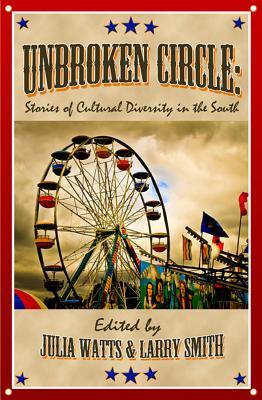
Secondly, one of my stories is officially on sale tomorrow in an anthology put out by Bottom Dog Press called Unbroken Circle: Stories of Cultural Diversity in the South. I am pleased that this story, “I Have Not Yet Returned,” about a young woman coming to grips with her father’s mental illness, has finally found a home.

unbrokencircle

The process from writing to publication, or being accepted to writing residences, has never been easy for me. I was doing some rough calculating in my head, and I have published about two dozen stories in print and online publications since I have started seriously seeking publication. Sounds like a lot until you consider that I sent my first work into the world in August of 1995–24 pieces in 22 years and hundreds, yes hundreds, of rejections in that time.

Listen to me. I sound like I’m bragging. Perhaps I am. Perhaps I should. 22 years of being mostly rejected, but not always, 22 years of not giving up on my dreams of being a writer, has made me a better one. Failure has made me a better teacher, too, even a better person. Not always failing has helped me to survive the process.

What I have learned about persistence has been invaluable to me as a writer and a person, and it is the attribute I most want to pass on to my writing students. Our society makes giving up so easy, why should anyone persist? I can tell them.

I have 24 reasons why.

Because I value so highly what I have learned through seeking publication, I am now accepting submissions for my own literary publication–Teach. Write.  It is specifically targeted to English composition instructors, any level, whether actively teaching or retired. Submissions are open now until July 1. The first issue will come out in September. Complete submission guidelines can be found at this link: Teach. Write.

I look forward to reading your work! Have a writing summer!!

***

If you would like to purchase a copy of Unbroken Circle: Stories of Cultural Diversity in the South, you can do so at Bottom Dog Press, Inc or at Amazon.com

English Lesson

(Lines Composed after a Bodaciously Bad Day)

by Katie Winkler

A comparative–

Better than before.

Better than this.

Better than that.

Better than some.

Use it in a sentence, please.

When will it be better?

I have been so much better.

Only you can make it better.

Only you

It’s an adjective, dear.

See, here–

Better times

Better rhymes

Better ways

Better days

Simply good is only an adjective.

And the Best is so superlative.

But

Better

Is

Comparative–

It is

Somewhere in Between.

******

I know my job gets me down sometimes, like today, but honestly, what do I have to complain about? I get to teach people how to be better writers, read, study and talk about great writers as well as write for my own pleasure–for a living. Is this a great country or what?

Then, there are days like today. But, the day is almost over, and I survived. I’m sitting with the ones I love the most, our little cat snoozing on the sofa. Plus, I just wrote a little poem. It’s nothing special, but I like it because I feel at peace now and better than I have all week. Better.

Hatcher Garden with Hannah 017

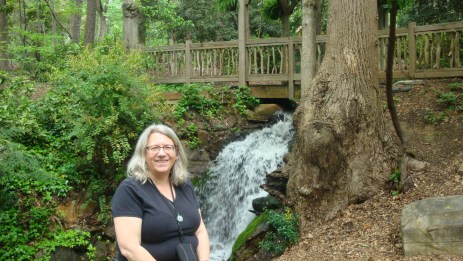
Me at Hatcher Gardens in Spartanburg, SC–April, 2015

******

Are you a writing teacher? Do you write when you have had a bad day, or is writing the last thing you want to do when you come home from work? I want to know! Please share with me your experiences as a writing teacher–the frustrations and the victories, the writing you do just for fun, to release the tensions of the day–whatever you have to share. If I think it’s right for my new online literary journal, Teach. Write. I will publish it in the Fall 2017 premiere.

Submissions are open now until July 1, so if you don’t have time to write during the school year, you’ll still have time to submit in the summer. Check out my submission guidelines, and I hope to hear from you soon!

Got to Get Ourselves Back to the Garden

Woodstock
by
Joni Mitchell
I came upon a child of God
He was walking along the road
And I asked him, where are you going
And this he told me
I’m going on down to Yasgur’s farm
I’m going to join in a rock ‘n’ roll band
I’m going to camp out on the land
I’m going to try an’ get my soul free
We are stardust
We are golden
And we’ve got to get ourselves
Back to the garden
Joni Mitchell did not play at Woodstock. She wasn’t even there. Reportedly, she penned this homage to one of the most important musical events of the 20th Century from a hotel room as she watched clips of the festival on TV. Nevertheless, she caught the spirit of that time, experienced it in a true way and wanted to return to it–knew that it would be  necessary to go back to the place where the spark became flame, built up and roared.
I was nine-years-old when Woodstock happened. My father was a major in Army Intelligence, serving in Vietnam; nevertheless, the country’s division over the war was not a part of my life then. My wonderful parents protected us as best they could from the reality of my father’s situation. Woodstock came and went while I was playing Kick-the-Can in my grandmother’s backyard, waiting for my little brother to be born and my daddy to come home.
I didn’t really start listening to Mitchell’s music much until college. I attended a rather conservative Christian university, and because I’ve always been a contrary soul, probably to get attention more than anything, I subscribed to Rolling Stone magazine and carried each issue  around with the cover always carefully arranged to show off the title. Oh, what a rebel.
joni_wild

Joni Mitchell painted a self-portrait for the cover of Wild Things Run Fast

I did, however, truly read Rolling Stone and often times bought albums that were reviewed favorably in the magazine. Joni Mitchell’s 1982 album Wild Things Run Fast was reviewed (Review), and I liked what I read, so I bought the album. It moved me, especially  the final track, based on the beautiful “Love” chapter in the Bible–I Corinthians 13.

But not until I took my first teaching job in Aliquippa, PA, working at a private Christian school that paid me a pittance (less than the male teachers with equal or less experience), did I hear Mitchell’s “Woodstock.”
In PA, one of the things I did to amuse myself was go to the nearby mall and “shop,” rarely buying anything unless I had gotten a little care package from home or pushed paying a bill back a little. In the mall was a record store that also sold cassette tapes (CDs were not a thing yet). I was single then, and there was this good-looking young man who frequently worked there, so I would always take time to visit and linger if he was working, looking through the used and discounted cassette tape bin (I couldn’t afford a record player), searching for something that looked interesting.
One day I found something of value to me–Joni Mitchell’s third album–Ladies of the xladiesCanyon. Even then the “Woodstock” track on that album didn’t appeal that much to me. I preferred the rock version by Crosby, Stills and Nash. Other tracks resonated with my single, 20-something self–“Big, Yellow Taxi” and “Conversation,” especially.
I was lonely then. Still am in many ways, whenever I’m away from my family and close friends. Then as now,  I just never seemed to fit in anywhere else. Southerner from Alabama living in dying northern steel town. Liberal in the conservative world–conservative in the liberal world. Devoutly Christian yet disillusioned with institutionalized religion. But whenever I listened to Mitchell’s songs, I just felt better. Her distinctive voice would waft over me, soothing away the frustrations of the day–the loneliness, the isolation, the otherness.

Life got much better and infinitely less lonely when I started dating the man who would become my wonderful husband. After we moved from PA and settled in North Carolina, I still listened to Joni Mitchell, now on CD, but different songs began to resonate with me–my daughter was born and “The Circle Game” became my favorite, but now when I listened to “Woodstock,” Mitchell’s piano and poetry began to sink in: “We are stardust. We are golden.” Yes, yes we were.

6c9a21a22275faf54018dbcb55f1db46-2

by seriousfun@Morguefile.com

Then we come to yesterday–twenty years later–over twenty years doing what I love to do and in which I always thought I excelled. “Perhaps you’re not as good as you think you are,” I thought as I drove home after a particularly disheartening day, not of teaching, but of listening to how my colleagues, my friends, are being dismissed, belittled and even harassed by people who are supposed to have their best interest at heart, and worst of all, hearing an administrator, who has never taught an online class, denigrating our students in an open roundtable discussion about distance learning.
Feeling empty, I drove. Then, as if mystically planned all along, I tapped the CD player button. “Ladies of the Canyon,” the song, “Woodstock” was playing–the second verse. Joni’s voice soothed me again and started bringing me back.
Then can I walk beside you
I have come here to lose the smog
And I feel to be a cog in something turning
Well maybe it is just the time of year
Or maybe it’s the time of man
I don’t know who l am
But you know life is for learning
We are stardust
We are golden
And we’ve got to get ourselves
Back to the garden

Thanks to Joni, I’m on my way back.

wildflowers

photo by hmjmiller@morguefile.com

I have decided to add a creative non-fiction category to Teach. Write: A Literary Journal for Teachers of Writing. Send me creative non-fiction pieces about your experiences as a writing instructor. I will also be accepting poetry and short fiction. See Submissions Guidelines here.  I will be accepting submissions until July 1, 2017 for the first edition of the journal.

Process, Not Plagiarism

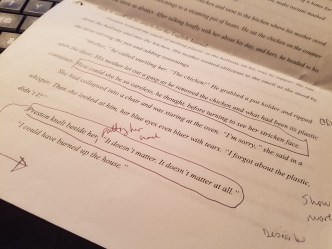
my workI created a wiki on wikispaces for my professional development class. I call it Process, Not Plagiarism. Here is a link if you’d like to see it: Katie’s Wiki (My apologies for the Wiki not being open before. I have changed permissions, so you can now see the wiki.)

This is a subject I’ve thought a great deal about in my 27 years teaching and am convinced that the best way to prevent plagiarism is to engage students in the process and observe them throughout it.

The subject of plagiarism detection software came up on my wiki and this was my answer:

It is good to let students know about and learn how to use plagiarism detection software, but it is far from the answer to the plagiarism problem in higher education. First of all, more and more students are learning how to “beat” plagiarism detection software. Here is an article in Times Higher Education by Hannah Fearn from back in 2011 about how easy plagiarism software is to beat: “Plagiarism can be beat with simple tech tricks.”

I have never been a huge advocate for plagiarism detection services anyway because while the software does a decent job of detecting word-for-word plagiarism, it doesn’t do anything for the bigger problem–lack of proper attribution. Students often think that if they use quotation marks and cite quotes then they are home free, and sometimes they think if they re-write in their own words then they don’t need attribution because the software won’t pick up the plagiarism.

Secondly, and most importantly in my mind, emphasizing the process allows me the time I need to encourage students to choose a topic they are truly interested or even passionate about. When students become engaged in the process and truly want to learn about it instead of simply completing a project, then the results can be more than satisfactory–they can be life-changing.

More on this topic later. .

***

If you teach or have taught English composition at any level, please consider submitting to the premiere edition of Teach. Write, a literary journal for writing teachers. The submission guidelines can be found at Teach. Write. Submission Guidelines, and I will be accepting works of poetry and prose until July 1. The first edition will come out in September.

Lifelong Learning

One thing I hope to instill in my students is a love of learning, something that continues long after the semester is over, the year ended or the degree conferred. The drive to do this comes, even after almost 30 years of teaching, from my own love of being the student, not the teacher.

Right now, I am enjoying a  course through the state’s professional development system called “Technology Bootcamp II.” I wasn’t privileged to take the first six-week course, but now, in the third week of this second course, I have already learned some exciting new technologies to add spice to my seated and online classes. Here are some new things I’m learning as well as some older things I’m learning anew:

Blackboard–I used to teach using Blackboard until our college moved to Moodle. Although I am so used to Moodle now and happy with that learning platform, it’s gratifying to see that I have gotten back into the swing of things pretty easily. The interfaces are similar enough that I have easily adapted. I am glad, however, to learn the differences, so I can better prepare students who might transfer and encounter Blackboard or those who come to me more familiar with Blackboard than Moodle.

Prezi–I have used Prezi for several years now and prefer it to some other presentation software. In this course, however, I have learned to use some of the bells and whistles that I didn’t know and discovered some templates that I hadn’t seen before. I like Prezi’s dynamic animation that makes presentations almost cinematic. It is user friendly and easy for students to learn. Here is a link to the Prezi I created to introduce myself to the class. Educational accounts are free.

Prezi Introduction

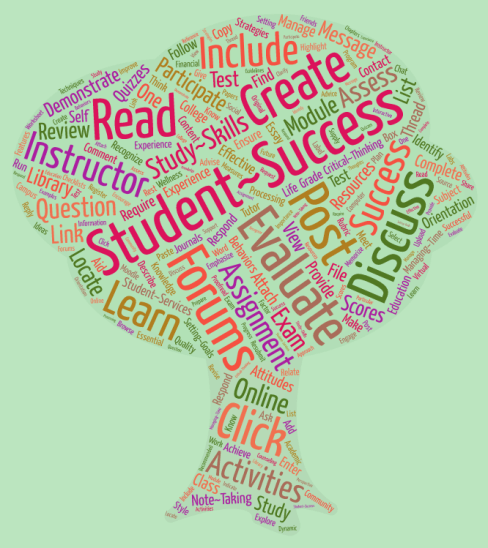
Tagul–This easy-to-use program was new to me, and it is fun!  I can see many uses for it in my classes because I think students will have fun with it too. Tagul allows you to easily produce Word Cloud Art just by uploading web content or adding your own text. Here is one of the first word clouds I created using words from my Study Skills class syllabus.

student-success

I was able to view a short tutorial, and then after a little trial and error, created this word tree that highlights some of the main ideas of the course. Word Cloud exercises could be used for vocabulary-building, learning key concepts and terms, for review purposes and a myriad of other uses. And, like Prezi, it’s free!

Here is a link to the animated version of the word cloud I created:  https://tagul.com/oo05cu2qlre9/student-success

Jing–Although I have used other screencast programs, Jing will be extremely useful for making short how to videos, five minutes or shorter. User friendly with helpful tutorial videos (I should hope so), Jing didn’t take long to get  the hang of and before I knew it, I had created a short tutorial video on how to use Tagul! Here’s a link to the video if you would like to see my first effort at using Jing! Free!

Jing Screencast

LiveBinders–This application helps instructors and students create digital three-ring binders. I haven’t finished working on this project yet, but so far I am quite impressed with LiveBinders. I’m able to download and organize websites, photos, videos, files, etc. that pertain to a particular topic, making them accessible for classroom use. Students can create a free account to create portfolios for class or keep all of their class project files together and easy to share, especially when working on group projects. Very useful.

I will also be learning classroom and online applications of Google Earth this week. Looking forward to it, and I will give you all an update on more useful education applications as I learn them.

I love being a lifelong learner!

Speaking of being a lifelong learner: Just a reminder that my literary e-zine, Teach. Write.,is open for submissions of short fiction, poetry and essays now through July 1, 2017. Anyone who has taught English composition is welcome to submit. See the guidelines  at this link for more information: Teach. Write Submission Guidelines. I would love to see your work!

December 1 still the deadline

mid

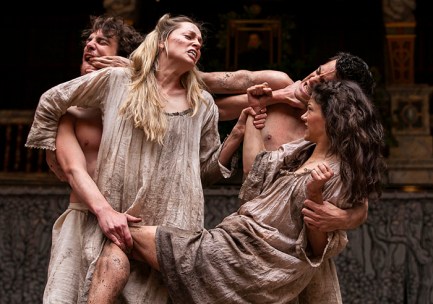
A Midsummer Night’s Dream, Globe Theater, London 2015

I haven’t written this blog for almost two months. I’m sure you can guess why, so I won’t go into it. Maybe I will some day, but not today. Today is the end of a restful and contemplative Thanksgiving season, the first Sunday of Advent, the Sunday of comfort. Today, I am thankful and comforted that I still have something to give to this world.

And yet.

It’s been a long two months, y’all. I have been hopeful, elated, disheartened and even depressed, but none of these feelings are going to get me anywhere. They certainly won’t make me a better teacher, a better writer, a better person. So, I have rested and recuperated, found myself again, the quiet and peaceful me, the me who has a confidence she rarely shows the world, who rests in the certainty that the Apostle Paul was right when he wrote: “Do not be overcome by evil, but overcome evil with good (Romans 12:21).

But what tools does such an insignificant person like me have to do good? The question is absurd. I am a writing teacher. My position affords me tremendous opportunities to do good, and I am so grateful to have these chances to help people pursue the most important achievement of  all, becoming better. Certainly I can help students make their writing better, help them to discover ways to strengthen sentence structure and word usage to better communicate. But teaching writing, because it is so intimate, because students will write things they could never say, forms a bond that few other people can have with a relative stranger–a person who sits and listens and learns for only a few weeks and then is gone.

However, I am not only a writing teacher dedicated to helping my students become better, I have other tools to do good. I am a writer–a true writer.  I write because writing is a part of who I am. One reason I have come to prefer teaching online to teaching in a classroom is that I’m a better writer than a speaker. When I write I can go back and revise, find better words, create better sentences, more effective structures, even different punctuation, until I’m satisfied, or more likely, have run out of time. Being a writer forces me to re-evaluate my words and the way I say them, allows me to instruct more clearly, more permanently, offers me opportunities to express myself with groanings I can not utter, gives me the chance to communicate the joy and sorrow of my life, bringing comfort and cheer to others.

And then there is this one tool that I can’t quite figure out how to use–the one that gets me into so much trouble–my anger. It exhausts me, being angry all the time. Oh, I understand it, even like it at times. It burns inside of me and makes me feel alive. Mostly, it is a righteous flame. At times it fuels me to do good–to speak for those who cannot, to protect like Mother Bear. But these past couple of months, the anger has flamed and threatened to overtake me like the wildfires around my mountain home, sparked by two long months of drought and by small minds who care little about anything other than their immediate ill-conceived pleasure.

But the rains are coming. The showers are already here.

I got this package in the mail the other day. I didn’t think it was for me because I hadn’t ordered anything, but no one else in the household had either, so I opened it up, right before we got the first rainfall that we’ve had since September. Here’s a picture of it:

001

As you probably know, it’s from Midsummer’s Night Dream. Helena says it to Hermia when they are fighting over something stupid. Isn’t it funny that these few little words came to me, I still don’t know by whom, at such a low point, the driest part of the season, like raindrops? These words, originally meant to be an insult, hurled at Helena’s vertically challenged rival in a moment of pique, came to me as precious moisture to help dampen the fire of my anger, to redirect it into positive action.

It was just a little rain that day. Just a little. It didn’t really change anything, but it gave me hope. You remember hope.

“Hope” is the thing with feathers –
That perches in the soul –
And sings the tune without the words –
And never stops – at all -”  –Emily Dickinson

I am little, oh so little, but I am fierce,  never stopping -at all.

***

And……Still plan to roll out my literary e-zine on December 1, so watch for details and submission guidelines for TEACH. WRITE. in the coming days.


Teach. Write. Again.

writer-605764_640-2

I have a dream. To publish a literary e-zine that celebrates the writing of composition teachers.

The one thing that has helped me most to become an effective composition teacher, besides twenty-seven years of teaching English composition of course, is writing and pursuing publication of my work. Such a process has certainly kept me humble (I quit counting when my rejections reached over two hundred.) and has never made me rich. However, a couple of years, I did make enough to be taxed. (Of course, that isn’t saying much, is it?)

On the other hand, with over two dozen short stories published in print and online publications, as well as over a hundred theater reviews and features for the local paper, five years as columnist for my college, two or three years as an arts columnist, and now approaching the production of my second full-length play, my writing avocation has also boosted my confidence as a writing  instructor and given me a certain credibility with my students, some of my students.

Above all, being a writer keeps me mindful of what it’s like to write for a critical audience–a critique group member, an editor, an agent, an audience.
3990049531_e1c94fdd9e_bBecause I’m a writer, I am reminded of what it’s like

  • to procrastinate.
  • to spend more time revising and editing than composing
  • to be uninterested, or lose interest, in a project
  • to be obligated to complete said project
  • to have a work criticized or rejected
  • to take that criticism or rejection as a personal attack
  • to be misunderstood

But it’s not all bad. Because I am a writer, I can truthfully inform my students that good writing, while hard, and often thankless, work is

  • a valuable skill
  • a confidence builder
  • actually can be fun
  • and sometimes, every now and then, absolutely glorious!

fun-1012681_640-2

So, the dream is to have this little online publication called Teach. Write. that will allow present and former composition teachers of all types to try their hands at writing out of their comfort zone, to make themselves vulnerable again to constructive criticism and rejection, to boost their confidence and support their colleagues–to write, and in so doing, become better teachers, better people.

The e-zine will be for writing teachers by writing teachers, specifically, but because the style and subject of essays, poetry and short stories will be open for the most part, the magazine should appeal to a general audience.

Although I will consider pieces that are on the subject of writing if they are unusual and compelling, I’m not particularly looking for work that is about writing or being a writing teacher. As I mentioned, this magazine is calling for teachers to move out of their comfort zones, so I would rather they write a literary short story or a flash piece, a sonnet or poem in blank verse, an essay about a night spent in jail–whatever they want to say. These will be the general submissions.

Because I want this e-zine to be useful to writing teachers, I also will have a regular feature called “Writing Your Own.” In this feature I will call for composition teachers to write pieces based on their own writing prompts. For example, the fantasy e-zine, Mirror Dance, published a flash piece called “Waiting for Beowulf” that I had written as an example for a creative writing assignment in my British literature I online class.  It is so helpful for instructors to write with their students–it can also be simply fun, yielding strong writing from students and publishable work from teachers.

I have set December 1 as the deadline for setting up the website. At that time, I will begin accepting essays and short fiction of 2,500 words or less, poetry of 100 lines or less (up to three poems accepted in one document), ten-minute stage and screenplays (ten pages), and pieces for the “Writing Your Own” feature (250-2,500 words).

All teacher-writers should include a short (100 words or less) biographical statement, which includes their present or past position as an English composition teacher. This statement is more important to me than publication credits. Of course, elementary and middle school language arts teachers, high school and college-level English teachers can submit, but if they have taught independently for business and industry or as part of a continuing education program, they are also eligible. If they have tutored in English composition professionally or as a volunteer, they may feel free to submit. They should simply mention composition teaching experience in the bio..

From  December 1 to June 30, I will accept submissions for the inaugural edition, which I hope to publish in the fall. My desire is to begin publishing twice a year, fall and spring, hoping that contributers who are working teachers can write and submit in the summer and winter, then enjoy, along with their students, their published work in the fall and spring.

I believe it is important to pay writers, but I don’t have much money, so I will be offering only a small honorarium here at the beginning of my venture, hoping that in the future I can offer more. I will let writers know the amount in December.

If anyone is interested in submitting  work to Teach. Write., start writing and look for an announcement on Hey, Mrs. Winkler with a link to Teach. Write. 

I have had this dream for a long time, but as it is has been with most of my dreams, they only happen when I find the time to do them and set to work.  The time is now.
 

Good News!

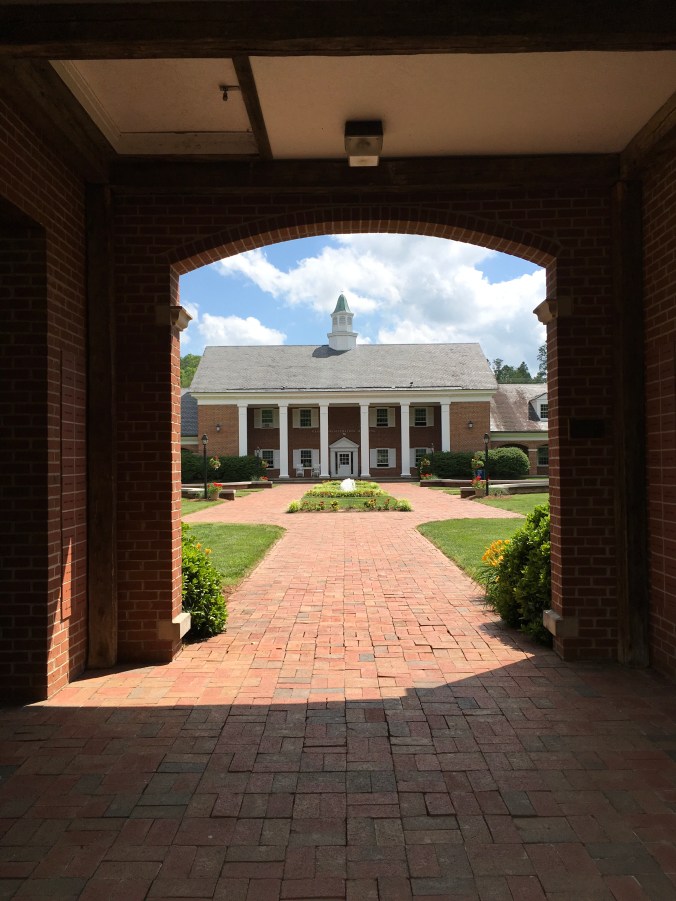
Super busy with, well, teaching and writing, but had to stop to post this because it is GOOD NEWS FOR LIBERAL ARTS!!! Rare indeed. And not just liberal arts but for English majors!

Woot!

Here’s one of my favorite quotes from the article: “‘College shouldn’t prepare you for your first job, but for the rest of your life,” says John Kroger, president of Reed College in Oregon, the liberal-arts school that famously served as a starting point for Steve Jobs.”

Good News, Liberal Arts Majors!

I’ll be back soon with information about my Teach. Write. literary e-zine project. (I know I keep saying that, but I mean it this time!)

Teach. Write.

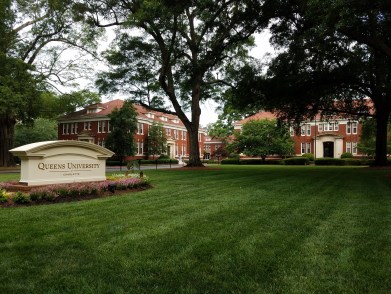
Queens Univ_CharlotteA couple of weeks ago, I attended a wonderful four-day writing workshop at Queens University in Charlotte, sponsored by the North Carolina Writers Network (NCWN), of which I am a member. I came away humbled but also encouraged, with new confidence in my work and with my writing spirit renewed. This long weekend convinced me that teachers of writing need to not only practice their own writing, but also put it out there! Go to workshops and critique groups, present at readings and literary open mic events. Teachers who write and open that writing up to criticism can come back into the classroom with a renewed sense of what it’s like to be a student. At least, that’s what happened to me.

Dinner at Fenwicks

Shrimp and Grits at Fenwick’s

The workshop began on Thursday afternoon. I arrived and was the first one to sign up for the open mic night. After I got settled, I had time to explore that area of Charlotte,  with many stately old homes and the impressive Queens University campus. Then, I found a nice little restaurant called Fenwick’s and had some scrumptious shrimp and grits with a nice chardonnay to start things off right. That evening Ed Southern, director of NCWN led us in a fun exercise to help us get to know one another followed by  a fascinating presentation on The Wall Poems of Charlotte, a grass roots public art project, which highlights the work of North Carolina poets. I think our college should consider a similar public art project at our college or in our town. Perhaps I will propose it.

One of the best things about the trip was that I was able to remember what it is like to be a student again–always good for a teacher to experience, especially if she’s been at it as long as I have.

At my age, I never thought to again be sharing the bathroom and showers in the dorm, seeking  out a friend in the dining hall at lunch or walking with some fellow students down to one of the local hangouts, but that’s what I did! The closeness and camaraderie I developed with the eight other fiction writers in the workshop as well as the other writers in the poetry and non-fiction workshops, helped take away the initial uncomfortable feelings I had at moving out of my middle-aged comfort zone and made it easier to accept the constructive criticism offered by the instructor and my fellow students.

Our marvelous instructor Sarah Creech, who teaches at Queens University, also helped us feel more comfortable by  doing some simple exercises that encouraged us to get to know one another better, but it wasn’t long before we were seriously critiquing the work that we had shared with each other in the weeks before the workshop began.

For some ungodly reason, I signed up to be the first person (again) to be critiqued, but Sarah facilitated the group with such finesse and my fellow writers were so kind and supportive, that it wasn’t hard to accept the criticism. In fact, I found it affirming and encouraging because most of the areas that needed improvement were areas that I myself targeted for revision. It sure didn’t hurt to hear the positive comments either.

In front of Chapel

It was pretty hot, but in the morning and evening, I enjoyed walking around the beautiful campus or writing in one of the common areas.

We repeated the process of critiquing, beginning with what is working and what could use revision, for the other eight attendees. What I found especially interesting was the better I got to know the other people in my group, the more I wanted to offer truly helpful words of advice and not just give some throw away comments. I also found myself going back and re-reading their work, so I could give more in depth comments. In addition, my confidence grew in my own work. Here were other serious writers, good writers, but my work was on a par with theirs.

After the first day of critiquing each others’ work, Sarah concentrated on lecture and exercises to help bolster the class’s weaker areas that had been revealed from the critiques the day before. We emphasized character development and motivation, sensory details and setting, among other issues. The lectures were always targeted and blessedly short, followed by periods of writing. That evening we enjoyed our literary open mic event, which was a wonderful time to hear the work of writers in my own group as well as poets and non-fiction writers from the other group. a pizza party in the commons area of Sykes Learning Center ended the official events of the evening, but a few of us continued our discussion of the weekend at a local pub, just like in the old college days.

Sykes Learning Center

Sykes Learning Center

The last day we did more writing but also had time to share our work with the group, no critiquing this time–just enjoying each other as writers. As much as I missed my family and was glad to be going home, I truly was sad to say goodbye to my new writer friends but glad that I had a chance to meet them. I hope to continue sharing my work with them. It is amazing how quickly people can bond when they share a passion for storytelling.

It may be obvious what I learned and had affirmed about teaching composition during the workshop, but here is a list of a few things that come to mind:

  • spend time letting students get to know each other as people
  • build in time to socialize
  • celebrate your students’ writing
  • provide opportunities to share writing
  • keep any lecture relevant to the particular group of students you are teaching
  • keep lecture to a minimum
  • target areas that need work and tailor-make exercises to help improve weak areas
  • make exercises creative and fun
  • allow students to critique each other’s writing in small groups
  • begin with positive feedback but move on to areas that need improvement

Stay tuned for my next blog post when I present the details of my new project–an online literary magazine designed to showcase the work of those who teach writing.