Some Weeks Are Good

I know I whine, but not always. Sometimes things work out. Some weeks are good. Last week was one of those. Classes went well. Real collegiality and collaboration took place. Respect was the watch word. Yes, it was a good week. In celebration, I’m printing the lyrics (rough draft) to one of my favorite songs in my new musical CAMPUS. This song is sung by the three “fairy godteachers.” Enjoy!

The Liberal Arts

Mrs. H (singing)
When I lived in Chicago.

Mrs. Mc and Mr. T.
You lived in Chicago?

Mrs. H
Back when I was a girl.
One thing I used to do

Mrs. Mc and Mr. T
What was it?

Mrs. H
I used to read.

Mr. T
Who would have guessed?

Mrs. H
I mean only read.
You’d think the teachers would agree
That reading was a great activity
But they would roll their eyes and give that look
When they called on me and my nose was in a book.
I read
The Three Musketeers in history.
I think Jane Eyre in PE
In Science it was Pride and Prejudice
Lord of the Rings I read in Math
I even got in trouble for reading
In English class.

Ms. M
Why was that?

Mrs. H.
I’m not sure of the cause
But I think it was
Because I was reading Judy Blume
Instead of Sylvia Plath

Mr. T
But what does this have to do
With signing up kids for class?
How do we make them move
Get up off their tiny…

Mrs. H
I’ll tell you.
And then there came a day
That wonderful, glorious day.

Mr. T
Here we go.

Mrs. H
When I knew
Without doubt
What learning was all about…
It was fifth grade and I was all alone
I had no friends to call my own.
Just only had my books
To keep me company
To keep away the looks
They gave to me.

Then we went to the art museum
The Chicago art museum
And walking down the staircase
I looked up and saw it fill the wall
A painting all in black

Ms. M and Mr. T
All in Black?

Mrs. H
Mainly black.
With a thin line of white running down the middle
And an orange line running down the side.
That was all

Then I walked down that massive stairway
Step by step
Moving closer
Moving nearer
To the truth.

Mr. T.
What truth?

Mrs. H.
There was something
In all the blackness
You couldn’t see it from afar
There was meaning
In the darkness
Shapes and form
And art

Ms. Mc
I love this little story
But I’m not sure what it means

Mr. T
That makes two of us
I just don’t see
What you’re trying to say.

Mrs. H
I’m trying to say
That after that day
I knew what school was all about
Giving me knowledge for my work
But teaching me so much more
Teaching me how to live and
What to live for.
Because you only know what truth is
When you get close enough to see
I learned that’s what the liberal arts
Could give to me.

The Liberal Arts
The Liberal Arts
Because you only know what truth is
When you get close enough to see.

Ms. Mc
Now I know what you mean
I’ve felt it too
I only cared about computing
When I was in school
And Chemistry was okay too
The calculations were somewhat challenging.

Then I went to a symphony with my class
Drug to hear a full orchestra on the lawn
Of an old mansion in downtown Tulsa.

Mr. T
Tulsa?

Ms. Mc
Downtown Tulsa on the lawn
With my 10th grade class
When I was just fifteen
I sat through some baroque
Didn’t really have a choice
And some other too straight forward
I can’t remember what it was
Then came The Moldau

Mr. T.
The what?

Mrs. H.
Bedrich Smetana’s The Moldau

Mr. T
Right.

Ms. Mc
I’d never heard anything like it before
It was a river
A river flowing through the music
Through my mind
Starting as a stream
Running through the strings
And I heard the poem
The musical poem
With structure and form

So I’m trying to say
That after that day
I knew that school was all about
Giving me knowledge for day to day
But teaching me so much more
Teaching me how to live and
What to live for.

Because you only know what truth is
When you sit still enough to hear
I learned that’s what the liberal arts
Could make so clear.

ALL
The Liberal Arts
The Liberal Arts
Because you only know what truth is
When you sit still enough to hear.

Mr. T
Well, you two can really get on my nerves
I just don’t like people it’s true,
But you’re really all right you two.
I see what you’re trying to say.
Because it happened to me one day.

Mrs H and Ms Mc.
It did?

Mr. T.
It did.
Actually it was one night.

Mrs. H.
Oh, no, not one night.

Mr. T
Well, yes there was a girl
A beautiful girl
With brown eyes and brown hair
Who wore lots of leather
If I remember right
In my acting class.
But she was different than the others
Didn’t want to be a star
She studied and studied
Wanted to be a doctor
But I didn’t care
I just wanted to get with her
Backstage.

Mr. H.
Oh, please.

Mr. T
Well, anyway,
She wanted to go on this field trip
I didn’t really want to go
To the planetarium in Pittsburgh.

Mrs. H.
I didn’t know you lived in Pittsburgh

Mr. T
There’s a lot you don’t know.

So I signed up for the field trip
Flirted with her on the bus.
But she wouldn’t sit next to me
In a darkened room with us
Boys. I guess she was right.
Not to sit next to us boys that night.

So I was bored out of my skull
As the show began to start.
Just about to go to sleep
Until it happened.

Mrs. H and Ms Mc
What happened?

Mr. T.
Out came the stars
In the center of the winter night
They said I could see a hunter.
A hunter I didn’t see
They said two stars mark his shoulders
And two stars mark his knees
Then they outlined his form
Standing with his arms upraised,
A hunter standing strong
I saw Orion.
I saw the Orion Nebula

I’m trying to say
That after that day
I knew what school was all about
Giving me knowledge for my work
But teaching me so much more
Teaching me how to live and
What to live for.

Because you only know what truth is
When someone points you to the light
I learned what liberal arts can do
That fine winter’s night.

ALL
The Liberal Arts
The Liberal Arts
Because you only know what truth is
When someone points you to the light

Mr. T
That’s the day I wanted to teach drama

Ms. Mc
That’s the day I wanted to teach math

Mrs. H
That’s the day I knew I could teach English

All
The day we finally understood
And knew we could

Teach the liberal arts

Another Guest –Hey, I’m busy reaching my writing goals for the summer

thought-police-e1369141340932

I’m busy with my fiction and playwriting, but here’s another great guest article. This is from The Atlantic–“The Coddling of the American Mind” by Greg Lukianoff and Jonathan Haidt–interesting read. It comes through an organization I support called FIRE–Foundation for Individual Rights in Education. They support and promote free speech on college campuses–even speech the general college population doesn’t want to hear. I like that about them. They are quoted in the article, which is about the pervasiveness of political correctness on our campuses that is quenching free speech and maybe even harming the psychological well-being of students.

Here’s the link: http://www.theatlantic.com/magazine/archive/2015/09/the-coddling-of-the-american-mind/399356/

Katie Goes on a Tear

liberal arts

Classical Liberal Arts

Recently a posting about the cost of education in America compared to countries that offer “free” education got me really going on a tear for some reason. Some of the comments by people I know, like and admire, made me realize how many misconceptions people have about a liberal arts education. First of all, I understand people’s frustration with the current state of higher education in America–it’s a case of paying too much for too little. However, it isn’t entirely the learning institutions’ fault, though they certainly share the blame.

No, the biggest reason behind the failure of our high schools, colleges and universities is that we, as a people, do not understand the true nature of a liberal arts education and therefore devalue it. Listening to some administrators, students, their parents and the general public, I conclude that most people view getting an education as a means to an end–getting a job. Many people seem to think that when they, or the government, pay tuition that they are basically purchasing a diploma, certificate or degree that they need in order to become employed, like purchasing transportation or clothing or anything else that makes work possible.

See, I’m still on the warpath, but I’ll get over it. I’ll have to in order to keep my sanity. It did help to vent on the hapless people who commented on my comments on Facebook, and I thought some of my points were pretty darn good, actually, so I’m going to re-print them here.

Point #1–There is something to be said for providing high performing high school students with at least the first two years of college, like in Georgia. It’s not free–students have to work very hard in high school to maintain a B average to get a Hope Scholarship. Getting an education is the goal–not getting a job. We need citizens who know how to read and write well and most importantly how to think critically. We need to give people an incentive to truly learn something in high school, and we need to give parents an incentive to push their kids to do well in school. We could do this if we adopted something like what Georgia has.

Point #2–Getting an education is about more than getting a job–it’s about learning how to think critically and problem solve and be autonomous, not under anyone’s control except God’s. It’s power to the powerless, it’s learning how to appreciate art and literature and music. It’s about making life better for yourself and the people you love. We have lost our way; we have forgotten what a real education is, and we have substituted it with this paltry idea of mere job training. Show me a person who is truly educated–and I don’t mean has a degree–I’m not talking about degrees, and I’ll show you someone who has a career that fulfills him or her. And if that thinking person doesn’t have a job, then he or she doesn’t want or need one. (A bit hyperbolic but I was fired up)

Point #3–We need to start realizing that education is for everyone and start making our middle and high schools places of real learning again. I don’t think everyone needs a four-year degree. I think we need to start coming up with alternative ways for people to get their education, but the biggest concern should be helping people see the value of an education–of learning how to read with real comprehension, to write clearly and effectively, to use modern technology to do meaningful, practical research. Diplomas, degrees and certificates are meaningless unless people are learning skills like problem-solving that will benefit them no matter what they do for a living because more than likely they will be changing careers and jobs more than once in their lifetime, so they need to learn skills that will help them adapt to new work situations quickly–they need to learn how to critically think–we still have that in this country but it’s quickly being lost to this idea of utilitarian education that has been proven (just look at the results of the Industrial Revolution)–it’s called a liberal arts education and it works but only if the public understands the value of it, and right now liberal arts education is under fire and too many people don’t see its value. That is a crying shame.

Throw Back Sunday

My Work Home

My Work Home

I used to write a BRCC column a couple of times a month for the Hendersonville Times-News. Here’s one of those columns, from back in 2003:

A series of events the past few weeks has caused an identity crisis in me, forcing me to ask that question teachers often find themselves asking. “What exactly do we have to offer—what is our role?

Should we be entertainers? After all, it is difficult to keep students engaged, especially when many have grown up passively viewing a television screen or matching wits with an exciting computer-generated opponent. Sometimes we try to “jazz things up,” yet no matter how witty our illustrations or detailed our demonstrations, despite our high tech visual aids, we teachers can’t match the special effects of Star Wars or Lord of the Rings.

Of course, teachers should make attempts to prompt student responses through group discussion and student comments, but in the end it is the teacher who has the responsibility to bring student discussions to the sticking point, to summarize key points of any discussion. I know it’s become a dirty word in some circles, but sometimes we even need to lecture.  For many students, that’s not entertainment.

If it is not a teacher’s role to be an entertainer or merely a facilitator, is it to be an encourager? Everyone needs praise.  Good teachers know this and try to find real reasons for praise. One word of encouragement from an admired and respected instructor can fuel some students for an entire semester. Sometimes praise can even change a student’s life; however, constructive criticism has also been known to be the making of a person.

Teachers sometimes see themselves as physicians, highly trained professionals who diagnose problems and offer cures.  But others sometimes see us as nothing more than dispensers of grades—recorders. I do the work; you write my A in the grade book and raise my self-esteem.

Are we here to make students feel better about themselves?  Are we counselors? As a writing teacher, I sometimes find it difficult to even constructively criticize a student’s work if I’m aware of his or her difficult circumstances. I ask myself, what if he or she takes my criticism personally. Could my words so sting that the student becomes so angry or discouraged that he or she drops my class or quits school?

In the end, good teachers know avoiding the errors in student performance, no matter what the students’ difficulties, can only block their ability to learn. Our job is to assess students and inform them of their problem areas, not to assure them, “Everything is okay.”

At the beginning of the semester in my freshman composition classes, I relate to students my educational philosophy by describing a scene from the movie All That Jazz, based on the life of Bob Fosse, the late choreographer and Broadway director of Chicago.  The Fosse-like character becomes frustrated with a beautiful young dancer who gets her job more for her sexual appeal than her dancing ability. When the young woman breaks down in tears, the choreographer stops the music and goes to the girl, saying something like this: “I can’t promise you I’ll make you a great dancer.  I can’t even promise I can make you a good dancer. But if you work real hard and listen to what I say, I’ll make you a better dancer.”

Like the choreographer, we can’t make many promises. We can’t say for sure that our students will be stimulated or get A’s or even pass. But we can make the promise that if they will listen, even if the delivery is not of their liking, even if the grade is not what they expect, they will learn.

Reminded then of our promise, our role becomes clear. I know what it is we have to give. It’s not entertainment, not unreserved praise; it’s not a shoulder to cry on. The only thing we can offer our students is what we know—about our disciplines, about learning, about life.

The rest is up to them.

The Quality of Mercy

images

Maggie Smith, one of my favorite actors, as Portia 
in Shakespeare's Merchant of Venice--
the BBC's 1972 version of the play

The quality of mercy is not strain’d,

It droppeth as the gentle rain from heaven

Upon the place beneath: it is twice blest;

It blesseth him that gives and him that takes:

But mercy is above this sceptred sway;

It is enthroned in the hearts of kings,

It is an attribute to God himself;

And earthly power doth then show likest God’s

When mercy seasons justice. Therefore, …

Though justice be thy plea, consider this,

That, in the course of justice, none of us

Should see salvation: we do pray for mercy;

And that same prayer doth teach us all to render

The deeds of mercy. I have spoke thus much

To mitigate the justice of thy plea;

Which if thou follow, this strict court of Venice

Must needs give sentence ‘gainst the merchant there.

The Merchant of Venice, Act 4, Scene 1

I am so much like Shylock. I believe strongly in justice. Just like Shylock, I don’t just seek justice, I demand it. But unlike him, I hope, in dealings with my students anyway, I see the wisdom of Portia, one of my favorite of Shakespeare’s female characters, and I know that it would have served Shylock well to heed Portia’s words and render mercy. And indeed, many times when a student asks for mercy, and I choose to give it, we are indeed both blessed. The student gets a chance to rectify whatever problem there is–attendance, poor performance in class, misbehavior in class, whatever it may be, and I get the satisfaction of helping a student succeed and truly learn something valuable.

Sometimes, however, that mercy is given, the student takes it, and then uses my act of mercy against me. This just doesn’t happen to teachers, of course, but I find that the teaching profession seems particular vulnerable to the ungrateful. I get so disheartened when this happens that I want to make a list of strict rules and never show any mercy whatsoever. Sometimes I think my colleagues and supervisors would be happier if my mercy were a bit less freely given.  Now, I do have rules and high standards, but I temper them with mercy if I see that I can help the student. I just have to, you see, because of the mercy shown to me.

I remember when I was a senior in undergrad school. I was struggling, like a lot of my own students, with who I was and where I was going next. I was pretty smart and had a way with words, but I was so caught up in my life –meeting people and learning a new language and becoming a woman and discovering hidden talents, like acting and persuasive speaking, that I had, frankly, lost interest in my English studies.

I procrastinated with my paper and put it off and off that last semester of my first senior year that when I finally started working on it in earnest, I realized that it would be impossible for me to finish. I had to ask for an extension. I was truly scared when I walked into my professor’s office. He was intimidating because he was so brilliant as well as being the head of the English department. I didn’t think he even really knew my name. I was standing there and couldn’t speak. He finally looked up and said something, I can’t really remember, and I blurted it all out. Not all of “it” was absolutely true either, but he had mercy. He gave me the extension I requested without hesitation. Then he did something I never expected–He pointed to the chair and said, “Now sit down and tell me what’s really bothering you.”

I finished the paper that first semester of my 2nd senior year. I never had worked so hard on anything in my life. 35 pages comparing the works of Flannery O’Connor and Franz Kafka–two displaced people who didn’t fit in anywhere, so they became writers or maybe they were writers and that’s why they didn’t fit in. I still don’t know. Anyway, I could say I finally found my way while I was writing that paper, and it would be a lie. I could say I stopped procrastinating and learned my lesson; that too would be untrue. No, I worked that hard out of gratitude to the professor who showed me mercy. His mercy, freely given, was twice blessed.

So I lean towards mercy when I think that mercy is going to be best for the student, when the student has a chance of making real change in his or her life. However, the quality of mercy is not strained (or forced). If the mercy is to be at all, then it must come freely given from the person granting that gift. For example, Portia is a wise judge. She knows she cannot legally force Shylock to have mercy because then that mercy would simply be a violation of justice. True mercy requires true justice. So she appeals to Shylock’s sense of justice when she appeals to his mercy. But he doesn’t want justice. He wants revenge.

As we see later in the play, Shylock made a grave mistake not granting mercy–it led to his bankruptcy and loss of his only child–making the play a tragedy more than a comedy in my mind, so great is Shylock’s loss. But Shylock’s fall is inevitable because Shylock is so full of anger, justifiably so perhaps considering the anti-semitic society in which he lives, that he can not show mercy because mercy must be freely given.

Therefore, even if a student takes my merciful action and uses it against me, it is still a gift freely given in an attempt to help that student. If now that student is demanding mercy, I can not give it because it is not freely given and would corrupt justice.
However, if I truly believe that I am standing my ground for the sake of the student as well as the integrity of my profession, then I am blessed no matter how the student misuses my gift. If no one ever acknowledges that I did the right thing and some people rally against me because of my stand, I will still be blessed because I didn’t allow others to pervert my deep sense of justice. 
I will continue to seek justice by upholding established policies and procedures, to fight for what is right, and I will continue to show mercy. Not because it is in my nature–it is not; not because my faith demands it–it does not. I show mercy out of gratitude–gratitude to the one whose unmerited favor has given me such a wonderful, abundant life.

Ronda J. Dalenberg: Sister Teacher

Summer_09_Robspics 099

My sister Ronda during her last summer trip with our extended family
Gulf of Mexico--August 2009

Four years ago my only sister died. She was my age now, 54, and for some reason, that makes this anniversary of her death especially painful for me. Until she had to retire early because of her illnesses, she worked for the federal government, Rural Housing, making low-interest loans so poor people could have a decent place to live. One day when I was visiting Alabama where she lived and worked, she drove me around to show some of the houses she helped build. She stopped in front of one that she was particularly proud of. It was a cute little brick home, but not just a little box like so many government houses I had seen. It had a large arched window in the front, white accents and other interesting features. She told me that the contractors she was working with now had found ways to make the houses unique but still keep the price low. “It doesn’t cost much to make a big difference in people’s lives,” she said.

Ronda loved science when she was in school and thought about being a veterinarian when she first started attending Auburn University, but she ended up getting her degree in Animal and Dairy Sciences. She thought when she was in school that she would end up managing some sort of barn or farm. She loved horses and dogs, especially, but no, she ended up working for the government making loans. When she first started working for the government, her department was called Farmers Home Administration. She needed to know about the economics of farming to assess lands, equipment and livestock when making loans, but things began to change and her main work at the end of her career was making home loans.

Ronda never seriously considered a teaching career. I remember that she tried to do some substituting at one time in her life and had a really bad time one day. She shook her head and said to me, “Why would you ever want to be a teacher?” Then we laughed at all the horrible things those little hellions did to her that day in the way people sometimes do when the bad times are over. I didn’t say anything to her then, but when I think about it now, I realize that my sister was one of the best teachers I ever had.

Ronda was the oldest and we used to tease her about how bossy she was. We compared her to Lucy in the Peanuts comic strip. She reveled in this comparison, holding her hand up to one of my brothers, saying, “I’ll give you five good reasons to quit that.” Then, one by one counting and curling her fingers to create a fist, just like Lucy famously did over and over in the Sunday funnies. She didn’t stop her bossiness when we became adults either. It used to infuriate me that she would dare to have an opinion about education and/or teaching when I was the professional educator, by golly!  How could she tell me anything about education?

Things changed over time, of course. As I matured, enduring many successes and even more failures, I gained some of the humility that most acquire with time. There is one time in particular that Ronda made a comment about my teaching that ultimately changed my attitude about my career, even though at the time the comment stung like one of my Great Aunt Jane’s peach tree switches.

I was visiting my parents’ home where my sister was living. Her husband Donald is a truck driver, so he was gone a lot and her health was getting to the point that she didn’t want to live alone. As I often did, unfortunately, I was regaling the family about all my troublesome students, how they didn’t listen to directions and didn’t seem to care and how some were bilking the tax payers, just going to school to get a government check and on and on, ad nauseum. Ronda listened a long time and when I finally took a breath, she said, “You don’t sound like you like your students very much.”

I don’t remember what I said or did after that but I do remember that at first I was so angry at her. “How dare she?” “Doesn’t she know I was just blowing off steam?” But I couldn’t shake the feeling that my sister was right. It was then I knew I needed to go back to the reason I became a teacher in the first place–to help people be productive and find happiness in a job well-done–to help them lead better lives because of what they learned in my classes. How could I teach them effectively if I didn’t even like them? How could I care?

After that,  I went back to teaching with a renewed sense of my students’ intrinsic worth. I began to look for the things I liked about my students–their humor, their love of life, their eagerness, their youthful spirits, their drive. I even found myself being somewhat amused, or at the least not angered, by their student-like failings–their procrastination and arrogance and rebellion. I know I’m a better teacher now because I decided that liking my students, enjoying them, makes me a better teacher.

I don’t know if Ronda ever knew in this life time what her simple observation did for me, but it is only one example of the way my sister has taught me to be a better teacher–and a better person. I think of her and I miss her all the time, but here on this fourth anniversary, the intense pain of her horrible death has been replaced with the joy of her life and what it meant to me and all those who have been blessed to have known her as wife, daughter, sister, cousin, friend, colleague, mentor and teacher.

To Become a “Miracle Worker” Too

Miracle worker Anne Bancroft and Patty Duke in 1962’s “The Miracle Worker” by William Gibson When I was a young girl in the 60’s, I loved to watch old movies on Saturday afternoon. Some of these movies made a deep impact on me for one reason or another. I remember watching one of my first Shakespeare plays on Saturday morning–the 1935 version of Midsummer Night’s Dream starring Olivia de Havilland as Hermia, Andy Rooney as Puck and James Cagney, yes, James Cagney, as Bottom. I didn’t know any of those actors then, but I was fascinated by their actions. I barely understood a word of what was said but I was mesmerized by the words. So many movies during those halcyon days, when my viewing choices may have been fewer but have rarely been better, helped form my love not only of film but also of story telling and the theater, psychology and human development, justice and mercy–movies like Citizen Kane and Rebecca, Stage Door and All about Eve, To Kill a Mockingbird and 12 Angry Men. 

However, there is one movie that told a story which stands out above the rest in my mind, a story that helped solidify a desire that was already growing in me before I was a decade old–the desire to teach. That story is told in the 1962 film The Miracle Worker, the story of Helen Keller and her teacher Annie Sullivan. I can’t remember a time I didn’t want to be a teacher, but watching Annie struggle to teach Helen, to give some meaning to the child’s dark and silent life by giving her the gift of language and in return seeing her own life change from dark to light, caused the stirrings of desire to leap into a consuming passion.

I was reminded yesterday of this great story and its impact on my career choice when I went to see our local community theater’s production of William Gibson’s play. I’ve seen it several times over the years and the movie many times, but something about the intimacy of the small theater and the fine acting by my friend who was playing Annie and another friend’s young daughter who played Helen, brought back the force the story and its impact on my life in a way I hadn’t felt in many years. This time, however, I have been a teacher for thirty years, a bit jaded about my profession, especially these days, especially in North Carolina, but watching Helen’s face at the water pump as the water flows over her hands and she finally understands what words are, seeing Annie’s face when Helen comes to her with her new found knowledge and signs that special word “teacher” renewed my love of teaching.

One passage in particular especially rang true to me last night. In the scene Annie is discouraged because she has brought Helen to the threshold of understanding language, has struggled mightily to bring her there, but words are still just a finger play to Helen and time is running out. Annie looks down at the deaf, blind and mute child with such yearning and says these words:

I wanted to teach you—oh, everything the earth is full of, Helen, everything on it that’s ours for a wink and it’s gone, and what we are on it, the—light we bring to it and leave behind in—words, why, you can see five thousand years back in a light of words, everything we feel, think, know—and share, in words, so not a soul is in darkness, or done with, even in the grave. And I know, I know, one word and I can—put the world in your hand—and whatever it is to me, I won’t take less!

Is it any wonder that even way back when I was not much older than Helen was that day the world opened up to her, that my world opened up to me? That day I knew what I wanted to do–help people understand the beauty and power of words. When I got a little older, one of the first biographies I read was Helen Keller’s autobiography, “The Story of My Life.” I chose that book because I had seen the movie and been so intrigued by Annie Sullivan and how it must feel to teach a child. Reading the story from Helen’s perspective fueled my passion for teaching. In this passage Helen describes that day at the water pump:

I stood still, my whole attention fixed upon the motions of her fingers. Suddenly I felt a misty consciousness as of something forgotten–a thrill of returning thought; and somehow the mystery of language was revealed to me. I knew then that “w-a-t-e-r” meant the wonderful cool something that was flowing over my hand. That living word awakened my soul, gave it light, hope, joy, set it free! There were barriers still, it is true, but barriers that could in time be swept away.*

I left the well-house eager to learn. Everything had a name, and each name gave birth to a new thought. As we returned to the house every object which I touched seemed to quiver with life. That was because I saw everything with the strange, new sight that had come to me. On entering the door I remembered the doll I had broken. I felt my way to the hearth and picked up the pieces. I tried vainly to put them together. Then my eyes filled with tears; for I realized what I had done, and for the first time I felt repentance and sorrow.

I learned a great many new words that day. I do not remember what they all were; but I do know that mother, father, sister, teacher were among them–words that were to make the world blossom for me, “like Aaron’s rod, with flowers.” It would have been difficult to find a happier child than I was as I lay in my crib at the close of that eventful day and lived over the joys it had brought me, and for the first time longed for a new day to come.

Some people struggle to know what to do with their lives, to find themselves, but I knew long ago as a little girl watching TV on a Saturday afternoon, when I could have been outside playing, that some day I would be a teacher. As much as I have wanted to escape my destiny over the years, it’s clear that I am where I belong, doing what I was born to do. What William Wordsworth said is true, “The child is father of the man.”

Mother of the woman, too.

Teaching Online–I Think I Like It


Kind of Fun to Teach Online

Kind of Fun to Teach Online

When I first started teaching online I found distance learning far inferior to traditional. Teaching has always been so interactive for me, so I didn’t see how I could capture the same dynamic in an online environment. I have found that I was absolutely right. The two environments are vastly different and require distinct teaching styles. However, that does not mean teaching online can not be as effective as teaching in the traditional classroom, and at times, I find online classes to be the better way to teach literature.

Of course, I have been teaching 200-level literature classes online for quite a few years and have had the freedom to develop my courses the way I see fit. I also am blessed at my college with an incredible distance learning support staff that have helped me solve problems and supplied me with the technological skills I need to continue improving my classes and lessening my grading load.

Earlier this semester, I presented a session on teaching 200-level courses online at the North Carolina Community College’s annual conference in Raleigh and thought I would share some of the information I presented there:

Course Structure

  • Provide Students with Resources, including
    Examples, in Folders
  • Number Assignments
  • Provide Due Dates in Multiple Places
  • Post a welcome Letter and/or Video
  • Use multiple Avenues of Communication

Assignments–Combine Traditional and Non-Traditional

   Traditional

  • Lecture (video or audio taped)
  • Class Discussion (through Discussion Forums,  On-line Chats and Skype)
  • Written assignments (reader responses, essay tests, literary analysis

   Non-Traditional

  • On-line Reading Quizzes
  • Kaltura Assignments
  • Audio/Video Response
  • SCROM Packages
  • Online Presentations

Some of My Favorite Assignments

  • Creative Projects
    • Rewriting a scene from Beowulf using a different perspective
    • Writing a Japanese Chain Poem
    • Writing a poem in the style of one of the Romantic Poets
  • Film and Video
    • Film Assignments—Watching a Modern British Film
    • Youtube videos
      • Resources
      • Assignments
  • Kaltura Assignments (For Moodle Users)
    • Lectures
    • Directions
  • Travel Project–My All-Time Favorite
    • $10,000 imaginary dollars to spend on the trip
      of a lifetime!!!
    • 20% of the grade in this course
    • Choose author and/or work to research
    • Annotated Bibliography
      • Scholarly
      • Related to author, work and countries associated with both
      • Should not be purely biographical
      • Research the places in the work, too
    • Travel Itinerary Presentation
      • Powerpoint or some other software
      • post on Travel Project Forum for all students to see 1
      • 14-day itinerary of a literary tour
      • I provide detailed examples of the annotated bibliography and the presentation.

If you would like more information about any of the above information, just contact me here at “Hey, Mrs. Winkler!” I’ll be glad to share.

On my next blog, I’ll discuss some advanced grading methods I use online to help with the heavy grading load that can be generated when teaching upper level online classes


Today Is What It’s All About

Yesterday, I was discouraged, but today is a new day. Why? I went to rehearsal of my college’s new play. We’re performing a stage version of the movie Clue that is based on the old sleuthing board game so many of us know and love. The movie has an all-star cast, including the late great Eileen Brennan, Tim Curry (of Rocky Horror Picture Show fame), the fabulous Madeline Kahn, Christopher Lloyd, Michael McKean, Martin Mull and Lesley Ann Warren.

At auditions, there were so many fine actors that our director, head of the drama department, decided to have understudies for some of the roles, include a “household staff” that will serve as entertainment between scenes and then get their shot at the big roles during two additional shows. Great idea, and it’s what directors who are primarily good educators at community colleges do–make their lives much more complicated for the sake of their students as well as the community members who are also significant stake holders in their college.

Today’s rehearsal reflects what community colleges are all about–play production students coming early and staying late to work on the set, more seasoned actors helping the newer ones, agreeing with the director without argument, offering suggestions, happy to have them accepted or not, the director’s quick and non-embarrassing corrections when new actors make mistakes, each actor creating a story for his or her character, an occasional harmless joke, the joys of physical humor leading to laughter and a true knowledge of an art form that only comes with actually getting up and doing it.

This is educational theater and the essence of what liberal arts is all about–following directions, creative problem-solving, collaborating and creating. I’m so glad to once again be a part of it.

Also, today–my positive day–I want to give a shout out to the colleagues, support staff, administrators and students who helped me so much during this past discouraging week. I complain sometimes, but I truly just want to make things better for my fellow instructors and my students, especially my students. Nevertheless, I want to find more time to praise the people I work with who also have the welfare of all of our students foremost in their minds. I also appreciate those students and friends who have reached out to me this week, offering me respect and encouragement. Thanks, guys–you know who you are.

“The Idea of idea of a University” Still Rings True–An Unexpected Eulogy for Dr. Grady Joe Walker: Everything Old is New Again, Part II

DrGradyJoe-Walker-1417624164

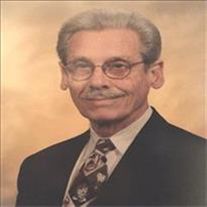
Dr. Grady Walker, Phd

I’ve been planning to write a blog concerning the great educational treatise “The Idea of a University” by John Henry Cardinal Newman since early December, but with the rush of finishing the semester, traveling and merry-making during the holiday, I haven’t gotten around to it until now. Planning to write, I did a little research, as I am wont to do, and came across the obituary of Dr. Grady Joe Walker, the professor at Oral Roberts University who introduced me to the work of Newman and ignited my great love for 19th Century British literature in the Victorian Era course he taught.

But Dr. Walker was not only a teacher, he was also a great mentor to his students. He engaged them on many levels, especially as faculty advisor for the literary magazine and the English Club. He even opened up his beautiful homes to us. Dr. Walker liked to buy fine old homes in disrepair, fix them up, replant their gardens, fill them with antiques and then sell them. During this process he would invite students over for club meetings and Christmas parties. Those meetings were such fun! After a tour of the house, where he would show us all the different rooms furnished with incredible antiques he purchased on trips to Europe, Dr. Walker would serve all this great food and we would eat and laugh as well as talk about literature and writing. Sometimes Dr. Walker invited a writer to come and read his or her work to us. Sometimes we read our own work or read from a favorite work of ours. He made us all feel important–that our ideas mattered.

I remember Dr. Walker’s Victorian literature course to be one of the most challenging that I had as an undergraduate. The class was small, the reading load demanding, but by that time I had learned that if I didn’t read, I was going to be greatly embarrassed in Dr. Walker’s class and for me during that time avoiding embarrassment was one of my primary motivations. (Oh, how times have changed.) So even though the reading was difficult for me, I read the excerpts from Newman’s seminal work on education closely, and that work quite literally changed my life. After I read it, I knew I wanted to be the kind of teacher Newman was, one who didn’t just teach a subject, but taught her students how to think and strove to instill in them a love of learning for its own sake.

Here are a few of my favorite quotes from Newman’s work that still resonate with me to this day, especially now as the country seems to be moving away from valuing the study of the liberal arts:

  • I have said already, that to give undue prominence to one [discipline] is to be unjust to another; to neglect or supersede these is to divert those from their proper object. It is to unsettle the boundary lines between science and science, to disturb their action, to destroy the harmony which binds them together. Such a proceeding will have a corresponding effect when introduced into a place of education. There is no science but tells a different tale, when viewed as a portion of a whole, from what it is likely to suggest when taken by itself, without the safeguard, as I may call it, of others (Discourse 5.1).
  • Hence it is that his education is called “Liberal.” A habit of mind is formed which lasts through life, of which the attributes are, freedom, equitableness, calmness, moderation, and wisdom (Discourse 5.1).
  • Cautious and practical thinkers, I say, will ask of me, what, after all, is the gain of this Philosophy, of which I make such account, and from which I promise so much….I am asked what is the end of University Education, and of the Liberal or Philosophical Knowledge which I conceive it to impart: I answer, that what I have already {103} said has been sufficient to show that it has a very tangible, real, and sufficient end, though the end cannot be divided from that knowledge itself. Knowledge is capable of being its own end. Such is the constitution of the human mind, that any kind of knowledge, if it be really such, is its own reward….I would maintain, and mean to show, that it is an object, in its own nature so really and undeniably good, as to be the compensation of a great deal of thought in the compassing, and a great deal of trouble in the attaining (Discourse 5.2).
  • But education is a higher word; it implies an action upon our mental nature, and the formation of a character; it is something individual and permanent, and is commonly spoken of in connexion with religion and virtue. When, then, we speak of the communication of Knowledge as being Education, we thereby really imply that that Knowledge is a state or condition of mind; and since cultivation of mind is surely worth seeking for its own sake, we are thus brought once more to the conclusion, which the word “Liberal” and the word “Philosophy” have already suggested, that there is a Knowledge, which is desirable, though nothing come of it, as being of itself a treasure, and a sufficient remuneration of years of labour (Discourse 5.6)
  • The artist puts before him beauty of feature and form; the poet, beauty of mind; the preacher, the beauty of grace: then intellect too, I repeat, has its beauty, and it has those who aim at it. To open the mind, to correct it, to refine it, to enable it to know, and to digest, master, rule, and use its knowledge, to give it power over its own faculties, application, flexibility, method, critical exactness, sagacity, resource, address, eloquent expression, is an object as intelligible…as the cultivation of virtue, while, at the same time, it is absolutely distinct from it (Discourse 5.9).

And my favorite passage of all:

  • I say, let us take “useful” to mean, not what is simply {164} good, but what tends to good, or is the instrument of good; and in this sense also…I will show you how a liberal education is truly and fully a useful, though it be not a professional, education. “Good” indeed means one thing, and “useful” means another; but I lay it down as a principle, which will save us a great deal of anxiety, that, though the useful is not always good, the good is always useful. Good is not only good, but reproductive of good; this is one of its attributes; nothing is excellent, beautiful, perfect, desirable for its own sake, but it overflows, and spreads the likeness of itself all around it. Good is prolific; it is not only good to the eye, but to the taste; it not only attracts us, but it communicates itself; it excites first our admiration and love, then our desire and our gratitude, and that, in proportion to its intenseness and fulness in particular instances. A great good will impart great good. If then the intellect is so excellent a portion of us, and its cultivation so excellent, it is not only beautiful, perfect, admirable, and noble in itself, but in a true and high sense it must be useful to the possessor and to all around him; not useful in any low, mechanical, mercantile sense, but as diffusing good, or as a blessing, or a gift, or power, or a treasure, first to the owner, then through him to the world. I say then, if a liberal education be good, it must necessarily be useful too (Discourse 7.5).

Don’t let anyone dissuade a student from studying what he or she wants to study. Don’t ask of your daughter or son, what kind of job will you get with that degree? Ask instead, are you interested enough in this subject to study in college to learn how to think and get a good liberal arts education? If the answer is “yes,” then that education will be well worth it and that student’s life will be made richer–better.

Thanks to Dr. Grady Walker and other professors like him, my life has been made better by my education–more than simply a path to a job.

Here’s a link to the whole work if you would like to read it. I hope you will.  http://www.newmanreader.org/works/idea/