Teaching Online–I Think I Like It


Kind of Fun to Teach Online

Kind of Fun to Teach Online

When I first started teaching online I found distance learning far inferior to traditional. Teaching has always been so interactive for me, so I didn’t see how I could capture the same dynamic in an online environment. I have found that I was absolutely right. The two environments are vastly different and require distinct teaching styles. However, that does not mean teaching online can not be as effective as teaching in the traditional classroom, and at times, I find online classes to be the better way to teach literature.

Of course, I have been teaching 200-level literature classes online for quite a few years and have had the freedom to develop my courses the way I see fit. I also am blessed at my college with an incredible distance learning support staff that have helped me solve problems and supplied me with the technological skills I need to continue improving my classes and lessening my grading load.

Earlier this semester, I presented a session on teaching 200-level courses online at the North Carolina Community College’s annual conference in Raleigh and thought I would share some of the information I presented there:

Course Structure

  • Provide Students with Resources, including
    Examples, in Folders
  • Number Assignments
  • Provide Due Dates in Multiple Places
  • Post a welcome Letter and/or Video
  • Use multiple Avenues of Communication

Assignments–Combine Traditional and Non-Traditional

   Traditional

  • Lecture (video or audio taped)
  • Class Discussion (through Discussion Forums,  On-line Chats and Skype)
  • Written assignments (reader responses, essay tests, literary analysis

   Non-Traditional

  • On-line Reading Quizzes
  • Kaltura Assignments
  • Audio/Video Response
  • SCROM Packages
  • Online Presentations

Some of My Favorite Assignments

  • Creative Projects
    • Rewriting a scene from Beowulf using a different perspective
    • Writing a Japanese Chain Poem
    • Writing a poem in the style of one of the Romantic Poets
  • Film and Video
    • Film Assignments—Watching a Modern British Film
    • Youtube videos
      • Resources
      • Assignments
  • Kaltura Assignments (For Moodle Users)
    • Lectures
    • Directions
  • Travel Project–My All-Time Favorite
    • $10,000 imaginary dollars to spend on the trip
      of a lifetime!!!
    • 20% of the grade in this course
    • Choose author and/or work to research
    • Annotated Bibliography
      • Scholarly
      • Related to author, work and countries associated with both
      • Should not be purely biographical
      • Research the places in the work, too
    • Travel Itinerary Presentation
      • Powerpoint or some other software
      • post on Travel Project Forum for all students to see 1
      • 14-day itinerary of a literary tour
      • I provide detailed examples of the annotated bibliography and the presentation.

If you would like more information about any of the above information, just contact me here at “Hey, Mrs. Winkler!” I’ll be glad to share.

On my next blog, I’ll discuss some advanced grading methods I use online to help with the heavy grading load that can be generated when teaching upper level online classes


Today Is What It’s All About

Yesterday, I was discouraged, but today is a new day. Why? I went to rehearsal of my college’s new play. We’re performing a stage version of the movie Clue that is based on the old sleuthing board game so many of us know and love. The movie has an all-star cast, including the late great Eileen Brennan, Tim Curry (of Rocky Horror Picture Show fame), the fabulous Madeline Kahn, Christopher Lloyd, Michael McKean, Martin Mull and Lesley Ann Warren.

At auditions, there were so many fine actors that our director, head of the drama department, decided to have understudies for some of the roles, include a “household staff” that will serve as entertainment between scenes and then get their shot at the big roles during two additional shows. Great idea, and it’s what directors who are primarily good educators at community colleges do–make their lives much more complicated for the sake of their students as well as the community members who are also significant stake holders in their college.

Today’s rehearsal reflects what community colleges are all about–play production students coming early and staying late to work on the set, more seasoned actors helping the newer ones, agreeing with the director without argument, offering suggestions, happy to have them accepted or not, the director’s quick and non-embarrassing corrections when new actors make mistakes, each actor creating a story for his or her character, an occasional harmless joke, the joys of physical humor leading to laughter and a true knowledge of an art form that only comes with actually getting up and doing it.

This is educational theater and the essence of what liberal arts is all about–following directions, creative problem-solving, collaborating and creating. I’m so glad to once again be a part of it.

Also, today–my positive day–I want to give a shout out to the colleagues, support staff, administrators and students who helped me so much during this past discouraging week. I complain sometimes, but I truly just want to make things better for my fellow instructors and my students, especially my students. Nevertheless, I want to find more time to praise the people I work with who also have the welfare of all of our students foremost in their minds. I also appreciate those students and friends who have reached out to me this week, offering me respect and encouragement. Thanks, guys–you know who you are.

“The Idea of idea of a University” Still Rings True–An Unexpected Eulogy for Dr. Grady Joe Walker: Everything Old is New Again, Part II

DrGradyJoe-Walker-1417624164

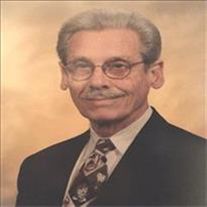
Dr. Grady Walker, Phd

I’ve been planning to write a blog concerning the great educational treatise “The Idea of a University” by John Henry Cardinal Newman since early December, but with the rush of finishing the semester, traveling and merry-making during the holiday, I haven’t gotten around to it until now. Planning to write, I did a little research, as I am wont to do, and came across the obituary of Dr. Grady Joe Walker, the professor at Oral Roberts University who introduced me to the work of Newman and ignited my great love for 19th Century British literature in the Victorian Era course he taught.

But Dr. Walker was not only a teacher, he was also a great mentor to his students. He engaged them on many levels, especially as faculty advisor for the literary magazine and the English Club. He even opened up his beautiful homes to us. Dr. Walker liked to buy fine old homes in disrepair, fix them up, replant their gardens, fill them with antiques and then sell them. During this process he would invite students over for club meetings and Christmas parties. Those meetings were such fun! After a tour of the house, where he would show us all the different rooms furnished with incredible antiques he purchased on trips to Europe, Dr. Walker would serve all this great food and we would eat and laugh as well as talk about literature and writing. Sometimes Dr. Walker invited a writer to come and read his or her work to us. Sometimes we read our own work or read from a favorite work of ours. He made us all feel important–that our ideas mattered.

I remember Dr. Walker’s Victorian literature course to be one of the most challenging that I had as an undergraduate. The class was small, the reading load demanding, but by that time I had learned that if I didn’t read, I was going to be greatly embarrassed in Dr. Walker’s class and for me during that time avoiding embarrassment was one of my primary motivations. (Oh, how times have changed.) So even though the reading was difficult for me, I read the excerpts from Newman’s seminal work on education closely, and that work quite literally changed my life. After I read it, I knew I wanted to be the kind of teacher Newman was, one who didn’t just teach a subject, but taught her students how to think and strove to instill in them a love of learning for its own sake.

Here are a few of my favorite quotes from Newman’s work that still resonate with me to this day, especially now as the country seems to be moving away from valuing the study of the liberal arts:

  • I have said already, that to give undue prominence to one [discipline] is to be unjust to another; to neglect or supersede these is to divert those from their proper object. It is to unsettle the boundary lines between science and science, to disturb their action, to destroy the harmony which binds them together. Such a proceeding will have a corresponding effect when introduced into a place of education. There is no science but tells a different tale, when viewed as a portion of a whole, from what it is likely to suggest when taken by itself, without the safeguard, as I may call it, of others (Discourse 5.1).
  • Hence it is that his education is called “Liberal.” A habit of mind is formed which lasts through life, of which the attributes are, freedom, equitableness, calmness, moderation, and wisdom (Discourse 5.1).
  • Cautious and practical thinkers, I say, will ask of me, what, after all, is the gain of this Philosophy, of which I make such account, and from which I promise so much….I am asked what is the end of University Education, and of the Liberal or Philosophical Knowledge which I conceive it to impart: I answer, that what I have already {103} said has been sufficient to show that it has a very tangible, real, and sufficient end, though the end cannot be divided from that knowledge itself. Knowledge is capable of being its own end. Such is the constitution of the human mind, that any kind of knowledge, if it be really such, is its own reward….I would maintain, and mean to show, that it is an object, in its own nature so really and undeniably good, as to be the compensation of a great deal of thought in the compassing, and a great deal of trouble in the attaining (Discourse 5.2).
  • But education is a higher word; it implies an action upon our mental nature, and the formation of a character; it is something individual and permanent, and is commonly spoken of in connexion with religion and virtue. When, then, we speak of the communication of Knowledge as being Education, we thereby really imply that that Knowledge is a state or condition of mind; and since cultivation of mind is surely worth seeking for its own sake, we are thus brought once more to the conclusion, which the word “Liberal” and the word “Philosophy” have already suggested, that there is a Knowledge, which is desirable, though nothing come of it, as being of itself a treasure, and a sufficient remuneration of years of labour (Discourse 5.6)
  • The artist puts before him beauty of feature and form; the poet, beauty of mind; the preacher, the beauty of grace: then intellect too, I repeat, has its beauty, and it has those who aim at it. To open the mind, to correct it, to refine it, to enable it to know, and to digest, master, rule, and use its knowledge, to give it power over its own faculties, application, flexibility, method, critical exactness, sagacity, resource, address, eloquent expression, is an object as intelligible…as the cultivation of virtue, while, at the same time, it is absolutely distinct from it (Discourse 5.9).

And my favorite passage of all:

  • I say, let us take “useful” to mean, not what is simply {164} good, but what tends to good, or is the instrument of good; and in this sense also…I will show you how a liberal education is truly and fully a useful, though it be not a professional, education. “Good” indeed means one thing, and “useful” means another; but I lay it down as a principle, which will save us a great deal of anxiety, that, though the useful is not always good, the good is always useful. Good is not only good, but reproductive of good; this is one of its attributes; nothing is excellent, beautiful, perfect, desirable for its own sake, but it overflows, and spreads the likeness of itself all around it. Good is prolific; it is not only good to the eye, but to the taste; it not only attracts us, but it communicates itself; it excites first our admiration and love, then our desire and our gratitude, and that, in proportion to its intenseness and fulness in particular instances. A great good will impart great good. If then the intellect is so excellent a portion of us, and its cultivation so excellent, it is not only beautiful, perfect, admirable, and noble in itself, but in a true and high sense it must be useful to the possessor and to all around him; not useful in any low, mechanical, mercantile sense, but as diffusing good, or as a blessing, or a gift, or power, or a treasure, first to the owner, then through him to the world. I say then, if a liberal education be good, it must necessarily be useful too (Discourse 7.5).

Don’t let anyone dissuade a student from studying what he or she wants to study. Don’t ask of your daughter or son, what kind of job will you get with that degree? Ask instead, are you interested enough in this subject to study in college to learn how to think and get a good liberal arts education? If the answer is “yes,” then that education will be well worth it and that student’s life will be made richer–better.

Thanks to Dr. Grady Walker and other professors like him, my life has been made better by my education–more than simply a path to a job.

Here’s a link to the whole work if you would like to read it. I hope you will.  http://www.newmanreader.org/works/idea/

Good Beginnings–Mama K and Her Kin, Part I

cheaha_mt1b

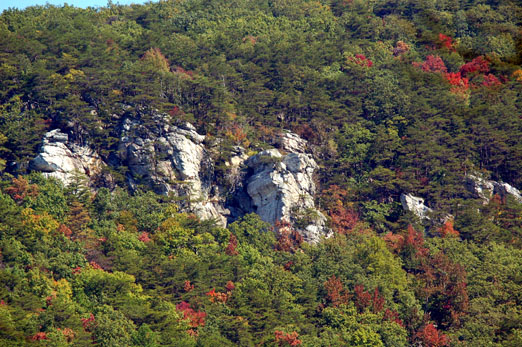
View of Mt. Cheaha near my grandmother’s birthplace in northeast Alabama

My grandmother, my mother’s mother, and one of my namesakes (I was named after my two grandmothers) was a teacher. We called her Mama K. She came from the mountains of Alabama, up near Chattanooga, that’s the tail end of the Appalachian range. It’s beautiful up there. If you ever visit, be sure you go to Mt. Cheaha, the highest point in Alabama.

My grandmother met my grandfather, also a teacher and a principal, at what was then called Jacksonville State Teachers College. Back then, the late 1920’s, a person could complete a teaching degree in just two years. They met in a music appreciation class. He was funny and boisterous, she was proper and reserved. He had grown up near Budston in Chambers County, Alabama, still one of the poorest counties in the nation, and she had grown up in the mountains, also surrounded by poverty, but their families, mostly farmers, managed to give their children good beginnings–childhoods filled with love, security and faith–teaching them self-sufficiency and discipline, but they wanted more for their kids than the hard scrabble life they had, so they managed to find a way to send them to the teachers college, where they could hopefully rise out of the poverty in which they were born.

All but one of my grandmother’s siblings became educators. Uncle John Taylor was principal of a school in Rome, Georgia for years. I didn’t know him well, but I went to his funeral with my mother, and I’ll never forget how packed that church was, how well-respected and loved Uncle John Taylor was.

My Aunt Jane, the baby of the family, completed all the course work for a doctorate in mathematics but didn’t see the need to write a dissertation as she was happy teaching algebra, calculus and trigonometry to high school students, mainly in Valley, Alabama, in the east-central part of the state near the Alabama/Georgia line. My daughter’s middle name is Jane in honor of my great Aunt Jane, who never married and had no children of her own. Her niece, my mother, became a teacher and high school librarian.  I, the grandniece, am a teacher too, having taught English composition and literature over 25 years in private at public schools, at the secondary and college level.

Aunt Dixie, the middle daughter,  also obtained a teaching certificate and maybe taught a year or two, but she went to revival services at the little County Line Baptist Church and fell in love with the handsome young preacher who was preaching that day, my Uncle Judson, and married him. His son, also Judson, became a teacher and principal in the Birmingham, Alabama area, now retired as Dr. Judson L. Jones. His daughter Lea is also a teacher and working on her doctorate in education.

Uncle Jim went into the navy and served his country honorably, becoming a farmer near Troy, Alabama, carrying on his parents’ profession, but it’s interesting to note that his daughter and granddaughter became educators, highly respected in their fields.

When Mama K graduated from Jacksonville State Teachers College, her first teaching position was in North Alabama in a one-room schoolhouse. I remember going through some of Mama K’s old school books from those days when I was a child. It was one of my favorite past times. I loved old books and still love them to this day, the way they smell and feel and look. In between the pages of one of the old textbooks was a little pamphlet about Harry the Hookworm, illustrated with funny little cartoon pictures of a hookworm and explaining how to avoid getting the parasites by using a latrine. The latter part of the pamphlet actually had instructions on how to build an outhouse.

I asked Mama K about it, and she told me this story. Once when she was teaching in that little schoolhouse in North Alabama, there was one little boy who was very poor and usually came to school wearing the same clothes, but she didn’t think anything of it because his clothes, despite being worn, always looked clean, but one day every time he came close to her, she noticed a horrible smell, a body odor that got worse in the next few days, especially now that it was getting colder, and she was keeping the windows and doors of the little schoolhouse closed.

Finally, the smell got so bad that she simply had to say something, so she kept him after school and asked as gently as she could, “Are you taking a bath from time to time?”

He said, “Yes’m”

“Are you taking off your shirt and your pants and getting into a tub?”

“Yes’m. My mama heats up the water on the stove and I get in.”

“Do you scrub all over?”

“Yes’m”

My grandmother didn’t want to embarrass the boy any more than she already had, but she wanted to find out what was causing the smell and she had her suspicions, so she said, “Are you taking off all your clothes, including your underwear?”

He looked surprised at the question, and said, “Why, no ma’am. My mama done sewed me into my underwear!”

She chuckled and I laughed, after she explained it to me as I didn’t have much knowledge of long johns, and then she got serious, telling me that when she taught at the little one-room schoolhouse, a large portion of her teaching was about how to live a healthy life day to day when you were poor and didn’t have much of anything. She talked about how poor her students were and that many of them didn’t have houses with running water or latrines. They didn’t know many of the basic things, so she taught those along with reading and writing and arithmetic. She felt good about the short time she taught those students because she believed she was helping them have better lives.

My grandmother wasn’t sure how the boy resolved his problem, but he never came to school again smelling bad and everyone, including his fellow students I’m sure, were happy about it.

I look back at that story today, as a teacher myself, and am heartened. Sometimes what I have to say is difficult to say and hard for some people to hear. It is embarrassing and uncomfortable. It sometimes leads to confrontations, but if something is wrong at my institution, if something smells bad, then it is my duty as a leader in my classroom and at the college to find the cause of that stink and start scrubbing.

I learned how to seek and scrub partly from my grandmother–Margaret Katherine Dabbs, a brave and honorable woman–and I am thankful for the good beginnings she brought to my life, especially my teaching life. I hope I can be her namesake in more ways than one.

Next up–A story about Mama K during the time of school desegregation in Alabama.

O’Connor and Swift–Revelation

Veteran's Day 080

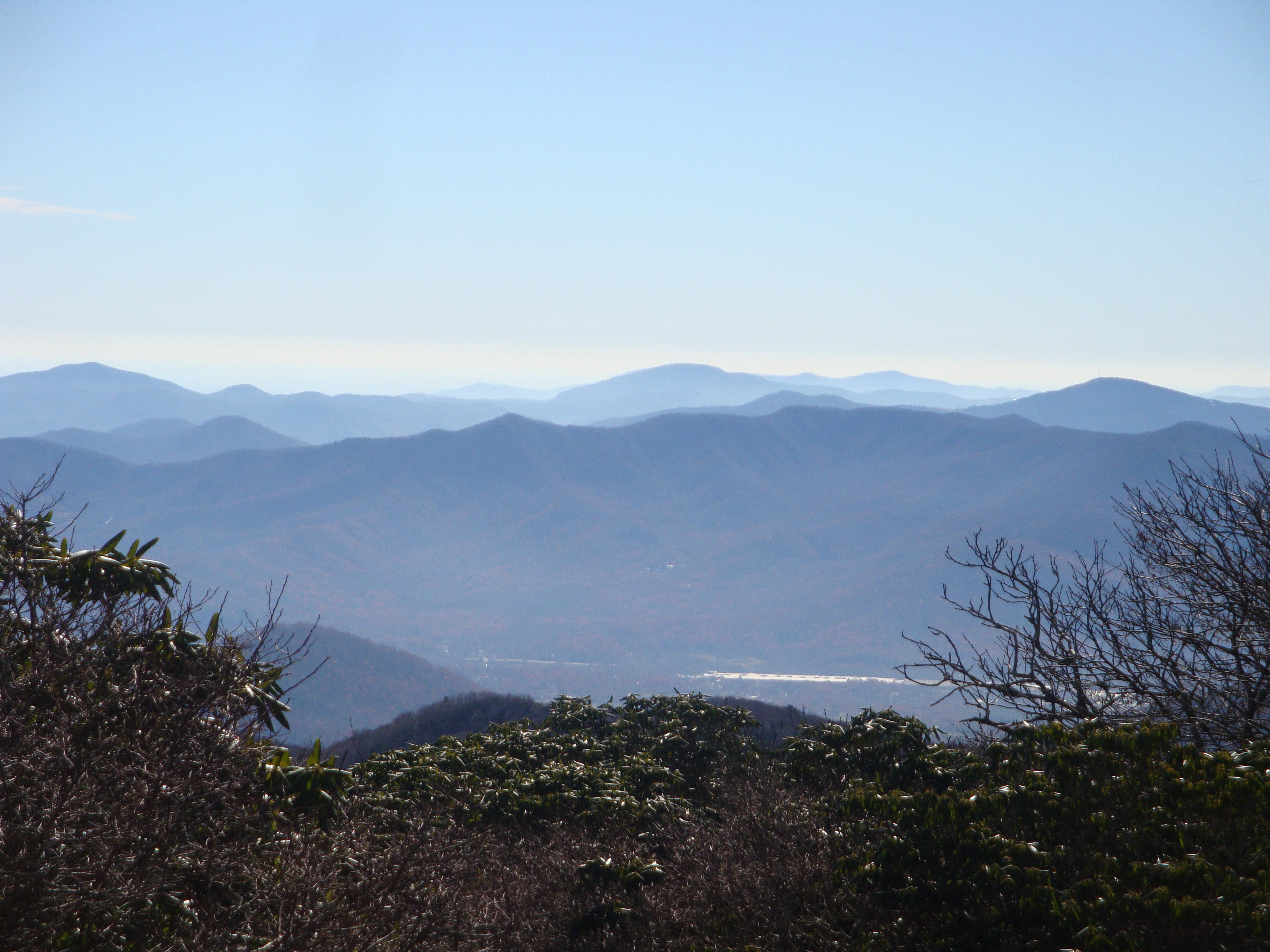
View from the Craggy Gardens Trail off the Blue Ridge Parkway where I went to think on Veteran’s Day, 2014

I’m preparing to teach on two of my favorite works, “Revelation” by Flannery O’Connor and “A Modest Proposal” by Jonathan Swift  Both works have been extremely important in my life–humbling, formative, funny in such a strange, macabre way.

“Revelation” is the story of Mrs. Turpin, who runs a pig farm along with her husband. At the opening of the story she has brought her husband to a busy doctor’s office to have his infected leg treated. While in the lobby waiting, Mrs. Turpin voices her contempt for all those she feels are beneath her, which is just about everybody. An ugly girl, O’Connor’s description, not mine, gets fed up with Mrs. Turpin’s comments and has a rather extreme reaction, causing a needed change in Mrs. Turpin when she realizes she is indeed, “a warthog from hell.”

Everytime I re-read “Revelation” I am struck, just like Mrs. Turpin, by O’Connor’s big fat book of human development, realizing that I too am a warthog, for all my blustering arrogance. I remember her words that I repeat when I’m lecturing. When asked why she used such violence and grotesque characters in her work, O’Connor said, “To the hard of hearing you shout and for the almost blind you draw large and startling figures.”

Sometimes I do that. And it’s okay. As long as I stay humble and am willing to accept the fact that people don’t like it much when warthogs squeal.

Jonathan Swift shouted and squealed when he wrote “A Modest Proposal,” suggesting that the Irish problems of extreme poverty and famine be solved by eating Irish children. He even included recipes. Some people took his satire seriously and feared for Swift’s soul, others criticized him for his over-the-top style, just as they criticized O’Connor. Funny how the world remembers and studies those bold enough to shout.

So lesson for today–Realize you are just a warthog, then start squealing.

Today’s squeal–Every American who is willing to study hard and aspires to a profession that requires a four-year degree, not two years of technical training only, deserves an affordable way to obtain that degree without becoming overburdened with debt.