Reading at The Brandy Bar

The Brandy Bar + Cocktails — Photo by usarestaurants.info

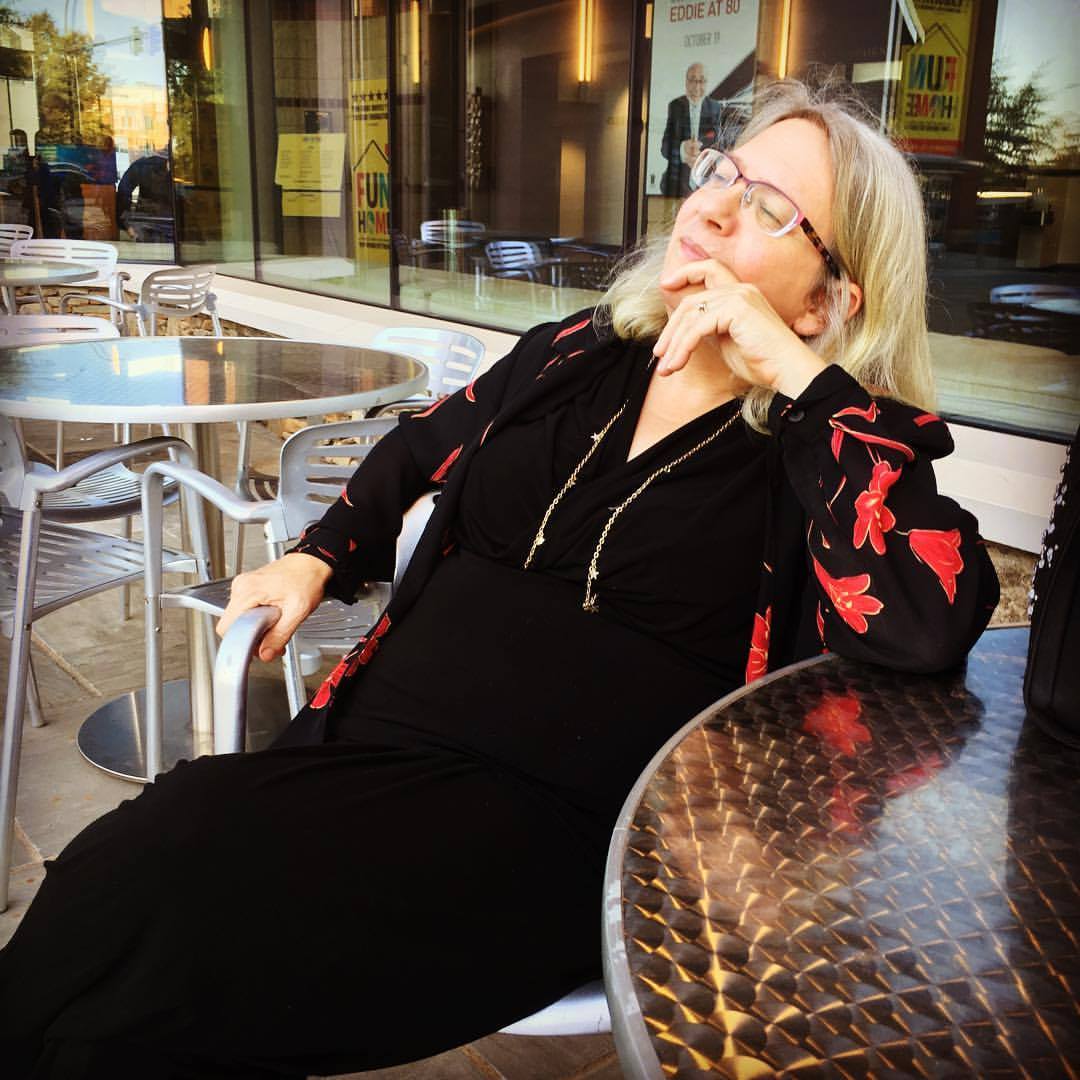
It’s getting real, y’all. This month I will begin the formal editing process of my teaching memoir, Lessons: A Teaching Life. If all goes well, the book will be published by the end of the year. I’ve been told it’s never too early to get the word out, so I signed up to read a short excerpt from the book at The Brandy Bar+Cocktails.

For the past several years, almost every month, the North Carolina Writers’ Network–Henderson County sponsors “In the Company of Writers” at The Brandy Bar. It’s great. The Brandy Bar is in an old building on historic 7th Avenue in Hendersonville, NC. Writers gather to hear a presentation by a local or regional poet, author, or playwright, followed by an open mic.

Last Wednesday, the evening began with signing up for the open mic and chatting with writer friends to the sound of blues tunes by guitarist Charlie Wilkinson and Hollywood Jonny. Next, came a marvelous presentation by local poet Tony Robles who read from his two volumes of poetry–Where the Warehouse Things Are and Thrift Store Metamorphosis. Tony moved us all as he read poems about the soul-healing power of physical work and the intrinsic value of everyday life and ordinary people. After the reading, Tony answered questions, offering insight into his work and telling us about the novel he’s working on, his first.

The Reading Room — Photo by usarestaurants.info

I was the first to read after Tony. A little nervous to follow such a great writer and eloquent speaker, but I felt so good afterward. One of the best things about reading a work in progress to an audience is when you get affirmation that your work has value. In my case, I also picked up on a few things I needed to revise, which I was hoping for. I used to tell my students to read their work aloud when they were revising and editing. One of the best ways to check for technical errors, sure, but also an opportunity to analyze word choice, sentence structure, and rhythm.

It was also a joy to hear the other readers. Some were writers I’ve come to know very well over my years of involvement with the Network, but I was happy to hear the fine work of writers I’d never met, including quite a few younger writers. In the company of writers is a good name for the event, one of my favorite places to be. Extra nice to be sitting in a comfortable chair sipping on a specialty of the house, Brandy Alexander.

Lava lamp collection by the bar–photo by usarestaurants.info

One of the most moving pieces came from a bearded man wearing a cap, tattoos covering his arms. He wrote about addiction and dealing with it. After the readings, he approached me and asked if I had ever taught at the University of North Carolina–Asheville. I said I had not, but I had taught at Blue Ridge Community College for 27 years.

His face brightened. He had been there, too. He asked about his teacher, my colleague who retired several years before me. I told him that I met with her regularly, that she was doing well and enjoying retirement. He wanted me to let her know that he was at UNCA finally finishing his degree, in English. “Tell her I’m a little late in getting it but I’m getting it.” I assured him I would let her know.

Once long ago, a student gave me a little wooden plaque shaped like a pencil that said, “Time and distance cannot erase the influence of a good teacher.” I think I’ll remind my friend of that when I tell her about meeting her grateful student while reading at The Brandy Bar.

Distractions

Photo by Anna Shvets on Pexels.com

We suffer from distractions. It’s not only the high tech, although that is definitely a problem – our phones and computers and endless entertainment sources and open AI and, and, and. More than anything else, we are distracted by our concerns. No, our worries. Perhaps it makes us feel virtuous to worry, to endlessly bemoan the failings of others and how they are leading us all down the path that leads to destruction. After all, if we can distract ourselves with how the world is going to hell in a handbasket, maybe we won’t have to look into our own souls and search for the true sources of our problems.

Lord knows I’m guilty. If I worry enough about how this current election will affect education and talk about it enough with friends, then I can distract from the fact that I promised myself I would finish my teaching memoir this first year of my retirement and that I would work diligently on making the most use of the Virtual Playwriting Fellowship the Dramatists Guild Foundation awarded me.

Photo by Tim Gouw on Pexels.com

Of course, I don’t call it worrying; I am “concerned,” so my worry becomes something good, right? My other distractions, including social media, are being used, I tell myself, to help raise awareness and guide people toward good things. And it is good if I stay focused, but if I’m honest, I don’t. I start out with those good intentions and slip on down the road to you know where.

In Book XII of C. S. Lewis’s great satiric epistolary novel, The Screwtape Letters, the uncle demon Screwtape advises his nephew Wormwood about the value of distractions to keep the new Christian, no longer in danger of the fires of hell, from being too effective.

He says:

Photo by Mike Bosch on Unsplash

You can make him waste his time not only in conversation he enjoys with people whom he likes, but in conversations with those he cares nothing about on subjects that bore him. You can make him do nothing at all for long periods. You can keep him up late at night, not roistering, but staring at a dead fire in a cold room. All the healthy and outgoing activities which we want him to avoid can be inhibited and nothing given in return, so that at last he may say, as one of my own patients said on his arrival down here, “I now see that I spent most of my life in doing neither what I ought nor what I liked”. The Christians describe the Enemy as one “without whom Nothing is strong”. And Nothing is very strong: strong enough to steal away a man’s best years not in sweet sins but in a dreary flickering of the mind over it knows not what and knows not why, in the gratification of curiosities so feeble that the man is only half aware of them, in drumming of fingers and kicking of heels, in whistling tunes that he does not like, or in the long, dim labyrinth of reveries that have not even lust or ambition to give them a relish, but which, once chance association has started them, the creature is too weak and fuddled to shake off.

You will say that these are very small sins; and doubtless, like all young tempters, you are anxious to be able to report spectacular wickedness. But do remember, the only thing that matters is the extent to which you separate the man from the Enemy. It does not matter how small the sins are provided that their cumulative effect is to edge the man away from the Light and out into the Nothing. Murder is no better than cards if cards can do the trick. Indeed the safest road to Hell is the gradual one—the gentle slope, soft underfoot, without sudden turnings, without milestones, without signposts,

So, whether it be pleasure or worry that distracts us, in the end all that will matter is that we have not acted as we should have or wanted to. It is right that we be concerned about extremist candidates running for state superintendent, about school board meetings becoming violent, about indoctrination coming from the right or left, about unwarranted censorship or the lack thereof, but it is wrong of us to see problems where there aren’t any or to let our fears and worries distract us from what you (talking to teachers now) are supposed to do–TEACH.

Photo by Katerina Holmes on Pexels.com

Until the last two years of my teaching, I worried constantly about ambiguous mandates coming down from the administration. Often, they didn’t apply to me but nevertheless distracted from my teaching. I would get upset, argue, discuss whatever it was endlessly with my colleagues in their offices. The thing is I didn’t need to worry because most people in the administration were simply passing on what had been mandated to them, having little hope that, for example, yet another restructuring of developmental education would fix the problems that the previous restructuring just a few years before had not fixed or made worse.

Photo by Andrea Piacquadio on Pexels.com

All my “concern” did not help me teach those developmental classes effectively. The only thing that helped was buckling down and embracing any sound ideas and finding ways around the silliness, or simply ignoring it. For example, when the state mandated that instructors should not use fiction or essays written in first-person to teach reading and writing, I was flabbergasted, ready to fight this nonsense tooth and nail at the conference I went to explaining the new curriculum. However, low and behold, almost every session at the conference included sample readings that were either essays written in fir st person or fiction. These teachers were fantastic, and their lesson ideas were great. I adopted some of them. No one seemed to notice these teachers were ignoring the mandate, including the people who had cobbled together the new curriculum. I didn’t have to fight.

Now that I’m retired, I can see that I wasted a lot of time and caused myself undo stress by allowing myself to be distracted by administrative bloat and broad, ambiguous criticism. All I can do now is say to young educators, please don’t be like me: don’t turn your teaching world upside down with every pedagogical or andragogical wind that blows. It’s not worth it. Pick out the good ideas and incorporate them, change when you need to, learn new technical skills that enhance your teaching, use old ideas that have worked for you before, and trust yourself.

Photo by Yan Krukau on Pexels.com

Teaching is a craft. You should always be open to improving it; however, teaching is also an art, most successful when it is creative and engaging, when it takes risks, when it moves onto the fringes and beckons students into the glorious realm of ideas.

Read. Write.

photo by Katie Winkler

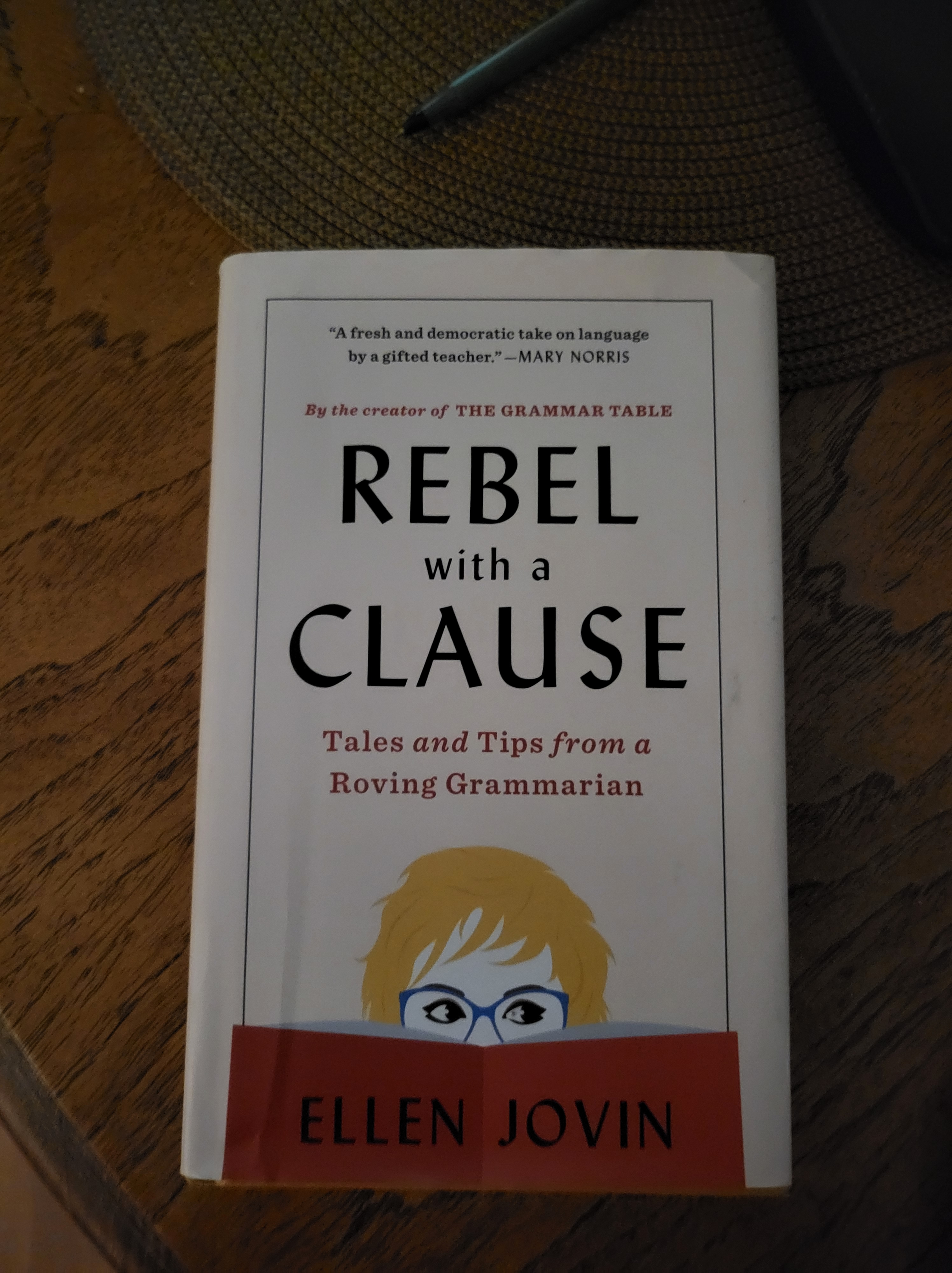
Just finished reading one of the gift books (pictured above) that a dear friend and former colleague gave me my last day at work. It is simply charming and a perfect choice for a woman who has retired from teaching English but will always love grammar.

That’s right. I said it. I love grammar, always have. I remember when I was in high school VOLUNTEERING to take an advanced grammar class because even then I felt drawn to grammar for some strange reason. Side note: Isn’t amazing that a high school in Jenks, Oklahoma, outside of Tulsa, would be able to fill an advanced grammar class?

With its in-depth discussion of parts of speech and detailed diagrams of complex sentences like the Preamble to the Constitution, that grammar class cemented my love and affinity for all aspects of language, including what I used to think most people found uninteresting and mundane. However, Ellen Jovin’s social experiment offers proof that many people find grammar not only interesting but often worth debating–seriously.

Jovin indicates in her introduction that she left her New York City home in the fall of 2018 armed with a folding table, a sign that reads “Grammar Table,” several English language handbooks, and a husband–to record each grammar session for a documentary that is now in post-production. By the time the book was published in 2022, the duo had visited 47 states, missing only Alaska, Hawaii, and Connecticut. I know what you’re thinking, why Connecticut? I mean, it’s right there! In the witty style that suffuses the book, Jovin explains that they were hungry for pizza, got caught up enjoying it, and called it a day without setting up the table. Then came Covid.

Jovin went ahead and wrote the book. Good for her! Each chapter discusses “hot” grammar topics at the table, beginning with one that scorches, the Oxford comma. You know the one–“eats, shoots, and leaves” or “eats, shoots and leaves?” Her measured response to even those who feel most strongly pro or con, mainly pro, is another hallmark of the book. I love the way that Jovin finds a way to smooth the ruffled feathers of even the staidest visitors to her table.

Some of my favorite topics include participles, gerunds, punctuation of all sorts, homophones, and possessive apostrophes. Foremost, I found validation as I was in agreement with this grammar expert in almost every case and can remember explaining concepts in a similar way to my students over the years. Jovin uses example sentences and draws little diagrams and simple drawings as aids, just like I did, and they work! Just like they did for me. To use a southernism–It just tickles me.

Photo by Vlada Karpovich on Pexels.com

Her style and organization have inspired me as I continue to work on my own writing project, a memoir of my career as an educator. Like her I don’t want to write in chronological order but topically, showing how my life experiences have impacted the classroom. I also want to infuse humor and introduce interesting, quirky characters into the work as she does. I want it to be entertaining as well as informative. I want to teach and write, just like I ask others to do.

~~~~~~~~~~~~~~~~

Speaking of Teach. Write., if you have anything you would like to submit for this edition, then the deadline is fast approaching–September 1. The fall/winter edition will publish on Oct. 1, and I will reopen for submissions at that time. I have some great pieces to share with you in this new edition, so stay tuned for more information.

If You Ask Me…

Photo by Leeloo Thefirst on Pexels.com

When state performance measures came out this year and the Credit English Success (p.7) rate was below the average band, my first instinct was to become defensive. “It’s not my fault!” I wanted to scream and quickly blame someone else. Another instinct was to point the finger at society’s focus on data. However, after the initial flare up of self-protection, I calmed down and began to reflect more completely on the entirity of the report, which helped to put things into perspective. I want to be prepared to offer suggestions for improvement should anyone ever show any interest in what a retiring English educator with 33 years of experience thinks.

Although our college is considered below average in Credit English Success, we are above average in College Transfer Success (p. 17.) This is encouraging to me because it says that despite extraordinary circumstances such as the pandemic with its accompanying economic and cultural effects, our students who transferred to four-year institutions were well-prepared to continue their education.

Another encouraging factor is that while we are below the average band, only by .03 index points, I know we, and I don’t mean just the English department, I mean the entire college, WE can do so much more to help our students perform better in their English classes. One thing is already in the works, and that is a push to encourage, or even to require, students to take their English classes early in their programs. However, there is more that we as a college can do to help improve College English Success. Here are a few ideas:

Photo by Min An on Pexels.com
  • Normalize high standards for reading and writing. If students heard from every instructor across divisions how important reading and writing well is to success in school and the workplace, and if instructors incorporated more reading and writing assignments in all classes, our scores would go up.
  • Improve the writing assessment skills of instructors. Although most instructors have advanced degrees in their subject area and are experts in writing within their discipline, few have had any formal education on how best to assess reading and writing skills. Understanding ways to incorporate reading and writing assessments within instructors’ particular divisions based on the writing assessment techniques already used in the college’s English department would be a way to permeate all programs with a consistent standard without violating any instructor’s academic freedom. Topics of professional development could include

  • incorporating vocabulary and other reading lessons into any course
  • adding consistent writing criteria into advanced grading methods such as rubrics, checklists, and marking guides.
  • composing engaging writing assignments with clear instructions.
  • teaching best practices of composition teachers and explore how to translate these techniques into the non-English classroom
  • how to save time when grading written assignments while maintaining high standards of written communication
  • Promote the importance of communication skills throughout the College, maybe even plan special events that highlight the importance of reading and writing in all disciplines. Many organizations are eager to partner with community colleges, groups such as PEN America and the National Writing Project that declares, “Writing is essential to learning, critical thinking, and active citizenship” (NWP).
Photo by Andrea Piacquadio on Pexels.com
  • Across the campus, teach not only students but also faculty and staff the importance of strong reading and writing skills for school and for the workplace. Here are just a few facts.
    • Reading well improves the ability to follow instructions, and reading complex texts, like literature, peer-reviewed scholarly articles, and professional journals, increases critical thinking, a skill highly prized by today’s employers according to World Economic Forum.
    • An August 2022 article from Business News Daily, reports on the professional benefits of reading books, fiction as well as non-fiction, including fostering empathy and creativity as well as developing problem-solving and cognitive skills. According to the article, reading can even lessen stress and build perseverance, skills students definitely need now and in the future. Imagine if all instructors were curating interesting and engaging readings for their students. They would be expanding their knowledge of their own disciplines while encouraging their own students to develop their reading skills.
    • The importance of strong communication skills in the workplace continues to be of high importance in 2022 as reported by major educational institutions like Harvard and MIT as well as career-seeking sites, such as Indeed, Monster, Zip Jobs, and Linked In.
Photo by Last Chwezi on Pexels.com

  • Another thing we can do to work on the problem is to develop a college-wide system for remediating students who need extra help with their writing. For example, when I was a graduate student at Western Carolina University low these many years ago, I worked as a graduate assistant in the Writing Center. I would often tutor students who had received a “CC” on their essays in a course other than English. I can’t remember what CC stands for after all of these years, but I do remember that professors gave CC’s to essays that did not meet basic college-level English standards. Students who received two CC’s would be enrolled at no expense in a remedial English program. The word was that no student wanted to endure that class, so they would come to the Writing Center for help. I remember receiving a thank you note from one grateful student whose scores on all of his essays improved upon just a few visits to the Writing Center. Our college might do something like this–develop a system to identify students in non-English classes who have writing issues and allow them to complete revisions for a higher grade only if they visit the Student Success Center to work on that revision. We already have a referral system in place, but if all instructors could be more proactive in addressing the need to improve writing skills campus-wide, then our success rates would increase.

Just a few ideas of what the college as a whole could do to improve our English scores. Next time on Hey, Mrs. Winkler I’ll offer some suggestions on ways the administration can help English faculty as they struggle to help improve retention and success for our students.

Even if they don’t ask me.

Student Teacher–Teacher Student

Photo by Andrea Piacquadio on Pexels.com

If I can put aside my oh-so-fragile ego, I can learn a great deal from my students. I am trying to listen more to what they say. One way I am learning from my students is by requiring my first semester freshman English composition students to write a short researched persuasive essay on a topic that is relevant to our college specifically or to one of the communities it serves.

Students can choose from a list of research questions I brainstormed, or they can submit their own questions for approval. Most of the time, the students pick one of my groups of questions. One set that became much more popular during the pandemic has been about online learning:

  • What is our college doing to help retain online students? Is it enough? Why? or Why not? What are some things that other schools are doing that our college might do to help retain online students? Is our college doing any of these things? 
Photo by Andrew Neel on Pexels.com

This short summer semester, without any prompting from me, two of my best students chose the same group of questions. After research, including separate personal interviews with the college’s Director of Teaching and Learning, my students argued two different, but similar, theses. Happily, both recognized the students’ role in their own success and offered suggestions for what students could do to help themselves complete online courses with the desired results.

However, one student emphasized the faculty’s role in improving online retention, and the other argued that the administration could take steps to help more students achieve success. I found both viewpoints interesting and insightful.

So, what did I learn?

Photo by Canva Studio on Pexels.com

The two big takeaways–Faculty should interact more with students, and administrators need to lighten instructors loads so that students can do so. Wow! I mean, my students didn’t teach me anything I didn’t know already. I’ve been saying it for years; however, what is new is hearing about the importance of interaction and building a personal relationship from online students themselves, one who has had six semesters of online classes at my institution.

Both students indicated how helpful it is when instructors quickly respond to inquires and return graded material as soon as possible. This is the first time, however, that I have had a student discuss the administration’s responsibility to be sure that faculty do not have an overload.

Their arguments are well-taken.

A case in point was my schedule this summer. I had three classes and a shortened semester of ten weeks instead of sixteen. Since I have been teaching sixteen-week English composition in eight weeks the past couple of years, ten weeks seemed like a summer vacation. With the lighter load, I was not only able to communicate more often and with more detail but also had time to develop my courses and further refine them for our mutual benefit. In addition, I was able to hold more live virtual sessions and record them for the sake of students who could not attend the sessions. Students mentioned how helpful these sessions were.

Both students mentioned the need for proper advisement when students are registering for online classes. Sometimes, they said, students are ill-prepared for the rigor of online classes and may not possess the time-management skills to be successful. I have found that some of my eight-week online students are not even aware that they are taking an accelerated English course and quickly drop out.

Photo by Edward Jenner on Pexels.com

One student mentioned in their essay the problem of recruitment taking precedence over retention. This point resonated with me. For example, on more than a few occassions, I have had developmental and other ill-prepared or otherwise weak students placed in my eight-week courses, or even worse, with advising restrictions removed since the pandemic, students are signing themselves up for classes, which can easily lead to misplacement. Most of these students withdraw; the expectations and pace are simply too much.

The hope is that administration will return to advising restrictions, but the lure of classes filled beyond capacity, and the funds that generates, so far seems to be too strong. As long as enrollment numbers are considered above all other considerations, including limiting the number of students in online classes, hiring more instructors, and better preparing them, I, and two of my most talented students, recognize that we will most likely continue to have low retention and success rates in online classes despite the efforts of even the most dedicated and talented faculty.

Mrs. Winkler Keeps Reading, and Thinking

I haven’t been writing like I should this summer since I’ve been working. It’s hard to read and analyze student writing all day and then come home and write. However, I do still find the time to read and have enjoyed an eclectic bunch of books.

Photo by Katie Winkler

I read Liturgy of the Ordinary by Tish Harrison Warren back in early spring–a high-stress time for me like so many educators, so this was a good find, loaned to me by the faculty advisor of our college’s Christian student group. It proved to be a good choice.

Being reminded of the value of appreciating the everyday events in my life and how these moments can become times of meditation and preparation for an increasingly tense working environment was the literary comfort food I needed, like the PB&J sandwich on the cover.

Warren takes us through a typical day with eleven chapters like “Waking,” “Losing Keys,” “Sitting in Traffic,” and “Sleeping.” Each one includes ways to not only appreciate the ordinary but also to find the spiritual force within it.

I especially liked Chapter 7: Checking Email because it discusses the value in our everyday work lives. One of the frustrations after almost 30 years of teaching is the sameness of my work. I still find joy in teaching, but I must admit to growing weary of answering so many of the same questions, marking the same errors over and over again.

Gratefully, my students do improve, but too soon they move on, and a whole new batch come in who need the same instruction. I’m not blaming them or anybody–nature of the beast. I’m just getting kinda sick of it, you know? I know, I know, I need to retire, and I’m going to–soon, but I don’t want to simply survive this upcoming year; I want to be a good, compassionate, not-burned-out composition teacher.

Having read this book will help me.

I also liked the chapter called Making the Bed. I hate to admit it, but for a long time, even though my mama taught me better, I wasn’t making up the bed. Then, I read this book about forming good habits (I blogged about it), and I started making my bed each morning. In the years since then, I’ve rarely missed a day, and it has indeed helped me to appreciate the value of routine–and the joy of it, even. Making the bed, preparing my desk for work, cooking, so many things I am finding pleasure in again.

Being 62 may have something to do with it.

Photo by Nitin Arya on Pexels.com

For example, the opening chapter of Daphne DuMaurier’s Rebecca begins with the unnamed protagonist describing her quiet life now that all the drama is over, and she is far away from Manderly, the sprawling estate that she and her husband Max had loved so dearly:

“In reality I lay many hundred miles away in an alien land, and would wake, before many seconds had passed, in the bare little hotel bedroom, comforting in its very lack of atmosphere. I would sigh a moment, stretch myself and turn, and opening my eyes, be bewildered at that glittering sun, that hard, clean sky, so different from the soft moonlight of my dream. The day would lie before us both, long no doubt, and uneventful, but fraught with a certain stillness, a dear tranquillity we had not known before.”

I remember thinking when I was a girl and reading Rebecca for the first time how utterly boring it must have been and had no idea how an uneventful day “fraught with a certain stillness” could possibly be either dear or tranquil.

Now, I understand, and reading Warren’s book just solidified that understanding. She writes: “Without realizing it, I had slowly built a habit: a steady resistance to and dread of boredom.”

That’s it. That’s what I had been doing.

Photo by Jennifer Treadway

Now, I can’t say that I welcome boredom, but I am learning how to make peace with it and use it more as “me” time. Sometimes, I, a person who in the past always had to be doing something and “feeling productive,” just sit on the front deck with a cold beverage and (gasp) think!

It’s becoming my liturgy, but you know, it’s not really ordinary at all.

Way Too Long

The last time I wrote a blog post was back on April 9, so it is high time I write another. I suppose.

I’m not sure what writing this blog means to me anymore. No one is forcing me to do it. I rather think there may be some who would be perfectly happy if I never wrote another word. Ah, who am I kidding? Mrs. Winkler, do not think of yourself more highly than you ought. I mean, what are you doing? You muse and mutter about this life work you do that may be important to you and possibly to some of your students but the essence of which seems to be of little importance to the “people who count,” those who seem to measure success through the uptick of certain numbers and the downward trend of others.

Photo by Vincenzo Malagoli on Pexels.com

But enough of this muttering, I say to myself. Buck up, Buttercup! You aren’t long for the world of decreasing academic freedom and shrinking shared governance. You, my dear Mrs. Winkler, are bound for retirement!! Ah, yes, many blissful days with absolutely no grading of freshmen essays laden with 1st and 2nd person pronouns, unnecessary repetition, and comma splices. You will only write and read what you wish as you sit on the front deck with your feet propped up, a cup of steaming coffee or glass of iced tea in your hand. Your daughter will give you more and more gift books like The Dictionary of Obscure Sorrows to fill the lazy days. And you will like it very much.

How’s that for a segue into my next book review?

Yes, for Christmas, my daughter gave me this unusual, incredible book called The Dictionary of Obscure Sorrows by John Koenig. She had a hard time finding a copy when she went Christmas shopping because she considers the book more like poetry or creative non-fiction than anything else. She found it finally in the reference section of the bookstore. Someone with a literal mind shelved it there, I suppose.

The book is as hard to describe as it was for her to find. It is indeed a dictionary because it has a series of words along with their parts of speech, definitions, and etymologies, but that is about all this book has in common with a dictionary. The invented or reinterpreted words are not in alphabetical order, but they are separated into categories that are equally as obscure as the words, such as “Between Living and Dreaming” (1) and “Montage of Attractions” (81)

Each entry defines a word that describes an emotion, feeling, or action that eludes denotation, but somehow, the author, through his poetic prose, puts words to what seems undefinable. Following each definition is the word’s etymology, so clever and accurate that it leaves readers nodding their heads and saying, “Yeah, that’s right. I know that feeling.”

Some of the definitions are short but others, my favorites, are essay length, often accompanied by a photograph or some other illustration. One of my favorite examples is the definition of Lumus, which comes from the Latin lumen, meaning light or brightness and humus–dark, rich soil. The brief definition of the word is “the poignant humanness beneath the spectacle of society” (127).

Pretty obscure, right? Until Koenig writes about what it means–to get away from society’s expectations and rediscover our humanity only to be swept back up into the rat race again. Then, his meaning becomes clear: “We know it’s all so silly and meaningless, and yet we’re still here, holding our breath together, waiting to see what happens next. And tomorrow, we’ll put ourselves out there and do it all again. The show must go on” (129)

Yeah, I say. That’s right. I know that feeling.

I know it right now. And am inspired to write my own word to name this current malaise.

Photo by cottonbro on Pexels.com

The word is Meloncholied, which comes from the German Melancholie (melancholy)+Lied (song)

And so goes the old teacher’s song:

I’m not sure I even know what it is I do anymore. It seems like more and more, pardon the sports metaphor, I’m playing some evasive game with definite, elusive rules that are only made clear once they are broken and penalties are imposed. How do I score if I don’t know where the goal line, post, net, or basket is?

And the chorus:

You are simply more trouble than you are worth, Mrs. Winkler. We won’t even bother trying to rein you in since your pasture has been seeded and will soon sprout its winter grass. But these young content experts, whose subject knowledge exceeds that of anyone else at our college, whose enthusiasm for teaching has not been beaten down by political pandering and bureaucratic busyness, let’s pour all our condescension and patronizing onto them while we passively aggressively work on the lowering of the industry standards we claim to uphold.

And yet!

Oh, the blessed “and yet” — the turn of my sonnet–the sestet to the glum octave.

And yet, there is hope. Our educational felix culpa. It is coming. It is. I don’t know if I will live to see it, but the fire is coming that will burn down all of these false constructs that have plagued the educational institutions of our country for so long. After the destruction, we can build anew and again lay a foundation of learning for learning’s sake.

That is my hope anyway.

Therefore, despite feeling lost at times in this specious world, where upholding academic standards for the eventual betterment of students’ lives and society at large is no longer the apparent goal of our colleges and universities, I am nevertheless optimistic about the future of higher education in America. A dread, mixed with excitement is growing in me as I sense that we are on the cusp of major change–painful, soul-wrenching, horrible, miraculous, life-giving change.

For that, I wait.

And tomorrow I teach.

Meloncholied.

Work Cited:

Koenig, John. The Dictionary of Obscure Sorrows. Simon & Schuster, 2021.
Snow, Anger, and Peace

Snow in western North Carolina
photo by Katie Winkler

It is snowing here in Western North Carolina. Our first big snow in a while and so beautiful. My husband and I have made preparations: I went to get what groceries I needed and tried not to go crazy (come on guys, even if we get snowed in, it’s not like we are going to starve in the day, maybe two, it will take to dig out). We ran the dishwasher and washed a couple of loads of laundry just in case our power goes out, which is possible with the high winds that are predicted for later in the day. John didn’t forget the birds either. He wiped off the five inches of snow on the tops and refilled them this morning, so now I’m watching the cardinals, titmice, chickadees, woodpeckers, wrens, juncos, and rufous-sided towhees as they take turns at the well-stocked feeders.

All is at peace.

So what’s the anger all about, Mrs. Winkler, you may ask.

It’s the title of a book many of you no doubt have already read but is totally new to me–Anger by Thich Nhat Hanh, a Zen Master and Buddhist monk. The book is a Christmas gift from a dear friend, inspired by a long debate we had a couple of months ago about the “value” of anger. He didn’t see any positive effects of the emotion, and I recognized its destructive nature but argued that feelings of anger, correctly channeled, can have powerfully positive effects.

After reading the book, I am convinced that our friendly argument (I know–an oxymoron, especially these days) was more a semantic one than anything else. Anger, written from a Buddhist perspective but aligning with my own Christian worldview, seems to address both our points of view.

The first thing I noticed and had to get used to was the simple and repetitive nature of the writing. Having just read Rudolf Flesch’s The Art of Plain Talk (see my review in my last post), I appreciated the simple nature of the language, but the repetition distracted me at first, until I moved into the rhythm of the work and realized its purpose as a meditation on anger.

Throughout my first reading of the work, I noticed that Thich Nhat Hanh tends to emphasize the following:

  • Acknowledging the anger you or someone else feels
  • Recognizing that it springs from suffering
  • Taking “good care” of your own anger as much as you can
  • Asking for help

Throughout the book, the author repeats these basic ideas, explaining it in different words and contexts while offering many real-world examples. This will be a book that I’ll read again. I’m sure I will glean even more wisdom from it next time around.

One of my favorite parts is “Chapter Two: Putting out the Fires of Anger,” where Thich Nhat Hanh discusses how dealing with your own suffering and anger can help other people dispel any anger they have with you: “A transformation will take place in the other person…just by your behavior” (42).

Another chapter that speaks to me is “Chapter Seven: No Enemies.” In this part, the author speaks about the effect of alleviating anger on a community, even a nation. One section of the chapter is entitled “Compassion is Intelligent.” He writes: “If you think compassion is passive, weak, or cowardly, then you don’t know what compassion is. If you think that compassionate people do not resist and challenge injustice, you are wrong. They are warriors” (130).

I love this. Reading it and meditating on it has been invaluable to me because I have always seen my so-called “righteous anger” as the thing that makes me a courageous fighter. Now I see things differently. Perhaps my anger towards injustice lights a flame, but the results will only be positive if, if I dissect that anger and channel it, developing compassion for those with whom I am angry by trying to understand their suffering as well as my own.

Much of what Thich Nhat Hanh says resonates with my own Christian beliefs:

  • Matthew (7:12): “In everything, do to others what you would have them do to you. . . .”
  • Mark (12:31): “Love your neighbor as yourself.”
  • Ephesians (4:26): “Be angry and do not sin; do not let the sun go down on your anger…”

You see, my friend and I are not so far apart after all. None of us are. So my wish for all of us in 2022 is that we would find that peace that passes all understanding in our hears and our minds (Phillipians 4:7).

Stay tuned for next blog post when I review the unusual but wonderful little book that my daughter gave me for Christmas, The Dictionary of Obscure Sorrows by John Koenig.

*************

Just a few updates:

I am now accepting submissions for the Spring~Summer 2022 edition of Teach. Write.: A Writing Teachers’ Literary Journal. For complete information se my submission guidelines.

My podcasting studio–photo by Katie Winkler

Also, drumroll please, I will be resurrecting my podel (podcasted novel) called CAMPUS: A Novel That Wants to Be a Musical sometime this month!!! It has been a long time, but last semester was just too intense (sooooooo much grading). I had little time for any of my passion projects, but I’m itching to get back in the saddle with some new material. If you don’t know what I’m talking about, then I hope you will listen to the first 12 episodes. You can find the podel on most podcast platforms, but here’s a link, too: CAMPUS.