“The Idea of idea of a University” Still Rings True–An Unexpected Eulogy for Dr. Grady Joe Walker: Everything Old is New Again, Part II

DrGradyJoe-Walker-1417624164

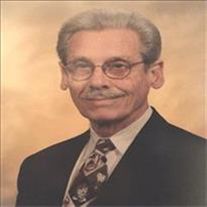
Dr. Grady Walker, Phd

I’ve been planning to write a blog concerning the great educational treatise “The Idea of a University” by John Henry Cardinal Newman since early December, but with the rush of finishing the semester, traveling and merry-making during the holiday, I haven’t gotten around to it until now. Planning to write, I did a little research, as I am wont to do, and came across the obituary of Dr. Grady Joe Walker, the professor at Oral Roberts University who introduced me to the work of Newman and ignited my great love for 19th Century British literature in the Victorian Era course he taught.

But Dr. Walker was not only a teacher, he was also a great mentor to his students. He engaged them on many levels, especially as faculty advisor for the literary magazine and the English Club. He even opened up his beautiful homes to us. Dr. Walker liked to buy fine old homes in disrepair, fix them up, replant their gardens, fill them with antiques and then sell them. During this process he would invite students over for club meetings and Christmas parties. Those meetings were such fun! After a tour of the house, where he would show us all the different rooms furnished with incredible antiques he purchased on trips to Europe, Dr. Walker would serve all this great food and we would eat and laugh as well as talk about literature and writing. Sometimes Dr. Walker invited a writer to come and read his or her work to us. Sometimes we read our own work or read from a favorite work of ours. He made us all feel important–that our ideas mattered.

I remember Dr. Walker’s Victorian literature course to be one of the most challenging that I had as an undergraduate. The class was small, the reading load demanding, but by that time I had learned that if I didn’t read, I was going to be greatly embarrassed in Dr. Walker’s class and for me during that time avoiding embarrassment was one of my primary motivations. (Oh, how times have changed.) So even though the reading was difficult for me, I read the excerpts from Newman’s seminal work on education closely, and that work quite literally changed my life. After I read it, I knew I wanted to be the kind of teacher Newman was, one who didn’t just teach a subject, but taught her students how to think and strove to instill in them a love of learning for its own sake.

Here are a few of my favorite quotes from Newman’s work that still resonate with me to this day, especially now as the country seems to be moving away from valuing the study of the liberal arts:

  • I have said already, that to give undue prominence to one [discipline] is to be unjust to another; to neglect or supersede these is to divert those from their proper object. It is to unsettle the boundary lines between science and science, to disturb their action, to destroy the harmony which binds them together. Such a proceeding will have a corresponding effect when introduced into a place of education. There is no science but tells a different tale, when viewed as a portion of a whole, from what it is likely to suggest when taken by itself, without the safeguard, as I may call it, of others (Discourse 5.1).
  • Hence it is that his education is called “Liberal.” A habit of mind is formed which lasts through life, of which the attributes are, freedom, equitableness, calmness, moderation, and wisdom (Discourse 5.1).
  • Cautious and practical thinkers, I say, will ask of me, what, after all, is the gain of this Philosophy, of which I make such account, and from which I promise so much….I am asked what is the end of University Education, and of the Liberal or Philosophical Knowledge which I conceive it to impart: I answer, that what I have already {103} said has been sufficient to show that it has a very tangible, real, and sufficient end, though the end cannot be divided from that knowledge itself. Knowledge is capable of being its own end. Such is the constitution of the human mind, that any kind of knowledge, if it be really such, is its own reward….I would maintain, and mean to show, that it is an object, in its own nature so really and undeniably good, as to be the compensation of a great deal of thought in the compassing, and a great deal of trouble in the attaining (Discourse 5.2).
  • But education is a higher word; it implies an action upon our mental nature, and the formation of a character; it is something individual and permanent, and is commonly spoken of in connexion with religion and virtue. When, then, we speak of the communication of Knowledge as being Education, we thereby really imply that that Knowledge is a state or condition of mind; and since cultivation of mind is surely worth seeking for its own sake, we are thus brought once more to the conclusion, which the word “Liberal” and the word “Philosophy” have already suggested, that there is a Knowledge, which is desirable, though nothing come of it, as being of itself a treasure, and a sufficient remuneration of years of labour (Discourse 5.6)
  • The artist puts before him beauty of feature and form; the poet, beauty of mind; the preacher, the beauty of grace: then intellect too, I repeat, has its beauty, and it has those who aim at it. To open the mind, to correct it, to refine it, to enable it to know, and to digest, master, rule, and use its knowledge, to give it power over its own faculties, application, flexibility, method, critical exactness, sagacity, resource, address, eloquent expression, is an object as intelligible…as the cultivation of virtue, while, at the same time, it is absolutely distinct from it (Discourse 5.9).

And my favorite passage of all:

  • I say, let us take “useful” to mean, not what is simply {164} good, but what tends to good, or is the instrument of good; and in this sense also…I will show you how a liberal education is truly and fully a useful, though it be not a professional, education. “Good” indeed means one thing, and “useful” means another; but I lay it down as a principle, which will save us a great deal of anxiety, that, though the useful is not always good, the good is always useful. Good is not only good, but reproductive of good; this is one of its attributes; nothing is excellent, beautiful, perfect, desirable for its own sake, but it overflows, and spreads the likeness of itself all around it. Good is prolific; it is not only good to the eye, but to the taste; it not only attracts us, but it communicates itself; it excites first our admiration and love, then our desire and our gratitude, and that, in proportion to its intenseness and fulness in particular instances. A great good will impart great good. If then the intellect is so excellent a portion of us, and its cultivation so excellent, it is not only beautiful, perfect, admirable, and noble in itself, but in a true and high sense it must be useful to the possessor and to all around him; not useful in any low, mechanical, mercantile sense, but as diffusing good, or as a blessing, or a gift, or power, or a treasure, first to the owner, then through him to the world. I say then, if a liberal education be good, it must necessarily be useful too (Discourse 7.5).

Don’t let anyone dissuade a student from studying what he or she wants to study. Don’t ask of your daughter or son, what kind of job will you get with that degree? Ask instead, are you interested enough in this subject to study in college to learn how to think and get a good liberal arts education? If the answer is “yes,” then that education will be well worth it and that student’s life will be made richer–better.

Thanks to Dr. Grady Walker and other professors like him, my life has been made better by my education–more than simply a path to a job.

Here’s a link to the whole work if you would like to read it. I hope you will.  http://www.newmanreader.org/works/idea/

Everything Old Is New Again, Part I–Hard Times

Gradgrindapprehendshischildren

One of my areas of concentration in my graduate studies was 19th Century British literature, specifically the Victorian Era. Something about this time period has fascinated me since I was a little girl. Public television, bless it, introduced me to works by Anthony Trollope, George Eliot, Arthur Conan Doyle, Elizabeth Gaskell, and of course, Charles Dickens.  I also read Dickens in school, and when I was eight, I saw the classic musical Oliver based on Dickens’ novel Oliver Twist, which fueled my desire to read his books. I remember as a young pre-teen, how I would settle in a corner and re-read A Christmas Carol by the lights of the Christmas tree. I’ve seen just about every film version of any Dickens’ novel that has been made–A Christmas Carol–many, many versions–Alastair Sim is still my favorite Scrooge, although Bill Murray and Patrick Stewart are right up there.

My interest in Dickens and Victorian literature continued into high school and then college. As an English major in undergrad school, I took a course called the Victorian Era where I read about Dickens’ role in educational reform, along with other great reformers, including John Henry Cardinal Newman (whose work The Idea of a University will be the subject of my next blog).

Then, in graduate school, preparing for my comps, I took a course called 19th Century British Literature and had the opportunity to read Dickens’ book Hard Times, a novel about Thomas Gradgrind, a wealthy retired businessman who believes in practical, tangible knowledge above all and does his best to wipe all “fancy” and imagination from his children’s lives as well as the people in the town he controls, effectively crippling them. Gradgrind founds a school, run by one Mr. M’Choakumchild, to further his utilitarian ideas of education.

Hmmmmmmm–an extremely wealthy businessman who knows little about education presuming to tell educators what and how they should teach and wishes to privatize education–sound familiar?

Well, I’m a decent writer, but I’m no Dickens, and I couldn’t possibly put into words the way I feel about the current state of education in my country better than he does, so here’s two passages from Hard Times. The first opens the novel and lays out Gradgrind’s educational philosophy. The second is a grim description of what life is like for the people indoctrinated by said philosophy. Let’s hope “our town” never looks like “Coketown.”

From Hard Times by Charles Dickens

CHAPTER I
THE ONE THING NEEDFUL

Now, what I want is, Facts.  Teach these boys and girls nothing but Facts.  Facts alone are wanted in life.  Plant nothing else, and root out everything else.  You can only form the minds of reasoning animals upon Facts: nothing else will ever be of any service to them.  This is the principle on which I bring up my own children, and this is the principle on which I bring up these children.  Stick to Facts, sir!’

The scene was a plain, bare, monotonous vault of a school-room, and the speaker’s square forefinger emphasized his observations by underscoring every sentence with a line on the schoolmaster’s sleeve.  The emphasis was helped by the speaker’s square wall of a forehead, which had his eyebrows for its base, while his eyes found commodious cellarage in two dark caves, overshadowed by the wall.  The emphasis was helped by the speaker’s mouth, which was wide, thin, and hard set.  The emphasis was helped by the speaker’s voice, which was inflexible, dry, and dictatorial.  The emphasis was helped by the speaker’s hair, which bristled on the skirts of his bald head, a plantation of firs to keep the wind from its shining surface, all covered with knobs, like the crust of a plum pie, as if the head had scarcely warehouse-room for the hard facts stored inside.  The speaker’s obstinate carriage, square coat, square legs, square shoulders,—nay, his very neckcloth, trained to take him by the throat with an unaccommodating grasp, like a stubborn fact, as it was,—all helped the emphasis.

In this life, we want nothing but Facts, sir; nothing but Facts!’

The speaker, and the schoolmaster, and the third grown person present, all backed a little, and swept with their eyes the inclined plane of little vessels then and there arranged in order, ready to have imperial gallons of facts poured into them until they were full to the brim.

CHAPTER V
THE KEYNOTE

Coketown, to which Messrs. Bounderby and Gradgrind now walked, was a triumph of fact; it had no greater taint of fancy in it than Mrs. Gradgrind herself.  Let us strike the key-note, Coketown, before pursuing our tune.

It was a town of red brick, or of brick that would have been red if the smoke and ashes had allowed it; but as matters stood, it was a town of unnatural red and black like the painted face of a savage.  It was a town of machinery and tall chimneys, out of which interminable serpents of smoke trailed themselves for ever and ever, and never got uncoiled.  It had a black canal in it, and a river that ran purple with ill-smelling dye, and vast piles of building full of windows where there was a rattling and a trembling all day long, and where the piston of the steam-engine worked monotonously up and down, like the head of an elephant in a state of melancholy madness.  It contained several large streets all very like one another, and many small streets still more like one another, inhabited by people equally like one another, who all went in and out at the same hours, with the same sound upon the same pavements, to do the same work, and to whom every day was the same as yesterday and to-morrow, and every year the counterpart of the last and the next.

These attributes of Coketown were in the main inseparable from the work by which it was sustained; against them were to be set off, comforts of life which found their way all over the world, and elegancies of life which made, we will not ask how much of the fine lady, who could scarcely bear to hear the place mentioned.  The rest of its features were voluntary, and they were these.

You saw nothing in Coketown but what was severely workful.  If the members of a religious persuasion built a chapel there—as the members of eighteen religious persuasions had done—they made it a pious warehouse of red brick, with sometimes (but this is only in highly ornamental examples) a bell in a birdcage on the top of it.  The solitary exception was the New Church; a stuccoed edifice with a square steeple over the door, terminating in four short pinnacles like florid wooden legs.  All the public inscriptions in the town were painted alike, in severe characters of black and white.  The jail might have been the infirmary, the infirmary might have been the jail, the town-hall might have been either, or both, or anything else, for anything that appeared to the contrary in the graces of their construction.  Fact, fact, fact, everywhere in the material aspect of the town; fact, fact, fact, everywhere in the immaterial.  The M’Choakumchild school was all fact, and the school of design was all fact, and the relations between master and man were all fact, and everything was fact between the lying-in hospital and the cemetery, and what you couldn’t state in figures, or show to be purchaseable in the cheapest market and saleable in the dearest, was not, and never should be, world without end, Amen.

A town so sacred to fact, and so triumphant in its assertion, of course got on well?  Why no, not quite well.  No?  Dear me!

No.  Coketown did not come out of its own furnaces, in all respects like gold that had stood the fire.  First, the perplexing mystery of the place was, Who belonged to the eighteen denominations?  Because, whoever did, the labouring people did not.  It was very strange to walk through the streets on a Sunday morning, and note how few of them the barbarous jangling of bells that was driving the sick and nervous mad, called away from their own quarter, from their own close rooms, from the corners of their own streets, where they lounged listlessly, gazing at all the church and chapel going, as at a thing with which they had no manner of concern.  Nor was it merely the stranger who noticed this, because there was a native organization in Coketown itself, whose members were to be heard of in the House of Commons every session, indignantly petitioning for acts of parliament that should make these people religious by main force.  Then came the Teetotal Society, who complained that these same people would get drunk, and showed in tabular statements that they did get drunk, and proved at tea parties that no inducement, human or Divine (except a medal), would induce them to forego their custom of getting drunk.  Then came the chemist and druggist, with other tabular statements, showing that when they didn’t get drunk, they took opium.  Then came the experienced chaplain of the jail, with more tabular statements, outdoing all the previous tabular statements, and showing that the same people would resort to low haunts, hidden from the public eye, where they heard low singing and saw low dancing, and mayhap joined in it; and where A. B., aged twenty-four next birthday, and committed for eighteen months’ solitary, had himself said (not that he had ever shown himself particularly worthy of belief) his ruin began, as he was perfectly sure and confident that otherwise he would have been a tip-top moral specimen.

Then came Mr. Gradgrind and Mr. Bounderby, the two gentlemen at this present moment walking through Coketown, and both eminently practical, who could, on occasion, furnish more tabular statements derived from their own personal experience, and illustrated by cases they had known and seen, from which it clearly appeared—in short, it was the only clear thing in the case—that these same people were a bad lot altogether, gentlemen; that do what you would for them they were never thankful for it, gentlemen; that they were restless, gentlemen; that they never knew what they wanted; that they lived upon the best, and bought fresh butter; and insisted on Mocha coffee, and rejected all but prime parts of meat, and yet were eternally dissatisfied and unmanageable.  In short, it was the moral of the old nursery fable:

There was an old woman, and what do you think?
She lived upon nothing but victuals and drink;
Victuals and drink were the whole of her diet,
And yet this old woman would NEVER be quiet.

Mama K and Her Kin, Part II

Lanett

The 1963 Lanett Championship Football Team

In Part I of “Mama K and Her Kin,” I wrote about my grandmother Katherine Dabbs, who was educated at Jacksonville State Teacher’s College in North Alabama, where she met my grandfather Gordon Dabbs (we called him Daddy D) in a music appreciation class. I also talked about one of her experiences teaching in a one-room school house in North Alabama. But Mama K’s educational adventures didn’t end there.

Mama K married Daddy D, and they settled in the Ridge Grove area of Chambers County, not far from Dudleyville and Budston, you read right, Dudleyville and Budston. in between Camp Hill and Lafayette, Alabama, the county seat of Chambers County. Lafayette hit the big time in 1988 when the feature film Mississippi Burning was filmed there. Some people didn’t like how the town was portrayed in the movie, but it did bring some needed funds to the cash strapped county that has long been one of the poorest in the nation.

It was poor when Mama K and Daddy D settled there and Daddy D was the principal of the Ridge Grove school. My mother was born in the little house that is right down the road from the property that my grandfather bought before he took the job as principal of Lanett High School in Lanett, Alabama. I’m sorry that I never met my grandfather, he died of a heart attack the year I was born, but I feel like I know him from the stories people tell him, especially my mother. She is so proud of her papa!

From her I learned that he was a wonderful teacher and principal. He loved science, taught physics, and liked to build things. Mom says that he built a generator from scratch that the family used when they went camping. When I was little, my siblings and I rode on a little go cart that he built, and all of us rocked in the little rocking chair he made for my sister Ronda, the oldest of his grandchildren. My husband John repaired and painted that rocking chair for our daughter Hannah to use, and it is still sitting down in our garage, ready to be handed down to children who will have wonderful memories of rocking and reading and daydreaming. I’ll be sure to explain how that chair was built with love by their great, great grandfather.

Mama K was devoted to Daddy D and she was the quintessential principal’s wife. When my mother and then my Uncle El, (He was also a teacher–he taught Spanish) was born, Mama K stayed home and took care of them, but when they got older, she went back to teaching and taught Alabama history and conservation. Yes, conservation was an important subject for rural Alabamians in the 50’s, my mother tells me. The soil had been badly depleted during the over-farming of the depression and war years, so the public schools stepped in to teach new and sustainable farming techniques to high school students.

Mama K continued to teach during the late 50’s but in 1959 tragedy struck and Daddy D, who had a history of heart problems, died at his home in Lanett. He was greatly mourned by his family, of course, and the whole community, but especially the educational community, both black and white. Even before the landmark Brown vs. Board of Education case in 1954, my grandfather had begun forming a strong relationship with Mr. Brown, the principal of the nearby black high school, but because of the resistance across the US and especially in the South to integration, there was not an immediate move to desegregate the schools, but my grandfather and Mr. Brown were anticipating the move towards integration. My mother remembers asking her father about desegregation, and he told her there might be “a lot of trouble” but that in the end “It’ll all work out.”

After my grandfather’s death, Mama K continued to teach at Lanett High School and the push to desegregate became stronger. Although my mother isn’t sure of the exact timing, my grandmother played a pivotal part in the successful racial integration of the county’s schools. Sometime between 1959 and 1963, the new administration asked for volunteers among the white teachers to go to the black high school to teach, while teachers from the black high school came to Lanett High. Mama K was the first white teacher to volunteer. She told my mother that as the widow of a beloved educational leader, she should set an example for the rest of the teachers.

Mom doesn’t know too many details about that time, but what we do know is that the Lanett City Schools were integrated successfully and without violence. Mama K didn’t teach much longer, however, because sometime in the early 60’s, I’m not sure of the exact date, my grandmother became seriously ill and was hospitalized, so it seemed to be a good time to retire.

My Great Aunt Jane, also a teacher, came to live with my grandmother following Daddy D’s death. As I said in Part I of this blog post, Aunt Jane taught math, including trigonometry and calculus. She continued to teach for years in nearby Valley, Alabama, and even though I was young, I can remember going on errands with her when she still taught and how students and former students would stop and talk to her, telling her what a good teacher she was. I was so proud to be her grand niece.

When I started teaching, Aunt Jane, who was like another grandmother to me, gave some extra special gifts that I continue to cherish to this day–one is a charm bracelet that she received when she retired that has all sorts of math and science teacher charms, including a math book, a beaker, a slide rule and an abacus. I’m an English teacher but I love it–the other is something that looks like an ordinary pen but extends out to be a pointer. I don’t use it any more but I did when I first taught because it always amazed my students–they were easily entertained back then. When Aunt Jane died, Mama K gave some of her things to the grandchildren and to me she gave a heavy marble pen holder that Aunt Jane got when she retired. I have it on my desk at the college where I teach, and every time I look at it and see her name, Jane Leath, I am reminded of the great teaching legacy I belong to and am so glad I have chosen this profession.

When times get bad and I get discouraged I remember them all–my grandmother and grandfather, mother, father, aunts, uncles, cousins, all the teachers in my life who have made a difference in this world–for good.

A

Germany Opens Up Free College to US Students

Guest Blog post for today:

I found this great blog post by a fellow education blogger — Maybe Hannah needs to go to Germany to get her Masters

James Rovira's avatarJames Rovira

Germany-665x385Yes, it’s true: US students who have a conversational knowledge of German have been invited to attend German universities for free. I would like to encourage all US students to take them up on this offer. Germany has some of the best universities in the world, and being centrally located in Europe, any student attending universities in Germany will have relatively easy access to Europe’s most significant cities. What an adventure.

Germany is able to make this offer because German universities are made up of, for the most part, libraries and classrooms, and because Germany doesn’t use federal tax money in the form of financial aid to support farm teams for professional sports that already generate billions of dollars a year in revenue (as if they couldn’t fund their own farm teams), and because Germany isn’t embroiled in massively unnecessary overseas wars, and because the German government isn’t spending more…

View original post 768 more words

Good Beginnings–Mama K and Her Kin, Part I

cheaha_mt1b

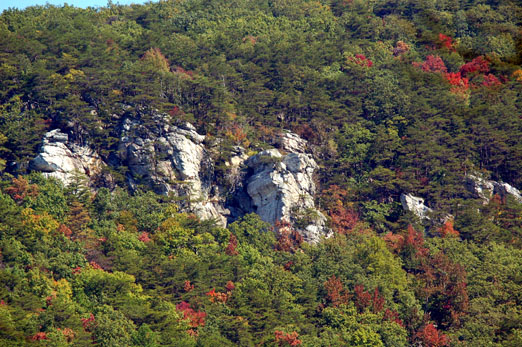
View of Mt. Cheaha near my grandmother’s birthplace in northeast Alabama

My grandmother, my mother’s mother, and one of my namesakes (I was named after my two grandmothers) was a teacher. We called her Mama K. She came from the mountains of Alabama, up near Chattanooga, that’s the tail end of the Appalachian range. It’s beautiful up there. If you ever visit, be sure you go to Mt. Cheaha, the highest point in Alabama.

My grandmother met my grandfather, also a teacher and a principal, at what was then called Jacksonville State Teachers College. Back then, the late 1920’s, a person could complete a teaching degree in just two years. They met in a music appreciation class. He was funny and boisterous, she was proper and reserved. He had grown up near Budston in Chambers County, Alabama, still one of the poorest counties in the nation, and she had grown up in the mountains, also surrounded by poverty, but their families, mostly farmers, managed to give their children good beginnings–childhoods filled with love, security and faith–teaching them self-sufficiency and discipline, but they wanted more for their kids than the hard scrabble life they had, so they managed to find a way to send them to the teachers college, where they could hopefully rise out of the poverty in which they were born.

All but one of my grandmother’s siblings became educators. Uncle John Taylor was principal of a school in Rome, Georgia for years. I didn’t know him well, but I went to his funeral with my mother, and I’ll never forget how packed that church was, how well-respected and loved Uncle John Taylor was.

My Aunt Jane, the baby of the family, completed all the course work for a doctorate in mathematics but didn’t see the need to write a dissertation as she was happy teaching algebra, calculus and trigonometry to high school students, mainly in Valley, Alabama, in the east-central part of the state near the Alabama/Georgia line. My daughter’s middle name is Jane in honor of my great Aunt Jane, who never married and had no children of her own. Her niece, my mother, became a teacher and high school librarian.  I, the grandniece, am a teacher too, having taught English composition and literature over 25 years in private at public schools, at the secondary and college level.

Aunt Dixie, the middle daughter,  also obtained a teaching certificate and maybe taught a year or two, but she went to revival services at the little County Line Baptist Church and fell in love with the handsome young preacher who was preaching that day, my Uncle Judson, and married him. His son, also Judson, became a teacher and principal in the Birmingham, Alabama area, now retired as Dr. Judson L. Jones. His daughter Lea is also a teacher and working on her doctorate in education.

Uncle Jim went into the navy and served his country honorably, becoming a farmer near Troy, Alabama, carrying on his parents’ profession, but it’s interesting to note that his daughter and granddaughter became educators, highly respected in their fields.

When Mama K graduated from Jacksonville State Teachers College, her first teaching position was in North Alabama in a one-room schoolhouse. I remember going through some of Mama K’s old school books from those days when I was a child. It was one of my favorite past times. I loved old books and still love them to this day, the way they smell and feel and look. In between the pages of one of the old textbooks was a little pamphlet about Harry the Hookworm, illustrated with funny little cartoon pictures of a hookworm and explaining how to avoid getting the parasites by using a latrine. The latter part of the pamphlet actually had instructions on how to build an outhouse.

I asked Mama K about it, and she told me this story. Once when she was teaching in that little schoolhouse in North Alabama, there was one little boy who was very poor and usually came to school wearing the same clothes, but she didn’t think anything of it because his clothes, despite being worn, always looked clean, but one day every time he came close to her, she noticed a horrible smell, a body odor that got worse in the next few days, especially now that it was getting colder, and she was keeping the windows and doors of the little schoolhouse closed.

Finally, the smell got so bad that she simply had to say something, so she kept him after school and asked as gently as she could, “Are you taking a bath from time to time?”

He said, “Yes’m”

“Are you taking off your shirt and your pants and getting into a tub?”

“Yes’m. My mama heats up the water on the stove and I get in.”

“Do you scrub all over?”

“Yes’m”

My grandmother didn’t want to embarrass the boy any more than she already had, but she wanted to find out what was causing the smell and she had her suspicions, so she said, “Are you taking off all your clothes, including your underwear?”

He looked surprised at the question, and said, “Why, no ma’am. My mama done sewed me into my underwear!”

She chuckled and I laughed, after she explained it to me as I didn’t have much knowledge of long johns, and then she got serious, telling me that when she taught at the little one-room schoolhouse, a large portion of her teaching was about how to live a healthy life day to day when you were poor and didn’t have much of anything. She talked about how poor her students were and that many of them didn’t have houses with running water or latrines. They didn’t know many of the basic things, so she taught those along with reading and writing and arithmetic. She felt good about the short time she taught those students because she believed she was helping them have better lives.

My grandmother wasn’t sure how the boy resolved his problem, but he never came to school again smelling bad and everyone, including his fellow students I’m sure, were happy about it.

I look back at that story today, as a teacher myself, and am heartened. Sometimes what I have to say is difficult to say and hard for some people to hear. It is embarrassing and uncomfortable. It sometimes leads to confrontations, but if something is wrong at my institution, if something smells bad, then it is my duty as a leader in my classroom and at the college to find the cause of that stink and start scrubbing.

I learned how to seek and scrub partly from my grandmother–Margaret Katherine Dabbs, a brave and honorable woman–and I am thankful for the good beginnings she brought to my life, especially my teaching life. I hope I can be her namesake in more ways than one.

Next up–A story about Mama K during the time of school desegregation in Alabama.

O’Connor and Swift–Revelation

Veteran's Day 080

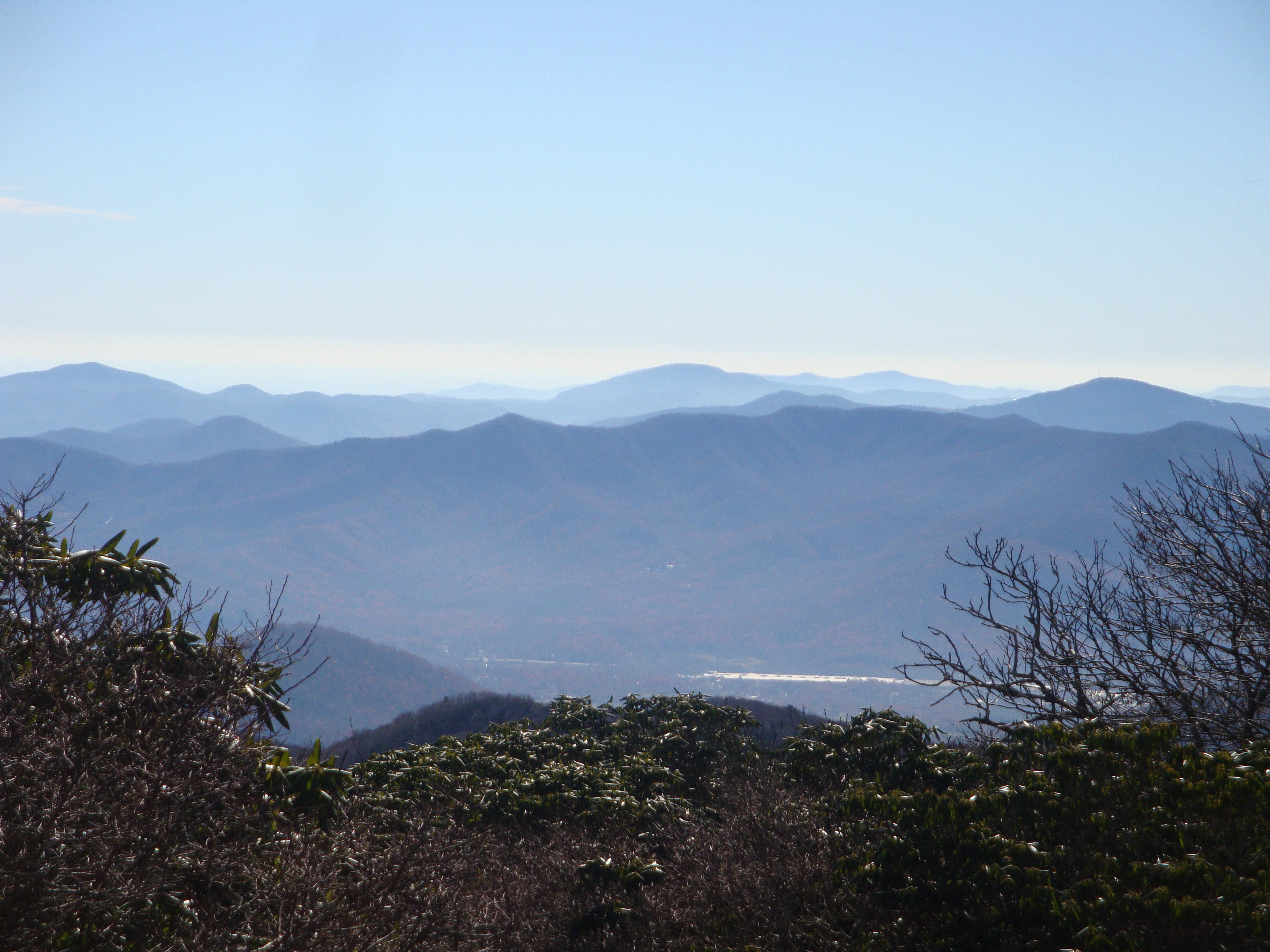
View from the Craggy Gardens Trail off the Blue Ridge Parkway where I went to think on Veteran’s Day, 2014

I’m preparing to teach on two of my favorite works, “Revelation” by Flannery O’Connor and “A Modest Proposal” by Jonathan Swift  Both works have been extremely important in my life–humbling, formative, funny in such a strange, macabre way.

“Revelation” is the story of Mrs. Turpin, who runs a pig farm along with her husband. At the opening of the story she has brought her husband to a busy doctor’s office to have his infected leg treated. While in the lobby waiting, Mrs. Turpin voices her contempt for all those she feels are beneath her, which is just about everybody. An ugly girl, O’Connor’s description, not mine, gets fed up with Mrs. Turpin’s comments and has a rather extreme reaction, causing a needed change in Mrs. Turpin when she realizes she is indeed, “a warthog from hell.”

Everytime I re-read “Revelation” I am struck, just like Mrs. Turpin, by O’Connor’s big fat book of human development, realizing that I too am a warthog, for all my blustering arrogance. I remember her words that I repeat when I’m lecturing. When asked why she used such violence and grotesque characters in her work, O’Connor said, “To the hard of hearing you shout and for the almost blind you draw large and startling figures.”

Sometimes I do that. And it’s okay. As long as I stay humble and am willing to accept the fact that people don’t like it much when warthogs squeal.

Jonathan Swift shouted and squealed when he wrote “A Modest Proposal,” suggesting that the Irish problems of extreme poverty and famine be solved by eating Irish children. He even included recipes. Some people took his satire seriously and feared for Swift’s soul, others criticized him for his over-the-top style, just as they criticized O’Connor. Funny how the world remembers and studies those bold enough to shout.

So lesson for today–Realize you are just a warthog, then start squealing.

Today’s squeal–Every American who is willing to study hard and aspires to a profession that requires a four-year degree, not two years of technical training only, deserves an affordable way to obtain that degree without becoming overburdened with debt.

What the Powers That Be Seem to Care About

  • California_09 183

Sometimes I feel really small and not in a good way like Hannah must have felt in between these redwoods on our trip to California a few years ago. That’s what led to this rant–feeling small

What the Powers That Be Seem to Care About: :

  • Meetings.Not useful ones. Probably not ones “the powers” want to hold either, but must be checked off “the list”
  • Lists.Probably not ones that my powers created but some powers somewhere thought that having an entire campus come together every other month (I shouldn’t complain it used to be every month) was somehow a “sign” that good communication was going on between the administration and the faculty and staff when in fact no communication goes on; however, requiring everyone to come to that meeting means someone somewhere can check an item off a list and checking items off lists produces numbers.
  • Numbers. The powers love numbers. Numbers validate. Numbers justify. Numbers produce. Exactly what these numbers produce I’m not sure, but they are obviously very important to the powers. and are essential to the powers maintaining power.
  • Maintaining Power. When you get down to it, that’s what this is really all about. Power. If the powers have power to tell employees what to do and when to do it and require them to come to this meeting and that one, then they continue to have a sense of power. And when they begin to feel powerless, the powers seek power wherever they can find it because staying in power means they can keep the job that allows them to tell other people what to do and criticize them when they don’t do the job the way they were supposed to when the employees were never told how to do the job in the first place. Or when they don’t go to a meaningless meeting, of course. And the employees can’t complain or stop the powers because powers are rarely evaluated by anybody else except by a once a year employee satisfaction survey that no one will pay attention to because the survey is just a process that produces more numbers that lead to more lists that must be discussed at more meetings attended by the powers that be because other powers demand it. And at the meetings about the numbers and the lists and the other meetings, more lists will be created to solve the problem, and after much discussion, it will be decided that the problem lies with the people whom the powers have power over and other lists will be created without the knowledge or input of the people who will be required to follow said lists who will be criticized when they don’t follow the lists correctly..
  • It’s as simple as that.

Notice that nowhere in this post were the words “education” or “students” mentioned. Hello! Why would they be?

From Vent to Art

summer and Raleigh trip 040

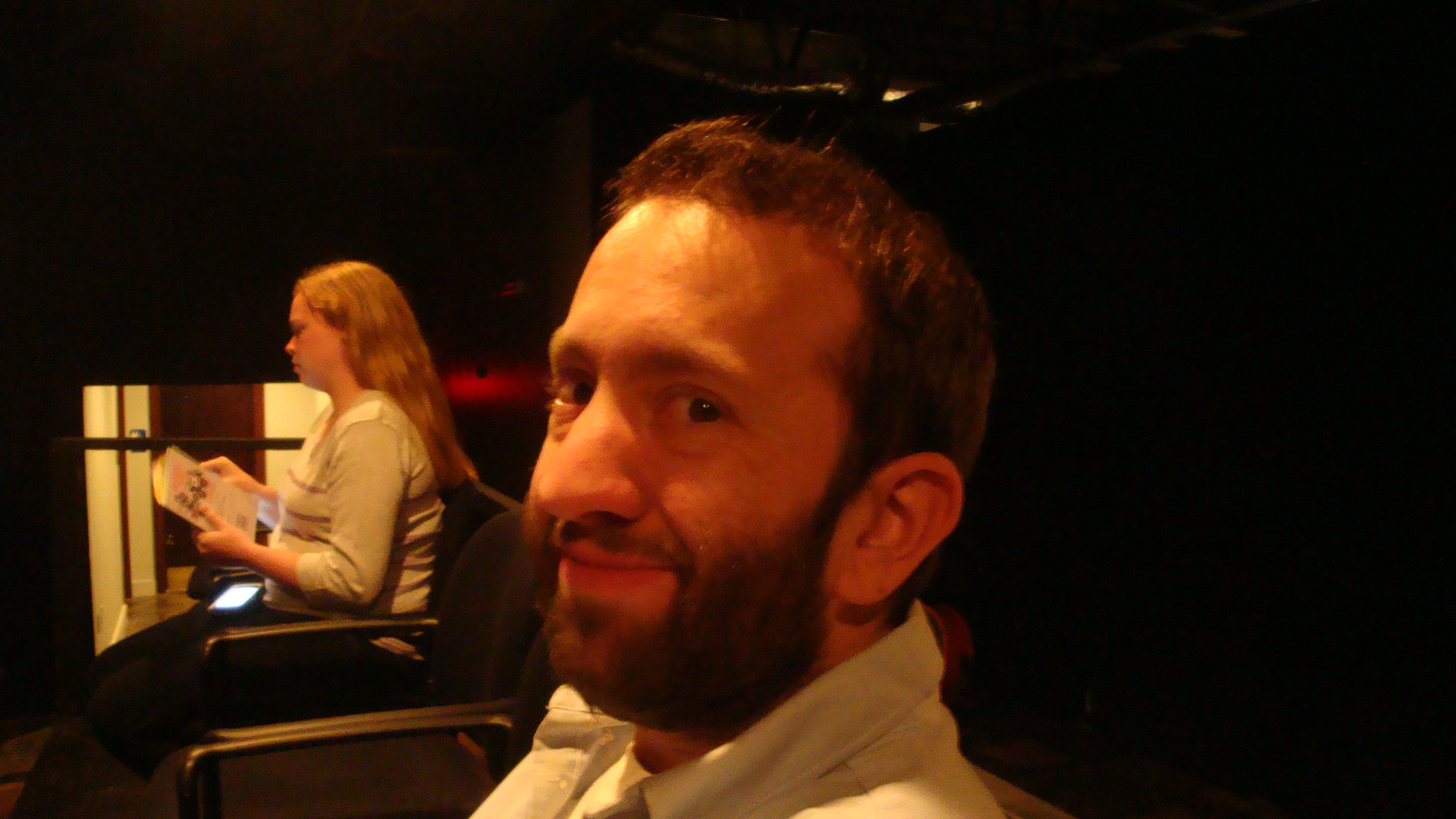
Curtis McCarley, composer and friend, at the show Pentecost after the Dramatists Guild of America’s Saturday Showcase in Raleigh, September 2014

A couple of years ago on the way back from Pennsylvania where we were visiting John’s family, I started venting, not out loud, but on paper. I was so disgusted with the way higher education is becoming more like a business than a public service–a source of income rather than a source of learning. Workforce development was, and remains, the buzz phrase around my college and my state. Practical learning rules the day–as if teaching people to think–the goal of a liberal arts education–is not the hallmark of any practical-minded curriculum.

But this blog post is supposed to be about art rather than venting, Katie Winkler, so get back to it.

So because I want to keep my job despite its frustrations, on that long drive home after the holidays, I began to muse about a way to vent, well, creatively. I felt like I was being asked, not to really teach, but to walk through the motions, without asking my students to reach an acceptable standard for college level students, so zombies came to mind. I felt I was being sucked dry of all my creativity and autonomy in the classroom–vampires came next. I found another analogy–so much technology but no real attention to that technology’s practical application in the classroom–inept wizards. And then there were werewolves and nazis.

But there are those who are still fighting–and not just faculty–there are staff members and administrators who are fighting the good fight. They are the fairy godmothers (and one fiesty fairy godfather) of my story. I started throwing my ideas out to my husband and daughter as we drove along and next thing I knew it the plot of CAMPUS, my new musical, was born.

Now, when frustration threatens to overcome me on the job, I retreat into the fantasyland of the College of Applied Multi-Purposes United in Simplicity, where the good fairy godteachers fight against their arch-enemy, Mr. Mediocrity, and all his minions, to uphold the ideals of the liberal arts and bring truth and beauty to two promising students, Jack and Jill, who want an education, a real education, one that prepares them for life, not just a job.

The play is going well. My friend and composer Curtis McCarley, my friend Christine Potee Laucher and I presented a scene from the play and a few songs at the Dramatist Guild of America’s Saturday Showcase in September at the Burning Coal Theater in Raleigh that was well-received, and I’ve submitted a proposal for a grant to help Curtis and I complete the work. I hope to get the play written by the end of June when I’ll hear about the grant.

Even if the proposal is not accepted, I’m glad I’ve pursued writing this play. It has given voice to my frustration in a creative, constructive way, helping me to continue my work while keeping in the forefront of my mind what are the true goals of my life.

Here’s the lyrics to one of the songs from the play, “Down at the Diploma Mill”:

DOWN AT THE DIPLOMA MILL
ONCE I WAS A BRIGHT YOUNG TEACHER
ONCE I MADE MY LESSON PLANS
ONCE I LOOKED INTO THEIR SHINING FACES
AND THOUGHT I’D MAKE A DIFFERENCE
NOW I KNOW THAT WAS ALL A LIE

CHORUS
WORKIN’ DOWN AT THE DIPLOMA MILL
LOOKIN’ FOR SOME BRAIN CELLS TO KILL
WE NEVER MEANT IT TO BE THIS WAY
But we GOT NOTHIN’ LEFT TO SAY
DOWN AT THE DIPLOMA MILL

ONCE I HAD SOME GOOD IDEAS
ONCE I TRIED TO CHANGE MY WAYS
QUIT GIVING OUT OBJECTIVE TESTS
BE DIFFERENT THAN ALL THE REST
ASK AN ESSAY QUESTION
DO A PROJECT INSTEAD

BUT THE DEAN SAID IT WASN’T ASSESSMENT
WE SHOULD GET RETURN ON OUR INVESTMENT
IF IT’S NOT SOMETHING WE CAN CALCULATE
OR THAT’S EASY TO REGURGITATE
THEN IT’S SOMETHING YOU CAN’T DO
DOWN AT THE DIPLOMA MILL

CHORUS
WORKIN’ DOWN AT THE DIPLOMA MILL
LOOKIN’ FOR SOME BRAIN CELLS TO KILL
WE NEVER MEANT IT TO BE THIS WAY
But we GOT NOTHIN’ LEFT TO SAY
DOWN AT THE DIPLOMA MILL

BRIDGE
WHY DID I SPEND THAT MONEY TO BE A DOCTOR
WHEN ALL THEY WANT IS A PROCTOR
WHY BOTHER CALLING ME A TEACHER
WHEN I’M JUST A FACILITATOR
FESTERING IN THIS STINKING DIPLOMA MILL

THE STUDENTS SAY MY CLASS IS TOO BORING
TOO MUCH GRAMMAR OR MATH STARTS THEM SNORING
I NEED TO TRY AND ASK THE GOOD QUESTIONS
NOW I CAN ONLY HIDE MY FRUSTRATION
IT’S ALL I CAN DO TO KEEP THEM FROM TEXTING

CHORUS
WORKIN’ DOWN AT THE DIPLOMA MILL
LOOKIN’ FOR SOME BRAIN CELLS TO KILL
WE NEVER MEANT IT TO BE THIS WAY
But we GOT NOTHIN’ LEFT TO SAY
DOWN AT THE DIPLOMA MILL

The Times They Are A’Changin’

Backpacking Trip 09 003

I started a blog back in 2012 here on Word Press that I haven’t touched. A lot has happened since then in my life and at my job. I’m an English instructor at a community college in Western North Carolina. Since November of 2012, we’ve been through some radical systemic changes with which I have been involved–or not. Some I participated in willingly and some kicking and screaming. Some I started but someone else insisted on finishing. In the weeks to come I hope to share some of these changes with you–the good, the bad and the ugly.

But right now I have papers to grade and online classes to build. TTFN!