The Dramatists Guild Foundation and Me

The Dramatists Guild Foundation won a TONY!

Why do I care?

The Foundation is now an independent organization but was an arm of the Dramatists Guild of America, which I have been a member of since 2006 when I applied. I submitted my one-act play Green Room, a social satire that takes place in the green room of a sleazy talk show. The play had been produced at Blue Ridge Community College in Flat Rock, North Carolina, where I taught for 27 years and from where I retired Aug 1 of last year.

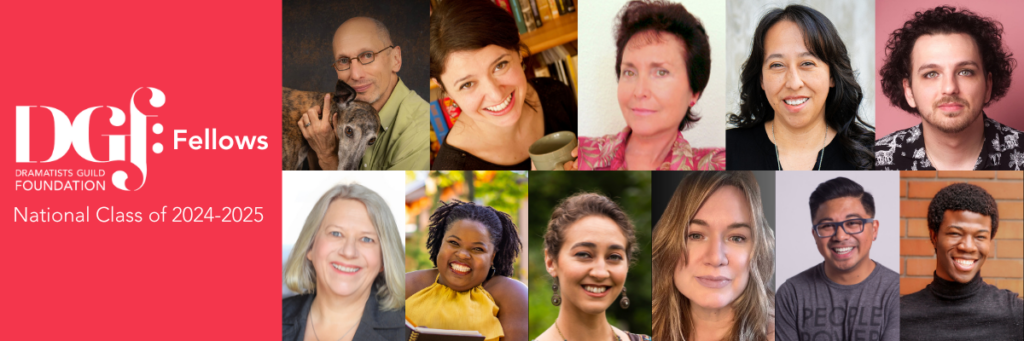
The Foundation continues to strongly support Dramatists Guild members, and I receive regular communications from both groups. Towards the end of my final year of teaching, the Foundation announced it was offering, for the first time, a national virtual fellowship for Dramatists Guild members living outside of the New York area. Being accepted was indeed a long shot, but with the help of my theater friend and mentor at the college, who had directed all of the four plays I had produced there, I decided to apply.

I submitted sample pages and music from my play A Carolina Story, applying for a position as a musical theater fellow. The play, a re-telling of the Story of Job set in Western North Carolina during the depression, had been produced at Blue Ridge about ten years ago, but I have long wanted to revise and revive it. I also thought it was the best fit for the national fellows program as it represents Appalachia and its unique often misrepresented culture. Quite a few months went by, my retirement began, and I thought nothing more about the fellowship. Then, in November I found out I was a finalist, by December, I was in!

Since January, the fellows from all over the country have been meeting for two-hour workshops as well as critiquing each other’s work and encouraging each other. I have exchanged my play with four talented playwrights so far, learning so much from just reading their works, but also getting invaluable feedback about my play. Best of all is being around people who are so different but are united by the love of words and the theater.

Being a fellow has put me back in the position of a student but has also allowed me to use the teaching skills I worked so hard to develop as a college instructor, especially when giving feedback to the other fellows. Discussing my work with other professional playwrights was at first intimidating; I thought I was out of my league, but now I realize that although my play needs improvement, it holds its own. It has promise.

I am honored to be a part of the Dramatists Guild Foundation’s inaugural 2024-2025 National Virtual Fellowship program and congratulate the Foundation on receiving its well-deserved TONY!

Distractions

Photo by Anna Shvets on Pexels.com

We suffer from distractions. It’s not only the high tech, although that is definitely a problem – our phones and computers and endless entertainment sources and open AI and, and, and. More than anything else, we are distracted by our concerns. No, our worries. Perhaps it makes us feel virtuous to worry, to endlessly bemoan the failings of others and how they are leading us all down the path that leads to destruction. After all, if we can distract ourselves with how the world is going to hell in a handbasket, maybe we won’t have to look into our own souls and search for the true sources of our problems.

Lord knows I’m guilty. If I worry enough about how this current election will affect education and talk about it enough with friends, then I can distract from the fact that I promised myself I would finish my teaching memoir this first year of my retirement and that I would work diligently on making the most use of the Virtual Playwriting Fellowship the Dramatists Guild Foundation awarded me.

Photo by Tim Gouw on Pexels.com

Of course, I don’t call it worrying; I am “concerned,” so my worry becomes something good, right? My other distractions, including social media, are being used, I tell myself, to help raise awareness and guide people toward good things. And it is good if I stay focused, but if I’m honest, I don’t. I start out with those good intentions and slip on down the road to you know where.

In Book XII of C. S. Lewis’s great satiric epistolary novel, The Screwtape Letters, the uncle demon Screwtape advises his nephew Wormwood about the value of distractions to keep the new Christian, no longer in danger of the fires of hell, from being too effective.

He says:

Photo by Mike Bosch on Unsplash

You can make him waste his time not only in conversation he enjoys with people whom he likes, but in conversations with those he cares nothing about on subjects that bore him. You can make him do nothing at all for long periods. You can keep him up late at night, not roistering, but staring at a dead fire in a cold room. All the healthy and outgoing activities which we want him to avoid can be inhibited and nothing given in return, so that at last he may say, as one of my own patients said on his arrival down here, “I now see that I spent most of my life in doing neither what I ought nor what I liked”. The Christians describe the Enemy as one “without whom Nothing is strong”. And Nothing is very strong: strong enough to steal away a man’s best years not in sweet sins but in a dreary flickering of the mind over it knows not what and knows not why, in the gratification of curiosities so feeble that the man is only half aware of them, in drumming of fingers and kicking of heels, in whistling tunes that he does not like, or in the long, dim labyrinth of reveries that have not even lust or ambition to give them a relish, but which, once chance association has started them, the creature is too weak and fuddled to shake off.

You will say that these are very small sins; and doubtless, like all young tempters, you are anxious to be able to report spectacular wickedness. But do remember, the only thing that matters is the extent to which you separate the man from the Enemy. It does not matter how small the sins are provided that their cumulative effect is to edge the man away from the Light and out into the Nothing. Murder is no better than cards if cards can do the trick. Indeed the safest road to Hell is the gradual one—the gentle slope, soft underfoot, without sudden turnings, without milestones, without signposts,

So, whether it be pleasure or worry that distracts us, in the end all that will matter is that we have not acted as we should have or wanted to. It is right that we be concerned about extremist candidates running for state superintendent, about school board meetings becoming violent, about indoctrination coming from the right or left, about unwarranted censorship or the lack thereof, but it is wrong of us to see problems where there aren’t any or to let our fears and worries distract us from what you (talking to teachers now) are supposed to do–TEACH.

Photo by Katerina Holmes on Pexels.com

Until the last two years of my teaching, I worried constantly about ambiguous mandates coming down from the administration. Often, they didn’t apply to me but nevertheless distracted from my teaching. I would get upset, argue, discuss whatever it was endlessly with my colleagues in their offices. The thing is I didn’t need to worry because most people in the administration were simply passing on what had been mandated to them, having little hope that, for example, yet another restructuring of developmental education would fix the problems that the previous restructuring just a few years before had not fixed or made worse.

Photo by Andrea Piacquadio on Pexels.com

All my “concern” did not help me teach those developmental classes effectively. The only thing that helped was buckling down and embracing any sound ideas and finding ways around the silliness, or simply ignoring it. For example, when the state mandated that instructors should not use fiction or essays written in first-person to teach reading and writing, I was flabbergasted, ready to fight this nonsense tooth and nail at the conference I went to explaining the new curriculum. However, low and behold, almost every session at the conference included sample readings that were either essays written in fir st person or fiction. These teachers were fantastic, and their lesson ideas were great. I adopted some of them. No one seemed to notice these teachers were ignoring the mandate, including the people who had cobbled together the new curriculum. I didn’t have to fight.

Now that I’m retired, I can see that I wasted a lot of time and caused myself undo stress by allowing myself to be distracted by administrative bloat and broad, ambiguous criticism. All I can do now is say to young educators, please don’t be like me: don’t turn your teaching world upside down with every pedagogical or andragogical wind that blows. It’s not worth it. Pick out the good ideas and incorporate them, change when you need to, learn new technical skills that enhance your teaching, use old ideas that have worked for you before, and trust yourself.

Photo by Yan Krukau on Pexels.com

Teaching is a craft. You should always be open to improving it; however, teaching is also an art, most successful when it is creative and engaging, when it takes risks, when it moves onto the fringes and beckons students into the glorious realm of ideas.

Baby Brother

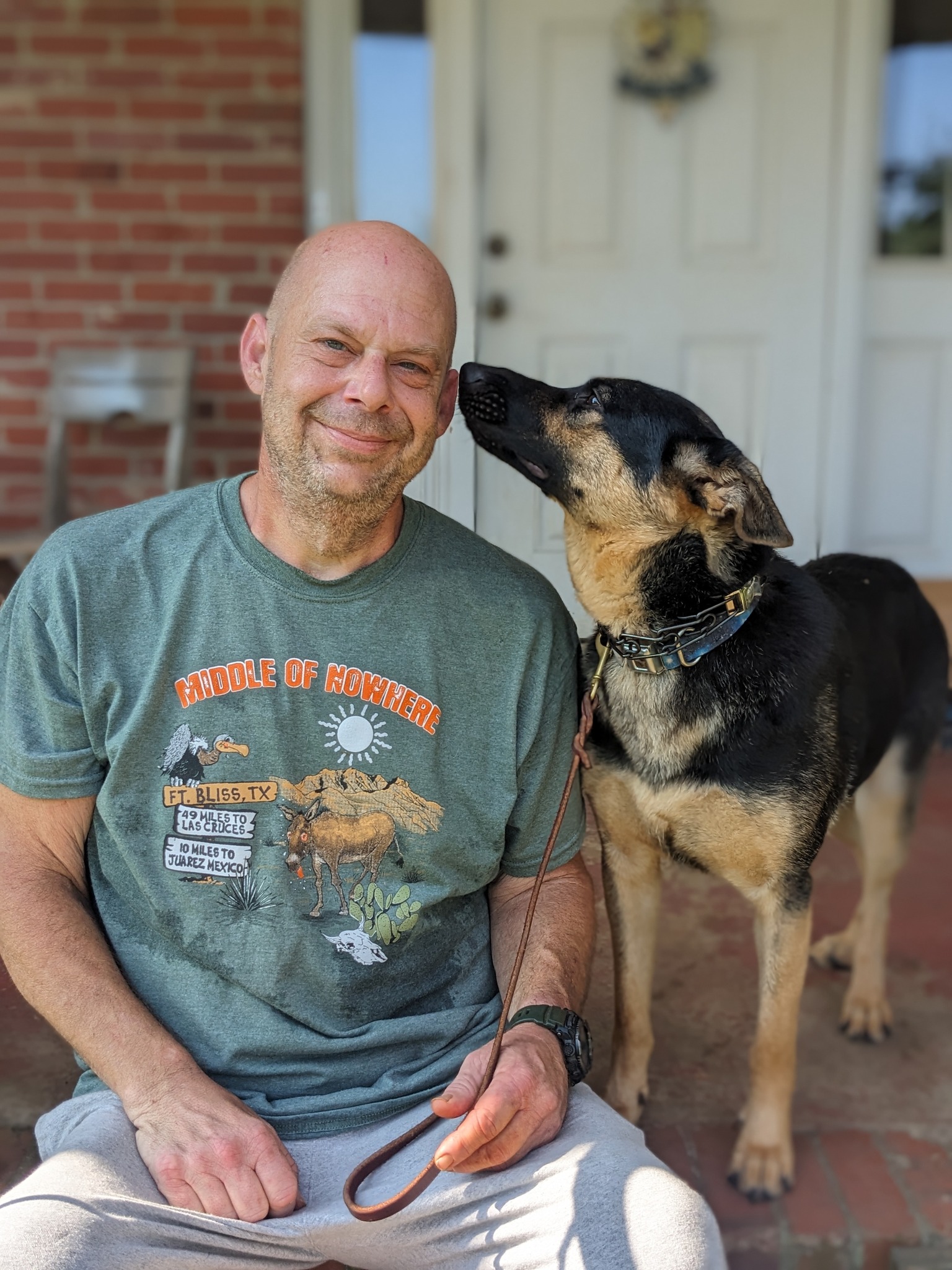
As a much older, bossy sister, it is hard to admit that my baby brother has been such an influential teacher to me for half a century. But, the past few weeks, as he has endured serious health issues, including emergency open heart surgery, I have been reminded of some of the strengths he’s demonstrated time and time again, including adaptability, persistence, and most of all, resilience.

My brother hasn’t chosen the easiest path to make a living: he breeds and trains working German shepherds. He started the business when he was still in undergraduate school at Auburn University and grew it through many years of struggle as he was working on his master’s in liberal arts at Auburn University-Montgomery. While there, he focused on media and computer studies that have all been helpful in conducting his business, which included creating and maintaining his website: Schwarzerhund.com. His dogs are some of the most intelligent, powerful, and beautiful creatures you will ever have the privilege to meet.

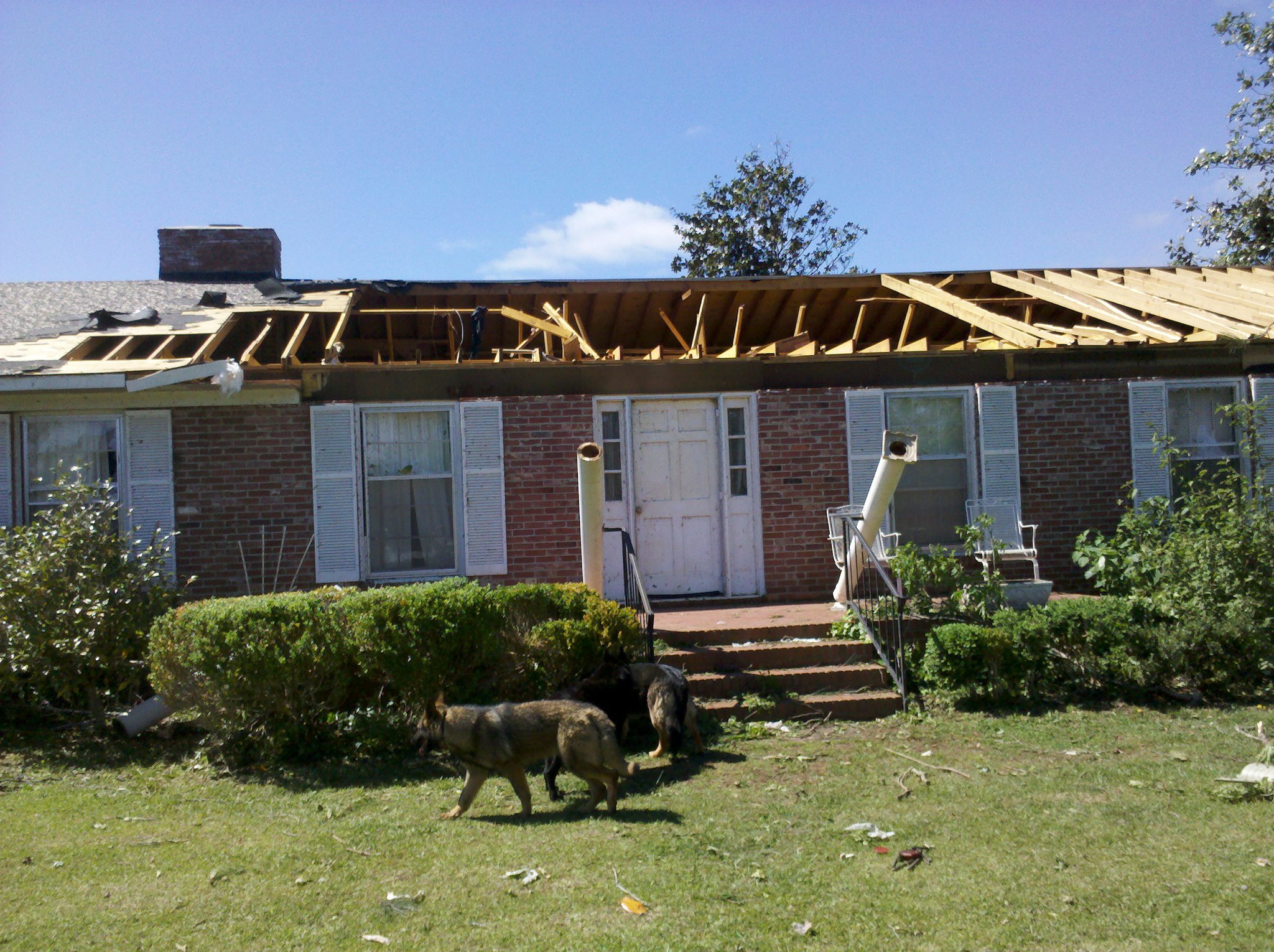
My brother is no stranger to adversity. On April 27, 2011, less than two weeks after the death of our sister Ronda and the evening of the day he defended his master’s thesis, Rob’s trailer, right next to my parents’ house, was destroyed by one of the EF-4 tornados to strike Alabama during the historic super tornado outbreak that year.

What was left of the trailer after the tornado–photo by Katie Winkler

Around 10:00 pm, my brother had fallen asleep in front of the television and did not hear the news of the approaching tornado. He did, however, hear the tell-tale sounds of wind rushing like a locomotive bearing down on his vulnerable home. He and the young German shepherd he was caring for sprinted across the lawn to my parents’ house. My mother, also unaware of the approaching tornado, had just locked the door when Rob started pounding on it, yelling, “Mom, you’ve got to let me in or I’m going to die.”

He made it inside, but as soon as my mother closed the door behind him, the tornado struck. My brother recalls how they could hear the roof creaking and giving way as half of it was sucked up into the vortex. Somehow, they made it to the hallway, where they met my father, who had mobility issues due to diabetic neuropathy, coming out of his bedroom. They headed to the bathroom and stood huddled in the tub waiting for the storm to pass, which it did shortly after.

They were safe. That was the main thing.

The family home after the tornado

However, the damage was extensive; my brother knew that, but he didn’t have time to fully take stock of everything that happened. Once he made sure my elderly parents were in an undamaged room of the house and safe, he found the house’s insurance information, but of course the phone lines were out, and at that time, cell coverage was spotty at best in that area of Chambers County, one of the poorest in the nation.

So, he called his big sister. At first my husband and I couldn’t hear much, but made out the word tornado, and looked on the Weather Channel’s website to see the news of the huge storm. The radar showed the cells all over Alabama. We were helpless, though, until Rob was able to navigate around all the fallen trees and drive close enough to a town to get cell reception. Because of Rob’s quick thinking, I was one of the first to call and inform the insurance company of the disaster, so my family was able to quickly receive help.

About two months into the rebuilding–June 2011

Rob made a few other essential calls and then headed home. When he drove up to the house, the dog that had followed him from the house across the yard, that he thought was lost in the storm, came running up to him unharmed. She must have been able to get under the house. That was the first of many miracles that kept him going in all the many months following the tornado.

To my credit, I did do my share, helping out as much as I could, especially with my parents by securing a place for them to live while the house was being rebuilt and visiting as often as I could, but it was my brother who adapted his entire life in order to manage the property and his business after the storm. He stayed at the farm, at first sleeping under the carport in a recliner with a shotgun to ward off looters while protecting and caring for his beloved dogs. Of all the dozens of animals he cared for at the time, he didn’t lose any in the storm itself, and only two died as a result of injury and trauma–A miracle that such a powerful storm did not take more lives.

The Family Home Today

To my discredit, however, I did try to play the big sister at one point. I admit that I got pretty bossy and critical during that time, and my little brother finally had enough. He told me, “Katie, you’re going to have to make a decision. You’re either going to have to come down here permanently and run the show, or you’re going to have to trust me to do it.” I learned two valuable lessons that day: Number 1–Little brothers grow up and become men. Number 2–People have to be given a chance to handle things their own way–they have to be trusted.

That last lesson really helped me as an instructor to adult students. I learned that I was actually hurting my students if I gave them too much direction, if I didn’t allow them to discover things on their own, even if they had to experience painful trial and error. That’s the only way we really learn anything. During the years of recovery, my brother made some mistakes, but he pulled through and has brought the farm and his business back from the devastation of the tornado, a credit to his tenacious spirit.

One of Rob’s beautiful puppies.

This last trial that my brother has been through, enduring sextuple heart bypass surgery, has once again proven his persistence and resilience, his ability to adjust and adapt his best laid plans. Also, in the midst of that, he has maintained an optimism that defies his circumstances. He has shown humility and gratitude, allowing medical professionals, friends, and family to enter into his private world and help him. This is easier said than done for an independent introverted bachelor, but he has done it and has grown as a person as he has adapted to his new reality.

I took Rob to his first doctor appointment with his primary physician following the surgery, and his nurse read from the cardiac ICU report. It said, “Robert Whitlock is a 54-year-old male and a very nice man.” An understatement. He’s also the best little brother anybody could ask for.

And he’s not a bad teacher either.

Print copies of 2024 spring~summer edition of Teach. Write. available for purchase

You can order print copies of the 2024 Spring~Summer edition of Teach. Write. at Lulu.com. Here is the link. If you are interested in submitting to the journal for the 2025 Fall~Winter edition, please go to teachwritejournal.com to see the submission guidelines.

photo of pile of papers
Photo by Kelly on Pexels.com

The publication of the print copy is always great, but one more exciting thing is coming up that some of you might be interested in, especially if you live in North Carolina. I’m going to be a guest editor at the North Carolina Writers’ Network spring conference. I will be one of the “Slush Pile LIve” panelist. I was honored that they asked me, and you can be sure that I will take copies of this most recent edition!

Here is more info if you are interested: Full Schedule with Descriptions | North Carolina Writers’ Network (ncwriters.org)

The new edition of Teach. Write. is Here!

March came and went without me posting, but it wasn’t like I was just sitting around! No, I was spending every waking moment working on the new edition of Teach. Write. And taking walks with friends and playing with my not so little kitten. Going to Alabama to help take care of my mother. Working on my play as a Dramatists Guild Foundation National Fellow And spending ten glorious days in Germany to celebrate our 35th anniversary and my brother’s retirement.

Yes, Katie’s been busy NOT teaching. Without the pressures of preparing lessons and grading essays, I was actually able to take my time and truly enjoy the editing process. I’m happy with the results; hope you will be, also.

So, head on over to teachwritejournal.com and have a look!

Education should begin with education

Photo by Angelica Reyn on Pexels.com

I’ve probably written this in a post before, but it bears repeating. One of the best teaching professors I ever had said, “The goal of any good teacher is to become increasingly unimportant.” To me, that meant teachers are successful when they help students learn how to be independent, critical thinkers–self-starters who can be trusted to troubleshoot and problem solve yet still ask for assistance when needed–people who aren’t afraid of a challenge or obstacles or even failure. My goal was to give my students tools to meet those challenges and overcome obstacles, to learn from failure and become resilient. I wanted to equip students for all of life, not just work.

Photo by Thirdman on Pexels.com

But here in North Carolina and elsewhere in our country, education has become more of a means to an end. The general attitude seems to be “get those general ed classes out of the way” (I heard that ALL the time). They seemed to say to me, “Those classes, especially English and math, are just annoying steps a person must take to be pumped into “the pipeline” and “enter the workforce.” Gaining an education that helps people live better lives, no matter what they do for a living, or if they choose to stay home and raise children or pursue their art, has been replaced with training for a particular, specific field with a goal of employment, not life-changing education.

Photo by Yan Krukau on Pexels.com

So many of the intangibles that occur when students are truly engaged in an educational experience are lost when the emphasis is on training for local, narrowly focused workforce development based on current trends that will shift and change with every economic bubble that bursts. In the last few years of my teaching, I yearned for the days when so many of my students actually enjoyed going to school, who relished simply learning something they never knew about before. They built relationships with their classmates, studied and ate meals together, listened to music, played video games between classes and had spirited discussions in and outside of the classroom. I remember the days when students would work together, pouring hours of work into extra-curricular activities like producing a play, some of them spending hours in rehearsal on top of all of their classes and after school jobs, but they did it because they wanted to–they had a passion for it, even if they had other long-term vocational plans.

Photo by Pixabay on Pexels.com

There was a time at the college where I taught when all students in the college transfer program were required to take a literature class. There they had a chance to stretch themselves by reading complex texts that are at the foundation of not only ours but the world’s culture and government. Now, a student can get either an Associate of Science or even an Associate of Arts degree without having to take a literature course at all. How can that be?

In addition, more and more in our community colleges, three disturbing trends have taken hold–asynchronous online learning for developmental English students, high school students earning high school and college English credit for the same college-level class, and so-called accelerated classes. I helped to develop some of these courses and taught them, so you would think that I would be a proponent, but in my defense, I was misled in all of these cases into thinking the situations were temporary or that only advanced students would be taking these classes. I feel like a fool. That’s an understatement.

Photo by Liza Summer on Pexels.com

I am mortified.

In my and the college’s defense, the developmental co-requisite English class that I had developed, which was part of North Carolina’s third iteration of developmental education in less than a decade, was not intended to be an online program. The plan was that all developmental classes be taught in the classroom. Then, in March of 2020, when we were soon to roll out our new co-requisite English classes, the pandemic hit. All classes, including the co-requisite English courses, were forced to go online.

It didn’t go well.

Come back soon and I’ll explain.

Why Certify K-12 Teachers?

In North Carolina, as in many other states, those who teach in kindergarten through twelfth grade are required to meet certain qualifications to teach in the public schools. Being a certified teacher means

  • Receiving a bachelor’s degree, including certain courses in education, depending on the institution. Appalachian State University, for example, requires 44 credit hours of general education for its English Education (secondary) degree, plus 24 hours of education courses, including
  • Completing, in addition, three credit hours of a foreign language, and of course, to teach English a student teacher must have a significant number of courses in the subject area, 43 credit hours, including six hours of British literature, six hours of American literature, six hours of world literature, three hours of Shakespeare, three hours of literary criticism, genre studies, or creative writing, nineteen hours in language, writing, and pedagogy, as well as two cognate courses, Psychology Applied to Teaching and Reading Instruction in the Senior High School, for a total of 120 credit hours. All of these courses require a C or better to count towards the degree. The average cost of a degree at App State is close to $48,000.
  • Passing two national standardized tests including the Praxis Core Academic Skills Test (required to enter most education programs) and the Praxis II test for every subject area to be certified. These tests are administered by the very large, supposedly non-profit Educational Testing Service (ETS), which has been widely criticized for the monopoly it holds on testing for teachers and students and for its continued non-profit status despite its huge profit margin (OlixAlex) Potential teachers pay out of pocket $90 to $210 for each exam.
  • Maintaining Licensure is also required. Every five years North Carolina English teachers must have completed either eight Continuing Education Units (CEUs) or 80 clock hours of professional development to maintain their certification. Most teachers pay for CEUs out of pocket.

Question for the North Carolina Public School System:

Why does North Carolina require certification for K-12 teachers when there are two major groups of non-certified teachers, not counting private school teachers, who can teach freely in North Carolina but are not required to have the same qualifications as K-12 public school teachers?

Photo by Jessica Lewis ud83eudd8b thepaintedsquare on Pexels.com

The first group I will discuss is parents. Here are the requirements to teach children between seven and sixteen in a North Carolina homeschool, according to the North Carolina Department of Non-Public Education Homeschool Handbook:

  • A high school diploma or its equivalency, no minimum GPA is mentioned.
  • A notice of intent to operate a homeschool
  • Operation under either Part 1 or Part 2 of Article 39 of the G.S. 115C as a religious or
    non-religious school
  • Operation of the school on a regular schedule for at least nine calendar months, excluding
    reasonable holidays and vacations. Who checks this?
  • School disease immunization and annual attendance records for each student, although the parent is the one maintaining these records and there’s little oversight
  • Administration of a nationally standardized achievement test administered annually to each student. Parents get to choose which test from a recommended list, and not all of these exams require a proctor. There is no minimum score required.
  • Notification to DNPE when the school is no longer in operation

That’s it, folks! Oh, the state encourages those who homeschool to talk to professional educators from time to time, but this, of course, is voluntary, because, I mean, what do those certified teachers know?

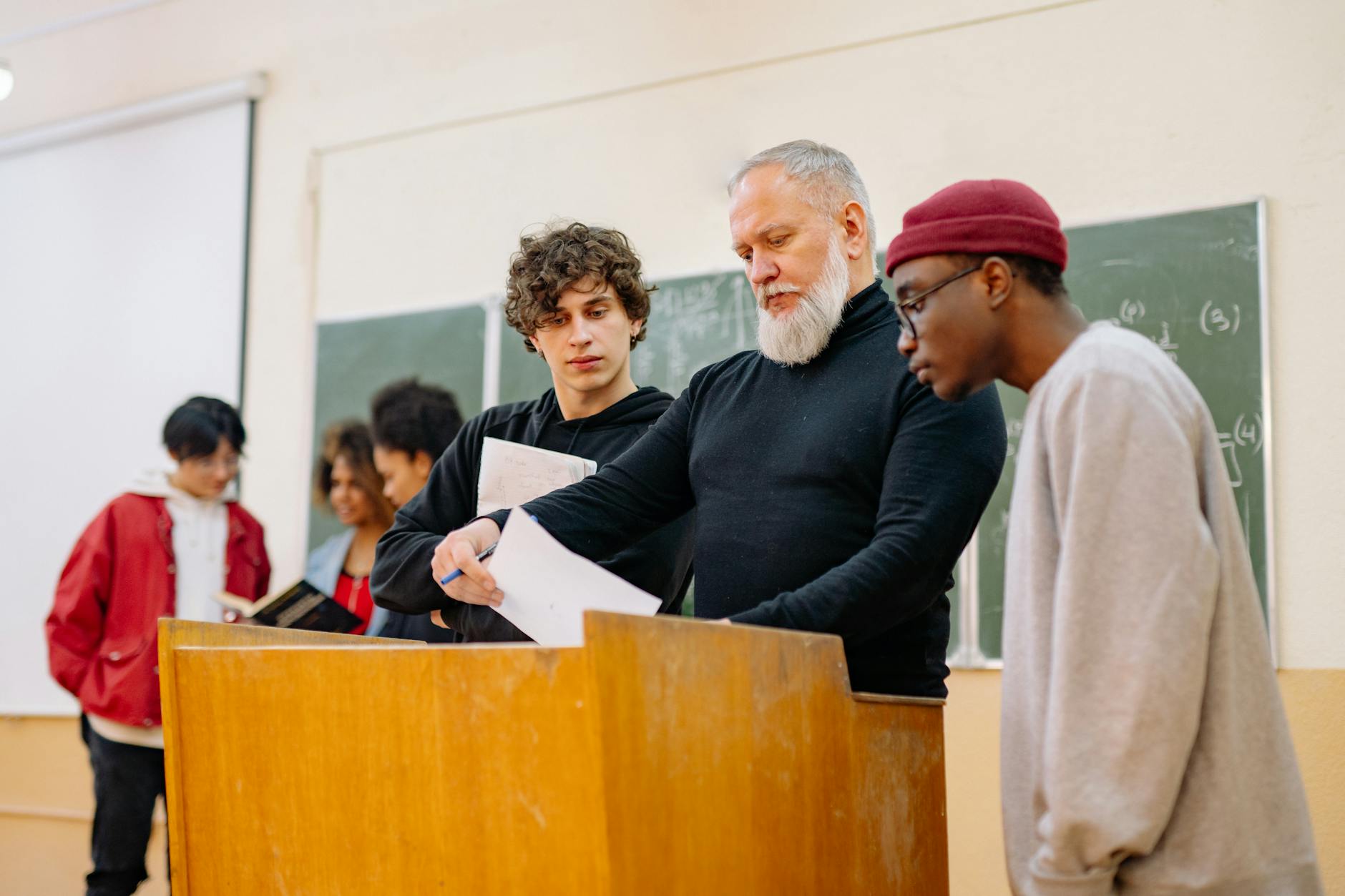
The other group that is not required to achieve and maintain certification is community college instructors teaching dual-enrolled students. I was a relatively rare community college instructor who had taught at the high school level and been certified to teach grades 6-12. At one time or another I was certified to teach English and German in Alabama, Georgia, Ohio, Colorado, and North Carolina. Although instructors must have a minimum of a master’s degree in their subject area, few of them have had education courses or have studied adolescent psychology and classroom management because most of them never dreamed, not older faculty anyway, that they would be forced to teach 14-, 15-, and 16-year-old high school students.

Photo by Yan Krukau on Pexels.com

And yet, more and more, not only are community college faculty expected to teach high school students within their classes on campus, but also online classes, and even in the high school itself. That’s right. More and more full-time college instructors are expected to leave the college campus and go to the high school to teach high school students exclusively, regardless of their level of training, experience, and comfort working with large groups of young teenagers in a high school environment. Believe me, teenagers in groups can be intimidating and even cruel. Not everyone can handle it. I couldn’t.

That’s one of the reasons I left teaching high school and got a job at a community college where I was happy until I was forced to teach large groups of young teenagers again. I retired early for a lot of reasons: teaching more and more high school students who were not prepared academically or emotionally for college-level work was one of the big ones. Don’t even get me started on the pressure from parents and administrators to lower academic standards for high school students.

Photo by Karolina Grabowska on Pexels.com

One-on-one or in groups of two or three, I did just fine, they did just fine, especially if the parents allowed the students to navigate the course as a college student should, without interfering. I love teaching teenagers under those circumstances. However, I know my strengths, and teaching groups of teenagers is not one of them. Dealing with parents, no matter how well-intentioned, is also not one of my fortes. However, it didn’t matter how many times I talked to the administration about how faculty were more and more frustrated with teaching high schoolers in large numbers and having to go to the high school to teach. Because the college is making money, because high schools and parents are saving money, this dubious educational process continues. In the end, it’s the high school students who lose sometimes two years of life experience they could have had learning to be independent thinkers if society would only think about the students first and find better ways to lower the costs of higher education.

Do you see what the problem is? It’s the incongruity. The state puts so much emphasis on testing and licensure, so much seeming concern about the qualifications it has for teacher education. “We only want the best, fully vetted teachers for our kids,” they opine. Except when it’s politically or socially inconvenient for the powers that be to have standards and fully vet the teachers. Or fully pay them.

Side Note: Of course, certification isn’t the answer either. Little supervision happens with any licensure program because it’s mostly bureaucratic hoops to jump through to provide data so politicians, school administrators, and the public can pretend they care about the quality of instruction. In reality, very few people truly care about the quality of education students receive, says the cynical retired community college instructor.

Photo by Yan Krukau on Pexels.com

I can see the political gears turning: “Oh, I know, more people are mad at the schools and teachers than ever. They think their kids are being indoctrinated, so let’s take money away from the public schools that require teacher certification and give it to parents so they can start homeschools that have few standards, where the “teacher” only has to have a high school diploma or equivalent and the students have no minimum score to reach on a yearly national exam that may or may not have an outside proctor to administer it.”

And then there are the dual enrollment programs, Career and College Promise in North Carolina, Again, because it’s convenient and saves money, got to save the money even if it is bad for education, let’s just throw our oh so important teacher education courses out the window and toss our unprepared college instructors into the high school classroom, those who never planned to teach high school and often resent having to teach an age group that they may not have the aptitude, or attitude, to teach.

Oh, we’re so worried about those big bad liberal high school teachers out there that we want to pull our kids out of the public school and homeschool them, but by golly, if I’m gonna save some bucks on the kid’s college education, then let the indoctrination by those free-wheelin’, gender pronoun talkin’ professors begin.

Photo by Karolina Grabowska on Pexels.com

Or not.

“If I don’t want my 15-year-old kid, who is going to bypass her first two years of real college, reading To Kill a Mockingbird, then I’ll just march down to that college and complain to the president.” Or “I don’t want my child feeling bad about slavery, so I’m just going to ask the professor not to make my baby read that slave narrative. The teacher just has to give him an alternate assignment. I mean, we just skipped all the history and literature that made us feel icky when we homeschooled him, and he still graduated.”

Of course, he did. Aren’t you so proud? Let’s just see how everything pans out when your baby wants to become a teacher (you should talk him out of it) and has to pay for and take the Praxis I exam and pass with a minimum score in order to get into the education program. Of course, I hear there are lots of Praxis prep courses he can take, only $399–a steal.

Photo by Michael Burrows on Pexels.com

Banned or Challenged?

Photo by Mikhail Nilov on Pexels.com

Okay. It’s time for all sides in the book banning debacle to simmer down. If people would just chill, the world would be a better place. (And I am the chief non-chill person, so I’m talking to myself here, too.) I do think that people throw around the word “banned” a bit too freely, especially where school classrooms and libraries are concerned.

Take Florida, for example, where people are justifiably concerned about House Bill 1467 that requires extensive review of classroom materials by members of school boards, most of whom are not educators nor librarians with no training in curriculum development. It also requires principals to take on onerous clerical responsibilities for materials. In addition, only certified librarians, who are already certified in Florida, must go through further training on what is considered “appropriate” before they can review material and if they do not comply completely with the new law, then they risk being disciplined or removed from their positions.

Therefore, the decision by some Florida school districts has been to remove any book that could possibly be considered inappropriate until the librarians can be trained, or indoctrinated, into seeing a book the way those of a particular political persuasion sees that book. On the other hand, people, again justifiably so, are upset when they read headlines about books being removed from the shelves and see photos of those empty school library shelves.

But, here’s my thing, those books that are being pulled from the shelves, they haven’t been banned. They are being pulled for review. Now, I know I don’t know nuthin bout the running of the government and I’m just a little ole retired English teacher, but I’m just gonna say it. This Florida law is stupid. The way I read it is that for political purposes, the Florida legislature has passed this law to placate extremist folks of all kinds, many who could not care less about the true education of children, which involves the continual development of their ability to discern what is right and true and good. Think John Milton’s great speech on censorship, the Aeropagitica.

Photo by freestocks.org on Pexels.com

In reality, all this bill is doing is creating a bureaucratic, unenforceable mess. Already, teachers don’t have enough time in the day to actually teach students much of anything, much less form relationships with them so teachers can match instruction to the individual student’s needs. Librarians don’t have time to lead students in instruction on how to complete research or help them find books that they WANT to read or encourage them to love reading. How is a school board that meets once a month, is not compensated for their time, and more than likely does not have the knowledge of curriculum for all of the different subjects, with usually no training in determining grade level, how are they supposed to review ALL instructional material for the school? AND as I understand it, the law indicates that school boards must do this review in public and allow for public comment and input. It’s a ridiculous notion to think that compliance with this law will be possible.

This is one reason why everybody needs to chill. This is bad law. What needs to happen is people standing up and having a conversation about why it’s bad and challenging it.

Or not.

Photo by Max Fischer on Pexels.com

Perhaps I’m cynical. Perhaps I’m bitter. So, take my words with a grain of salt, but I just don’t think many people really care. In the end, the outrage on both sides will pass and teachers will be stuck with more rules to follow, forms to fill out, evaluations to be made, everything to take them away from what should be their focus, explaining, mentoring, encouraging, assessing, remediating–teaching.

To me, all of the bluster is intended to make people feel like they care about the education of children. To show that they are a true believer in either a religious or secular sense. “See, I go to school board meetings and speak out about showing pornography to our kids.” “Look at me! I go to school board meetings to speak out about freedom and against censorship.”

But the teachers and administration need to chill, too. There’s just too much reactionary activity on all sides. Florida passes a law. The admin and some teachers are worried about being sued or losing their jobs. I know there might be a chance of that happening, but life is risky. Look, I’m not trying to make light of that fear, but is a job at a school that consistently makes you go against your conscience really worth having?

Photo by Yan Krukau on Pexels.com

Teachers, look at your situation. How likely is it that you will lose your job? How many times in your career has your job been threatened because of what and how you teach? I know there are some, but it is kind of like a police officer using a gun–many officers go through their whole career never firing their gun except on the firing range. A 2016 Pew Research Center study sponsored by The National Police Research Platform found that only 27% of officers fired their guns while on duty.

It seems to be even rarer for a teacher to be fired for cause. A fact check by 74 indicates that only 2.1% of American public school teachers are fired for cause, mainly for incompetence, not for their ideology, not for what they are teaching. I couldn’t find separate statistics for those directly fired because of the books they have on their shelves and in their curriculum, but it’s less than 2%.

I would never tell a teacher what to do, but I would encourage teachers everywhere at every level–stand up for yourself, stand up for what you believe, stand up for freedom of thought and against censorship. At the same time, admit when a book is inappropriate for your students. Avoid feeling threatened when a parent challenges a book. It’s their right. At the same time, encourage parents to come to you when they have a question about something you’ve said or about a book or some other aspect of the curriculum instead of going immediately to administration.

If you are an administrator or a school board member or a parent, please don’t leave the classroom teacher out. Ask them what’s going on. Have real discussions face to face with the teacher, instructor, or professor. Understand that what a student says about what a teacher says and does is not going to give anyone a complete picture of what is really happening in our classrooms. However, talk to our students about what is happening with book bans, challenges, and removals. They might surprise us with what they are able to “handle.”

Photo by Pixabay on Pexels.com

So, let’s try not to overreact. Instead of leaping to review every book for any remote perception of something wrong, or more than likely to make our big important political statements, why don’t we allow teachers to make their own judgments while parents make theirs, recognizing that sometimes all we need to do is talk together about books and ideas and feelings, even if they make us uncomfortable. Sometimes, that’s when real education begins.

The Power of the Expert Interview

I started requiring interview reports with local experts early in my career teaching freshman composition as part of the students’ major research project. I still think it is one of the best ways to help students focus their research. In more recent times, it has thwarted plagiarism and an overdependence on the internet for research. But the biggest reason I always leaned towards a local interview is that it helped students become more enthusiastic about their projects.

Photo by Sora Shimazaki on Pexels.com

I have written about my “process over plagiarism” approach before and included the example of my student from a poor background who became excited about his project after interviewing a florist at the Biltmore Estate, but I have numerous other examples of how students have benefitted greatly from interviewing a local expert.

There’s the time a non-traditional age student and mother wanted to write about breast feeding in public (this seems like a non-issue, but this was over a decade ago, and I live in the Deep South, nuff said). She was a great student and had a good, balanced argument supporting the importance of breast feeding and why women who choose to breast feed in public should not be shamed. For her interview, she contacted the director at the La Leche League in our county. The student was happy to report that not only did she come away from the interview with a more focused topic, she also received valuable print materials to use as sources, made important contacts with experts, and walked out with a job! That’s right, this pre-nursing student was getting help with her research paper as well as gaining invaluable experience.

Photo by RF._.studio on Pexels.com

Another student wanted to focus on forensics (I got a lot of that when CSI was at its peak of popularity), but she was having trouble finding someone to interview. I suggested she reach out to the county coroner, which she did. The coroner turned out to be a woman who was particularly interested in what could be discovered about cause and time of death by looking at skeletal remains. My student met her at her office in the county courthouse where the coroner shared book titles with her and allowed her to take notes and make copies from texts on her shelf. She also showed the student samples of bones, explaining what she could determine from examining them. The student narrowed the focus of her research paper and at the same time found a new interest in a career as a forensic anthropologist.

One of the most interesting stories of the face-to-face interview I had was with a student who wanted to do his research paper on Habitat for Humanity in our county because he was opposed to the organization, thinking the group in our area discriminated in favor of the Hispanic population. My student was a non-Hispanic and of a non-traditional age. His opinion at the beginning of his research was that too much aid was going to Hispanic people to the detriment of the white population. You may be surprised that I allowed the student to write on the topic; however, I warned him that he should not write about it unless he was not willing to change his mind if he found that his assumptions about the project were untrue. He agreed. It was risky but after talking to him, a risk I was willing to take. Sidebar: Being a good teacher involves taking calculated risks. It doesn’t always work, but it did that time.

Photo by Keith on Pexels.com

I can honestly say that in all my years of teaching, I have never seen a person so completely change after one interview. The thing is my student didn’t just interview one person who worked for Habitat for Humanity. Because he was a carpenter, he felt that the best way to find out what was really going on was to volunteer to work on a Habitat for Humanity project house within the Hispanic community of which he was suspicious. When he came to class after his first volunteer experience, he had a big smile on his face and admitted to me with no hesitation that he had been so wrong.

The idea of “sweat equity,” where the person who will receive the house works alongside those who have volunteered their skills, strongly appealed to my student’s work ethic, and he was impressed at how hard the people benefiting from the program worked on the house. After working with and talking to the future homeowners, he was convinced that Habitat for Humanity was an organization that gave a helping hand, not a handout. He became a long time Habitat for Humanity volunteer after that. One interview assignment had changed his attitude, and his life!

Photo by Alex Green on Pexels.com

Of course, not every interview has been a life-changing experience for a student, some were actually complete duds, but students learned from negative experiences as well. They also learned how to prepare appropriate questions, contact someone they didn’t know, meet with that person, record answers, and summarize the interview in a report, then integrate that information into their paper.

Even if students failed to satisfy the requirements of the assignment, I was alerted to the student’s difficulties and often able to avert problems with the researched essay itself. I would often address these issues in the student conferences that I held before the students began working on their rough drafts.

More about student conferences soon.

Movies about teaching inspired me

Photo by Anna Tarazevich on Pexels.com

Like many kids growing up in the 60’s and 70’s, I watched movies on Saturday afternoon. I was usually finished with my chores or riding horses by the time the matinee came on. Some of my favorite movies were about schools and teachers, go figure, and I saw some great movies over the years. Some of the films that inspired me to seek out teaching as a career were ones I just came across by accident, usually on Saturday afternoon because I was bored. Boredom is good for kids, btw. Let them be bored.

Here are a few movies about teaching that I still love just as I think of them:

Photo by Lukas Faust on Pexels.com

Conrack–This 1974 movie starring Jon Voight is based on The Water is Wide, the autobiography of writer Pat Conroy (The Great Santini, Prince of Tides, Beach Music, among others) who taught on remote Daufuskie Island off the coast of South Carolina. Conroy was a rebel whose non-traditional methods teaching poor black kids were effective but not socially accepted. Hummmm, guess anyone who reads my blog knows how this movie influenced me.

Good Morning, Miss Dove–1955, starring Jennifer Jones–Miss Dove is a very different type of teacher from Conroy. Very strict and traditional, she nevertheless realizes the dramatic impact she has had on her students as during her convalescence from a serious illness, she is visited by some of her former students and reflects on the personal sacrifices and quiet successes she has had over the course of her career as a geography teacher in a small town. It was good for me to see that different kinds of teachers meet the needs of students in different ways. Most students need and want discipline.

To Sir, with Love — 1967, starring Sidney Poitier – I had an immediate love of Sidney Poitier when I watched the handsome actor star in this film, based on the autobiographical novel of E. R. Brithwaite, about an immigrant from British Guyana taking on the trials and tribulations of teaching in an inner-city school in London. What inspired me was the power a passionate teacher had to change the lives of people the rest of the world had counted as lost and abandoned, the same thing that drew me to the movie Conrack. Frankly, I don’t care about the criticism that has been leveled towards the movie in modern times. To me, as a child growing up in the Deep South, it crossed racial lines and showed a black man as a hero teacher, winning the admiration of mostly white students. I wanted to be a teacher who, despite his flaws, stood up for what was right.

Goodbye, Mr. Chips–1939, Robert Donat and Greer Garson and musical version 1969 starring Peter O’Toole and Petula Clark–I remember watching both versions as a child. Based on the novella by British author James Hilton, both films showed me that teaching doesn’t just change students’ lives, it also changes teachers for the better. In the beginning Mr. Chips is a stiff, awkward pedant with little ability to relate to his students, but then he falls in love and marries a woman with less education but considerably more charm than himself. While their marriage is short-lived, his wife’s influence lasts a lifetime and softens Mr. Chips. He never marries again, pouring all his energies into his teaching. Robert Donat won an Oscar for his performance as Mr. Chips. Years later, O’Toole was nominated for an Oscar and won the Golden Globe for Best Actor in a musical or comedy. Both films showed me that teaching is more than a profession. It gives life meaning and purpose even when a teacher is faced with great tragedy and personal loss.

Photo by Dids . on Pexels.com

The Blackboard Jungle, 1955, Glenn Ford and Sidney Portier. I saw the Blackboard Jungle after To Sir with Love. Because I had such a huge schoolgirl crush on Portier, I would watch any film with him in any role. I had no idea who Glenn Ford was, but I quickly became a fan because of this movie. Ford plays the role of the teacher in an inner-city school and Portier, ironically, is one of his students. This movie, that talks about the difficulties of teaching, including low pay, classroom management when the room is full of troublemakers (understatement), the lack of respect from students and little to no support from administrators. But, despite the difficulties, Ford’s character, Mr. Dadier, persists and students learn. I found out through bitter experience that The Blackboard Jungle told the truth about teaching, only exaggerating a little. It helped me go into teaching with my eyes wide open and partly because of it, I was able to keep going even after some of the worst times.

The Miracle Worker, 1962, Anne Bancroft and Patty Duke–Of all the movies about teachers I saw growing up, the movie about how Annie Sullivan wouldn’t give up on her blind and deaf student, Helen Keller, was a prime influence on my decision to become a teacher. I will always remember that moment when Helen Keller finally understood connected the word being signed into her hand with the meaning–Water. The look on the young actor’s face as the meaning dawned on her. It so moved me that I watched the film, and the stage play by William Gibson based on Helen Keller’s autobiography, The Story of My Life, on which the play and film are based. I have read it many times, always returning to that scene at the water pump:

We walked down the path to the well-house, attracted by the fragrance of the honeysuckle with which it was covered. Some one was drawing water and my teacher placed my hand under the spout. As the cool stream gushed over one hand she spelled into the other the word water, first slowly, then rapidly. I stood still, my whole attention fixed upon the motions of her fingers. Suddenly I felt a misty consciousness as of something forgotten—a thrill of returning thought; and somehow the mystery of language was revealed to me. I knew then that “w-a-t-e-r” meant the wonderful cool something that was flowing over my hand. That living word awakened my soul, gave it light, hope, joy, set it free!

The joy of Annie Sullivan, played brilliantly by Anne Bancroft, as she shared word after word with her student, now hungry for more and more now that the floodgates were open–that was the joy I wanted to experience and for almost forty years have been able to, despite some of the hardships encountered by those movie stars from long ago. I will always remember how they inspired me.