Hey, Mrs. Winkler: A History

In 2014, I started this blog as a way to stay sane as I became increasingly alarmed about the state of things at my institution, a small community college south of Asheville, North Carolina. Since 1995, I had taught English composition, developmental English, British literature, and creative writing. During the first decade or so, I had enjoyed blessed autonomy, trusted to develop my own curriculum that followed limited state and institutional guidelines. I liked it that way, and by all indications, I and other English instructors were effective teachers, especially when preparing students to be successful when they transferred to four-year institutions. We collaborated on the required freshman English classes, using the same textbooks and study materials, but we were still considered the experts when it came to our individual classes and pretty much left to create our own curriculum and assessments.

Photo by cottonbro on Pexels.com

However, as online instruction and dual enrollment became more popular, the college administration as well as the state sought more and more standardization because, you know, it’s so much easier to collect data and dollars that way and aren’t those the only things that matter? I guess you can tell how I felt about the changes and my loss of academic freedom.

As that first decade of Hey, Mrs. Winkler moved on, I found myself feeling smaller and smaller as an employee, even though I was growing in my abilities and contributions to the college, including the development of four online literature classes—World Literature II (I believe the first online lit. in the state of North Carolina), British Literature I and II, and American Literature II. I also developed accelerated online classes for the two required freshmen English courses, making it possible for students dependent on financial aid to proceed through their courses more quickly.
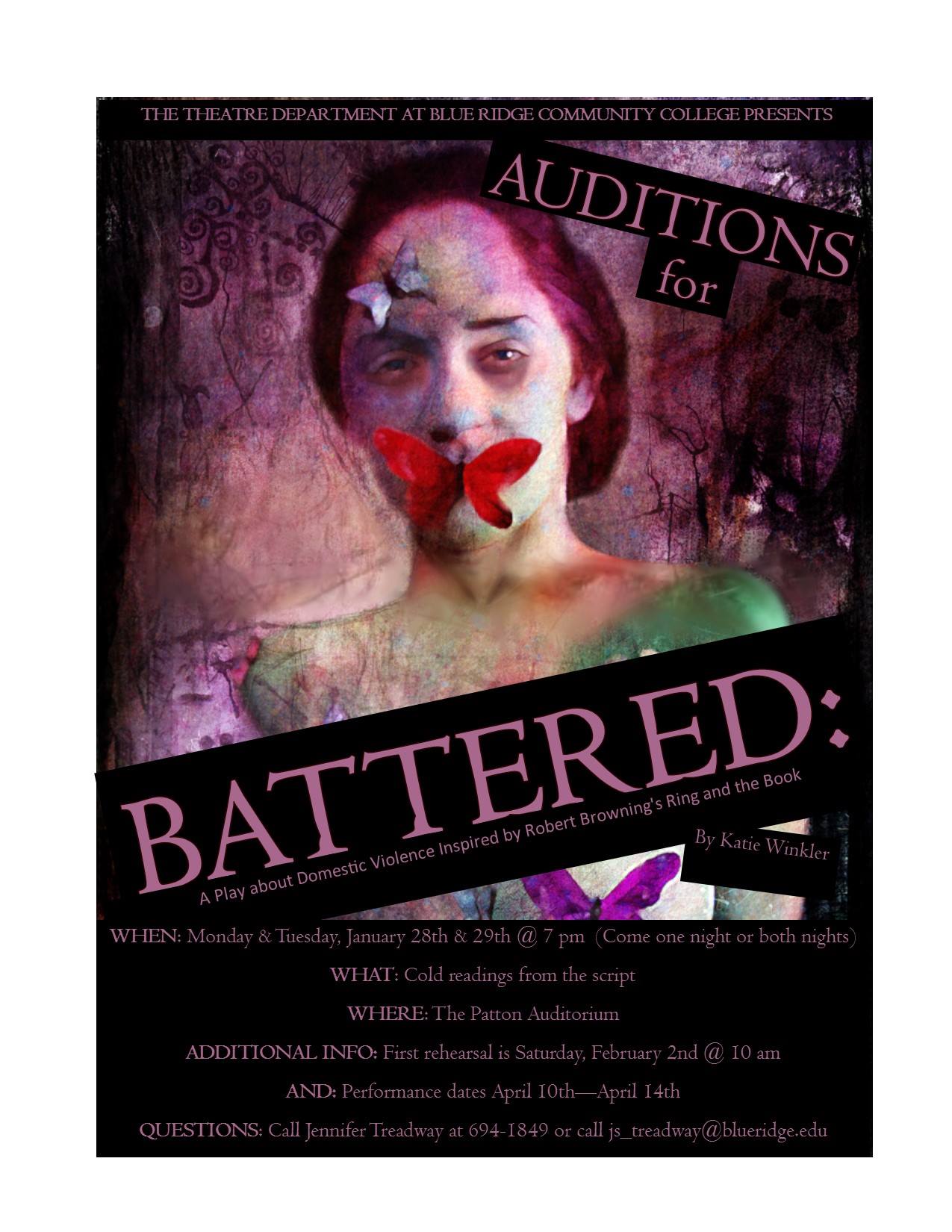
Even before 2014, I had become deeply involved in the theater department at my college as a writer, actor, director, dramaturg, and publicist. I also collaborated on writing screenplays for short films, one that won the 2008 Asheville 48-Hour Film Project Best Film called Serial Love. I wrote four plays that were produced at the college—a one-act comedy called Green Room, the musical A Carolina Story with music by a former student, Curtis McCarley, a faithful stage adaptation of Frankenstein by Mary Shelley, and a play about domestic violence inspired by Robert Browning’s The Ring and the Book called Battered. All four were fantastic teaching experiences as I collaborated with student actors and crew members when writing and revising the scripts.
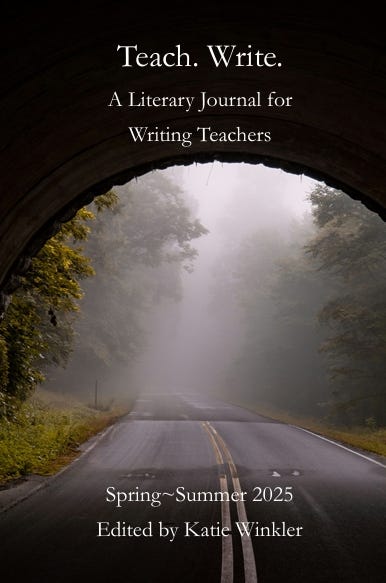
In 2017, I launched a literary journal called Teach. Write.: A Literary Journal for Writing Teachers, which now has its own website teachwritejournal.com and is a member of the Community of Literary Magazines and Presses. The latest edition is dedicated to the people of western North Carolina and those who came to help us following the devastation caused by Hurricane Helene.

So, you see, Hey, Mrs. Winkler was not only a place to rant, but also about the wonderful collaborations and incredible students I had over the years. I love teaching, and writing the blog, then editing the journal, gave me opportunities to express all the bad, good, and seriously screwed up things that were happening. It helped me survive those last years. Finally, however, I had to leave teaching, probably because I loved it too much. I just couldn’t take what was happening to it anymore. When the opportunity arose for me to retire a bit early, I took it, and I haven’t been sorry.

It’s been over a year and a half since I retired, and although I miss my colleagues and my students, I don’t miss the administrative hassles and definitely do not miss grading essays! In some ways, especially as I work on my memoir, Lessons: A Teacher’s Life, to be published this year or early next, I feel that I haven’t left. Also, my time as a Dramatists Guild Foundation Fellow helped me rewrite A Carolina Story, which had its beginnings at the college where I taught the bulk of my career. Next month, the new A Carolina Story will have a workshop reading at Hendersonville Theatre as part of their series New Works Readings: Page to Stage

The Beat Goes On.

Too Long

blog icon information internet

Photo by Pixabay on Pexels.com

This is what I get for teaching in the summer—less time to work on my blog. I almost let all of June go by without a post, but I made it!

I am saying right now, while I am in the midst of it, that I will never teach a course in the summer again. What was I thinking? Those of you who know me understand how I can get during the school year–I’m kind of intense, let’s say. Summer has always been my time to work on myself—my writing and reading, my diet and exercise, my family, my friends. Oh, and my Scrabble online time.

Not that I haven’t been doing all that.

However, I should have anticipated that teaching a composition course in eight weeks instead of sixteen is naturally going to take up a big chunk of time. And it has. Yet, I’m not sorry that I have done it because even if I do not succumb to the allure of teaching in the summer again (oh, Lord, I hope not ), I have learned a great deal that I can apply when teaching my sixteen-week classes.

Here we go:

  • Streamline assignments–I found that with fewer assignments, students are getting an ample amount of writing practice. I have also found that I can assign less time for assignments and still get the same quality of work from students. Giving weeks of time to complete the major assignments doesn’t seem to help either. Plus, I don’t have weeks of time when teaching a sixteen-week composition course in eight weeks.
  • Compact assignments–I re-wrote assignments to get more information in a single assignment so that I could afford to streamline. It takes some work and creative thought, but I dig that kind of stuff. Hey, course design is one of the reasons I love teaching so much.
  • Add video and text resources but keep them well-organized–I always have included a myriad of video and text resources, but with our new clean-looking LMS interface, it is easy to use labels to keep all of the student resources organized and easier to access. One tip–add resources that come from highly respected institutions (a plagiarism quiz from Cornell, which covers just about every possible plagiarism situation my students stumble across) and those that involve technology (a video about how to use Survey Monkey, which students like to use when doing field research for their capstone project).
  • Spreading out due dates–Students would find it difficult to be successful if they tried to complete two weeks worth of work in one cram session right on the day assignments are due. We can say good students get started early all we want, but the reality is most students, strong or weak, wait until the due date to complete assignments. Spreading out due dates helps students manage their time and helps me keep up with grading.
  • Introduce and summarize assignments–I have always added an introduction to my assignments, including key concepts from the text that I want to reinforce, but I have rewritten the introductions to be more intentional. I have also added summaries that include ONLY a bulleted list of what the students actually must submit for the assignments. This seems to help a great deal in avoiding confusion. Aristotle’s old advice, tell them what you are going to say, say it, and then tell them what you just said, still holds true.
  • Create screencasts–It is relatively easy to create explanatory screencasts and upload them to YouTube with my ipad. I created a screencast just the day before yesterday that is about eight minutes long and takes students through the steps to find sources on my college’s website. YouTube has a feature that makes it easy to close caption in order for the video to be ADA compliant. All together, including upload, the screencast took me about one and a half hours to create. That would be more than I might want to dedicate during the school year, but since I have only one class this summer, and this screencast will be able to be used again, it was worth the effort.
  • Stay in touch–I have always tried to stay in touch with students, but I have made an even more concerted effort to communicate with students this summer since I have more time. I try to answer e-mails quickly and maintain a light and friendly tone with students. Last night I called a struggling student and spent about fifteen minutes offering some advice but mainly encouraging her. Fifteen minutes to save her from withdrawing a second time from English composition. Time well-spent. I know in the regular school year, with six classes, I will be unable to talk to all of my students this way, but I can certainly try to make a more personal connection to online students who are struggling.
  • Encourage strong students, too–This summer it has hit me harder than usual how much my strong students need me. They need to see not only a blanket “good work” on assignments, but also remarks on their essays about specific things they have done well. Sometimes the A students are lost in the shuffle. I don’t want to forget them this coming school year when I start getting busy putting out fires.
  • Empathize with difficulties–It doesn’t hurt to be human. I try to remember what it was like to work two jobs, be active in a campus club and be in student government while I was carrying a full load of classes. Some of my students have small children to care for as well. I can’t imagine. But I need to try.
  • However, don’t lower standards–While I try to show students compassion and make concessions where I can, I never want to lower my standards. I would not only be doing a disservice to the student but also to the college and society at large. Our students’ potential employers deserve workers who can read and write clearly, concisely, and persuasively. I have to be kind but firm.
  • Maintain a sense of humor–Much undervalued in education, I think. Having a sense of humor when communicating with students, when appropriate of course, eases tensions and humanizes me and the situation. It helps establish rapport with students like nothing else and helps them realize that, wildly successful or not, this intense eight-week English composition course will be just a blip in their lives, an important blip, but not the be all and end all of their existence.

Now, I had fun! I love writing this blog and hope someone reads it, but even if no one does, I have had a chance to pull together some interesting conclusions about my experience teaching this eight-week online composition class, and it is giving me some good, good, good vibrations. Sounds like summertime to me!

Anyone for a game of Scrabble?

letter blocks

Photo by Pixabay on Pexels.com

cover_springsummer2019

DON’T FORGET TO SUBMIT TO TEACH! WRITE! DEADLINE FOR THE FALL 2019 ISSUE IS AUGUST 1! CLICK HERE FOR SUBMISSION GUIDELINES. I WOULD LOVE TO SEE YOUR POETRY, SHORT FICTION, OR CREATIVE NON-FICTION! YOU DON’T HAVE TO BE A TEACHER OR A PUBLISHED WRITER TO SUBMIT!


I made it! Barely.

cover_springsummer2019

Glad to offer Volume II, Issue 2 of Teach. Write.: A Writing Teachers’ Literary Journal. Once again, producing this journal right during this busy time of the semester, right before the premiere of my fourth play, has nevertheless been a joy. I feel like I get to know all of the writers who contribute by reading their e-mails, bios, and most of all, their writing. I thank them all for contributing, and I hope you will all enjoy this newest edition of Teach. Write.

Here is a link to the journal: 2019 Spring_Summer_Teach. Write.


The world premiere of Battered, a play about domestic violence inspired by Robert battered posterBrowning’s The Ring and the Book, will appear April 11-14, at the Patton Auditorium of the Henderson County campus of Blue Ridge Community College in Flat Rock, North Carolina.

Over a period of two years, I have worked on the script along with the director and a hard-working cast and crew. My continuing collaboration with the head of the drama department allows us to provide real-world experiences for students, along with an opportunity to express themselves through their art.

At the latest professional development day, the keynote speaker talked about providing students with what he called peak moments, those educational experiences that provide lasting memories and shape our students’ future. My hope is that this production of Battered will provide such experiences for the cast and crew. I know it has for me.