Battle Cry

Knight-800px (2)

Knight on Horseback by Firkin (freeclipart.com)


My last post was December 1. That seems like a long time ago. The normal end of the year rush, trying to do my best by my students, and then the additional hassle of dealing with the politics and bureaucracy of the job that is my least favorite aspect of teaching.

But then comes Christmas! A chance to get away and not think about work at all except for tinkering with the web-based material of my classes a little and musing about my profession. After a rest and time with the people who love me and whom I love, I know that I am up for the battle that is ahead.

I will fight for the integrity of my institution of higher learning. Yes, it is just a small community college, but it has always been a place where I have been proud to work–where students have been expected to meet certain levels of competency before receiving a passing grade. Period.

MedievalDesign-800px (2)

Medieval Design by Firkin (freeclipart.org)

Therefore, I resolve to put on my armor and fight the good fight. Too many are giving in to the pressures of administrators and parents who are data-driven down a road to nowhere. Not me. Not now. Not ever. I hope all teachers will follow me.  It won’t be easy. Our arsenal is dwindling–decreased respect for academia, no tenure, dwindling academic freedom as well as the autonomy college-level faculty have so long enjoyed.

However, we still have at least one mighty weapon–a free press, who knows for how long, so let’s make the most of it. National Public Radio, that bastion of fake news, along with American University Radio (WAMU), has been reporting, if you can believe those bleeding hearts, on a high school in Washington D.C. that boasted of having all of its graduates accepted to college. Sounds great? Not really.

The report states that not only did the majority of the graduates miss more than six weeks of school, but also only 57 students met graduation requirements. Yet somehow all 164 students graduated and 164 students were accepted into college. Faculty members testified that administrators frequently asked them to give students who missed an assignment a 50 instead of a zero. One faculty member was called while on maternity leave and asked to change a grade for a student she previously failed.

A few months later, NPR has published a follow-up article with voices of faculty around the country facing similar circumstances–being pressured to change grades and pass students who can’t, or won’t, meet minimum requirements, witnessing the falsifying of attendance and other records but not saying anything out of fear of losing their jobs.

Here’s the article:  “Teachers Around the Country React to Investigation at Ballou High School”

Interesting, but disturbing, especially because it’s no fake news. The things I have seen and heard this long month of December prove it’s all too real.

But I’m rested.

I’m ready.

Bring it on.


joanofarc-800px (2)

Joan of Arc by j4p4n (freeclipart.org)

Job 39:19-25 

King James Version (KJV)

19 Hast thou given the horse strength? hast thou clothed his neck with thunder?

20 Canst thou make him afraid as a grasshopper? the glory of his nostrils is terrible.

21 He paweth in the valley, and rejoiceth in his strength: he goeth on to meet the armed men.

22 He mocketh at fear, and is not affrighted; neither turneth he back from the sword.

23 The quiver rattleth against him, the glittering spear and the shield.

24 He swalloweth the ground with fierceness and rage: neither believeth he that it is the sound of the trumpet.

25 He saith among the trumpets, Ha, ha; and he smelleth the battle afar off, the thunder of the captains, and the shouting.


Rocking the Boat

Frontispiece from Prophets of Dissent–A Collection of Essays Published in 1918 (Wikimedia)

In a 2003 LA Times article, entitled “The Power of Dissent,” Harvard law professor Cass R. Sunstein, makes a reasonable argument about how a dangerous culture of conformity within NASA helped aid and abet the Columbia shuttle disaster that took the lives of the shuttle’s seven-member crew. At the conclusion of the article, Sunstein summarizes the stunning conclusions of the Columbia Accident Investigation Board that well over a decade later should give today’s administrative-heavy educational institutions with a top-down leadership mentality pause:

The Columbia Accident Investigation Board emphasized the need for NASA to develop a distinctive kind of culture, one that discourages deference to leaders, sees dissent as an obligation, promotes independent analysis and insists on a wide range of voices. The broadest lesson is simple. Well-functioning organizations discourage conformity and encourage dissent — partly to protect the rights of dissenters but mostly to promote interests of their own.

Discourage deference to leaders? See dissent as an obligation? Insist on a wide range of voices? Isn’t that against THE CODE? Yes, sisters and brothers, it is, and God bless it.

The suppression of dissent, no matter from what political, social or religious perspective, is dangerous for higher education, leading to meaningless bureaucracy, rote learning, demoralized faculty, and unmotivated students, who care, or are encouraged to care, more about their minimum wage  after-school jobs than they do about their educations. It also breeds the unreal expectation of what a piece of paper, without symbolizing true learning, can give them in life.

Conformity is anathema to college education. Standardizing for the sake of the nebulous “giving the students the same exposure to the same material” is not the point. If college is supposed to be preparing students for real world experiences, how does requiring all faculty to teach the same curriculum prepare students? Will all of their bosses be the same, having the same expectations, assessing their performance in the same way, promoting for the same reasons? And if our students become the bosses, heaven help us if they seek to suppress opposing viewpoints or disallow any honest debate.

At a community college, even if its mission is only to train the local workforce (of course it is much more ), then that community college fails if it does not offer students a rich and diverse curriculum, introducing them to multiple educational methodologies, personalities, disciplines, attitudes and expectations, teaching them one of the most important and desirable of all skills in the workplace–adaptability, the ability to conform, yes, but to a reasonable degree, while dissenting when necessary, when it could be hurtful, if not fatal, to just shut up and do the job.

Therefore, I will continue to dissent, against those things that violate my academic freedom–the freedom to be the kind of teacher I was called to be. No, I will not dissent for dissent’s sake, but yield to reasonable requests and accept constructive criticism. But I will fight against any pettiness that threatens to derail almost thirty years of quality teaching–even if I am a bit strange, excitable, stubborn, even insubordinate and obnoxious. I may be those things in some people’s eyes, even in my own sometimes, but mainly I choose to see myself as unique, passionate, steadfast, questioning, and if some people find my demeanor obnoxious, I can live with that, and sleep at night.

anne-hutchinson

Anne Hutchinson–Puritan Dissenter

As Sheryl Crow sings,

I was born in the South
Sometimes I have a big mouth
When I see something that I don’t like
I gotta say it.


Dissent is not the dirty word some seem to think it is. Don’t rock the boat, they say. Why not? Because it might turn over? So what if it does? We might learn to swim.


What happens when liberal arts are devalued in the community college?

5653093-steve-jobs-liberal-arts-quoteThere seems to be an increasing hostility in the world today towards the study of the liberal arts. This is not a new subject to readers of my blog. As a community college instructor teaching English, I have grave concerns about how this hostility is affecting many of my students at the college where I teach.

If students don’t value the liberal arts, especially the humanities, they often become resentful of having to complete assignments that appear, to their uninformed minds, to have no practical value. This resentment can turn to inattentiveness and a lack of participation, which sometimes turns to more serious inappropriate behavior, and even to open hostility and violence, according to a 2008 study by educational counselors Dr. Robert Dobmeier and Joseph Moran (“Dealing with the Disruptive Behavior of Adult Learners”).

The feeling that students’ time studying in the humanities classroom is somehow wasted is often times reinforced by negative attitudes within the home, among peers and in the wider community. For example, former Governor Pat McCrory of North Carolina said in a 2013 radio interview referring to certain humanities courses, including gender studies and an African foreign language

“So I’m going to adjust my education curriculum to what business and commerce needs to get our kids jobs as opposed to moving back in with their parents after they graduate with debt,” McCrory said, adding, “What are we teaching these courses for if they’re not going to help get a job?”

If the governor of a state with a rich tradition of superb institutions of higher education feels free to make such uninformed statements, it is logical to assume that some students are hearing similar ones at home and among their peers.

I can attest that this lack of respect has led to disrespect for not only the disciplines I teach, but also for myself. Furthermore, I am not alone. Students are becoming more and more critical of instructors’ assignments, teaching styles and assessments. I don’t mean legitimate questions respectfully asked, which leads to explanations that help students understand the material better, but criticism that is increasingly uncivil, including sleeping, texting or talking in class, posting inappropriate comments in online discussion forums, as well as e-mailing rude and even obscene comments to instructors.

Worse, community college instructors are increasingly confronted with angry and hostile students in the classroom and in our offices. These students are often upset that an instructor has carried out a policy that is stated clearly in his or her syllabus or there is some disagreement about a grade. Sometimes these encounters are upsetting and even frightening to the instructor, his or her colleagues, other students, staff and administrators.

I have been teaching a long time, and I know that incidents like these have been happening since the first classrooms were created, but I have never, in my whole almost 30-year career, had so many adult students with such unhealthy attitudes toward learning for learning’s sake, that inexplicable passion for learning, which leads to all of the things so many people say they desire out of higher education–citizens who can think critically, communicate well, solve problems and adapt to new situations quickly.

Something needs to be done. But what? There are no easy answers, but I am going to begin with educating myself with specific information that supports my belief that the study of the liberal arts should be the bedrock of all our institutions of higher learning.

**********

I found this incredible essay posted on the Academy of Arts and Sciences website, along with a great article entitled, The Vitality of the Humanities in U.S. Community Colleges,” that reiterates my thoughts on the importance of all students studying the arts and humanities in our community colleges:

January 19, 2015

Community College Students and the Humanities: New Opportunities for Learning and Growth

posted by Martha J. Kanter

Martha J. Kanter, Ed.D., is a Distinguished Visiting Professor of Higher Education at New York University and former U.S. Under Secretary of Education from 2009 through 2013.

More than 40 percent of our nation’s adults are unable to read, write, or compute at the competency level expected of America’s high school graduates, so it’s hardly a surprise, even if it is gravely disappointing and frustrating, to inform policy makers, and the public about the worth of the humanities.1 But what better way to elevate the discussion than with facts and policy strategies?

That is why the light that the American Academy of Arts and Sciences is shining on community colleges and the humanities is critical in this endeavor. Even today, too many Americans aren’t aware that the community colleges are the gateway to higher education for more than 40 percent of our nation’s undergraduates. A generation ago the United States was first in the world in the number of college graduates with two-year and four-year degrees. According to the Organisation for Economic Co-operation and Development (OECD), we are now eleventh in the world, tied with Israel.2 The good news is that we are moving in the right direction: we were ranked sixteenth 16th in the world in 2009. It’s a national imperative that we provide Americans the best quality education so we must look to the community colleges and state universities where the middle-class and low-income majority is seeking higher education. (my accent)

Educational improvements and financial support are sorely needed. Sadly, public colleges and universities were hit hard by the recession and lost, on average, about 20 percent of their state support. We need our private universities to join with their colleagues in the community colleges and state universities in a shared vision to reimagine and redesign general education in the years ahead. In doing so, we will ensure that all of our students have access to the fundamental ideas, knowledge, skills, and capacity to learn that will advance greater numbers of students with undergraduate and graduate degrees for America’s prosperity in the 21st century.

Looking at the facts, more than a third of associate’s degrees are awarded in subjects that require a significant humanities course load.3 Exposure to the humanities in the first two years of college as a significant component of general education provides the intellectual framework for students to compare and contrast the viewpoints of those different from themselves and to delve into the learning spheres of analytical reasoning, problem solving, and decision making to tackle the very real problems facing their communities and the greater society.

In a recent survey, the American Association of Colleges and Universities found that 93 percent of CEOs want to hire individuals who demonstrate the “capacity to think critically, communicate clearly and solve complex problems,” capabilities “more important than their undergraduate major. More than nine in ten of those surveyed say it is important that those they hire demonstrate ethical judgment and integrity; intercultural skills; and the capacity for continued new learning.”4  (accent is mine) 

Unfortunately, the collaboration so urgently needed between the arts, humanities, sciences, and business has fragmented into ever more disparate pieces over the last decade when their interaction and integration should be encouraged to spur innovation, entrepreneurship and creativity to drive our nation forward. In the decades ahead, our nation will need more Americans with college degrees who are well versed in the histories and opportunities to address the major societal challenges of our democracy and the world, not the least of which include the education levels of children, income inequality, the social, economic and civic needs of diverse communities, globalization, innovation, and American competitiveness. Interdisciplinary thought leadership and collaboration will be more important than ever in crossing boundaries to address the local, regional, national, and global problems ahead of us.

When Tom Ehrlich spoke about the pathways to ethical and engaged citizenship at Miami Dade College in 2009, he said, “college learning must be about much more that [sic] knowledge—knowledge that may be obsolete in just a few years. Most important, it must be about learning how to learn and to keep on learning. At its core, that is what a liberal education does, it liberates our minds to learn.”5  (accent is mine) 

We should look to the evidence, embrace the liberal arts as a necessary foundation for postsecondary education in all fields of study, and figure out how to give our students the best possible opportunities to discover themselves, their place in the world, and how they can contribute to improving their own lives and the lives of their communities. In doing so, we will be part of the American dream we wish to realize for ourselves and future generations. (accent is mine)

ENDNOTES
1 U.S. Department of Education, Institute of Education Sciences, National Center for Education Statistics, 1992 National Adult Literacy Survey (Washington, DC: U.S. Department of Education, 2000), http://nces.ed.gov/pubsearch/pubsinfo.asp?pubid=199909; and U.S. Department of Education, Institute of Education Sciences, National Center for Education Statistics, “Percentage of adults in each prose, document, and quantitative literacy level: 1992 and 2003,” in 2003 National Assessment of Adult Literacy (U.S. Department of Education, 2003), http://nces.ed.gov/naal/kf_demographics.asp#2.
2 OECD, Education at a Glance 2014: OECD Indicators (Paris: OECD Publishing, 2014), http://dx.doi.org/10.1787/eag-2014-en.
3 American Academy of Arts and Sciences, “Associate’s Degree Completions in the Humanities as a Percentage of All Associate’s Degree Completions, 1987–2013,” in Humanities Indicators, 2014.
4 Hart Research Associates, It Takes More than a Major: Employer Priorities for College Learning and Student Success (Washington, DC: Hart Research Associates, 2013), http://www.aacu.org/sites/default/files/files/LEAP/2013_EmployerSurvey.pdf.
5 Tom Ehrlich, “Ethical and Engaged Citizens: Whose Responsibility?” (talk delivered at Miami Dade College, Miami, FL, May 21, 2009).

Stay in School! It’s Worth It!

New York Times opinion page editor David Leonhardt has some interesting things to say about the college dropout rate and how it especially hurts lower income Americans. Here’s a sobering passage for me as a community college instructor:

At the other end of the spectrum are community colleges, the two-year institutions that are intended to be feeders for four-year colleges. In nearly every one are tales of academic success against tremendous odds: a battered wife or a combat veteran or a laid-off worker on the way to a better life. But over all, community colleges tend to be places where dreams are put on hold.

Most people who enroll say they plan to get a four-year degree eventually; few actually do. Full-time jobs, commutes and children or parents who need care often get in the way. One recent national survey found that about 75 percent of students enrolling in community colleges said they hoped to transfer to a four-year institution. But only 17 percent of those who had entered in the mid-1990’s made the switch within five years, according to a separate study. The rest were out working or still studying toward the two-year degree.

“We here in Virginia do a good job of getting them in,” said Glenn Dubois, chancellor of the Virginia Community College System and himself a community college graduate. “We have to get better in getting them out.”

However, Leonhardt offers information that should encourage us to find ways to keep young people in school:

That loss of ground is all the more significant because a college education matters much more now than it once did. A bachelor’s degree, not a year or two of courses, tends to determine a person’s place in today’s globalized, computerized economy. College graduates have received steady pay increases over the past two decades, while the pay of everyone else has risen little more than the rate of inflation.

The battle my colleagues and I fight every day is worth it. Yes, it is.

The link: https://www.nytimes.com/2017/03/29/opinion/fix-the-college-dropout-boom.html?_r=0

1398459277-300px

******

Still plenty of time to submit to the premier issue of the new literary journal Teach. Write. I am looking for flash fiction, short stories, poetry and creative non-fiction by anyone who is teaching or has taught writing at any level. Deadline is July 1 for the fall 2017 edition. See full submission guidelines for more information.

Got to Get Ourselves Back to the Garden

Woodstock
by
Joni Mitchell
I came upon a child of God
He was walking along the road
And I asked him, where are you going
And this he told me
I’m going on down to Yasgur’s farm
I’m going to join in a rock ‘n’ roll band
I’m going to camp out on the land
I’m going to try an’ get my soul free
We are stardust
We are golden
And we’ve got to get ourselves
Back to the garden
Joni Mitchell did not play at Woodstock. She wasn’t even there. Reportedly, she penned this homage to one of the most important musical events of the 20th Century from a hotel room as she watched clips of the festival on TV. Nevertheless, she caught the spirit of that time, experienced it in a true way and wanted to return to it–knew that it would be  necessary to go back to the place where the spark became flame, built up and roared.
I was nine-years-old when Woodstock happened. My father was a major in Army Intelligence, serving in Vietnam; nevertheless, the country’s division over the war was not a part of my life then. My wonderful parents protected us as best they could from the reality of my father’s situation. Woodstock came and went while I was playing Kick-the-Can in my grandmother’s backyard, waiting for my little brother to be born and my daddy to come home.
I didn’t really start listening to Mitchell’s music much until college. I attended a rather conservative Christian university, and because I’ve always been a contrary soul, probably to get attention more than anything, I subscribed to Rolling Stone magazine and carried each issue  around with the cover always carefully arranged to show off the title. Oh, what a rebel.
joni_wild

Joni Mitchell painted a self-portrait for the cover of Wild Things Run Fast

I did, however, truly read Rolling Stone and often times bought albums that were reviewed favorably in the magazine. Joni Mitchell’s 1982 album Wild Things Run Fast was reviewed (Review), and I liked what I read, so I bought the album. It moved me, especially  the final track, based on the beautiful “Love” chapter in the Bible–I Corinthians 13.

But not until I took my first teaching job in Aliquippa, PA, working at a private Christian school that paid me a pittance (less than the male teachers with equal or less experience), did I hear Mitchell’s “Woodstock.”
In PA, one of the things I did to amuse myself was go to the nearby mall and “shop,” rarely buying anything unless I had gotten a little care package from home or pushed paying a bill back a little. In the mall was a record store that also sold cassette tapes (CDs were not a thing yet). I was single then, and there was this good-looking young man who frequently worked there, so I would always take time to visit and linger if he was working, looking through the used and discounted cassette tape bin (I couldn’t afford a record player), searching for something that looked interesting.
One day I found something of value to me–Joni Mitchell’s third album–Ladies of the xladiesCanyon. Even then the “Woodstock” track on that album didn’t appeal that much to me. I preferred the rock version by Crosby, Stills and Nash. Other tracks resonated with my single, 20-something self–“Big, Yellow Taxi” and “Conversation,” especially.
I was lonely then. Still am in many ways, whenever I’m away from my family and close friends. Then as now,  I just never seemed to fit in anywhere else. Southerner from Alabama living in dying northern steel town. Liberal in the conservative world–conservative in the liberal world. Devoutly Christian yet disillusioned with institutionalized religion. But whenever I listened to Mitchell’s songs, I just felt better. Her distinctive voice would waft over me, soothing away the frustrations of the day–the loneliness, the isolation, the otherness.

Life got much better and infinitely less lonely when I started dating the man who would become my wonderful husband. After we moved from PA and settled in North Carolina, I still listened to Joni Mitchell, now on CD, but different songs began to resonate with me–my daughter was born and “The Circle Game” became my favorite, but now when I listened to “Woodstock,” Mitchell’s piano and poetry began to sink in: “We are stardust. We are golden.” Yes, yes we were.

6c9a21a22275faf54018dbcb55f1db46-2

by seriousfun@Morguefile.com

Then we come to yesterday–twenty years later–over twenty years doing what I love to do and in which I always thought I excelled. “Perhaps you’re not as good as you think you are,” I thought as I drove home after a particularly disheartening day, not of teaching, but of listening to how my colleagues, my friends, are being dismissed, belittled and even harassed by people who are supposed to have their best interest at heart, and worst of all, hearing an administrator, who has never taught an online class, denigrating our students in an open roundtable discussion about distance learning.
Feeling empty, I drove. Then, as if mystically planned all along, I tapped the CD player button. “Ladies of the Canyon,” the song, “Woodstock” was playing–the second verse. Joni’s voice soothed me again and started bringing me back.
Then can I walk beside you
I have come here to lose the smog
And I feel to be a cog in something turning
Well maybe it is just the time of year
Or maybe it’s the time of man
I don’t know who l am
But you know life is for learning
We are stardust
We are golden
And we’ve got to get ourselves
Back to the garden

Thanks to Joni, I’m on my way back.

wildflowers

photo by hmjmiller@morguefile.com

I have decided to add a creative non-fiction category to Teach. Write: A Literary Journal for Teachers of Writing. Send me creative non-fiction pieces about your experiences as a writing instructor. I will also be accepting poetry and short fiction. See Submissions Guidelines here.  I will be accepting submissions until July 1, 2017 for the first edition of the journal.

Teach. Write. Not Yet.

frankenclassicI know I said that my next post would be about my new endeavor into the literary e-zine world, but I am super busy with getting my stage adaptation of Frankenstein ready for auditions in August, so I haven’t had time to work on it.
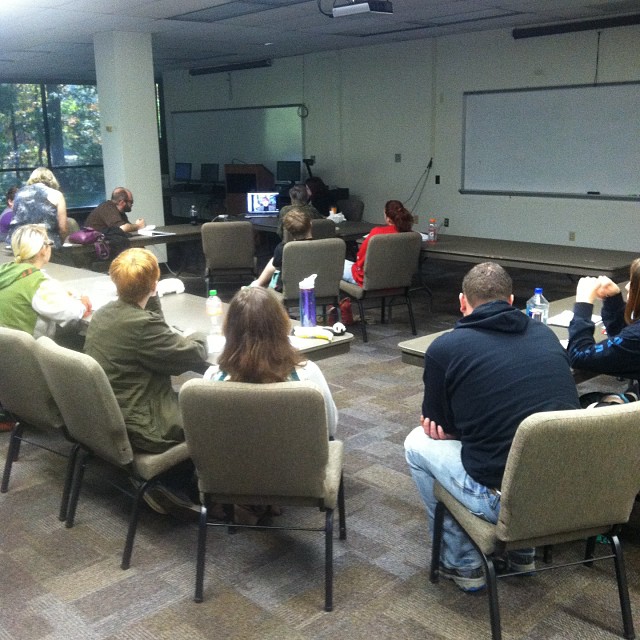
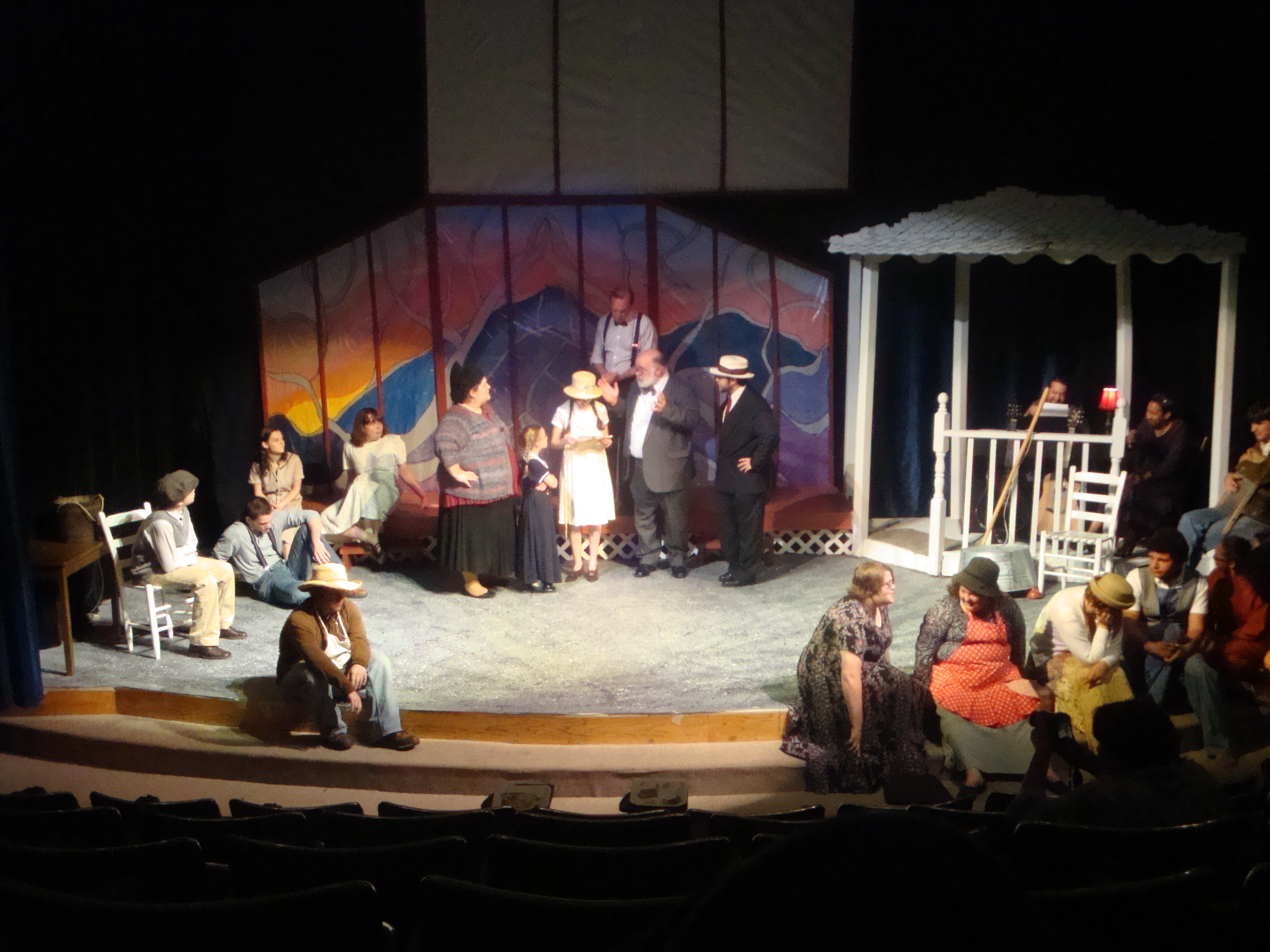
Just a little advertisement: if you live in the Asheville area, please consider making Blue Ridge Community College’s production of Frankenstein: A Faithful Adaptation of Mary Shelley’s Classic Novel a part of your Halloween weekend. The play runs October 26-31. We had our second read through (my 6th draft) of the play this past Monday with about 20 student and community actors coming out for the reading, and many of them will be auditioning. I could not have been more pleased.

I will keep you apprised of developments!!

But until I have time to work more on the e-zine, here is another great article from one of my favorite educational bloggers, Bernard Bull. The topic is humanizing educational policy. A great read.

Policies Don’t Care about People

The Art of Collaboration

Cast Meets with Susan Burk

Cast meets via Skype with Susan Burk from the Matthew Shepard Foundation during rehearsals for The Laramie Project – photo by Vince LaMonica

Not soon after I started working at the community college where I teach, I was thrilled that a new degree was added–an Associates of Fine Arts in Drama. The young woman who led the program brought back to life my love of all aspects of theater production. I had dabbled in community theater as a publicist, properties manager, stage director and actor in several places where I lived, but raising a small child and teaching a heavy adjunct load meant little time for this passion.


The drama department at the college brought it all back to me. Furthermore, it offered me opportunities to get back onto the stage through small roles that didn’t require a great deal of rehearsal time. Jennifer, the director, always made it doable, and the more I became involved the more I wanted to do. Because her department is small, and she is the only full-time instructor, Jennifer and I, an English teacher, started finding more and more opportunities to work together, forming a cross-curriculum relationship that has, I think, greatly enhanced both departments for the advancement of our students and has sustained us both by allowing us the creative outlets that we crave.

It all started one day, long ago, over lunch at a Chinese buffet restaurant, when we were discussing the upcoming production. Jennifer had decided she wanted to do two one-act plays with her directing one and me the other as I had expressed the desire of getting my feet wet as a director. She had already decided on one of the plays–Blue Window by Craig Lucas, but she hadn’t been able to find a suitable play for me to direct.

Almost as a joke, I said, “Hey, guess what?”

“What?” she said.

“I wrote a play long years ago. It’s called Green Room. How about that, Blue Window, Green Room.” I was almost laughing. I really wasn’t serious at all or suggesting anything, I swear.

Then, she said, “Let’s do that one.”

“What?” I said.

“Let’s do your play.”

“But you haven’t even read it. You don’t know anything about it. It might suck. I mean, as far as I remember it does suck.”

“Here’s the beauty of it,” she said. “It doesn’t matter. Whatever we don’t like, we change.”

Thus began a truly productive collaboration between two instructors. I can’t tell you what it means as a writer and an educator to have this kind of partnership, which protects Jennifer and her department from isolation and offers me opportunities to stretch the creative side in me–the writer, the actor.

We did produce Blue Window and Green Room. I ended up handing the directing baton over to Jennifer when, two weeks before opening night, one of the leads quit, and I had to step in to act. In addition, Curtis, a student who played a lead role in the play, also composed original music for Green Room and has gone on to collaborate with me, and Jennifer,  on many projects even after he left school.

The next semester I directed my first full length play, Bertolt Brecht’s Mother Courage and Her Children. Was I crazy? Of course, I was, but of course, Jennifer was there to help me through the process, and without her expertise the show would have been a disaster. On the other hand, because of my knowledge of German (I double majored in English and German in undergraduate school), I was able to contribute direct translations from the original text when the British translations we were using didn’t work. Also, I have a particular interest in musicals, which Jennifer doesn’t share, so working again with Curtis, we composed original music for the play.

Over and over again, Jennifer and I, along with students like Curtis, as well as colleagues, have collaborated on productions. So many times our ideas came from just seeing plays together in the community or at conferences. Other times they simply sprang from casual conversation or out of a desire to find a special project for a special actor. Here are just a few examples of our working together (in no particular order):

  • A production of Moises Kaufman and the Tectonic Theatre Project’s Laramie Project with student-led talk back facilitated by the public speaking instructor at the college. In addition, Jennifer had frequent discussions with Susan Burk from the Matthew Shepard Foundation and cast members had a teleconference with Burk to prepare for their roles. I acted in the show and wrote two features about the production for the local newspaper. Follow these links to read the features: 1)  Pre-Production 2)  Production
  • BRCC’s participation in the 48 Hour Film Project, winning Asheville’s contest in 2008. See the film at this link: Serial Love
  • Tennessee Williams’ One-Act Play Festival–we had two separate stages, a southern-style picnic and a lecture on Williams by one of our English faculty
  • Pre-show lecture about Lord Byron and the Shelleys before the production of Howard Brenton’s Bloody Poetry
  • Pre-show lecture, scenes and short film (produced by drama department) before production of Shakespeare’s Taming of the Shrew.
  • Pre-show lecture by me and an adjunct English instructor before Shakespeare’s Macbeth (we both acted in the production as well)
  • World premiere of A Carolina Story, a musical based on the Book
    Carolina Story 029

    A Carolina Story, April 2012

    of Job, by me with music by Curtis (We produced it a second time as a fund-raiser for the student emergency grant and loan fund)

There have been so many other examples of how our collaboration has enhanced our teaching. Currently, we are collaborating on perhaps our most ambitious project yet, an original stage adaptation of Mary Shelley’s Frankenstein. We are attempting to preserve the plot and style of the original while adding exciting multi-media effects to enhance the production.

Most theaters cannot sustain this kind of freedom and collaboration between writer and producer/director. It is educational theater, especially in higher education, that allows for this kind of risk-taking to take place. It is also this kind of educational theater that should be supported with proper funding and promotion because in the end, collaboration between faculty, staff, students, administration and community is what it takes for the arts in education to flourish, teaching us to work together for the betterment of all.

And hey, if you’re near Asheville the weekend before Halloween, come see Frankenstein!!


Chicago Follow Up

cloud-gate_c

The Bean–Chicago (chicagotraveler.com)

Finally getting back to my blog after a busy, busy spring break and catching up with my classes. I wanted to take some time to talk about some of the great books, monographs, white papers and other materials I collected while I was in Chicago. Here’s just a few of the things I brought back for my colleagues and me:

  • Understanding Cultural Diversity in a Complex World by Dr. Leo Parvis. I went to Dr. Parvis’s session on cultural diversity and it was quite inspiring. Dr. Parvis shows what dedication and enthusiasm can do. He has built up the cultural diversity at his college–Dunwoody Community College in Minnesota–from practically nothing to its current healthy mix of cultures. His book examines some of his most successful ideas.
  • Toward a New Ecology of Student Success: Expanding and Transforming Learning Opportunities Throughout the Community College by Dr. Jim Rigg. I went to Dr. Rigg’s session mainly out of curiosity since I entered the monograph competition that I had applied for and he won. He sure deserved to! His monograph is a well-researched and persuasive argument for “The Emerging/Transformative Cognitive Frame” (9) approach to student learning that he claims will lead students “toward becoming life long learners” (10). On improving retention, Riggs says, “Numerous studies on improving persistence rates and increasing student success point out the importance of having a rigorous academic curriculum and an engaging and nurturing campus environment” (7). So much of what he says in the books echoes my own views and the views of many of my colleagues. It’s nice to have validation as well as numerous great ideas I hope to share with our president before too long.
  • Bread and Roses: Helping Students Make a Good Living and Live a Good Life by Dr. Terry O’Banion, President Emeritus of the League for Innovation in Community Colleges. This excellent monograph makes the case for what the author calls “Essential Education,” one that combines the best of Liberal Arts education (the rose) with Workforce education (the bread). He says, “We need a practical liberal arts and a liberal career education” (25). One of my favorite quotes in the book comes from Tyton Partners, an educational advisory firm in Boston, “Foundational, lifelong skills, such as critical thinking, teamwork and collaboration, and problem solving are climbing to the top of employers wish lists [….] Ultimately, integration in this area should bridge academic and applied education and skills expectations across institutions” (24). Excellent and informative reading with practical steps for implementing an Essential Education.
  • Numerous white papers, briefs and monographs from the Community College Research Center at Cornell University. A few of the titles are
    • “Using Technology to Reform Advising: Insights from Colleges” I met and talked to the young man who wrote this white paper, Jeffrey Fletcher.
    • Track Transfer: New Measures of Institutional and State Effectiveness in Helping Community College Students Attain Bachelor’s Degrees by Davis Jenkins and John Fink
    • “Improving Assessment and Placement at Your College: A Tool for Institutional Researchers” by Clive R. Belfield
    • “What We Know about Online Course Outcomes” by Shannon Smith Jaggers, et, al.
    • “Increasing Access to College-Level Math: Early Outcomes Using the Virginia Placement Test” by Olga Rodriguez
    • “What We Know About Guided Pathways” by Thomas Bailey, et al.

These are just a few of the materials I gathered on my recent trip to the League for Innovation in Community College’s Conference in Chicago. It was a great conference. I look forward to sharing this material with my colleagues when we all get a breather. Might not be until after grades are turned in.

Chicago–Day Two

shedd

Shedd Aquarium (Chicagofree.com)

John spent the day at Shedd Aquarium and Adler Planetarium while I went to meetings. It was gorgeous and not too cold, so I did get out and walk a little down the River Walk during a break. It was a long day of meetings, but again, it was good, and I gleaned a great deal from most of the sessions I went to and am eager to share what I’ve learned with my colleagues.

Here’s a break down of my day:

8:00-9:00–Library Instruction That Improves Self-Efficacy and Academic Achievement. Two librarians from a large Nevada Community College presented on library instruction. It was interesting and validated many of the things our librarians are doing in and for our classes, but I did get some new ideas that I want to take back and share with our librarians. I also liked that this session included an activity. It was the first session that did.

9:15-10:15–Faculty Voices on Student Success and Completion. Excellent information to take back and share with our Achieving the Dream Team, especially for my supervisor who heads up the team as well as my colleague who is the head of communications. She presented some good materials to use in faculty focus groups to help start meaningful discussion–free resources! And I have copies!

11:30-12:30–Use Technology to Engage Students and Raise the Learning Bar–After a coffee break (I went up to our room and worked on my presentation), I went to the most well-attended session so far. This couple, who are both accounting instructors introduced a myriad of low-cost or free apps that are useful for students and teachers. They had great attitudes about the technology too, repeating several times how technology is only a tool and that content is king. I agreed with their philosophy and learned a great deal. Their session was well-organized, interesting and focused with interesting graphics and short informative videos about the different technology. They have a blog I plan to find and follow.

Ate lunch in the hotel where John and I had breakfast. Excellent buffet that was ironically cheaper than the breakfast buffet had been. Weird.

1:00-2:00–Building Academic Tenacity–Although not really a true round table, this session did offer some validation that what I am doing in my classes meshes with the literature on student persistence and retention. I was a bit disappointed that the speaker took almost all the time going through her powerpoint that we couldn’t see because it was a roundtable session. Towards the end we finally began a discussion, but it was too late to really get into it.

3:15-4:15–Creativity+Innovation+Entrepreneurship=Making Arts Sustainable–This was another useful session and a true roundtable discussion. The presenter was engaging and informative with an obvious passion for the arts combined with a pragmatic attitude towards funding arts programs. Some things that she does at her large, urban school are not likely to happen at our school, but she and others in the group offered great suggestions for sustaining the arts programs and getting buy in from the administration. Can’t wait to share some of this info with my arts faculty colleagues.

4:30-?  –Keynote address–I didn’t stay for the whole thing because it really didn’t relate to me–much more geared to administrators. I was so tired after the long day and there were so many people there, I slipped out and went to the room.

After talking to my mother, who is in the hospital, and being encouraged by her continued improvement, John and I walked over a block to a restaurant we had seen the night before, Howells and Hood. It has New American cuisine and a nice view of the city from its sprawling dining area. It has a large beer menu, which is what attracted John, I think. He was pleased with his porter. His meal, a brisket sandwich and fries, was okay, he said. I’ve spoiled him with my cooking, I said. My fish tacos, on the other hand, were tasty and flavorful, recommended by our attentive server. My Chicago-brewed Pilsner was great as well.

The night was getting quite chilly as we walked back, so I was glad we didn’t have far to go.  We enjoyed just lounging around the rest of the evening. Tomorrow, we’re going to take a well-deserved break, sleep in and then walk to the Art Institute of Chicago to see the Van Gogh exhibit–the first time these particular paintings have been on exhibit in America. I will make it back for a couple of sessions in the afternoon.

That’s the plan anyway.

League for Innovation in the Community College 2016

chicago

Courtesy of sheratongrand.com

I’m in  Chicago for the 2016 League of Innovations Conference. I have already experienced some of the best professional development I’ve ever had after only one day of meetings, which makes for an auspicious beginning.

Yesterday was all about getting here and getting settled in. John and I left Asheville super early on Saturday and got here before noon, so we had plenty of time to explore the city. It wasn’t warm (this isn’t called the Windy City for nothing), but the sun was out, and it was a beautiful day, so we left the hotel, ate at a sandwich shop down the street from the hotel and walked down to the Navy Pier, less than a mile from our home away from home.

navy pier

Navy Pier (courtesy of Trippy Media)

According to conciergepreferred.com the Navy Pier was not developed for use by the military but was used as a housing and training facility for the Navy during both world wars. Since 1946 the pier has been used for various purposes, including the undergraduate campus of the University of Chicago, but now is mainly a recreational facility, featuring a major embarking center for city cruises and bus tours, restaurants, biking and walking paths, restaurants, music venues, a children’s museum and, of course, the Ferris wheel. Walking around the pier and down the walkways along the Chicago River was a great way to be introduced to the city.

After making it back to the hotel and getting registered for the conference, an easy process thanks to the efficiency of my college’s educational foundation staff, we relaxed in the room for a while and later enjoyed a great meal at Bongiorno’s Italian Deli and Pizzeria. We were greeted by the proprietor, sat under signed Ernie Banks photos, had excellent service, ate authentic Italian Capricciosa pizza, drank good imported Italian beer and enjoyed a nice chat with the owner, who told us how he played minor league ball in Greensboro years ago and kindly admired my beautiful double-knitted scarf that my daughter Hannah made me for Christmas. Truly a Bella Notte!

Bongiornos-Italian-Deli-Pizzeria

The only thing that marred the evening was that Bongiorno’s is directly across from the Trump Tower–Just can’t get shed of that guy.

Today started early. We had breakfast at the little cafe in the hotel, then John headed out to explore while I started a long day of informative and interesting sessions as the conference began. Here’s a breakdown of the sessions I attended today:

8:30-9:30–Expand Your Horizon of Inclusion: Connect with Local Communities. This session was led by Dr. Leo Parvis, Coordinator of Social and Behavioral Sciences at Dunwoody College of Technology in Minnesota. He is the author of  Understanding Cultural Diversity in Today’s Complex World, now in its fifth edition. Dr. Parvis uses this textbook in the course he teaches on cultural diversity, so I bought a copy to take back to the college and share with our Inclusive Education Committee of which I am a member. An excellent presentation by one of the nation’s leaders in inclusive education.

9:45-10:45–Toward a New Ecology of Student Success: Expanding and Transforming Learning Opportunities throughout the Community College, The Cross Papers, Number 19. I have to make a confession. I did research, wrote and submitted a proposal in the 2016 Cross Papers’ competition and did not win, so I attended this session out of curiosity about the man who won this year’s competition more than anything else. I also must confess that I was humbled. Jim Riggs, who wrote this year’s monograph, gave a wonderful presentation, discussing the importance of faculty and support staff working together toward the same goals of student success–that faculty are the center of this effort because of their close contact, but that this “new ecology” must include ALL of the college–that the disconnect between these two parts of the community college must be repaired. I look forward to acquiring a copy of the monograph and bringing it back to the college and sharing it with administration, staff and fellow faculty.

11:00-12:00–How to Successfully Teach Online–Michael Corona, Business Communications Instructor, Excelsior College, NY–I didn’t learn a whole lot of new things at this session, but it was great for my spirit because it validated so much of my own online teaching practices. To hear that such an experienced and obviously successful online instructor employs many of the same strategies as I do in his online classes was inspiring. I also had a chance to network with other instructors, which is one of the main benefits of attending educational conferences.

1:00-2:00–Storytelling with Data: Telling the Tale of ALP–Facilitated by a former English instructor and a graduate student at the University of South Carolina, who, I found out later, taught at Piedmont Community College, this excellent session gave me some great ideas about how to present program data that helps elicit real change. I am looking forward to sharing this information with my supervisor and colleagues. After the session I had a nice discussion about ALP (Accelerated Learning Program) with Dawn Coleman,  the grad student who used to teach in North Carolina.

2:15-3:15–Life During Community College: Your Guide to Success–Terry Arndt, College Transition Publishing. This was another validating session, but I also was introduced to a few very useful tidbits I can take back to the college that is sure to interest many at my college, especially ideas about orientation courses and student retention. Listening to the questions and comments from other educators, I also realized in this session how progressive our college is when it comes to the first-year experience as well as our instruction in library resources.

If you have to work on Sunday, then this was a good way to do it.

Now I’m back in my room, watching the Penguins play the Capitals, the Pens just went up by one, and wondering when John will get hungry enough for some more good Chicago food and drink. I love the Penguins but…..