From Prompt to Publication

writerwritingframe-300px (2)

My first stab at producing and editing a literary journal–Teach. Write. -is taking shape.

I have accepted quite a few wonderful submissions, but I am hoping to get some more before the August 1 deadline. If you are, or ever have been, a teacher of writing in any capacity, then I would love to see your work–prose or poetry–doesn’t have to be about writing, just writing by a teacher or former teacher. See the submission guidelines for more information.

I was inspired to start Teach. Write. because I have witnessed how writing for publication has enriched my teaching. I am more attune to the power of the revision process, more gentle with my criticism and more accurate, too. Because I am a working writer, I work better with writers who are just learning the process–it keeps me closer to them.

One feature included in Teach. Write. will be called “Write Your Own.” In this feature I would like to highlight writing prompts that  teachers have used successfully in class. To do that, I would like the teacher to not only include and explain the prompt, but also to write something based on their own prompt and submit that piece along with the prompt and explanation.

Here is an example of an explanation, prompt and flash piece that I created for my online British Literature I class:

I’m always trying to find ways to engage online students more effectively. It isn’t always so easy to do. A couple of years ago, however, I came up with a prompt for a discussion forum on Beowulf that has proved to be most successful. I wrote my own response to the prompt when I first posted as an example for my students and liked it so much that I tweaked it a little and sent it out into the cold, cruel world. After a couple of rejections, an online fantasy publication–Mirror Dance–accepted it for publication. I was quite pleased. See the results here: Waiting for Beowulf

The Prompt

The early Anglo-Saxon people were great storytellers. The story of Beowulf, as you saw in the BBC film this week, began as oral tradition, told and re-told around campfires and in great halls for decades, even centuries, before it was finally written down in the form we know it.

Americans are great story-tellers, too, especially here in Appalachia where many of us, including me, have Anglo-Saxon and Celtic blood coursing through our veins. For this assignment I’m going to let you tell part of the Beowulf story your way. Let’s get started:

Directions:

  • Choose one of the scenes you read in Assignment 2.1:
    • First Attack
    • Fight with Grendel
    • Fight with Grendel’s Mother
    • Fight with the Dragon
    • Beowulf’s Funeral
  • Review the scene so you are sure of the plot.
  • Rewrite the scene or a part of the scene from a specific character’s point of view–For example–write the scene of the first attack from one of the surviving men’s point of view or tell it from one of the women’s point of view. Your scene should be one or two well-developed paragraphs in length (seven to ten sentences per paragraph). It may be longer if you are inspired.
  • Post your scene, illustrated by an internet picture you’ve found. See my post to get an example of what to do.
  • Post a thoughtful response to either my sample post (if you are the first one to post) or one of your fellow students’ posts. Take a look at my sample response to get an idea of what I mean by thoughtful response. Also, look at the grading rubric in the Joule Gradebook to see how I will be grading this assignment.
  • Have fun with this assignment!

    The Post and Sample Response
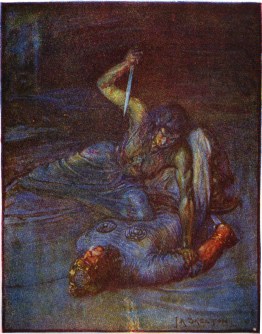
  • stories_of_beowulf_water_witch_trying_to_stab_beowulf

    By J. R. Skelton [Public domain], via Wikimedia Commons


    Waiting for Beowulf

    by

    Katie Winkler

    Come my beauties, writhing sea dragons and serpents, monsters with milky eyes, slouching on slopes by the cliff. Come greet our visitors–the loathsome King Hrothgar and his fiendish followers. And Beowulf, the son-killer, watch him don his war-gear, showing no fear. I will give him cause to tremble, cause to repent how he rent the arm of the monster-child, left him to die like a dog, denying a god the honor of a swift death.

    See the man take up Hrunting, the fool, thinking he will be victorious, boasting to his lord of its great strength as he comes to meet me in my own abode. He will swim to me through the depths, with great and mighty strokes, swim to my home some call a hellish turn-hole. Here he will sling the mighty sword. Its decorated blade will come down singing and ringing. Singing and ringing. But it will not touch the swamp-thing from hell. It will refuse to bite, and then this hag, this witch, shall take her revenge.

  • Response:
    • This creative response shows a good understanding of the scene in Beowulf that depicts the fight with Grendel’s mother. The author includes references to the description of Grendel’s mother in the original work as well as the underwater cave in which she lives. Also interesting is the use of kennings–compound words like war-gear, son-killer and turn-hole. Kennings are common in Anglo-Saxon poetry. Finally, it is interesting to see the story from the creature’s perspective. She is portrayed more as a vengeful mother who has lost her beloved son than a fiendish monster. The illustration is appropriate as well, showing that the illustrator obviously read and/or studied the original work before creating the artwork. Note: I used a different illustration in my post but could not include it here due to copyright issues.

Student Response to the assignment has been positive.

Most students respond well to Beowulf anyway. It is just such an exciting “action hero” story, but this prompt has helped many students take their studies a step further and start to explore the style and artistry of the poem as well as plot and character.

So if you have a prompt you really love, Write Your Own, and submit it and share your good idea with other teachers and writers.

Shameless Plug


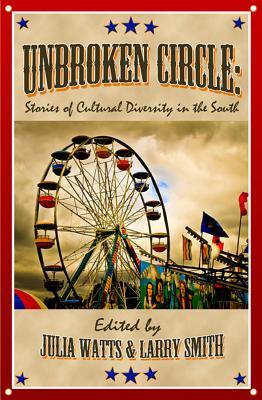
unbrokencircleOne more thing before I say good bye. I have a story in this marvelous little anthology: Unbroken Circle: Stories of Cultural Diversity in the South edited by Julia Watts and Larry Smith, published by Bottom Dog Press. You can buy a copy at the Bottom Dog Press website or on Amazon. Print and Kindle editions are available.

Here is what Karen Salyer McElmurray, author of Surrendered Child, said about the book: “In turbulent times, what we need is possibility, and in this rich gathering of diverse voices, Watts and Smith give us just that….These are stories and essays about the blues, about poverty, about families lost and made. Unbroken Circle is about broken and unbroken lives, and ultimately, hope.”
 

Teach. Write. Deadline Extended

Are you a writing teacher who loves to write? Do you write responses to your own writing prompts? Is writing for publication something you have done or dream of doing?

If your answer is yes to any of these questions, then I want to see your writing! The premiere edition of Teach. Write. : A Literary Journal for Composition Teachers is beginning to take shape. I have accepted several impressive creative non-fiction essays and poetry, but I would love to have more, especially flash or short fiction. Therefore, I have extended the submission period to August 1, 2017.

If you are teaching or have taught English composition at any level in any setting, then I want to read your work.

See the page Teach. Write. Submission Guidelines for more information and….

writerwritingframe-300px (2)

Looking Glass Rock Writers Conference

IMG_1074

School’s out for summer, so I’m here, sitting on the front porch of the admin building that you see in the picture above on the campus of beautiful Brevard College in Brevard, North Carolina, to attend the Looking Glass Rock Writers Conference. I will be attending fiction workshops lead by  Jane Smiley, author of the Pulitzer Prize-winning novel A Thousand Acres.

Attending at least one writers conference each summer has become one of my goals, and LGRC falls at the perfect time, right at the beginning of my summer. My hope is that this conference will jump start my ambitious writing plans for my time off teaching. My wish is to finish the novel that I will be working on here at the conference AND complete my new play, an adaptation of Robert Browning’s “Ring and the Book.”

As if that isn’t enough, I will also be launching my literary publication, Teach. Write. In September. I am still accepting work for the venture, so if you are, or ever been a teacher of English composition, then you are eligible to submit to Teach. Write. 

Go to this link for more information: Teach. Write Submission Guidelines. Deadline for submissions is July 1. I would love to see your work.


IMG_1068

School’s Out for the Summer!

school's out

School’s out for summer! Back in June of 1972, I never would have believed that I would see Alice Cooper singing his anthem of teen rebellion with a bunch of muppets? But look!

https://youtu.be/vmewc2Uqon4

I’m just enough of a rebel to kind of like this, even as a teacher of English, although I don’t think anyone has ever exactly seen me as a typical English composition teacher. I know I haven’t.

And yet, I might be more ordinary than I like to think because I can’t stop writing and revising and editing. That’s why I’m here at the computer on my first official work day off for the summer — writing.

Yes, it is going to be a writing summer that’s for sure, and I’m starting it out with a bang! First of all, later this week I will attend the Looking Glass Rock Writers Conference at Brevard College. My instructor is Pulitzer Prize-winning novelist, Jane Smiley. I’m, to put it mildly, stoked.

lookingglassrockfrompilotzoom

Secondly, one of my stories is officially on sale tomorrow in an anthology put out by Bottom Dog Press called Unbroken Circle: Stories of Cultural Diversity in the South. I am pleased that this story, “I Have Not Yet Returned,” about a young woman coming to grips with her father’s mental illness, has finally found a home.

unbrokencircle

The process from writing to publication, or being accepted to writing residences, has never been easy for me. I was doing some rough calculating in my head, and I have published about two dozen stories in print and online publications since I have started seriously seeking publication. Sounds like a lot until you consider that I sent my first work into the world in August of 1995–24 pieces in 22 years and hundreds, yes hundreds, of rejections in that time.

Listen to me. I sound like I’m bragging. Perhaps I am. Perhaps I should. 22 years of being mostly rejected, but not always, 22 years of not giving up on my dreams of being a writer, has made me a better one. Failure has made me a better teacher, too, even a better person. Not always failing has helped me to survive the process.

What I have learned about persistence has been invaluable to me as a writer and a person, and it is the attribute I most want to pass on to my writing students. Our society makes giving up so easy, why should anyone persist? I can tell them.

I have 24 reasons why.

Because I value so highly what I have learned through seeking publication, I am now accepting submissions for my own literary publication–Teach. Write.  It is specifically targeted to English composition instructors, any level, whether actively teaching or retired. Submissions are open now until July 1. The first issue will come out in September. Complete submission guidelines can be found at this link: Teach. Write.

I look forward to reading your work! Have a writing summer!!

***

If you would like to purchase a copy of Unbroken Circle: Stories of Cultural Diversity in the South, you can do so at Bottom Dog Press, Inc or at Amazon.com

Stay in School! It’s Worth It!

New York Times opinion page editor David Leonhardt has some interesting things to say about the college dropout rate and how it especially hurts lower income Americans. Here’s a sobering passage for me as a community college instructor:

At the other end of the spectrum are community colleges, the two-year institutions that are intended to be feeders for four-year colleges. In nearly every one are tales of academic success against tremendous odds: a battered wife or a combat veteran or a laid-off worker on the way to a better life. But over all, community colleges tend to be places where dreams are put on hold.

Most people who enroll say they plan to get a four-year degree eventually; few actually do. Full-time jobs, commutes and children or parents who need care often get in the way. One recent national survey found that about 75 percent of students enrolling in community colleges said they hoped to transfer to a four-year institution. But only 17 percent of those who had entered in the mid-1990’s made the switch within five years, according to a separate study. The rest were out working or still studying toward the two-year degree.

“We here in Virginia do a good job of getting them in,” said Glenn Dubois, chancellor of the Virginia Community College System and himself a community college graduate. “We have to get better in getting them out.”

However, Leonhardt offers information that should encourage us to find ways to keep young people in school:

That loss of ground is all the more significant because a college education matters much more now than it once did. A bachelor’s degree, not a year or two of courses, tends to determine a person’s place in today’s globalized, computerized economy. College graduates have received steady pay increases over the past two decades, while the pay of everyone else has risen little more than the rate of inflation.

The battle my colleagues and I fight every day is worth it. Yes, it is.

The link: https://www.nytimes.com/2017/03/29/opinion/fix-the-college-dropout-boom.html?_r=0

1398459277-300px

******

Still plenty of time to submit to the premier issue of the new literary journal Teach. Write. I am looking for flash fiction, short stories, poetry and creative non-fiction by anyone who is teaching or has taught writing at any level. Deadline is July 1 for the fall 2017 edition. See full submission guidelines for more information.

English Lesson

(Lines Composed after a Bodaciously Bad Day)

by Katie Winkler

A comparative–

Better than before.

Better than this.

Better than that.

Better than some.

Use it in a sentence, please.

When will it be better?

I have been so much better.

Only you can make it better.

Only you

It’s an adjective, dear.

See, here–

Better times

Better rhymes

Better ways

Better days

Simply good is only an adjective.

And the Best is so superlative.

But

Better

Is

Comparative–

It is

Somewhere in Between.

******

I know my job gets me down sometimes, like today, but honestly, what do I have to complain about? I get to teach people how to be better writers, read, study and talk about great writers as well as write for my own pleasure–for a living. Is this a great country or what?

Then, there are days like today. But, the day is almost over, and I survived. I’m sitting with the ones I love the most, our little cat snoozing on the sofa. Plus, I just wrote a little poem. It’s nothing special, but I like it because I feel at peace now and better than I have all week. Better.

Hatcher Garden with Hannah 017

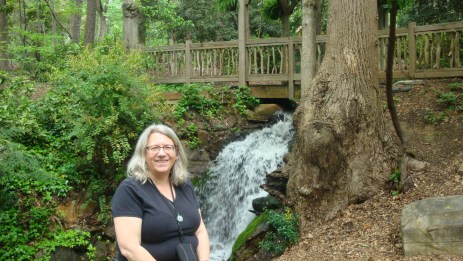
Me at Hatcher Gardens in Spartanburg, SC–April, 2015

******

Are you a writing teacher? Do you write when you have had a bad day, or is writing the last thing you want to do when you come home from work? I want to know! Please share with me your experiences as a writing teacher–the frustrations and the victories, the writing you do just for fun, to release the tensions of the day–whatever you have to share. If I think it’s right for my new online literary journal, Teach. Write. I will publish it in the Fall 2017 premiere.

Submissions are open now until July 1, so if you don’t have time to write during the school year, you’ll still have time to submit in the summer. Check out my submission guidelines, and I hope to hear from you soon!

Process, Not Plagiarism

my workI created a wiki on wikispaces for my professional development class. I call it Process, Not Plagiarism. Here is a link if you’d like to see it: Katie’s Wiki (My apologies for the Wiki not being open before. I have changed permissions, so you can now see the wiki.)

This is a subject I’ve thought a great deal about in my 27 years teaching and am convinced that the best way to prevent plagiarism is to engage students in the process and observe them throughout it.

The subject of plagiarism detection software came up on my wiki and this was my answer:

It is good to let students know about and learn how to use plagiarism detection software, but it is far from the answer to the plagiarism problem in higher education. First of all, more and more students are learning how to “beat” plagiarism detection software. Here is an article in Times Higher Education by Hannah Fearn from back in 2011 about how easy plagiarism software is to beat: “Plagiarism can be beat with simple tech tricks.”

I have never been a huge advocate for plagiarism detection services anyway because while the software does a decent job of detecting word-for-word plagiarism, it doesn’t do anything for the bigger problem–lack of proper attribution. Students often think that if they use quotation marks and cite quotes then they are home free, and sometimes they think if they re-write in their own words then they don’t need attribution because the software won’t pick up the plagiarism.

Secondly, and most importantly in my mind, emphasizing the process allows me the time I need to encourage students to choose a topic they are truly interested or even passionate about. When students become engaged in the process and truly want to learn about it instead of simply completing a project, then the results can be more than satisfactory–they can be life-changing.

More on this topic later. .

***

If you teach or have taught English composition at any level, please consider submitting to the premiere edition of Teach. Write, a literary journal for writing teachers. The submission guidelines can be found at Teach. Write. Submission Guidelines, and I will be accepting works of poetry and prose until July 1. The first edition will come out in September.

Teach. Write. Again.

writer-605764_640-2

I have a dream. To publish a literary e-zine that celebrates the writing of composition teachers.

The one thing that has helped me most to become an effective composition teacher, besides twenty-seven years of teaching English composition of course, is writing and pursuing publication of my work. Such a process has certainly kept me humble (I quit counting when my rejections reached over two hundred.) and has never made me rich. However, a couple of years, I did make enough to be taxed. (Of course, that isn’t saying much, is it?)

On the other hand, with over two dozen short stories published in print and online publications, as well as over a hundred theater reviews and features for the local paper, five years as columnist for my college, two or three years as an arts columnist, and now approaching the production of my second full-length play, my writing avocation has also boosted my confidence as a writing  instructor and given me a certain credibility with my students, some of my students.

Above all, being a writer keeps me mindful of what it’s like to write for a critical audience–a critique group member, an editor, an agent, an audience.

3990049531_e1c94fdd9e_bBecause I’m a writer, I am reminded of what it’s like
  • to procrastinate.
  • to spend more time revising and editing than composing
  • to be uninterested, or lose interest, in a project
  • to be obligated to complete said project
  • to have a work criticized or rejected
  • to take that criticism or rejection as a personal attack
  • to be misunderstood

But it’s not all bad. Because I am a writer, I can truthfully inform my students that good writing, while hard, and often thankless, work is

  • a valuable skill
  • a confidence builder
  • actually can be fun
  • and sometimes, every now and then, absolutely glorious!

fun-1012681_640-2

So, the dream is to have this little online publication called Teach. Write. that will allow present and former composition teachers of all types to try their hands at writing out of their comfort zone, to make themselves vulnerable again to constructive criticism and rejection, to boost their confidence and support their colleagues–to write, and in so doing, become better teachers, better people.

The e-zine will be for writing teachers by writing teachers, specifically, but because the style and subject of essays, poetry and short stories will be open for the most part, the magazine should appeal to a general audience.

Although I will consider pieces that are on the subject of writing if they are unusual and compelling, I’m not particularly looking for work that is about writing or being a writing teacher. As I mentioned, this magazine is calling for teachers to move out of their comfort zones, so I would rather they write a literary short story or a flash piece, a sonnet or poem in blank verse, an essay about a night spent in jail–whatever they want to say. These will be the general submissions.

Because I want this e-zine to be useful to writing teachers, I also will have a regular feature called “Writing Your Own.” In this feature I will call for composition teachers to write pieces based on their own writing prompts. For example, the fantasy e-zine, Mirror Dance, published a flash piece called “Waiting for Beowulf” that I had written as an example for a creative writing assignment in my British literature I online class.  It is so helpful for instructors to write with their students–it can also be simply fun, yielding strong writing from students and publishable work from teachers.

I have set December 1 as the deadline for setting up the website. At that time, I will begin accepting essays and short fiction of 2,500 words or less, poetry of 100 lines or less (up to three poems accepted in one document), ten-minute stage and screenplays (ten pages), and pieces for the “Writing Your Own” feature (250-2,500 words).

All teacher-writers should include a short (100 words or less) biographical statement, which includes their present or past position as an English composition teacher. This statement is more important to me than publication credits. Of course, elementary and middle school language arts teachers, high school and college-level English teachers can submit, but if they have taught independently for business and industry or as part of a continuing education program, they are also eligible. If they have tutored in English composition professionally or as a volunteer, they may feel free to submit. They should simply mention composition teaching experience in the bio..

From  December 1 to June 30, I will accept submissions for the inaugural edition, which I hope to publish in the fall. My desire is to begin publishing twice a year, fall and spring, hoping that contributers who are working teachers can write and submit in the summer and winter, then enjoy, along with their students, their published work in the fall and spring.

I believe it is important to pay writers, but I don’t have much money, so I will be offering only a small honorarium here at the beginning of my venture, hoping that in the future I can offer more. I will let writers know the amount in December.

If anyone is interested in submitting  work to Teach. Write., start writing and look for an announcement on Hey, Mrs. Winkler with a link to Teach. Write. 

I have had this dream for a long time, but as it is has been with most of my dreams, they only happen when I find the time to do them and set to work.  The time is now.


Teach. Write.

Queens Univ_CharlotteA couple of weeks ago, I attended a wonderful four-day writing workshop at Queens University in Charlotte, sponsored by the North Carolina Writers Network (NCWN), of which I am a member. I came away humbled but also encouraged, with new confidence in my work and with my writing spirit renewed. This long weekend convinced me that teachers of writing need to not only practice their own writing, but also put it out there! Go to workshops and critique groups, present at readings and literary open mic events. Teachers who write and open that writing up to criticism can come back into the classroom with a renewed sense of what it’s like to be a student. At least, that’s what happened to me.

Dinner at Fenwicks

Shrimp and Grits at Fenwick’s

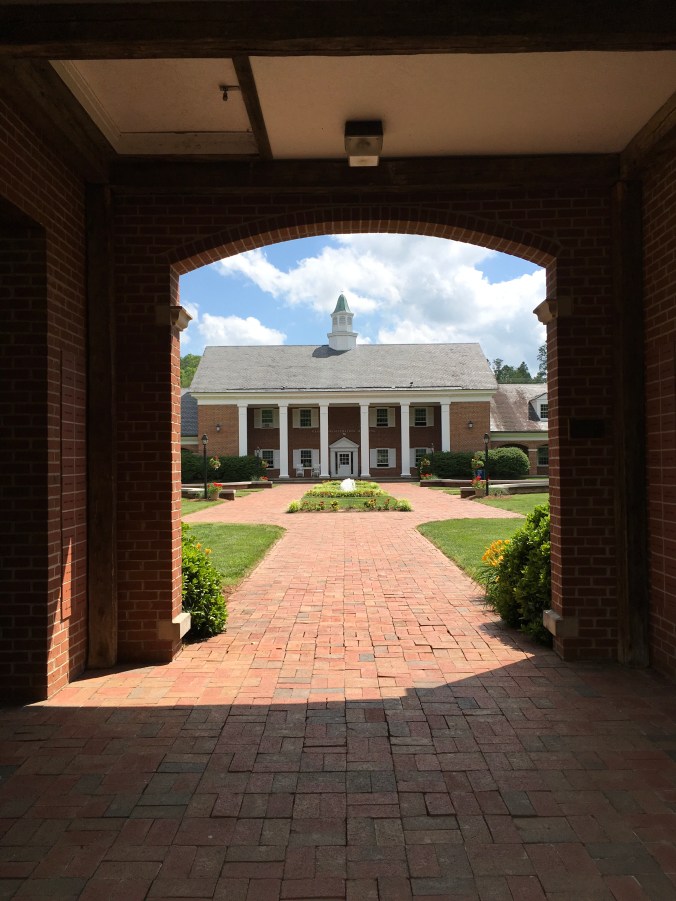
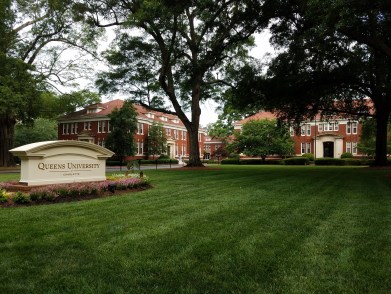
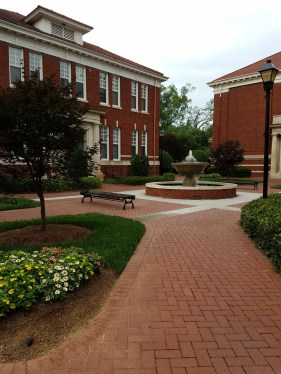
The workshop began on Thursday afternoon. I arrived and was the first one to sign up for the open mic night. After I got settled, I had time to explore that area of Charlotte,  with many stately old homes and the impressive Queens University campus. Then, I found a nice little restaurant called Fenwick’s and had some scrumptious shrimp and grits with a nice chardonnay to start things off right. That evening Ed Southern, director of NCWN led us in a fun exercise to help us get to know one another followed by  a fascinating presentation on The Wall Poems of Charlotte, a grass roots public art project, which highlights the work of North Carolina poets. I think our college should consider a similar public art project at our college or in our town. Perhaps I will propose it.

One of the best things about the trip was that I was able to remember what it is like to be a student again–always good for a teacher to experience, especially if she’s been at it as long as I have.

At my age, I never thought to again be sharing the bathroom and showers in the dorm, seeking  out a friend in the dining hall at lunch or walking with some fellow students down to one of the local hangouts, but that’s what I did! The closeness and camaraderie I developed with the eight other fiction writers in the workshop as well as the other writers in the poetry and non-fiction workshops, helped take away the initial uncomfortable feelings I had at moving out of my middle-aged comfort zone and made it easier to accept the constructive criticism offered by the instructor and my fellow students.

Our marvelous instructor Sarah Creech, who teaches at Queens University, also helped us feel more comfortable by  doing some simple exercises that encouraged us to get to know one another better, but it wasn’t long before we were seriously critiquing the work that we had shared with each other in the weeks before the workshop began.

For some ungodly reason, I signed up to be the first person (again) to be critiqued, but Sarah facilitated the group with such finesse and my fellow writers were so kind and supportive, that it wasn’t hard to accept the criticism. In fact, I found it affirming and encouraging because most of the areas that needed improvement were areas that I myself targeted for revision. It sure didn’t hurt to hear the positive comments either.

In front of Chapel

It was pretty hot, but in the morning and evening, I enjoyed walking around the beautiful campus or writing in one of the common areas.

We repeated the process of critiquing, beginning with what is working and what could use revision, for the other eight attendees. What I found especially interesting was the better I got to know the other people in my group, the more I wanted to offer truly helpful words of advice and not just give some throw away comments. I also found myself going back and re-reading their work, so I could give more in depth comments. In addition, my confidence grew in my own work. Here were other serious writers, good writers, but my work was on a par with theirs.

After the first day of critiquing each others’ work, Sarah concentrated on lecture and exercises to help bolster the class’s weaker areas that had been revealed from the critiques the day before. We emphasized character development and motivation, sensory details and setting, among other issues. The lectures were always targeted and blessedly short, followed by periods of writing. That evening we enjoyed our literary open mic event, which was a wonderful time to hear the work of writers in my own group as well as poets and non-fiction writers from the other group. a pizza party in the commons area of Sykes Learning Center ended the official events of the evening, but a few of us continued our discussion of the weekend at a local pub, just like in the old college days.

Sykes Learning Center

Sykes Learning Center

The last day we did more writing but also had time to share our work with the group, no critiquing this time–just enjoying each other as writers. As much as I missed my family and was glad to be going home, I truly was sad to say goodbye to my new writer friends but glad that I had a chance to meet them. I hope to continue sharing my work with them. It is amazing how quickly people can bond when they share a passion for storytelling.

It may be obvious what I learned and had affirmed about teaching composition during the workshop, but here is a list of a few things that come to mind:

  • spend time letting students get to know each other as people
  • build in time to socialize
  • celebrate your students’ writing
  • provide opportunities to share writing
  • keep any lecture relevant to the particular group of students you are teaching
  • keep lecture to a minimum
  • target areas that need work and tailor-make exercises to help improve weak areas
  • make exercises creative and fun
  • allow students to critique each other’s writing in small groups
  • begin with positive feedback but move on to areas that need improvement

Stay tuned for my next blog post when I present the details of my new project–an online literary magazine designed to showcase the work of those who teach writing.