I recently re-read Animal Farm, by George Orwell and it’s just as relevant and powerful as when I first encountered it in middle school. Orwell’s tale of rebellion and betrayal stirred something in me even then. I didn’t yet know the term “satire,” but I could feel its force. I knew Orwell wasn’t just telling a story about animals—he was warning us about power, manipulation, and the fragility of truth. That moment was a leap forward in my educational growth. It was the first time I understood that stories could say one thing on the surface and something entirely different underneath.
That breakthrough didn’t happen in isolation. Just before reading Animal Farm, I had participated in the Junior Great Books® program at my middle school. I remember sitting in a circle with a few kids from different classes, discussing a boxed set of stories and folk tales from around the world. Our teacher guided us with open-ended questions, but the magic came from the conversations themselves. That program didn’t just introduce me to literature—it taught me how to think about it.
The Great Books Foundation was founded in 1947 by Robert Maynard Hutchins and Mortimer Adler, visionaries who believed that meaningful conversation around classic texts should be accessible to everyone—not just scholars. In 1960, the Foundation launched the Junior Great Books program that still brings that same spirit of inquiry to younger readers like it did me all those years ago.
I still remember the African folk tales that spoke to me—stories rich with wisdom, humor, and moral complexity. They opened my eyes to cultures beyond my own and taught me that stories could carry truths across time and geography. That foundation prepared me to meet Orwell’s satire with curiosity and insight. The Junior Great Books program had already primed me to ask questions, to listen to others’ interpretations, and to trust my own instincts. Reading Animal Farm so soon after that gave me the tools to recognize manipulation, to question authority, and to appreciate the power of language—not just in literature, but in life.
Today, I see Animal Farm challenged in some circles, dismissed as “pro-communist” by those who never learned to read it as satire. That misunderstanding underscores why programs like Junior Great Books matter. They don’t just teach kids to read—they teach them to think. To question. To recognize nuance. And in a world where critical thinking is more vital than ever, I’m deeply grateful for the education I had.
I still have that boxed set of Junior Great Books. It’s a little worn, but it reminds me of the moment I first learned to read between the lines—and how that skill has shaped everything I’ve done since. Animal Farm was the spark, but the Great Books program gave me the lens. And for that, I’ll always be thankful.
Curious about the legacy of Junior Great Books and the Shared Inquiry method that shaped generations of readers? Learn more about the Great Books Foundation’s mission and history here.
The Brandy Bar + Cocktails — Photo by usarestaurants.info
It’s getting real, y’all. This month I will begin the formal editing process of my teaching memoir, Lessons: A Teaching Life. If all goes well, the book will be published by the end of the year. I’ve been told it’s never too early to get the word out, so I signed up to read a short excerpt from the book at The Brandy Bar+Cocktails.
For the past several years, almost every month, the North Carolina Writers’ Network–Henderson County sponsors “In the Company of Writers” at The Brandy Bar. It’s great. The Brandy Bar is in an old building on historic 7th Avenue in Hendersonville, NC. Writers gather to hear a presentation by a local or regional poet, author, or playwright, followed by an open mic.
Last Wednesday, the evening began with signing up for the open mic and chatting with writer friends to the sound of blues tunes by guitarist Charlie Wilkinson and Hollywood Jonny. Next, came a marvelous presentation by local poet Tony Robles who read from his two volumes of poetry–Where the Warehouse Things Are and Thrift Store Metamorphosis. Tony moved us all as he read poems about the soul-healing power of physical work and the intrinsic value of everyday life and ordinary people. After the reading, Tony answered questions, offering insight into his work and telling us about the novel he’s working on, his first.
The Reading Room — Photo by usarestaurants.info
I was the first to read after Tony. A little nervous to follow such a great writer and eloquent speaker, but I felt so good afterward. One of the best things about reading a work in progress to an audience is when you get affirmation that your work has value. In my case, I also picked up on a few things I needed to revise, which I was hoping for. I used to tell my students to read their work aloud when they were revising and editing. One of the best ways to check for technical errors, sure, but also an opportunity to analyze word choice, sentence structure, and rhythm.
It was also a joy to hear the other readers. Some were writers I’ve come to know very well over my years of involvement with the Network, but I was happy to hear the fine work of writers I’d never met, including quite a few younger writers. In the company of writers is a good name for the event, one of my favorite places to be. Extra nice to be sitting in a comfortable chair sipping on a specialty of the house, Brandy Alexander.
Lava lamp collection by the bar–photo by usarestaurants.info
One of the most moving pieces came from a bearded man wearing a cap, tattoos covering his arms. He wrote about addiction and dealing with it. After the readings, he approached me and asked if I had ever taught at the University of North Carolina–Asheville. I said I had not, but I had taught at Blue Ridge Community College for 27 years.
His face brightened. He had been there, too. He asked about his teacher, my colleague who retired several years before me. I told him that I met with her regularly, that she was doing well and enjoying retirement. He wanted me to let her know that he was at UNCA finally finishing his degree, in English. “Tell her I’m a little late in getting it but I’m getting it.” I assured him I would let her know.
Once long ago, a student gave me a little wooden plaque shaped like a pencil that said, “Time and distance cannot erase the influence of a good teacher.” I think I’ll remind my friend of that when I tell her about meeting her grateful student while reading at The Brandy Bar.
My father always said, in his loveably corny way, that he wasn’t ever going to retire, but refire! I think I will take his mantra as I embark on this new phase of my life. I have taken a few days to just re-evaluate things and decide what I want to spend my time doing.
So much of my time the last 55 years and more has been about getting an education or being an educator that it is going to take time to learn how to focus on other things, but I’m eager to try. I am already loving the freedom to order my life according to what is important to me, not my teachers or my employers.
Where to begin? Sheesh, now that it comes down to it, I’m having trouble even putting anything down. I know I want to spend more time with my family without annoying them, and I want to do things for them without hovering or being bossy.
But when it comes to the non-essentials, I guess the first thing I want is to write. I know that! Of course, I will continue writing this blog—my goal is to write a post once a week. But more than that, I want to start marketing the blog more and learn more about the business side of blogging and up my game a bit in that department. So, I guess I will be going back to school in that sense, but again, I want to do it. Nobody can make me anymore. Or voluntell me!!
It’s been a year since I worked on my podel (podcasted novel) Campus: A Novel That Wants to Be a Musical, so I want to pick that back up. I think I will shoot for one episode a month and try to increase that gradually. I want to improve the quality of the productions as well, which I am looking forward to doing.
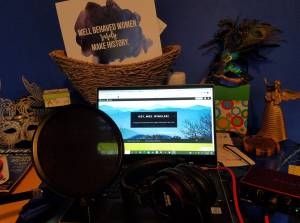
My podcasting set up thanks to husband and daughter
I have already started working on the book that my mother suggested I write—a memoir of my teaching career. My goal is to finish by the end of the year, which means averaging about 600 words a day, so I’m on track. I am pleased with the format I’ve chosen and the writing is coming so much easier now that I am not spending so much of my summer vacation days planning my classes for the fall semester.
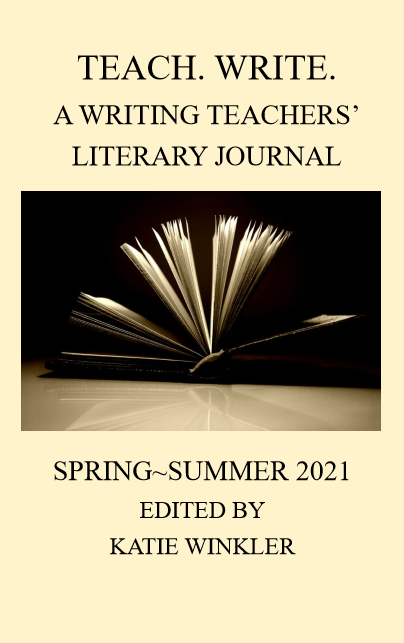
Spending more time with each edition of Teach. Write., the literary journal I founded, edit, and publish, is also something I want to do. I feel like I have made small improvements since the first edition in 2017, but I have always felt rushed to get each edition out. I am glad that retirement will afford me more time to work on this passion project.
First edition of Teach. Write.
So many other things I want to do, but I never want to forget that I also want to leave room in my life to be less busy, to listen more, read more, and have times like today to just sit on a porch in Alabama with a cup of coffee on a cool summer morning before the day heats up, listen to the collared Eurasian doves coo, pet a soft German shepherd puppy, and talk about life with my baby brother.
It’s a good life.
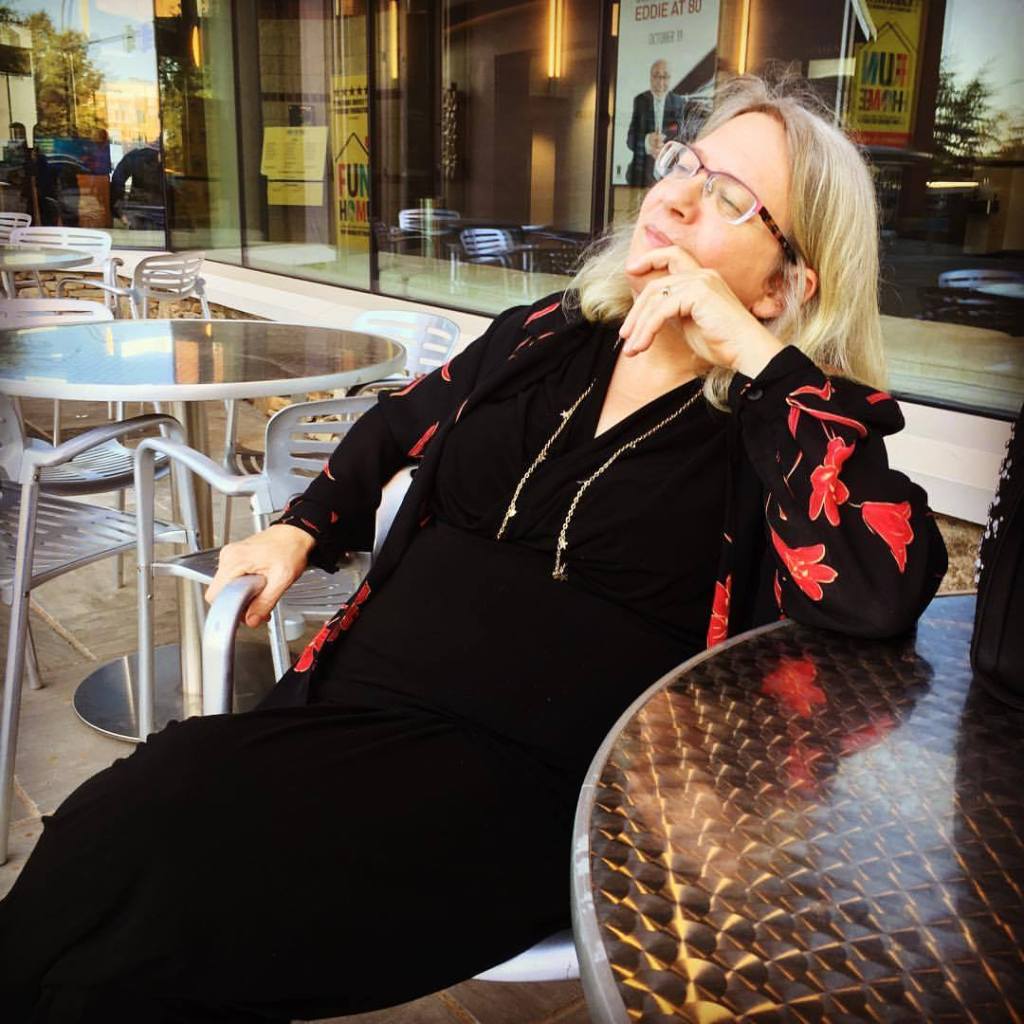
Me several years ago before seeing a play at the Peace Center in Greenville, SC.
I have been busy, as usual, but having loads of fun and enjoying my summer immensely. Last weekend I attended my fourth Squire Writers’ Workshop sponsored by the North Carolina Writers’ Network at Appalachian State University in Boone. I usually attend the fiction workshop, but this time I challenged myself with the creative non-fiction class taught by Zachary Vernon, an English professor at Appalachian State University.
Professor Vernon is an excellent instructor–knowledgeable, informative, and most of all, respectful of each writer’s work. I am working on a book about teaching, which my mother has inspired me to write. When I was visiting her in Alabama after her recent hospital stay and was talking about some of my work in my classes this past year, she said, “Katie, you should write a book about teaching.” How could I say no?
I took a chapter of the book in progress for critiquing at the workshop and received such encouragement as well as fantastic suggestions for improvement. Not only that, but I made new writer friends and reestablished friendships with writers I have met in previous conferences. I stayed in a dorm, ate in the cafeteria, drank beer at a popular student watering hole, ate dinner at a professor’s lovely home, and just had a great time. So good for the soul to be around people, other than my dear family and close friends, who encourage and support me.
If you do not know about the North Carolina Writers’ Network, then I encourage you to take a look. I have been a member for quite a few years and am now on the board. Even if you don’t live in North Carolina, you can take advantage of the many opportunities available to writers, including online classes. I am pleased that I have been asked to facilitate an online workshop about alternatives to traditional publication, including blogging, of course.
Click here if you would like more information about the network and the whole 21-22 online workshop series, including my session: “The Big Share: Alternative Forms of Publication in a Digital Age” (Multigenre).
Just a few days before the workshop, I taught 5th and 6th graders during the drama camp at my church. From casting to performance in 4 1/2 days. The camp was something I was, frankly, dreading but ended up enjoying. More about drama camp in another post.
Before that I had a stretch of not too much activity (thank the Lord), so I did some reading. First was Little Platoons: A Defense of Family in a Competitive Age. Again, my dear mother suggested this book to me. Our politics don’t always align, but as she read a review of this book to me when I went to visit, I thought it sounded interesting, and it was. Feeny is able to explain what I have long seen as a problem in American education–the emphasis on where children learn, using children as a way up the social ladder.
However, he does not vilify parents. Far from it. Of course, he discusses the role parents have, especially privileged ones, in pushing for their children’s entrance into elite kindergartens and private schools and then on into the most prestigious colleges and universities, but he explores at length what drives these parents and what the consequences are for less privileged students.
Feeney suggests that the institutions, through the admissions offices primarily, are perpetuating this class bias by increasing the competition and constantly changing the requirements for admission to make themselves look better.
When discussing the current admissions scandals, he says, “The incentives that drive the process leave us in our current unhappy predicament, in which everyone seems to acknowledge that college admissions has gone wildly out of whack, but the only people truly situated to make it better–the admissions officers of prestigious colleges and universities-keep introducing new ways to make it worse.”
Despite his indictment of admissions departments, Feeney acknowledges that the problems of our current educational institutions are a result of a cultural shift where a child’s education is no longer a means to an end but a constant series of wasteful competitions. “This happens,” he writes, “when competition becomes a self-fueling cycle, competition for its own sake, and it consumes more value than it generates.”
It is not only the elite in society who are generating this “dissipative rivalry,” to use a term Feeney borrows from his research. I see this clearly at the community college level–basing the success or failure of a college on the number of students recruited and retained long enough to “count,” encouraging high school students to take more and more college level courses without determining if the students are ready academically or psychologically for those classes, steering students toward business, STEM, and health-related programs instead of promoting all programs of a college. The list goes on and on.
You can see that Feeney’s book had an impact on me, and its more conservative approach to the problem in a strange way increased its veracity in my mind. We don’t have to be on the same political spectrum to agree that something’s rotten in American education today and that we need to work to change it.
photo by Katie Winkler
The next book I will review is special to my heart because it is a gift from my only child. She is a music technician who loves manga and anime, especially horror. A few years ago I wrote a stage adaptation of Frankenstein, and Hannah created some of the music and sound effects for the show. She regularly searches the manga section at local bookstores for new horror titles and found this version of Frankenstein by celebrated manga artist, Junji Ito. The adaptation is more faithful than most versions I’ve read, especially at the beginning, and the art is simply astounding–truly imaginative and appropriately horrific.
Following Junji’s adaptation is a series of original horror tales, featuring a school boy, name Oshikiri. I enjoyed all of these tales, but my favorite was “The Walls.” Spooky. Spooky.
The best thing about this book, of course, is that it is a gift from my kid–not for any other reason except she saw it at the bookstore and thought I would like it. Pretty cool, huh?
Last book I finished reading before I got so busy is pure escapist fun–Worth Dying For, a Jack Reacher novel by Lee Child. Jack Reacher is an ex-military police officer who roams the country righting wrong, fighting evil, and working hard to stay alive. In this novel, Reacher finds himself in Nebraska, trying to solve the disappearance of an eight-year old girl.
photo by Katie Winkler
I like that Child spends time with characters that are often simply glossed over in action thrillers, present just to give the hero someone to save. Not so in this the 15th Jack Reacher novel. Dorothy Coe, a woman in her 60’s who lost her daughter and her husband years before, is the typical grieving mother in expected and poignant ways, but she is also smart, brave, and tough. Since she is about my age, I kind of like this portrayal.
I’m still reading and stocking up on my titles for my trip to Pennsylvania, including the poetry books by my friends at the writers’ workshop and finishing Coyote Loop by my friend Charles Fiore, so be watching for more reviews. Oh, I hope to get another episode of CAMPUS out soon as well.
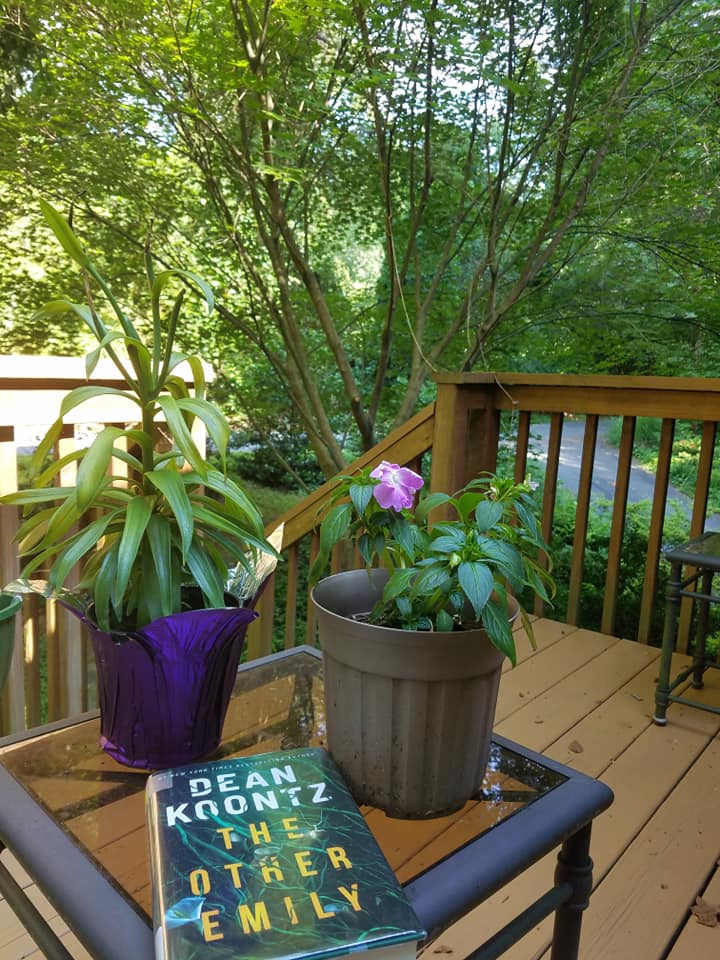
My Front Deck–Favorite Summer Reading Spot–Photo by Katie Winkler
17 or so years ago, John planted a Japanese Maple in our front yard–one of my favorite gifts from him. About ten years ago we had the front deck rebuilt, expanded it, and added a cute bistro set. When John plants flowers every year, he creates the perfect spot for my summer reading.
One of the things I cherish about my work is having the summer’s off so I can spend more time reading and writing. I haven’t done as much writing as I had planned yet (I’m determined to get caught up before summer’s end), but I have done what is for me (I am a slow reader) a great deal of reading. Since last post I have read three more–one non-fiction, one German young adult fiction, and one popular suspense/sci-fi/horror/just for funsies fiction.
I thoroughly enjoyed Dusk, Light, Dawn, Anne Lamott’s collection of essays about dealing with difficult times and emotions, about growing older yet continuing to learn and grow. I’ve always enjoyed Lamott’s self-deprecating humor and often beautiful prose.
From the chapter “Lunch-Money Faith,” for example, Lamott discusses the importance of listening: “Here Elijah meets God, not in the usual special effects of the Exodus tradition not the roar of hurricane or flames, but in a still small voice. Jewish and Christian writers have seen in this a reminder of the importance of contemplation, of quietness, of listening….Growing up, learning. I am slowly making my way from a hypnotized engine of delusion and self-obsession to being a bit more real, a smidge more alive more often. I’ll take it. I am learning to live more often in reckless love” (106).
I like how open Lamott is about her failings, both past and present, not to dismiss them, but to demonstrate how living through dark times has shaped her for better or worse. She writes of learning to forgive herself and others, of the importance of loving and caring for people for no reason other than they are people, how that includes loving herself–Maybe it sounds Pollyannaish the way I’m describing it, but the book is definitely worth a read. It encouraged me, which is something I always need during my summer-reading-on-the-front-deck therapy sessions.
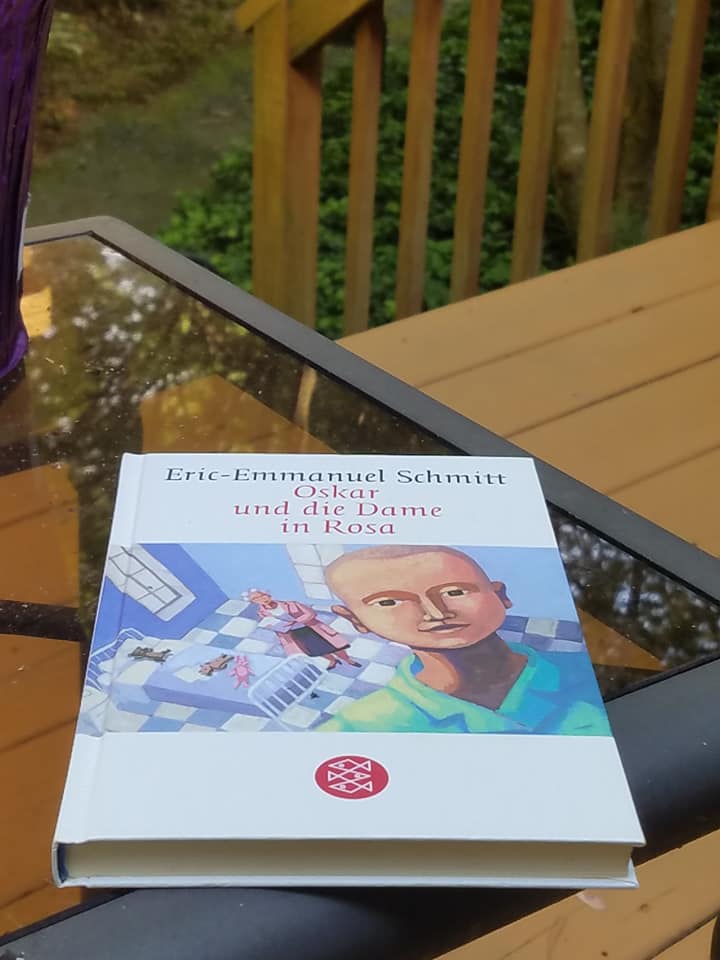
Photo by Katie Winkler
My sister-in-law Bettina loves to read. She frequently gifts me with books in German. My German is not very good I’m afraid, and I often give up pretty quickly on the books she gives me. She gifted me Eric-Emmanuel Schmitt’s lovely, bittersweet little book Oskar und die Dame in Rosa years ago, and this summer, determined to work on my rusty German, I finished reading it for real this time.
I’m so glad I did.
It is an epistolary novel made up of letters to God written by Oskar, a ten-year-old boy with a terminal illness. Die Dame in Rosa (The Lady in Pink) is a very old woman who is a volunteer nurse at the hospital, the oldest one, although I suspect that she may be an angel because she appears almost magically just when Oskar needs her most and brings comfort to the boy by suggesting that he write the letters, even though he, at first, does not believe in God.
His letters take us through the reality of life in the hospital but also through Oskar’s imagined life, one that he will never be able to live. It is a lovely book and not difficult for a rusty reader of German to practice on before moving on to a more difficult gift book from my thoughtful sister-in-law.
Reading on the front deck again–John’s gift tree, the Japanese maple, is in the background.–Photo by Katie Winkler
I took a break on the meatier books and read a fun popular thriller for my latest, another sci fi/thriller/horror book by Dean Koontz. I have enjoyed Koontz’ books since I read his first big blockbuster novel Watchers. I especially liked the genius golden retriever in that book. They made a movie of it, but don’t bother with that. The book is so much better. My good teacher friend once gave me a coaster that I still have on my desk at the school that says “Don’t judge a book by its movie.” Very true. Very true.
I have read many Koontz books since then, and although Watchers is still my favorite, I almost always enjoy a Koontz thriller, and I enjoyed The Other Emily as well, despite occasional gratuitous scenes of detailed meal descriptions–those irritate the heck out of me.
The author returns to his common theme of a basically decent person who is struggling with his past and is caught up in extraordinary, often supernatural, situations, battling his own demons as well as horrendous evil in a dark world.
Pure, horrific fun in many ways with terrific suspenseful passages and lively action, The Other Emily has its moments of deep insight and poignancy as most Koontz’ books do. At one point David quotes one of the most famous lines of Keats’ poem “Ode to a Grecian Urn”–Beauty is truth, truth beauty”–then goes on to say “Love without truth isn’t beautiful. It’s not even love” (336).
Then there’s more action and the usual twists and turns of a good Koontz suspense thriller. A fun summer read.
Now, what’s next?
~
It’s not too late to submit your work to my literary journal Teach. Write. I love to get the work of retired or currently working English composition teachers, but I accept work of all kinds from anybody. Submissions are open until September 1, so you have plenty of time. See the submission guidelines for complete information. I would love to hear from you.
Michele Harper is an emergency room physician, and her book The Beauty in Breaking: A Memoir reminds me of how much teachers have in common with doctors. I’ve blogged about the similarities before. Harper offers more confirmation of my perceptions, especially in “Chapter Two: Dr. Harper: The View from Here,” when Harper describes her internship in internal medicine before completing her residency as an emergency room physician.
In the chapter, she describes one of her professors, Dr. Jaiswal, a “forceful character” (33) whom all the interns feared and loathed. Harper describes how Dr. Jaiswal was particularly cutting and brutal to Harper during the author’s first presentation and in front of the patient, berating Harper for not completing a thorough patient history and for being ill-prepared for her presentation.
Some people, me included, would have been tempted to give up or simply been angry and rejected anything Dr. Jaiswal said out of bitterness and contempt, but Harper learns from the “breaking.”
“I never forgot that encounter,” she writes. “For the entire intern year, I made sure to ask too many questions of my patients….To the best of my ability, I not only read about the topics I didn’t understand, I also read around them. I reviewed the history in my head and practiced my assessment and plan, making sure the reasoning led to a logical conclusion….That was the last time I was unprepared for Dr. Jaiswal’s rounds. What’s important was that in that very long year, she helped me become a better doctor because I saw the good in her, in the value she placed on meticulous preparation and critical thinking” (40-41).
I am not advocating being “deragatory and cruel” (41) as Harper describes Dr. Jaiswahl, but I don’t mind being tough. I don’t really think I am all that tough actually, but in today’s ultra-sensitive world, I am perceived as such by some students, parents, and administrators. I wish I could help them all understand that all I want to do when I challenge and push students is motivate them to stretch themselves–ask too many questions, read about the subjects, read around them. I want them to learn how to think!
Harper offers many stories of encounters with people in her work and personal life who break her or come to her broken, in need of healing. She writes of what she learned from them and how she has come to embrace not the brokenness itself but the lessons that inevitably come from it.
In Chapter Three, Harper writes, “We had all been broken in that moment–broken open by shock and grief and anger and fear. I didn’t know how or when, but this opening could lead to healing. After all, only an empty vessel can be filled by grace; but to get there, we had to help each other rise while we shed the same tears. We had to get up and start again” (68-69).
Another chapter in the book I liked was “Chapter Four: Erik: Violent Behavior Alert.” Harper laments the bureaucratic bull that she has to put up with on her job that does little to nothing to help her patients. Man, can I relate. She speaks about a 2011 study that exposes the myth that most ER patients are uninsured. Not true according to the study. Most are insured and come to the ER for various reasons, including, she says, because they feel “so entitled from unchecked privilege that even polite questioning causes them to blow a fuse” (77). Again, man can I relate.
Harper touches on other issues that doctors and teachers, especially women, experience similarly, including the inequity in how female professionals are treated in the workplace and false perceptions of doctors, but the positive aspects of her work are similar to mine too–helping people, challenging them to take action, to move forward into a new and better life.
The Beauty in Breaking: A Memoir is well-worth the read for anyone, not just doctors and educators; we’ve all been broken, and we all can learn from that breaking–something I want my students to understand.
Harper, Michele. The Beauty in Breaking: A Memoir, Riverhead, 2020.
Photo of Cover by Katie Winkler
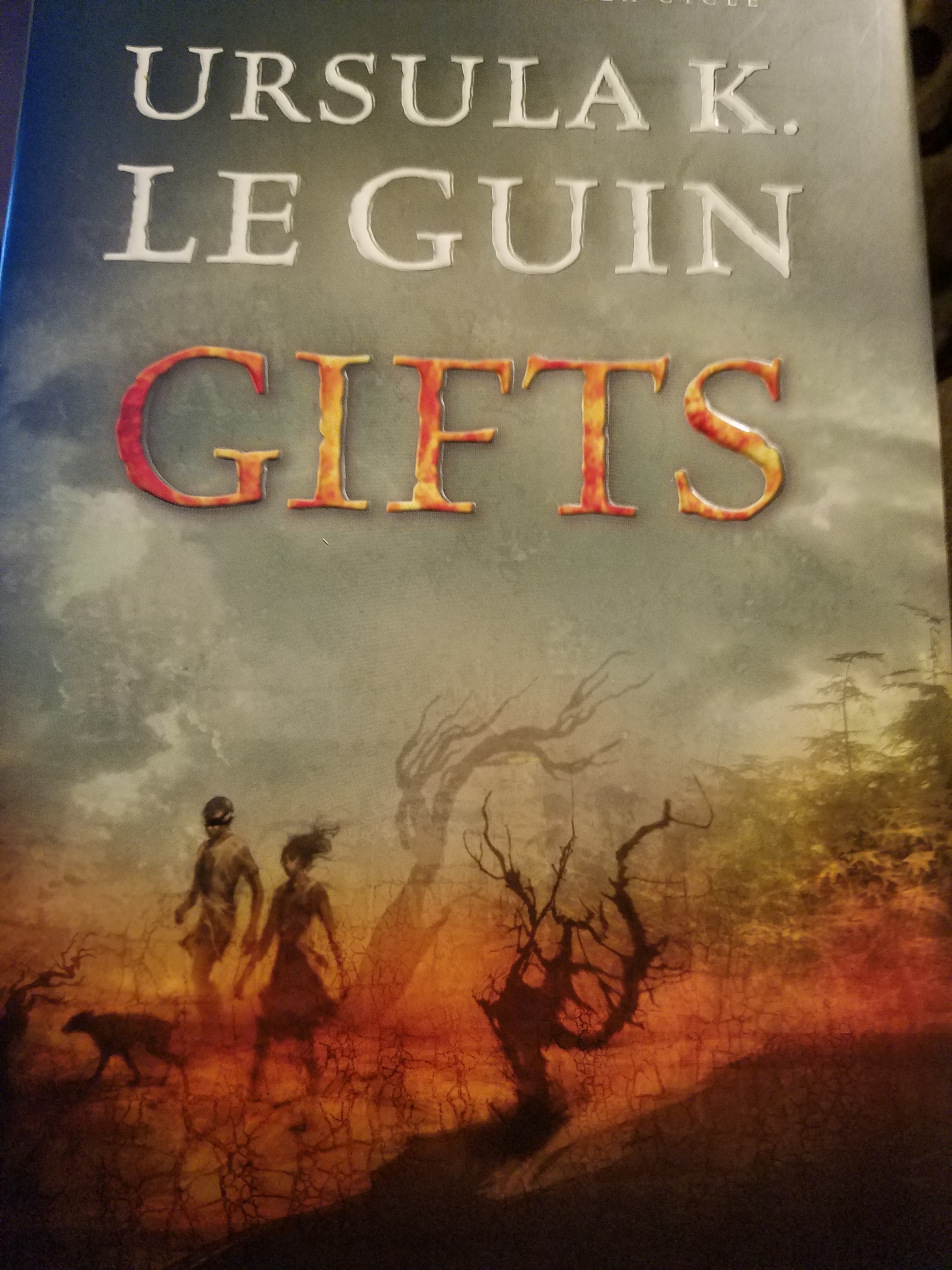
The next book I finished is the young adult fantasy novel Gifts by Ursula K. Le Guin. In this imaginary world, the people of the Lowlands are blessed, or perhaps cursed, with magical gifts–some seemingly benign, like summoning animals, and some dark and sinister, like the ability to twist limbs or melt flesh and bone.
Two young people, Orrec and Gry, friends all of their lives, must face the consequences when they refuse to use their gifts, refuse to take life only to help others retain power.
In the end, the true power lies in friendship, sacrifice, and love.
It also lies in storytelling.
One of my favorite passages in the novel is when the narrator discusses how storytelling empowers us:
“My blindfold and my mother’s illness worked together in one way that was good: we both had time to indulge our love of storytelling, and the stories carried us out of the dark and the cold and the dreary boredom of being useless” (194).
This is why I love to write. It carries me out of the dark and the cold. It gives me purpose.
Le Guin, Ursula K. Gifts, Harcourt, 2004.
Most writers I know aren’t happy keeping their writing to themselves. That is why I started Teach. Write.: A Writing Teachers’ Literary Journal. I wanted to offer a place where other writers out there, especially writing teachers like me, could share their work. Until September 1, I am accepting short fiction, poetry, essays, and more for the 2021 Fall/Winter edition of Teach. Write., and I would love to consider your work. I am especially interested in the work of those who teach writing, but I am open to all. See the submission guidelines for more information.
ANOTHER EPISODE OF MY PODEL (PODCASTED NOVEL), CAMPUS: A NOVEL THAT WANTS TO BE A MUSICAL, IS COMING YOUR WAY THIS WEEK! NOW’S YOUR CHANCE TO LISTEN TO THE PREVIOUS EPISODES SO YOU WILL BE READY FOR EPISODE 10. IT’S GOING TO BE A DOOZY!
I am blessed with special people in my life and one of those people is my nephew Timothy. He is in school studying media arts and has started a blog here on WordPress called the Mugwump Diaries. You can check it out here.
Timothy and I love reading and reviewing books, and for a while now, I have enjoyed reading his reviews on Goodreads, so I am excited that he has started a book review blog. Plus, he has inspired me to get back to my own book reviews.
This Christmas, I received several books that I am looking forward to reading and two Christmas themed books that I just haven’t gotten around to until this year. It just didn’t seem right to read them outside of the Christmas season.
I will write about those last two next post but today, I just want to talk about my gift books and what they mean to me.
Where to begin? Why not at the top? I can’t wait to read In Praise of Difficult Women by Karen Karbo, given to me by a dear friend and colleague who knows that I take it as an ultimate compliment that she finds me difficult. In the introduction, Karbo says, “I love these women because they encourage me to own my true nature. They teach me that it’s perfectly okay not to go along to get along. They show by example that we shouldn’t shy away from stating our opinions. Their lives were and are imperfect. They suffered. They made mistakes. But they rarely betrayed their essential natures to keep the peace” (p.17).
Yeah, that’s what I need to read!
That same friend gave me the book immediately below that, Untamed by Glennon Doyle. I haven’t finished it yet as I was distracted by the Christmas books I was determined to read (before it was too late, ha!), but it is another one that gives voice to my feelings, these feelings I have of not being what people expect me to be, that I’m not an easy keeper, as we say in the South. Doyle speaks to women who don’t want to be defined by their roles in society, who don’t want to be defined at all. Difficult women. Troublemakers.
Women like me.
I’m getting back to reading Untamed today!
The book to the right, Hamnet by Maggie O’Farrell is a gift from my husband and is proof of what a treasure he is. Out of all the books he could have chosen, he picked a historical novel giving life to Shakespeare’s son Hamnet, who died at eleven, during the Plague. A few years after the death of his son, Shakespeare wrote one of the greatest works of literature the world has ever known. Hamlet. Just like my friend, my husband knows me, knows that I would relish reading a beautiful book that will make me cry. He gets me, even though I’m difficult. And he loves me anyway.
To the left is another special book, Podcasting for Dummies, given to me by my dear daughter, who also advised my husband on what equipment to buy me to help me with my big podcasting challenge of 2021–my podel or povel or novcast or whatever you want to call it–this thing that I’m doing. Her gift book is special to me because it shows that she has faith in me and supports what her mother is doing, no matter how weird it is. And believe me, you will see, it is weird. But she gave me the book because she doesn’t care that her mother does do some strange things and doesn’t do or say all of the things mothers are supposed to do or say, except the most important thing, that is. She does say, “I love you.”
And my daughter loves me, too.
A gift book told me so.
All ready for the debut of my podel (podcast novel) CAMPUS, January 10
My work has kept me so busy that it took me a while to finish the latest choice for the Western Carolina University Alumni Book Club that I joined this summer.
The book is Just Mercy, written by the founder and executive director of the Equal Justice Initiative in Montgomery, Alabama that has been instrumental in helping to overturn many wrongful convictions and reduce the harsh sentences of poor and disabled people in Alabama and around the country.
The end of book discussion included the following provocative prompt: “A critical theme throughout Stevenson’s book is that the fight for fair and equal treatment of all people under the law is a long and ongoing struggle. Setbacks are common and must be overcome, and even in the aftermath of great victories, there is still more progress to be made. For example, the Supreme Court originally upheld the use of the death penalty on convicted minors, but this was later successfully overturned in 2005; still, the fight for fair and humane treatment of minors in the criminal justice system continues. How does this understanding and approach lead to more effective organization and activism on behalf of marginalized people?”
Here is my response: Stevenson touches on the most powerful approach to effective activism for the sake of poor and disabled people in Chapter Fifteen, titled “Broken.” Stevenson recognizes his extreme brokenness after trying to comfort one of his clients on the night of his execution. On the verge of giving up in the face of overwhelming injustices, the author admits to himself that he is as broken as those he is trying to save, but remembering his own past failures, he finds the strength to go on.
He says, “You can’t effectively fight abusive power, poverty, inequality, illness, oppression, or injustice and not be broken by it. We are all broken by something. We have all hurt someone and have been hurt. We all share the condition of brokenness even if our brokenness is not equivalent.”
There is such humility in recognizing that you are weak and will fail. We are too seldom willing to be humbled by what we cannot do and too often inflated by superficial accomplishments, even when “doing good.” We must ask ourselves if our altruism is born of deep empathy or shallow pity. I must ask myself if I am willing to continue fighting for liberty and justice, even in the face of defeat after defeat, even if I am never recognized for my efforts, or in some cases ridiculed for them. I hope I am, but I don’t know. Time will tell. I do know, however, that this book has inspired me to try.
My strange satirical novel has gnomes and fairy “godteachers” among other strange and mysterious students, teachers, and administrators, so this seems an apt illustration
After November’s National Novel Writing Month (NANOWRIMO), I had about 26,000 usable (rough draft usable) words of my new satirical novel about higher education in the South called CAMPUS: The Novel That Wants to Be a Musical.
I am happy to announce that since May 19, I have written 38, 173 more words! I know to some of you out there this is no big deal at all, but to me this is major as I have never before been able to adjust to a daily writing schedule (I do take one floating day off a week, which has helped greatly). I have exceeded my quota each day, which more than makes up for the days off.
I have also participated in craft lectures (via Zoom) by the North Carolina Writers’ Network and the Dramatists Guild of America. All have been useful, but this past weekend I was able to join 11 other writers for an extended workshop with Bryn Chancellor, author of Sycamore, which is now on my reading list. It was the first online Squires Writing Workshop, a program of the North Carolina Writers’ Network.
The emphasis was on the opening of a story or novel. We looked at just the first 1,200 words of the project. To begin with we looked at and shared examples of strong openings. Then, we did some writing exercises and shared. The next session we did another exercise and then had a fascinating and informative lecture about openings. The final three sessions were inspiring and helpful. We had all received each other’s work ahead of time, and all were faithful to read and comment on each person’s manuscript. I got so much out of the critiques, even when my work was not being discussed. It was a wonderful four days, and well worth it.
Look into the North Carolina Writers’ Network–a valuable organization for any North Carolina writer. We have members outside of North Carolina, too, so check it out!! ncwriters.org
And my reading continues–
Here are the goodreads reviews of the latest three:
MOO by Jane Smiley, 1995
***Spoiler Alert*** Perfect timing for me to read this satire about higher education as I work on my own novel with a similar theme. Full disclosure: I participated in a writing residency at Brevard College, studying under Jane Smiley, and she was a fabulous instructor, so I am partial to her work since that time. One of the things I like about her work is its variety. I also love her ability to portray the inner life of animals so that we can relate to them yet still see, smell, feel their animal nature. In this book she gifts us with the tragic character of the hog, Earl Butz, whose “job” it is to stuff himself. Oh, my, what a wonderful and compelling character. The most sympathetic of them all, which, I think, is Smiley’s intent.
Smiley seems to have a bucket list approach to writing, wanting to challenge herself, not wanting to repeat the same style. This is certainly a very different book than her Pulitzer Prize-winning A Thousand Acres, and hasn’t been as critically acclaimed, but in some ways I like it better, probably because of the satiric wit, and her ability to meld the tragic with the comic, which is my favorite kind of writing.
Ultimately, the book is comic (the last section begins with a chapter entitled “Deus ex machina”), and ends with a wedding. Ah, I see, I guess I’m a little slow–A Thousand Acres (King Lear)–Shakespearean tragedy; Moo (Ends with a wedding)–Shakespearean comedy.
Clever!
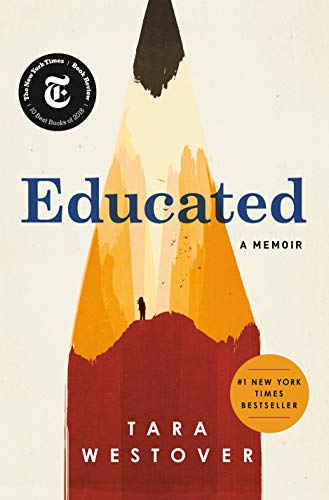
Educated: A Memoir by Tara Westover (2018)
This interesting memoir reads like fiction and at times the story is so bizarre and inconsistent that I think maybe it is fiction. However, I know that memory is a tricky thing, especially if you are the victim of childhood abuse, and I am convinced that Tara Westover certainly was.
I see why Westover named her book Educated, but I think it is more about Emancipation than it is Education, and I found myself wishing that she had spent less time with her highly dysfunctional family and more time with the way her education helped her break away.
I also think she absorbed a great deal more knowledge while she was being homeschooled than she gives herself or her parents for, but I certainly understand the omission.
Satyricon by Petronius (1st Century)
** spoiler alert ** Yes, it is considered to be the first novel. Yes, it gives valuable information about language and culture during the end times of the Roman Empire. Yes, it is satire, but it is also quite depraved. Basically Roman porn. I skipped through much of it because I couldn’t stomach it.
I primarily read it because I heard it was the first time the phrase “silent majority” was used, referring to the dead. I found that reference in Book 2 and skimmed Books 3 and 4 but unfortunately did see references to rape, including child rape (in book one), orgies, and cannibalism among other perversions. Call it classic if you want to. I just say Yuck!
I will be adding more to this post in the near future to give more details about these two books, so stay tuned!!!
Also, updates on the novel and on Teach. Write.: A Writing Teachers’ Literary Journal.
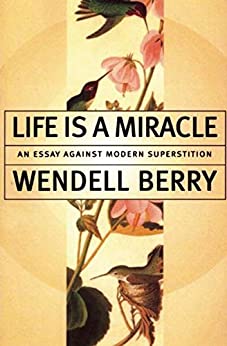
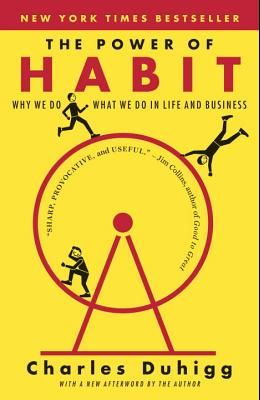
I have had this book for years and started reading it but put it aside. I’m not sure why; perhaps the time is right for it now, but it is a marvel. So much of it is resonating with me now, especially as I am working on a novel that satirizes higher education in the world today. It’s like I’m doing accidental research.
One of my alma maters, Western Carolina University offered an online book club for alumni, so I joined. Why not?
This is the first book we are reading. I am about half way through, but I got distracted once I started reading Berry’s book. However, I am going to be excited to get back to it because I am definitely learning a great deal.













 Hey, Mrs. Winkler!