The Art of Writing

conventioncenter-day_creditscottdresselmartin_580

Before I was a full-time instructor, over twenty years ago, I presented at my first national conference–the National Conference of Teachers of English. It was in Denver that year, and I paid for the conference myself because I craved professional development, even though I was a lowly adjunct, only teaching three or four large college classes each semester.

In a round table session, I  presented  an exercise that I had created for my developmental English courses called “The Art of Writing.” The students took a reproduction of a famous piece of art (I had many pictures for them to choose from) and told them to brainstorm about what they saw, using a handout I gave them.

One side of the paper was marked “Concrete,” where they wrote what they saw in the picture or what they could imagine that they could experience with their other senses. On the other side of the paper, I wrote “Abstract,” where students wrote words and phrases that represented how the painting made them feel or what memories, or thoughts in general, the painting helped bring to the surface.

After they brainstormed, the would develop some sort of prose writing based on the art and their brainstorming, combining the concrete with the abstract. I used as an example a short piece I wrote that was based on the iconic painting American Gothic by Grant Wood. Here is the painting and the creative piece I wrote based on it:

Grant_Wood_-_American_Gothic_-_Google_Art_Project

American Gothic

I remember marrying him.  We stood together in the country church, farmer’s son and farmer’s daughter, too poor for ought else–too much a part of the land anyway.  My family sitting on those hand-hewn, hard-backed pews, witnessing.

That night I didn’t utter a word or a cry.  Closing my eyes, I imagined I was lying in the distant fields of my home, daises tickling my face and hands and feet.

I worked hard, learning not to expect any praise for the clean floors or hearty food. My greatest joy, to get all of the chores finished in time to head for the fields, to hold the soil of our land in my hand, to feel its moisture and smell its mustiness.

He did praise me once.  After three daughters, who were mine to raise, to teach, to find husbands for, I bore him a son.  I sweat and strained and screamed no less, but somehow it was different, and he thanked me.  Then, my son was gone, no longer mine.  So soon he learned not to cry.  So soon he became a man.

Now, in that same country church, as my youngest daughter gives herself to a farmer too poor to leave and too much a part of the land anyway, I sit in a hand-hewn, hard-backed pew, witnessing.

**

I quite like this little character study, which went on to be published by the way, but more importantly, the piece inspired my developmental students for over a decade. Some of my students’ writing was published in our yearly literary magazine–one even winning a cash prize as  the top fiction piece in that year’s journal.

Another student picked a famous photograph of an American flag on a front porch and wrote an amazing creative non-fiction piece about the meaning of liberty. That student was attending our school under the GI Bill, having served during Operation Desert Storm. I’m telling you, he had a heck of a lot to say about liberty that the younger people in the class needed to hear.

Were they inspired to write or did the assignment just help them feel free to use their creativity? Did the painting give them something to write about, a story already there that they just fleshed out? It was more than likely a combination of things, but whatever it was, many of my students, developmental students, did their best writing when writing about art.

In recent years, the state where I teach has discouraged creative writing or the study of literature  in writing classes, especially in developmental classes. The trend is towards more “practical” writing, utilitarian, without flair or heart or life. Surprise! I am bucking that trend. I don’t use my art assignment any more, but my students engage with and write about music, film, theater, literature and art, and their writing is better for it. They are better for it.

In 1938 Winston Churchill, said, “The arts are essential to any complete national life. The State owes it to itself to sus­tain and encour­age them….Ill fares the race which fails to salute the arts with the rev­er­ence and delight which are their due.”

Maybe the State, as well as college administrators and curriculum developers, should listen to him.

cover

If you are, or were, an English composition teacher, do you have a writing prompt that you have used in class and would like to share like I did at the conference? If so, I would love if you would submit it to my literary magazine Teach. Write. 

In the magazine, I have a feature called “Write Your Own” where you do like I did and write your own creative piece using a prompt that you have once given your students. Accompany your piece with a brief explanation of the prompt or the purpose for the assignment.

I am also accepting general submissions of poetry, flash, short stories, and essays through March 1 for the spring edition. Click for complete submission guidelines. I look forward to reading your work!

Happy New Year!!!

And Merry New Semester!
 

Teach. Write. featured in blog

A few months ago I was interviewed by flash fiction author Jim Harrington for his blog “Six Questions for…” which is focused on picking the brains of writers and editors to aid fiction writers in composing, revising, and marketing their work. Many thanks to Jim for the feature and for his interesting and informative blog.

The interview is now appearing on Jim’s blog. Hope you will take a look, and if you are now or have ever been a teacher of writing in any capacity, then please consider submitting to Teach. Write.  Submissions for the spring edition are open until March 1.

cover

Caring

writer-605764_640-2I am beginning to put more emphasis in my teaching on caring.
First of all, I want to care more, about how I teach, what I teach, yes, but what I really want to care more about is each and every student–not just the ones who need me most, either. I want to care about them all–the gifted student, the one who seems to have it all together as well as the one who has dissolved into tears in my office. All my students need earnest praise, constructive criticism, encouragement–attention. They deserve it.

I want to care enough to take the time to let the struggling student know what he or she is doing right as well as what needs improvement. It is so tempting to only mark what needs to be improved. I want to care enough to take the time let them know how much I like that creative spark or this interesting fact they found through careful research.

I want to care enough to put away my petty concerns, there are so many, to concentrate on one of the two things I know in my heart I was born to do–teach writing.

Secondly, I want my students to learn to care. When they start caring about their work, amazing things can happen. The process begins when picking a topic. I spend much more time with this part of the process than I ever have before, and I am seeing results.

It isn’t easy for my students to care about writing for a myriad of reasons:

  • They don’t like writing. Many meaningless “busy work” assignments over the years have soured a large number of my students to writing.
  • They don’t think writing is important. Even though my students write all the time in their daily lives, they often don’t see the relevance of learning to communicate well in the written word. Somehow they seem to think they write well enough to be understood and that’s good enough, so why spend time on it, especially if they are going into a STEM career
  • They don’t make time for revision and editing. I am convinced that if students would leave themselves enough time to revise and edit, they would have time to develop, if not a passion for writing, at least a more thoughtful attitude towards it because they would see how caring improves the writing, which begets pride in one’s work, which begets a desire to leave more time for revision and editing. It’s hard to care about something if rushing to keep a deadline.

One tactic I use to instill a little more thoughtful attitude towards writing is to require my freshman composition students to pick a research topic with a local focus. We spend time exploring topics that concern their everyday lives on and off campus. We brainstorm about the issues they care about, which often leads to a willingness to search even harder for solutions to the not so hypothetical questions they are asking.

Doesn’t always work, of course, but for some of my students, learning to care has not only helped them write better papers, but it also has helped them become advocates for change in their communities, making their lives better, too.

***

cover

The spring/summer 2018 edition of Teach. Write.: A Writing Teachers’ Literary Journal is open for submissions until March 1. See submission guidelines for more information


Teach. Write. Open for Submissions

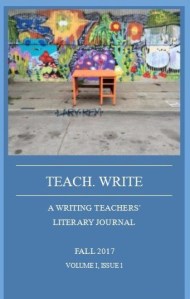
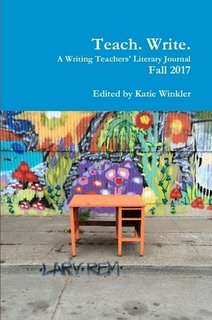
product_thumbnailToday, Teach. Write. : A Writing Teachers’ Literary Journal, opens again for submissions for the Spring/Summer edition and will remain open until March 1, 2018. The Spring/Summer 2018 edition will launch on April 1. If you are, or ever have been, a teacher of writing, I would love to see your work and consider it for publication.


See complete guidelines here: Teach. Write. Submission Guidelines

***

I posted that the North Carolina Writers’ Network mentioned the first edition of my literary journal for writing teachers on their Hats Off page, but they also wrote a short blurb about the journal in their publication called White Cross School back on Sept. 12, but I just saw the article for the first time a couple of days ago and have to share:

http://www.ncwriters.org/whitecross/2017/09/12/teach-write/

logoW

Writing Conferences offer great opportunities to learn and hone new skills as well as spend quality time with fellow writers. Consider attending the North Carolina Writers Network Fall Conference in Wrightsville Beach, November 3-5.

***

I am swamped right now but hope to get to post again soon and do a little diagramming of sentences as suggested by my friend and fellow writer Joe Perrone, Jr. 


A Classic Education Is Utilitarian

Fun Medical MGD© (2)

At our college’s tutoring center, a colleague and I struggled this past week to help a nursing student understand how to diagram sentences using traditional, Latin-based sentence diagramming methods. The student, a non-traditional-aged student coming back to work on a third degree, was frustrated on multiple levels because not only was she having difficulty with the concepts, especially having been away from anything close to grammar for several decades, she was also having difficulty understanding why she was being asked to diagram sentences in the first place as she sees no practical purpose for it. She’s not alone.

Even in my own composition classes, I have abandoned formal traditional diagramming of sentences in favor of a more informal approach, reminiscent of a structural linguistic method of diagramming, breaking a sentence up based on the functions of the words, phrases, and clauses with a minimum of grammatical terminology.

It is not, however, that I find traditional sentence diagramming a waste of time, and I support its use in the classroom for two main reasons:

  • Diagramming helps students understand the functions of words separate from the appearance of the word, such as verbals, which look like verbs but do not function as verbs.
  • Diagramming helps develop critical thinking skills, which is one of the primary functions of higher education

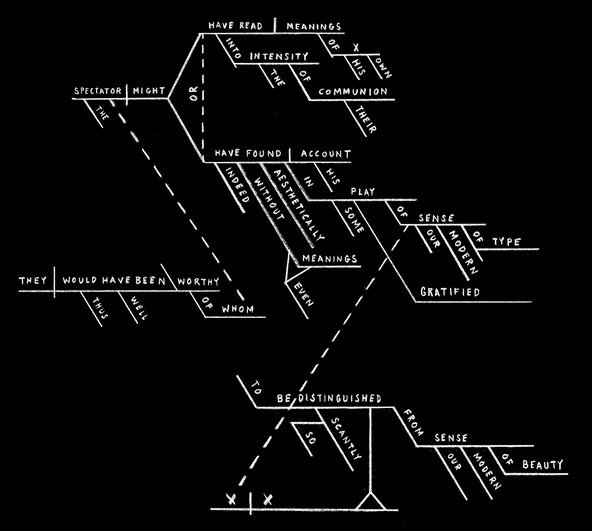
Kitty Burns Florey, author of Sister Bernadette’s Barking Dog: The Quirky History and Lost Art of Diagramming Sentences, eloquently explains the value of diagramming in her New York Times’ article from 2012, “Taming Sentences,” She writes that diagramming helps us think more clearly about what we are writing, and even if it doesn’t do a thing for our writing, it is at the very least, a puzzle that is good exercise for the brain, honing our critical thinking skills.

As a fascinating example, Florey diagrams a compound/complex sentence from Henry James’s The Golden Bowl:

draft-diagram1-tmagArticle-v2

Of course, I find all of this exciting and interesting, not so our struggling nursing student, who sees diagramming as wasted effort because she sees no application for it. I tried to explain that it was like doing drills for an athlete–the athlete may not do the drill during a race or game or match but, by exercising, will be developing the muscles he or she needs to be competitive. My colleague tried to equate the student’s love of reading to the exercise of diagramming–the student does not NEED to read. What she reads has no immediate application to nursing, but reading exercises the brain, which will help her be a better writer, and a better nurse.

Our student didn’t buy it. But because she is a good student and wants to do well, she listened to our explanations and, I believe, we did help her understand better. She even said that she wanted to come back to the tutoring center to get more help on another day.

We’ll be there.

***

Here are some more articles I hope to share with our student that discuss how important it is for nurses to critically think and write well:


First Edition of Teach. Write. Receives Notice

cover

The first edition of Teach. Write. is being featured on the North Carolina Writers’ Network’s Hat’s Off page. The North Carolina Writers’ Network is a wonderful support organization for North Carolina writers. If you live and write in North Carolina, please consider joining and supporting this fine organization. There are even some writers from other states who are members of NCWN. The conferences, residencies, workshops, communications and other services are invaluable ways for writers to meet and support one another.

If you would like to purchase a print copy of Teach. Write., then visit the journal’s page on Lulu.com. 


First edition of Teach. Write. to launch September 1

writerwritingframe-300px (2)

It is the perfect time for Teach. Write. to launch. As I begin my 23rd year of teaching at a small community college in North Carolina and work on producing the first edition of my first foray into producing a literary journal, I am reminded of how much I love my chosen professions. Since I was a little child I have wanted to be a teacher and soon after that dream was born, thanks to a marvelous English teacher named Mrs. Riskind, I have wanted to be a writer.

Now I am both.

To add editing to those two honored vocations exceeds all my expectations. It is modern technology that makes this journal possible and gives voice to those who deserve to be heard–English composition teachers. These are unique voices–surprising and refreshing. I can’t wait for you to read the short stories, essays and poetry of some special writing teachers.

It won’t be long now, so stay tuned!

An Exciting Summer

writerwritingframe-300px (2)

Submissions are closed for the premiere edition of Teach. Write. Thanks to all who submitted. I will be getting in touch with contributors as the month progresses. Tomorrow I will begin putting together the journal of poetry, prose and essays that will launch on September 1, 2017.

It has been a busy summer, and although I did not complete my two major writing goals, I have made progress on both and am looking forward to continuing that work while I begin teaching. The teaching will always come first, of course, but I am determined that I will use my time wisely and work on my writing projects each day. I want my students to be disciplined writers, so I need to make every attempt to be disciplined in my craft as well.

d8ce6a5e9ae0d888f860fbcc01dc04d2By the end of November, I will have completed the rough draft of my novel, Flood, a mystery/thriller set in Alabama during the early days of Obama’s first presidential run. The idea for the novel started as a short story for my unpublished novel Mordecai Tales, but on the advice of some of my writer friends, I decided to turn the idea into a novel. Portions of the book were workshopped at two different conferences this summer, and the feedback I received from fellow writers as well as two excellent instructors, Jane Smiley and Sheryl Monks, has encouraged me to complete the work.

223_4324I also will have completed several drafts of my new play, an adaptation of Robert Browning’s The Ring and the Book. I have spent many hours this summer re-reading and studying the The Ring and the Book, which has re-kindled my interest in this novel-length poem that is considered Browning’s crowning achievement but is little read today.
To prepare for writing the play, I also read Dared and Done: The Marriage of Elizabeth Barrett and Robert Browning, which includes fascinating biographical sketches of both writers as well as excerpts from their vast correspondence that is extremely helpful as I write the play. A third helpful source I completed reading early in the summer is Derek Parker’s non-fiction book Roman Murder Mystery: The True Story of Pompilia, an informative re-telling of the factual details surrounding the 17th Century Italian murder case on which Browning’s magnum opus is based. 

I am excited to complete both of these very different works and am truly enjoying the process of writing, something I hope to pass on to my students this semester.

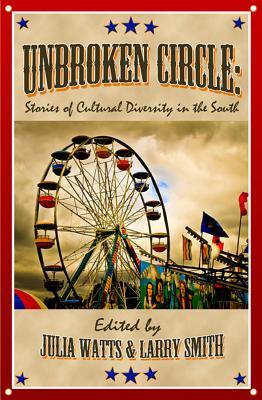
My other big writing event was the publication of a short story “I Have Not Yet Returned” in the anthology Unbroken Circle: Stories of Cultural Diversity in the South published by Bottom Dog Press as part of their Appalachian series. You can purchase a copy of the book with its 26 stories and essays about the modern South through the publisher’s website or at amazon.com.

unbrokencircle


Reminder–Teach. Write. and Great Article by David Leonhardt.

Submissions for the first edition of the literary journal Teach. Write. is August 1. See submission guidelines for information. If you are or ever have been a teacher of writing, I want to see your fiction, non-fiction or poetry. The premiere edition will be published on September 1.

Those of you who follow my blog probably have more than an inkling about how I feel about the current emphasis on vocational education at the expense of a broad general liberal arts one. That’s why I found myself nodding with enthusiasm as I read NY Times’ opinion page editor David Leonhardt’s column about the problems with vocational education. There are links to scholarly articles that confirm Leonhardt’s position that are well worth reading as well. Here’s the link:

Teach. Write. Deadline Extended

Are you a writing teacher who loves to write? Do you write responses to your own writing prompts? Is writing for publication something you have done or dream of doing?

If your answer is yes to any of these questions, then I want to see your writing! The premiere edition of Teach. Write. : A Literary Journal for Composition Teachers is beginning to take shape. I have accepted several impressive creative non-fiction essays and poetry, but I would love to have more, especially flash or short fiction. Therefore, I have extended the submission period to August 1, 2017.

If you are teaching or have taught English composition at any level in any setting, then I want to read your work.

See the page Teach. Write. Submission Guidelines for more information and….

writerwritingframe-300px (2)