My summer is winding down. On August 13, I head back to work. To say I’m ambivalent about doing so is an understatement. Reading emails about re-accreditation responsibilities and changes in policy are already making my insides churn, but I will NOT go down a road of resentment and bitterness that is sure to get me nowhere. I will focus on the only thing at work I have any control of–the classroom. In my next blog, I will continue to write about some of the changes I am making in my instruction, but for now, I have some unfinished summer business to attend to.
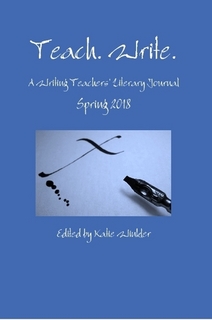 First of all, I have extended the deadline to August 15, for submissions to Teach. Write.: A Writing Teachers’ Literary Journal. Check out the submission guidelines here. I have also decided to OPEN UP SUBMISSIONS TO ALL. I realized that writing students (virtually everyone has been a writing student) as well as teachers need to have a voice in Teach. Write. However, I do request that in your required third person bio that you include your composition teacher experience, if you have any, or explain the impact writing instruction has had on you. I am open to both positive and negative experiences as long as you don’t blame English teachers for everything that has gone wrong in your life.
Secondly, I am still not finished with either the play Death or Love?, about the work of Elizabeth Barrett Browning and Robert Browning, or my novel Flood. I have hope that I will finish the play, but the novel will not get finished this summer. It just won’t. I am excited about it, though, because I have made great progress in developing the plot, as well as doing meaningful research and revision. My personal deadline is now December 31.
To make completing the novel a real possibility, I am once again going to participate in NANOWRIMO (National Novel Writing Month). This time, however, I am going to attempt to involve my students by providing times, places, and maybe even snacks, so we can write together during the month of November.

View from Neuschwanstein Castle, Bavaria, photo by Katie Winkler, June 2018
Finally, I should report on my greatest successes of the summer: incredible trip to Germany to visit my brother and his family, two meaningful and inspiring writers’ conferences–one at Brevard College with Craig Johnson, author of the Longmire mysteries, and the other in Raleigh with Elaine Neil Orr, whose latest book Swimming Between Worlds has won praise from Lit South and author Charles Frazier, who wrote Cold Mountain.

Photo by Magoi on Pexels.com
Eye surgery was virtually painless and has resulted in 20/20 far-sighted vision in both eyes. I will have to wear reading glasses, but the difference is simply amazing. My surgeon, anesthetist. nurses, and other hospital personnel were friendly, thoughtful and comforting. I can’t say enough about my regular eye doctor and his staff who have taken good care of me for years. They were all so efficient and helpful.
My greatest success was spending quality time with my husband and daughter. I don’t have enough time in this blog post to recount how great it has been, so I will simply say that I have been refreshed–body, mind, and spirit.
Now, my new goal–to not wait until a vacation rolls around to give myself the care I need to be the most effective teacher I can, helping my students become better writers while developing the soft skills they need to navigate an increasingly complex world. I am a teacher, but I am also a writer, wife, mother, friend, member of more than one community. I can’t wear all of these hats only in the summer. I can’t ever wear them all at once. Self-care means moderation and balance, sloughing off the worry that wastes precious time and produces nothing.

Photo by Pixabay on Pexels.com
Still ambivalent? Yes, I’m afraid so, but that doesn’t mean I am not ready to enter the fray and fight the good fight. The GOOD fight.

 Hey, Mrs. Winkler!