Conviction and Renewal

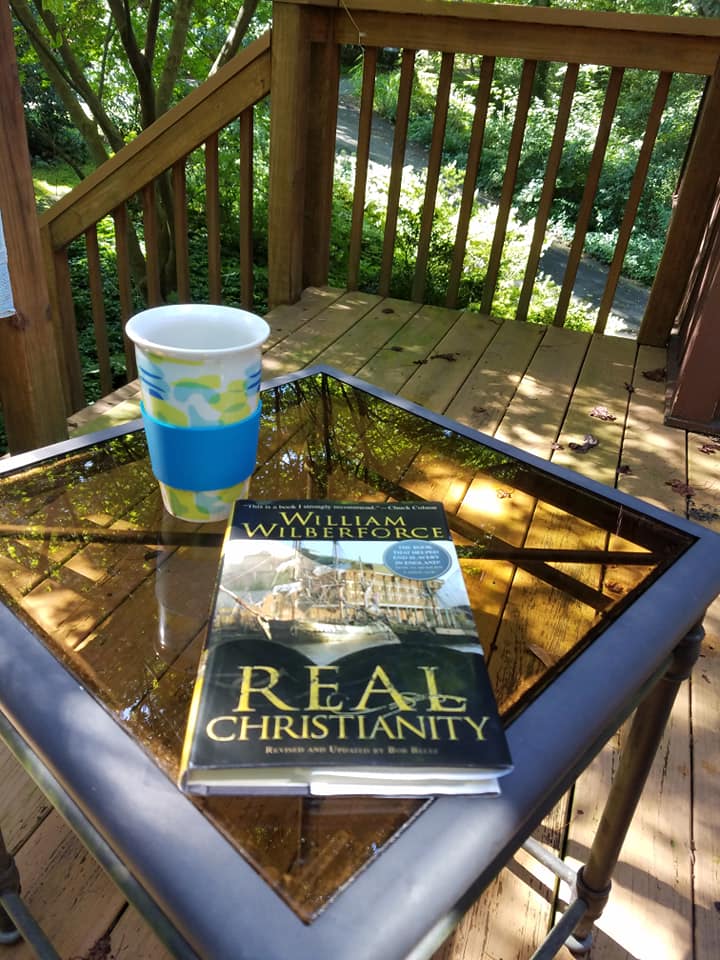
My favorite summer place

This summer continues to be a time of renewal for my spirit, but it hasn’t been easy. My reading adventures, working on this crazy satirical novel , and being alone so much have led me to confront many uncomfortable realities about myself–I have lacked resilience and settled for mediocrity much of my life. I’m often petty, self-absorbed and self-righteous, easily angered, hypocritical, thoughtless, vain, jealous, etc., etc.

Oh, don’t worry, I continue to love myself. That’s kind of the problem. I think of myself more highly than I ought, methinks.

Many of the books I’ve chosen to read this summer have helped me to see some of my many weaknesses, and also, thankfully, validated some of my strengths. As always, the two are inextricably bound to one another. But the book I just finished has not only convicted but also bolstered my spirit and renewed my resolve.

The book is Real Christianity, a paraphrase (by Bob Beltz) of William Wilberforce’s A Practical view of the prevailing religious system of Professed Christians, in the higher and middle classes in this country, contrasted with real Christianity written in 1797. The title alone explains why I read the paraphrase, but someday I will read the original.

William Wilberforce was an abolitionist and member of parliament who helped to end slavery in England. His book, however, never explicitly mentions the battle to abolish slavery, and it addresses, as the original title suggests, the middle and upper classes of the British Empire.

But it didn’t take long at all for me to see myself and my country in the pages of this modern paraphrase, written in 2006 by the man who was one of the producers of the very good biopic Amazing Grace, that tells the story of Wilberforce’s twenty-year fight. More about the movie later.

Many dog-eared pages

For example, here is a quote from early in the book:

“We must remember that almost any ideology can be distorted and misused to bring misery to multitudes or justification to the most bizarre behavior. Nothing is more dangerous. That which is intended to motivate goodness and restrain evil actually can become the instrument of that which it intended to restrain. History is full of examples of how virtues such as liberty or patriotism become twisted when separated from a healthy and authentic faith. Twisted men in every generation and occupation have twisted whatever they must twist to get what they want. Why should we expect that some within the Church would not be guilty of the same actions?” (46).

Wow! See what I mean? And it was written in the 18th Century! Wilberforce himself struggled with the same issues he writes about. He is remembered for being a force for good, for valid reasons, but, of course, he struggled and failed miserably at times, especially in allowing slave labor, thinly veiled by the concept of “apprentices,” to continue in the abolitionist colony of Sierra Leone. See this interesting article on the subject in The Guardian.

See what I mean? Conviction and renewal. Convicted by Wilberforce’s words and renewed by the knowledge that his failure was, and mine is, inevitable. Renewed? How does being reminded of failure possibly revive my soul? Another paradox of my faith, I suppose. I see that the answer is not abandoning my faith or ceasing to struggle to do good, but knowing that I can ask for and WILL receive forgiveness, I can continue striving to do some good in the world.

Not a bad lesson to pass on to my students, is it?

Here’s another one:

“Money and ambition have become idols in our time, especially for individuals in the business and professional worlds. Disguised as common business practice, these forces are allowed to gather great momentum in our lives. Arguments about being diligent at what we do, becoming successful in our profession or providing for our families seduce us so that we no longer have a clear sense of judgment about these issues. Our work consumes us” (73).

It is important to keep in mind that he is addressing Christians here, not people who do not claim to be believers. Knowing that, these words strike me to the core. I have let my work consume me. I have become as data-driven as the rest of the world. What is my retention rate? How many students passed that essay with a C or better? Let me check how many hours I spent working on the LMS. Look at those FTE’s, will you?

I am convicted, but I am renewed because, since March, I have been working from home, so thankful that I have been forced to concentrate my efforts on the people who need me–my family, my friends, and, my students.

It’s about time.

****

If you want to know more about Wilberforce and the battle to end slavery in the British Empire, I highly recommend the film Amazing Grace. Strong performances, especially Benedict Cumberbatch as England’s youngest ever prime minister, William Pitt the Younger, who was a great friend of Wilberforce’s.

Work Cited

Wilberforce, William. Real Christianity. Revised and edited by Bob Beltz, Regal, 2006.

Reading and Writing

My strange satirical novel has gnomes and fairy “godteachers” among other strange and mysterious students, teachers, and administrators, so this seems an apt illustration

After November’s National Novel Writing Month (NANOWRIMO), I had about 26,000 usable (rough draft usable) words of my new satirical novel about higher education in the South called CAMPUS: The Novel That Wants to Be a Musical.

I am happy to announce that since May 19, I have written 38, 173 more words! I know to some of you out there this is no big deal at all, but to me this is major as I have never before been able to adjust to a daily writing schedule (I do take one floating day off a week, which has helped greatly). I have exceeded my quota each day, which more than makes up for the days off.

I have also participated in craft lectures (via Zoom) by the North Carolina Writers’ Network and the Dramatists Guild of America. All have been useful, but this past weekend I was able to join 11 other writers for an extended workshop with Bryn Chancellor, author of Sycamore, which is now on my reading list. It was the first online Squires Writing Workshop, a program of the North Carolina Writers’ Network.

The emphasis was on the opening of a story or novel. We looked at just the first 1,200 words of the project. To begin with we looked at and shared examples of strong openings. Then, we did some writing exercises and shared. The next session we did another exercise and then had a fascinating and informative lecture about openings. The final three sessions were inspiring and helpful. We had all received each other’s work ahead of time, and all were faithful to read and comment on each person’s manuscript. I got so much out of the critiques, even when my work was not being discussed. It was a wonderful four days, and well worth it.

Look into the North Carolina Writers’ Network–a valuable organization for any North Carolina writer. We have members outside of North Carolina, too, so check it out!! ncwriters.org

And my reading continues–

Here are the goodreads reviews of the latest three:

MOO by Jane Smiley, 1995

***Spoiler Alert*** Perfect timing for me to read this satire about higher education as I work on my own novel with a similar theme. Full disclosure: I participated in a writing residency at Brevard College, studying under Jane Smiley, and she was a fabulous instructor, so I am partial to her work since that time. One of the things I like about her work is its variety. I also love her ability to portray the inner life of animals so that we can relate to them yet still see, smell, feel their animal nature. In this book she gifts us with the tragic character of the hog, Earl Butz, whose “job” it is to stuff himself. Oh, my, what a wonderful and compelling character. The most sympathetic of them all, which, I think, is Smiley’s intent.

Smiley seems to have a bucket list approach to writing, wanting to challenge herself, not wanting to repeat the same style. This is certainly a very different book than her Pulitzer Prize-winning A Thousand Acres, and hasn’t been as critically acclaimed, but in some ways I like it better, probably because of the satiric wit, and her ability to meld the tragic with the comic, which is my favorite kind of writing.

Ultimately, the book is comic (the last section begins with a chapter entitled “Deus ex machina”), and ends with a wedding. Ah, I see, I guess I’m a little slow–A Thousand Acres (King Lear)–Shakespearean tragedy; Moo (Ends with a wedding)–Shakespearean comedy.

Clever!

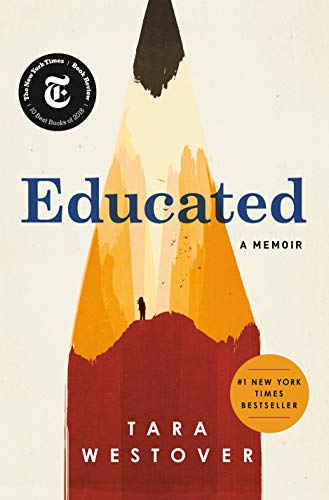
Educated: A Memoir by Tara Westover (2018)

This interesting memoir reads like fiction and at times the story is so bizarre and inconsistent that I think maybe it is fiction. However, I know that memory is a tricky thing, especially if you are the victim of childhood abuse, and I am convinced that Tara Westover certainly was.

I see why Westover named her book Educated, but I think it is more about Emancipation than it is Education, and I found myself wishing that she had spent less time with her highly dysfunctional family and more time with the way her education helped her break away.

I also think she absorbed a great deal more knowledge while she was being homeschooled than she gives herself or her parents for, but I certainly understand the omission.

Satyricon by Petronius (1st Century)

** spoiler alert ** Yes, it is considered to be the first novel. Yes, it gives valuable information about language and culture during the end times of the Roman Empire. Yes, it is satire, but it is also quite depraved. Basically Roman porn. I skipped through much of it because I couldn’t stomach it.

I primarily read it because I heard it was the first time the phrase “silent majority” was used, referring to the dead. I found that reference in Book 2 and skimmed Books 3 and 4 but unfortunately did see references to rape, including child rape (in book one), orgies, and cannibalism among other perversions. Call it classic if you want to. I just say Yuck! 

Mrs. Winkler’s Summer 2020

Photo by cottonbro on Pexels.com

Thanks to the pandemic, this has been a unique summer for me and almost everybody else, but not all bad. My reading continues, I have attended several interesting online seminars, and the work on my novel progresses. I am also making plans for the upcoming semester of teaching.

The big difference is not traveling, which I do greatly miss. I have family and friends in Alabama, Colorado, Virginia, Wyoming, Pennsylvania, Germany and elsewhere. I like traveling to visit them, and I also like to explore within my own state, attending meetings for the North Carolina Writers Network and the Dramatists’ Guild of America as well as “adventuring” with my daughter Hannah.

This summer I am at home almost always–weird.

I have developed routines, which is actually a novelty for me–I tend to improvise, but I am doing more of the things that are good for me, including exercising, reading, and writing more than I usually do.

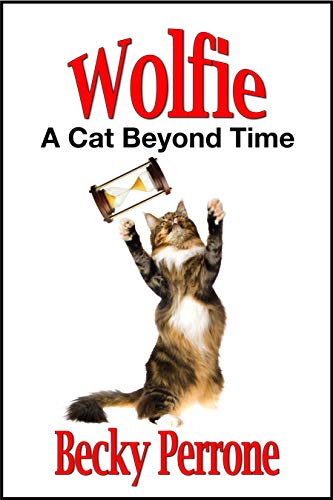
The cover of Wolfie: A Cat Beyond Time shows a large cat tossing an hour glass into the air.

I have been posting about my reading, which I have really ramped up this summer. My friend Joe Perrone, Jr. (check out his blog) asked me to read and review his wife’s debut middle-grade novel, Wolfie: A Cat Beyond Time, which I was glad to do; Becky is my friend, too. I thoroughly enjoyed reading it, and if you have YA readers in your life, I highly recommend that you purchase it for them, especially if they like cats as much as I do.

Here is the review I posted on Goodreads:

History is best learned through storytelling, and that is why this middle- grade novel would be a good addition to any middle school classroom bookshelf or young readers’ collection. It is part historical fiction, part adventure story, and part fantasy, a compelling combination that balances fact with fiction. The two young protagonists are charming, and Wolfie, the big cat that serves as a catalyst to their adventure, well, he is magnificent. One of the aspects that I like best is the balance the book brings to the history of the Old West. We get to see the good, the bad, and the ugly, but infused with enough humor and positivity to be appropriate for the targeted age group. An enjoyable and educational read for any youngster.

Photo by bongkarn thanyakij on Pexels.com

I have also been writing. Boy, have I been writing–30,000 words since May 19. I have never written almost every single day, but this summer I have. The two secrets for me have been determining how many words a day, approximately, I need to write to have a rough draft of my novel completed by the time school starts in August and then meeting or exceeding my quota each day. So far I have written six days a week and exceeded my goal most days, so I am ahead of the game. I should mention that I started out with 26, 000 words already written from November’s National Novel Writing Month. ( I wrote 50,000 but only half were usable.)

Of course, a first rough draft is a long way from finished novel, but I feel encouraged because I have wanted to finish a novel for four summers now but haven’t met my goal. I am determined to this year.

I am also busy attending webinars, submitting short stories to journals, and preparing for my classes in the fall, but I will save thoughts about those activities for future posts.

So come back and check them out!!!!

Are you writing this summer, too? Do you have a poem, essay, flash fiction, short story, or short drama you would like to share? Why not submit to Teach. Write.: A Writing Teachers’ Literary Journal?

You can find submission guidelines HERE.

I look forward to reading your work!!