Getting to Choose

It’s here! The Fall/Winter 2025 edition of Teach. Write. I hope you will take a look at it. Many fine writers from all over the globe have contributed poetry, short stories, creative non-fiction, and essays to this edition. You can find the journal here. For those who are not aware, I began Teach. Write. as part of this site in 2017. In 2023, to become a member of the Community of Literary Magazines and Presses (clmp.org), I was required to create a separate website for the journal, but I am still the sole editor and publisher. I am grateful to have more time to dedicate to the journal now that I’m retired, and I hope that this edition demonstrates what I’ve been learning and attempting to put into practice.

Everyone told me I would stay busy during retirement, and that’s true. The difference is, however, I get to choose. Most things anyway. I certainly didn’t choose the health issues in my family, but I’m grateful to have the freedom and flexibility to go where I’m needed and continue most of the activities I want to do.

Me receiving an Appy Inkwell Award for Best Memoir at the Appalachian Writer's Conference, 2024
Me receiving an Appy Inkwell Award for Best Memoir at the Appalachian Writer’s Conference, 2024

My biggest chosen project is my teaching memoir that is in the final stages of editing. It isn’t what I thought it would be, but with the help of a fine editor, it’s becoming better. Furthermore, the process is birthing new ideas and future writing projects that I may pursue.

I’ve also chosen to travel. I went to Davidson College for the Squire Summer Workshop, a program of the North Carolina Writers’ Network in July. In September I attended the Appalachian Writers Conference in Berea, Kentucky at the Historic Boone Tavern. I would have never been able to go to a September writing conference in the middle of the week while I was teaching.

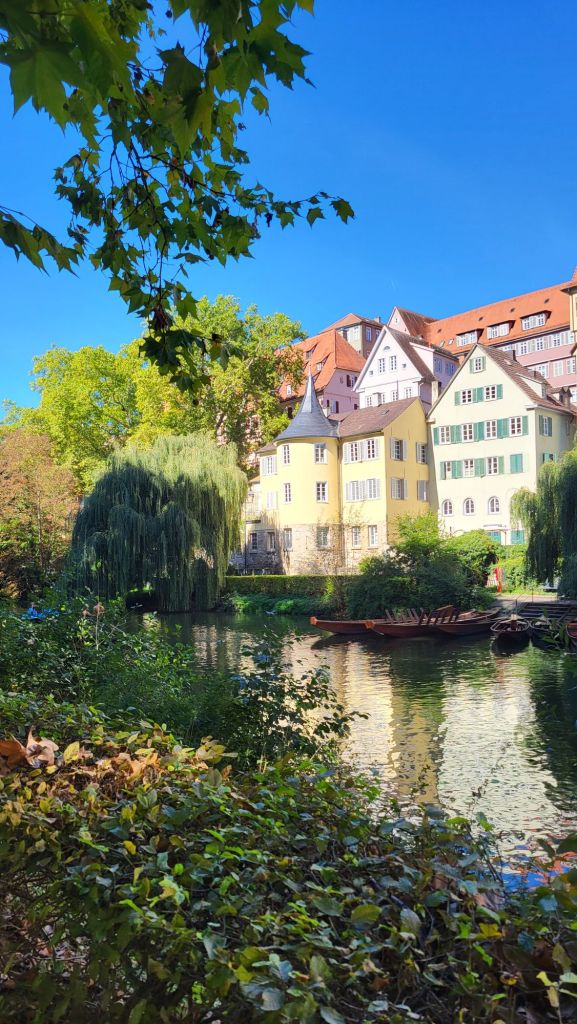
Soon after I got back from Berea, my family traveled to Europe where we spent 16 days with my brother and his family in Nagold, Germany, right on the edge of the Black Forest and then a week in Provence. Magnifique!! Then, it was back to Nagold for a few days, including a trip to nearby Tuebingen, where my husbund and I spent an extended vacation when we were first married.

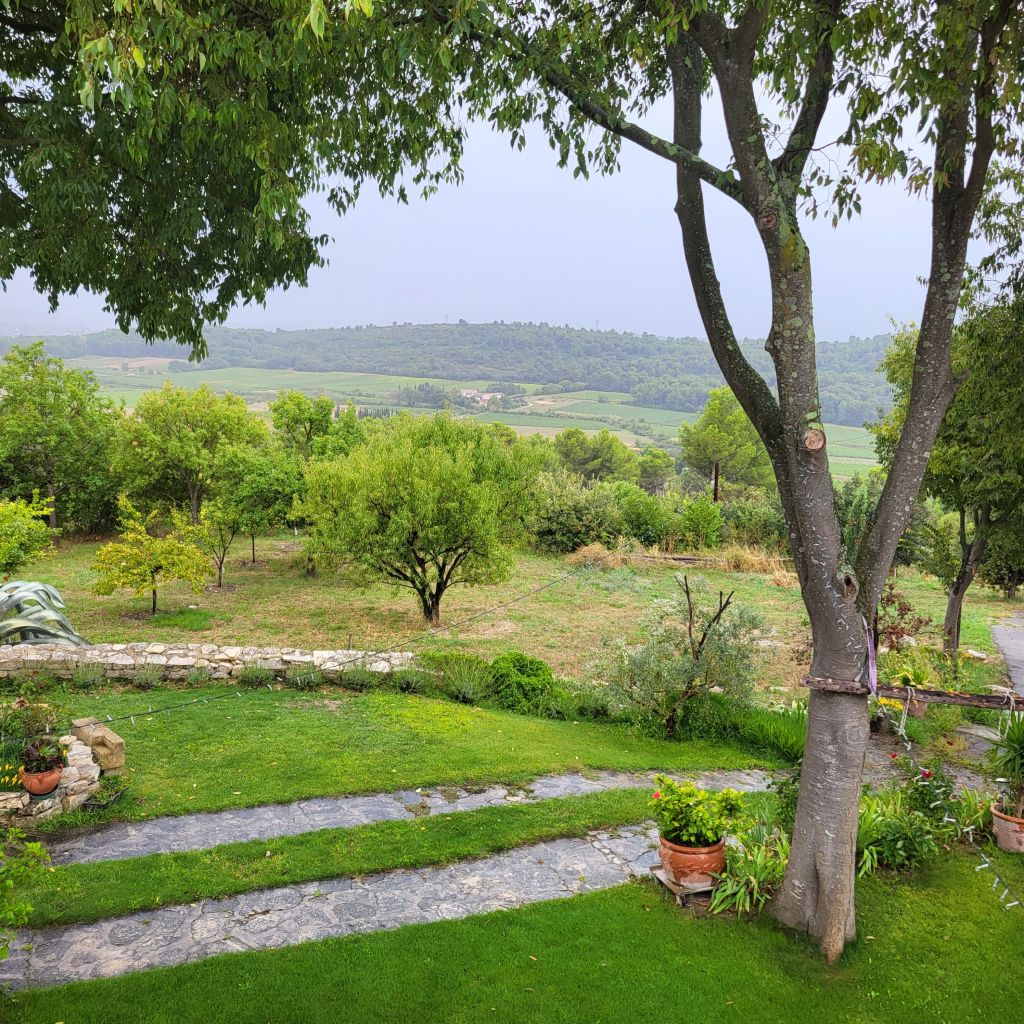
View from our villa in Provence

I’m in Alabama visiting family but soon I will be home in western North Carolina, choosing, God willing, to spend time with my husband and daughter, cuddle and play with my cat Flint, cook and bake, sit on my porch and read, drive up on the Blue Ridge Parkway to leaf watch, hike, help out as assistant stage manager for a stage version of Clue at the local community theater, meet with friends, and write, write, write.

I choose to do a lot, don’t I? Good thing it makes me happy.

Validation: Two Books About Balancing Education and Training

Ned Scott Laff and Scott Carlson’s Hacking College: Why the Major Doesn’t Matter and What Really Does challenges contemporary ideas about higher education. The book takes a critical look at today’s overemphasis on majors and predefined academic tracks, instead promoting a more flexible and personalized approach to navigating college. The authors advocate for experiential learning, skill-building, and real-world readiness, encouraging students to “hack” their education by tailoring it to their unique goals and aspirations. They also emphasize uncovering “hidden intellectualism” and leveraging untapped opportunities in the workforce, offering practical advice for students to maximize their college experience in ways that extend beyond rigid curricula.

Reading Hacking College felt like a real validation of the methods I used during my time as a community college educator. Many of the principles the authors outline—like the importance of experiential learning and practical, career-focused assignments—aligned perfectly with the approach I took in my classes. In one of my English composition courses, for example, I required students to interview a professional in their desired field. This assignment wasn’t just about teaching research and communication skills; it was about connecting their academic work to the real world in a meaningful and practical way.

The results were inspiring. Many students said it was the highlight of the course, as they gained invaluable insight into their chosen professions. One student even walked away from the interview with a job! Assignments like this not only enhanced their communication and research skills but also made the value of liberal arts education more tangible.

During my years teaching freshman composition and advising students in associate degree programs, I saw firsthand the importance of integrating the “bread” of practicality with the “roses” of intellectual and personal growth—a balance Terry O’Banion captures so beautifully in Bread and Roses. While a few students arrived with clear goals and preparedness, the majority were either unprepared or had unrealistic expectations. Toward the end of my career, I noticed an increasing number of students seeking only the quickest path to a high salary or transfer to an elite school. Many questioned the value of courses, like English composition, that didn’t appear directly tied to their career goals.

To address this, I instinctively began infusing my curriculum with practical, real-world assignments like the interview project. This approach didn’t just help students see the value in what they were learning—it also created moments of clarity, confidence, and even opportunity, like the student who landed a job from their interview.

Unfortunately, I’ve watched with concern as the “roses” of liberal arts education are increasingly overshadowed by a narrow focus on workforce pipelines. Reflecting on my experiences with students—and on books like Hacking College and Bread and Roses—reminds me why this balance is so essential. Education should prepare students not just for successful careers, but for meaningful and enriching lives. I’m more determined than ever to advocate for this perspective and keep the conversation going.

The Power of the Expert Interview

I started requiring interview reports with local experts early in my career teaching freshman composition as part of the students’ major research project. I still think it is one of the best ways to help students focus their research. In more recent times, it has thwarted plagiarism and an overdependence on the internet for research. But the biggest reason I always leaned towards a local interview is that it helped students become more enthusiastic about their projects.

Photo by Sora Shimazaki on Pexels.com

I have written about my “process over plagiarism” approach before and included the example of my student from a poor background who became excited about his project after interviewing a florist at the Biltmore Estate, but I have numerous other examples of how students have benefitted greatly from interviewing a local expert.

There’s the time a non-traditional age student and mother wanted to write about breast feeding in public (this seems like a non-issue, but this was over a decade ago, and I live in the Deep South, nuff said). She was a great student and had a good, balanced argument supporting the importance of breast feeding and why women who choose to breast feed in public should not be shamed. For her interview, she contacted the director at the La Leche League in our county. The student was happy to report that not only did she come away from the interview with a more focused topic, she also received valuable print materials to use as sources, made important contacts with experts, and walked out with a job! That’s right, this pre-nursing student was getting help with her research paper as well as gaining invaluable experience.

Photo by RF._.studio on Pexels.com

Another student wanted to focus on forensics (I got a lot of that when CSI was at its peak of popularity), but she was having trouble finding someone to interview. I suggested she reach out to the county coroner, which she did. The coroner turned out to be a woman who was particularly interested in what could be discovered about cause and time of death by looking at skeletal remains. My student met her at her office in the county courthouse where the coroner shared book titles with her and allowed her to take notes and make copies from texts on her shelf. She also showed the student samples of bones, explaining what she could determine from examining them. The student narrowed the focus of her research paper and at the same time found a new interest in a career as a forensic anthropologist.

One of the most interesting stories of the face-to-face interview I had was with a student who wanted to do his research paper on Habitat for Humanity in our county because he was opposed to the organization, thinking the group in our area discriminated in favor of the Hispanic population. My student was a non-Hispanic and of a non-traditional age. His opinion at the beginning of his research was that too much aid was going to Hispanic people to the detriment of the white population. You may be surprised that I allowed the student to write on the topic; however, I warned him that he should not write about it unless he was not willing to change his mind if he found that his assumptions about the project were untrue. He agreed. It was risky but after talking to him, a risk I was willing to take. Sidebar: Being a good teacher involves taking calculated risks. It doesn’t always work, but it did that time.

Photo by Keith on Pexels.com

I can honestly say that in all my years of teaching, I have never seen a person so completely change after one interview. The thing is my student didn’t just interview one person who worked for Habitat for Humanity. Because he was a carpenter, he felt that the best way to find out what was really going on was to volunteer to work on a Habitat for Humanity project house within the Hispanic community of which he was suspicious. When he came to class after his first volunteer experience, he had a big smile on his face and admitted to me with no hesitation that he had been so wrong.

The idea of “sweat equity,” where the person who will receive the house works alongside those who have volunteered their skills, strongly appealed to my student’s work ethic, and he was impressed at how hard the people benefiting from the program worked on the house. After working with and talking to the future homeowners, he was convinced that Habitat for Humanity was an organization that gave a helping hand, not a handout. He became a long time Habitat for Humanity volunteer after that. One interview assignment had changed his attitude, and his life!

Photo by Alex Green on Pexels.com

Of course, not every interview has been a life-changing experience for a student, some were actually complete duds, but students learned from negative experiences as well. They also learned how to prepare appropriate questions, contact someone they didn’t know, meet with that person, record answers, and summarize the interview in a report, then integrate that information into their paper.

Even if students failed to satisfy the requirements of the assignment, I was alerted to the student’s difficulties and often able to avert problems with the researched essay itself. I would often address these issues in the student conferences that I held before the students began working on their rough drafts.

More about student conferences soon.

Movies about teaching inspired me

Photo by Anna Tarazevich on Pexels.com

Like many kids growing up in the 60’s and 70’s, I watched movies on Saturday afternoon. I was usually finished with my chores or riding horses by the time the matinee came on. Some of my favorite movies were about schools and teachers, go figure, and I saw some great movies over the years. Some of the films that inspired me to seek out teaching as a career were ones I just came across by accident, usually on Saturday afternoon because I was bored. Boredom is good for kids, btw. Let them be bored.

Here are a few movies about teaching that I still love just as I think of them:

Photo by Lukas Faust on Pexels.com

Conrack–This 1974 movie starring Jon Voight is based on The Water is Wide, the autobiography of writer Pat Conroy (The Great Santini, Prince of Tides, Beach Music, among others) who taught on remote Daufuskie Island off the coast of South Carolina. Conroy was a rebel whose non-traditional methods teaching poor black kids were effective but not socially accepted. Hummmm, guess anyone who reads my blog knows how this movie influenced me.

Good Morning, Miss Dove–1955, starring Jennifer Jones–Miss Dove is a very different type of teacher from Conroy. Very strict and traditional, she nevertheless realizes the dramatic impact she has had on her students as during her convalescence from a serious illness, she is visited by some of her former students and reflects on the personal sacrifices and quiet successes she has had over the course of her career as a geography teacher in a small town. It was good for me to see that different kinds of teachers meet the needs of students in different ways. Most students need and want discipline.

To Sir, with Love — 1967, starring Sidney Poitier – I had an immediate love of Sidney Poitier when I watched the handsome actor star in this film, based on the autobiographical novel of E. R. Brithwaite, about an immigrant from British Guyana taking on the trials and tribulations of teaching in an inner-city school in London. What inspired me was the power a passionate teacher had to change the lives of people the rest of the world had counted as lost and abandoned, the same thing that drew me to the movie Conrack. Frankly, I don’t care about the criticism that has been leveled towards the movie in modern times. To me, as a child growing up in the Deep South, it crossed racial lines and showed a black man as a hero teacher, winning the admiration of mostly white students. I wanted to be a teacher who, despite his flaws, stood up for what was right.

Goodbye, Mr. Chips–1939, Robert Donat and Greer Garson and musical version 1969 starring Peter O’Toole and Petula Clark–I remember watching both versions as a child. Based on the novella by British author James Hilton, both films showed me that teaching doesn’t just change students’ lives, it also changes teachers for the better. In the beginning Mr. Chips is a stiff, awkward pedant with little ability to relate to his students, but then he falls in love and marries a woman with less education but considerably more charm than himself. While their marriage is short-lived, his wife’s influence lasts a lifetime and softens Mr. Chips. He never marries again, pouring all his energies into his teaching. Robert Donat won an Oscar for his performance as Mr. Chips. Years later, O’Toole was nominated for an Oscar and won the Golden Globe for Best Actor in a musical or comedy. Both films showed me that teaching is more than a profession. It gives life meaning and purpose even when a teacher is faced with great tragedy and personal loss.

Photo by Dids . on Pexels.com

The Blackboard Jungle, 1955, Glenn Ford and Sidney Portier. I saw the Blackboard Jungle after To Sir with Love. Because I had such a huge schoolgirl crush on Portier, I would watch any film with him in any role. I had no idea who Glenn Ford was, but I quickly became a fan because of this movie. Ford plays the role of the teacher in an inner-city school and Portier, ironically, is one of his students. This movie, that talks about the difficulties of teaching, including low pay, classroom management when the room is full of troublemakers (understatement), the lack of respect from students and little to no support from administrators. But, despite the difficulties, Ford’s character, Mr. Dadier, persists and students learn. I found out through bitter experience that The Blackboard Jungle told the truth about teaching, only exaggerating a little. It helped me go into teaching with my eyes wide open and partly because of it, I was able to keep going even after some of the worst times.

The Miracle Worker, 1962, Anne Bancroft and Patty Duke–Of all the movies about teachers I saw growing up, the movie about how Annie Sullivan wouldn’t give up on her blind and deaf student, Helen Keller, was a prime influence on my decision to become a teacher. I will always remember that moment when Helen Keller finally understood connected the word being signed into her hand with the meaning–Water. The look on the young actor’s face as the meaning dawned on her. It so moved me that I watched the film, and the stage play by William Gibson based on Helen Keller’s autobiography, The Story of My Life, on which the play and film are based. I have read it many times, always returning to that scene at the water pump:

We walked down the path to the well-house, attracted by the fragrance of the honeysuckle with which it was covered. Some one was drawing water and my teacher placed my hand under the spout. As the cool stream gushed over one hand she spelled into the other the word water, first slowly, then rapidly. I stood still, my whole attention fixed upon the motions of her fingers. Suddenly I felt a misty consciousness as of something forgotten—a thrill of returning thought; and somehow the mystery of language was revealed to me. I knew then that “w-a-t-e-r” meant the wonderful cool something that was flowing over my hand. That living word awakened my soul, gave it light, hope, joy, set it free!

The joy of Annie Sullivan, played brilliantly by Anne Bancroft, as she shared word after word with her student, now hungry for more and more now that the floodgates were open–that was the joy I wanted to experience and for almost forty years have been able to, despite some of the hardships encountered by those movie stars from long ago. I will always remember how they inspired me.

Teach. Write. Coming Soon

Photo by Laura Chouette on Unsplash

Unfortunately, this is not an April Fool’s Day message. 

I have been working hard on the Spring~Summer 2022 edition of Teach. Write.. However, the journal is a one-woman show, and this woman is a full-time composition instructor at a community college. My first obligations are to my students and the college, so although the journal is near completion, I need the weekend to concentrate on the final edit before I feel it is ready to see the light of day. Therefore, the new expected publication date is Monday, April 4. I apologize for the delay.

At the Door of the School

At the Door of the School by Nikolay Bogdanov-Belsky (1897),
Public domain, via Wikimedia Commons

Who am I?

Am I one of the students, my head bowed over my books, not looking up, only intent on myself and what I must see and read and learn?

Who am I?

Am I the old teacher, standing before the blackboard, not even seeing him as he waits patiently in his tattered rags with all he has?

Who am I?

Am I the stern pedant patrolling the hall, who will shoo him away, tell him to come back another day, when he looks more the part?

Or, am I the one who opened the door? Do I stand behind him now, whispering, “Go on in, boy. You belong there, just as you are.”?

NANOWRIMO–DAY ONE

Photo by Julia M Cameron on Pexels.com

NANOWRIMO stands for National Novel Writing Month and November is it!! I have participated in NANOWRIMO for the past few years. Last year I produced the first rough draft of CAMPUS: A Novel That Wants to Be a Musical that I am now producing as a podcast. No, I haven’t forgotten. I hope to do another episode in the next few days. Before that I wrote 50,000 words on my still unfinished novel FLOOD, which I WILL finish one of these days. Think retirement, Katie.

This year, however, I’m not writing a novel. I’m working on a non-fiction book (it’s allowed) about how my travels have impacted my teaching. My mother said this summer, as I was telling her about some of my ideas for my classes this fall, that I should write a book about teaching. I was touched and flattered, I mean I don’t think she was being sarcastic, and I decided to do it. No time like National Novel (Book) Writing Month.

At first the book was going to be more about some of my thoughts on education and explanation of my teaching methods, but when I attended the North Carolina Writers’ Network Squire Summer Workshops this summer and received some positive comments about the travel essay I submitted for critique, I settled on my current focus.

I am excited to have an excuse to write everyday for the next 30 days. I hope you will follow me on this latest adventure as Mrs. Winkler writes a book!

TODAY’S TALLY–1,895 WORDS

To find out more about NANOWRIMO, go to nanowrimo.org

HAUNTED HENDO Is Coming!! Print Version of Teach. Write. Is Here!

Haunted Hendo Premieres October 28 at 7 PM

COVID-19 can’t keep a good theater department down! At my college, the intrepid head of the department managed to produce nine short films for the Halloween season, coming to YouTube for your viewing pleasure this Thursday, October 28. The films are intended to celebrate mountain mysteries and local lore, including the Siren of the French Broad, a ghostly presence at the Hendersonville Historic Court House, the legend of the Boojum (an Appalachian version of Sasquatch) and more!

The films, featuring a variety of genres like horror, suspense, comedy, music video, documentary, and musical, are the end product of many hours of hard work by over 50 cast and crew, including not only faculty and students, but also alumni and community members as well as professional actors and filmmakers.

I was happy to contribute by writing two scripts for the anthology and directing one. It was great fun and a wonderful, engaging experience for everyone involved, especially the students.

The films will premiere at 7:00pm Eastern Time at the BRCC Theatre Channel

Hope you will join us for some Halloween fun.

It took me a while, but I finally found time between getting my second eight-week classes going and all of the grading. My Lord, the grading, to make the print version of Teach. Write. You can find it by clicking here.

Season Two, Episode One of CAMPUS now available

This summer is very different than last, which is not a bad thing, of course. However, I am getting out more and doing more that is keeping me away from working on the podel (podcasted novel), but I have episode one of the second season for listening pleasure (I hope).

Photo by Pixabay on Pexels.com

I like it anyway, if that counts for anything. Here’s the link to the next episode of CAMPUS: A Novel That Wants to Be a Musical.

Also, if you have something to submit to Teach. Write.: A Writing Teachers’ Literary Journal, then I will welcome it. Submissions of the fall/winter 2021 edition are open until September 1. See the submission guidelines for more information

The promised book reviews will be coming tomorrow. I hope.

Shakespeare’s Comedy of Errors–Virtual and in One Act!!

What you doing this weekend? How about tuning in to see yours truly play Shakespeare and the Duke of Ephesus in a virtual one-act rendition of Shakespeare’s Comedy of Errors? It’s free, but you have to register. Go to this link to find out all about it!!

https://fb.me/e/1gMaTQTL4

The Comedy of Errors is believe by many scholars to be Shakespeare’s first play. Two sets of mismatched twins, separated at birth find themselves, unbeknownst to each other, together again in the same city. Much hilarity ensues as they are continually mistaken for one another.

I loved experiencing acting in my first virtual play, and it is Shakespeare!!!! Forever adaptable Shakespeare!!! Our director shows how necessity is the mother of inventive, engaging educational theater–our students are learning so much about how to produce great theater, even during a global pandemic.

So proud of our students and our theater department!!!