New Episode of “CAMPUS: A Novel That Wants to Be a Musical” is Available

Episode 8

THE LIBERAL ARTS

One thing I love about creative work is serendipity. What a wonderful occurrence when things just fall into place. It was last summer when I was writing every day to finish the rough draft of CAMPUS when I started doing research to find the right piece of music that I imagined would inspire a fifteen-year-old girl, uninterested in the concert of classical music she was “forced” to attend.

On the Kennedy Center’s website, I found a short article, written for young people, about The Moldau, by Czech composer Bedrich Smetana. According to the article Smetana was inspired by his love for his country and for the Moldau River that runs through the Czech countryside and into Prague.

It is a musical poem, telling the story of the river’s journey as it encounters the people and landscapes that Smetana loved. There is even a musical description of whitewater rapids! (“Down by the River”).

Being a musical novice, I appreciated the simple language of the article that explained how the French horns and trumpets could represent hunters chasing deer through the forest and violins playing a polka at a wedding feast. Flutes become mermaids in the moonlight. Below the description of the piece was a video of The Moldau being performed at the Kennedy Center.

Astounding.

I knew I had found the piece that had inspired my character.

See? Serendipity.

But it doesn’t stop there. Oh no. Now, I had to find a recording in the public domain that I could freely use. Would it be possible? Nothing ventured, nothing gained. I support creative commons for a reason, so that’s the first place I went and I wasn’t disappointed. A simple search led me to a recording of The Moldau in the public domain provided by Musopen

I learned that, I’m quoting from their website, “Musopen is a 501(c)(3) non-profit focused on improving access and exposure to music by creating free resources and educational materials. We provide recordings, sheet music, and textbooks to the public for free, without copyright restrictions. Put simply, our mission is to set music free.” I discovered all sorts of things that will help me with this project and more.  The website even has a free streaming classical radio station that I’m listening to as I write this.

See? Serendipity.

But there’s more!!! I uploaded the music into Audacity (another open source that I love) and then just started reading the lyrics to my song, “The Liberal Arts.” It was such an incredible experience—without planning or manipulating anything, the lyrics of the song just seemed to fall into place with the music. Is this what musicians feel like when they are improvising? Whatever it is, it’s a great feeling.

Serendipity

Now, full confession—the piece was too long for my song, so I did cut some out of the middle, so I could have the ending that I love so much. Sorry to you musical purist out there, but not really. I am creating, feeling free from the shackles of having to do anything any certain way. Good or bad, this podel is mine, and I love it.

Serendipity—it’s a beautiful thing!
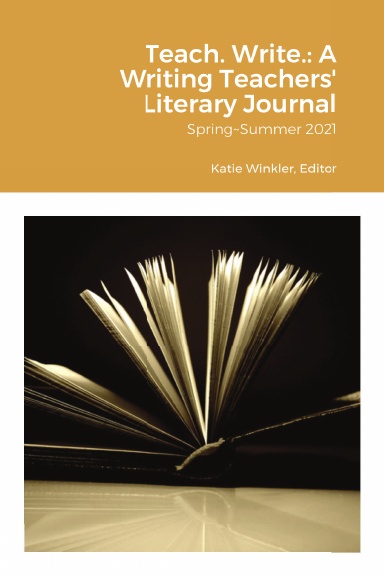
New Edition of Teach. Write. Available

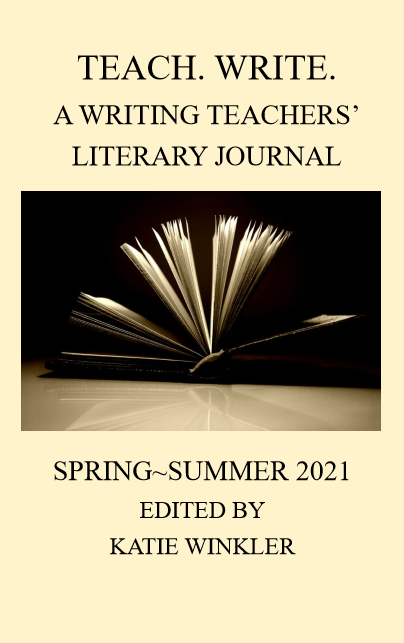
Remember when I said my mother had gone to the emergency room but was sent home? Well, she had to go back a few days later and was admitted. I went to Alabama for a week to be with her while she was in the hospital and get her settled when she came home. I stressed over trying to get the spring/summer 2021 edition of Teach. Write. published by April 1 until I reassessed my priorities. I contacted my wonderful writers and let them know I would have the new edition out by April 10.

And it’s here!!! Thank the good Lord for Spring Break!

Spring~Summer 2021 Revised

Revised April 17, 2021

I hope you enjoy this edition of Teach. Write.: A Writing Teachers’ Literary Journal. Next, I will work on another long overdue episode of CAMPUS, my podcasted novel, available on Anchor, Spotify, and other podcast platforms.

“To the hard of hearing you shout”

Photo by C. MacCauley–CC by-SA 3.0

In 1983 I wrote my senior undergraduate thesis comparing and contrasting the life and works of two great writers I’ve long admired–Franz Kafka and Flannery O’Connor. Both authors’ works are unusual to say the least. Franz Kafka’s “The Metamorphosis” begins with a man finding that he has been transformed into a giant insect; Flannery O’Connor’s “Good Country People” ends with a corrupt bible salesman seducing a strange young woman named Joy-Hulga and stealing her artificial leg.

Many question why a devoutly religious woman from Georgia would write stories with such unusual, grotesque characters and such unsettling, even shocking, plots. One person wrote O’Connor and asked her why she wrote the way she did. Her answer still speaks to me:

“To the hard of hearing you shout, and for the almost blind you draw large and startling figures.”

CAMPUS: A Novel That Wants to Be a Musical is my attempt to follow in the footsteps of O’Connor. It gives voice to my concerns about what is happening to higher education in this country. It is not intended to be my reality, but it is representative of a reality as I see it.

And lament it.

No, the campus in my novel is not representative of the campus where I work or any campus where I have ever worked or studied. The characters, even the human ones, are not descriptive of any person I have ever met. They are symbols only, but they serve my point and they speak for me.

They give me a voice again.

And it’s kind of a funny voice, I think.

The newest episode, that you can access at this link, introduces the fairy godteachers Belinda McBride and Brian Teasdale and features a song with music written and performed by Curtis McCarley, my good friend, former student, and composer for our play A Carolina Story. I had fun singing backup.

View from the Blue Ridge Parkway–Photo by Katie Winkler

New Episode of CAMPUS Available

Another episode of CAMPUS is now available!! Click here to access all six episodes!

I wasn’t sure I was going to get out a new episode this week. I got kind of discouraged, feeling kind of down about the music part of this crazy podel project I’m doing. I have visions of what I want it to sound like, but I don’t have the musical ability or technological skills to make it happen, so Sunday, my normal day to publish a new episode, I just sort of gave up.

But yesterday, I had required conferences with some of my students. One young man who wants to be a nurse talked about taking difficult classes like anatomy and physiology along with two English classes AND working AND keeping his girlfriend’s children on track with online school work while she is at work. Another student works at a nearby hospital. She was tired because she had just gotten home, while her husband was leaving to go to work; he works at a hospital, too–2nd shift. She told me how she had Covid-19 a couple of months ago. She just received her second vaccine and the side effects have hit her hard. She had been told that might happen. You know, she still has gotten her work in on time and makes it to every online session that she can. Neither student has complained or offered excuses. They just keep on going. 

I listened and felt ashamed. If they can persevere, then so can I. That’s why, after work, I went back to the drawing board and finished it. It’s not what I envisioned, but it’s from my heart–a heart that is thankful for the opportunity to teach these amazing people I call my students. This episode is dedicated to them. 

Special Valentine’s Day Episode of CAMPUS

Photo by Gabby K on Pexels.com

HAPPY VALENTINE’S DAY! Another episode of CAMPUS: A Novel That Wants to Be a Musical is live on Spotify NOW!! And it includes, in true Valentine’s Day form, a love story!! Click here to access CAMPUS.

I am especially excited this week because I think this is my best episode ever! First of all, my daughter Hannah, who is a recent graduate of UNC-Asheville, earning her second degree, a BS in Music Technology, arranged, recorded, and performed Gabhaim Molta Brighde in Irish Gaelic for this week’s episode. Her BA was in Music with a Voice Concentration from Converse College’s Petrie School of Music. The value of her education, one in classic music and the other in advanced music technologies is truly apparent in her recording. I know what you’re thinking, but a mother gets to brag on her daughter on Valentine’s Day, and every other day, too, for that matter. Oh, by the way, she has a job IN MUSIC during a pandemic (not teaching), doing what she loves and was trained for. How do you like them apples?

I’m also hyped because it has been so much fun playing around with the technology that is making this dream of mine come true. This week, with the help of Audacity: free, open source, cross platform, audio software, I was able to record two songs and alter my soprano voice to sound first like a tenor and then a bass. It is a little freaky but totally cool. The second thing I did was download the sound effect of a shower running from freesound.org and add it to one of my recordings. I also laid down background music provided by Anchor, which calls itself the “easiest way to make a podcast,” and I believe it. Anchor is provided by streaming music giant Spotify as an open source podcasting platform. All of my episodes are published immediately on Anchor and Spotify as well as numerous other podcasting databases very easily and at no cost to me.

CAMPUS is my passion project, and I am doing it for fun, but I can also see all sorts of educational applications of the open source technology I am learning to use. I hope you will listen and tell others about my podel (That’s my word for podcasted novel.)

Don’t think I’ve forgotten about the other ongoing project I love, my literary journal Teach. Write. I have already accepted some incredible poetry and flash fiction for this issue, but there is still time to submit for the spring/summer 2021 edition. Submissions close on March 1, and the journal will be published on April 1. See the link above for submission guidelines.

Gift Books

I am blessed with special people in my life and one of those people is my nephew Timothy. He is in school studying media arts and has started a blog here on WordPress called the Mugwump Diaries. You can check it out here.

Timothy and I love reading and reviewing books, and for a while now, I have enjoyed reading his reviews on Goodreads, so I am excited that he has started a book review blog. Plus, he has inspired me to get back to my own book reviews.

This Christmas, I received several books that I am looking forward to reading and two Christmas themed books that I just haven’t gotten around to until this year. It just didn’t seem right to read them outside of the Christmas season.

I will write about those last two next post but today, I just want to talk about my gift books and what they mean to me.

Where to begin? Why not at the top? I can’t wait to read In Praise of Difficult Women by Karen Karbo, given to me by a dear friend and colleague who knows that I take it as an ultimate compliment that she finds me difficult. In the introduction, Karbo says, “I love these women because they encourage me to own my true nature. They teach me that it’s perfectly okay not to go along to get along. They show by example that we shouldn’t shy away from stating our opinions. Their lives were and are imperfect. They suffered. They made mistakes. But they rarely betrayed their essential natures to keep the peace” (p.17).

Yeah, that’s what I need to read!

That same friend gave me the book immediately below that, Untamed by Glennon Doyle. I haven’t finished it yet as I was distracted by the Christmas books I was determined to read (before it was too late, ha!), but it is another one that gives voice to my feelings, these feelings I have of not being what people expect me to be, that I’m not an easy keeper, as we say in the South. Doyle speaks to women who don’t want to be defined by their roles in society, who don’t want to be defined at all. Difficult women. Troublemakers.

Women like me.

I’m getting back to reading Untamed today!

The book to the right, Hamnet by Maggie O’Farrell is a gift from my husband and is proof of what a treasure he is. Out of all the books he could have chosen, he picked a historical novel giving life to Shakespeare’s son Hamnet, who died at eleven, during the Plague. A few years after the death of his son, Shakespeare wrote one of the greatest works of literature the world has ever known. Hamlet. Just like my friend, my husband knows me, knows that I would relish reading a beautiful book that will make me cry. He gets me, even though I’m difficult. And he loves me anyway.

To the left is another special book, Podcasting for Dummies, given to me by my dear daughter, who also advised my husband on what equipment to buy me to help me with my big podcasting challenge of 2021–my podel or povel or novcast or whatever you want to call it–this thing that I’m doing. Her gift book is special to me because it shows that she has faith in me and supports what her mother is doing, no matter how weird it is. And believe me, you will see, it is weird. But she gave me the book because she doesn’t care that her mother does do some strange things and doesn’t do or say all of the things mothers are supposed to do or say, except the most important thing, that is. She does say, “I love you.”

And my daughter loves me, too.

A gift book told me so.

All ready for the debut of my podel (podcast novel) CAMPUS, January 10

Merry Christmas to Me (and all of you, too, of course)

Photo by Katie Winkler, December 24, 2020

I have written a crazy book called CAMPUS–A Novel That Wants To Be a Musical. Okay, so written might be a bit misleading. I have the first draft of a crazy book.

Here’s the thing–I teach English full-time and online at a community college during a global pandemic. This next semester, I will teach three accelerated composition classes (16-weeks of material in 8-weeks), two 16-week composition support classes (I have only taught them once before; they will again be synchronous online because of the pandemic), and one 16-week British literature course, maybe. I have very little time to do the necessary revision, editing, and, most time-consuming, marketing that it will require. Plus, I have no time to get together with my composer to write the music for the book. You read that correctly–this novel wants to be a musical, so music there will be–one way or another.

Here’s the other thing–I’m 60-years-old, and I’m a darn good writer, in my mind, but I’m not much of a business woman. I don’t know anything about marketing and don’t really trust people who do. I’m not sophisticated or wordly-wise. However, I’m not naive enough to think my book will be published traditionally, especially not with times as they are, and I’m not interested in self-publication, not in book form anyway.

So what’s a busy old teacher to do?

Since my specialty is 19th Century British literature, perhaps it is appropriate that I have decided, like Charles Dickens, George Eliot, and Wilkie Collins, to serialize my novel; however, my satirical novel in parts will have a 21st Century twist. It will be a podcast….

Maybe.

Maybe it will be a blog or a vlog or something else entirely. I hope it will eventually be housed within a parody website. Oh, I have ideas, but not much of anything solid yet. All I know is that cutting the project into small bits, like I suggest to my students all the time, will allow me to pour my heart into teaching like I always do, but also make it possible for me to work on revising and editing the novel a little at a time and not wait too long to share it with people. Wait. Will anybody want to read it?

Who knows?

Who cares?

I’m the only one who needs to because within this world that I am going to create, no one gets to tell me what it looks or smells like, what the people in it need to be or think or feel. No one can criticize, ostracize, or minimalize me on this campus.

What happens there will be completely of my making, for good or ill.

Merry Christmas to me!

Note: If you would like to follow me on my little adventure, I hope to air the first chapter of CAMPUS on Sunday, January 10. More details to follow after Christmas.

Starting this new project does not mean that I have abandoned Teach. Write. If you are interested in submitting something, you can read submission guidelines here. The deadline for the Spring/Summer 2021 edition is March 1, 2021.

Mrs. Winkler’s Last Summer Book, but She Keeps Reading

The last book I finished before the craziness of teaching all online, synchronous and asynchronous, was a book my brother gave to me a while back, and I finally pushed through the stack to get to it.

I’m glad I did.

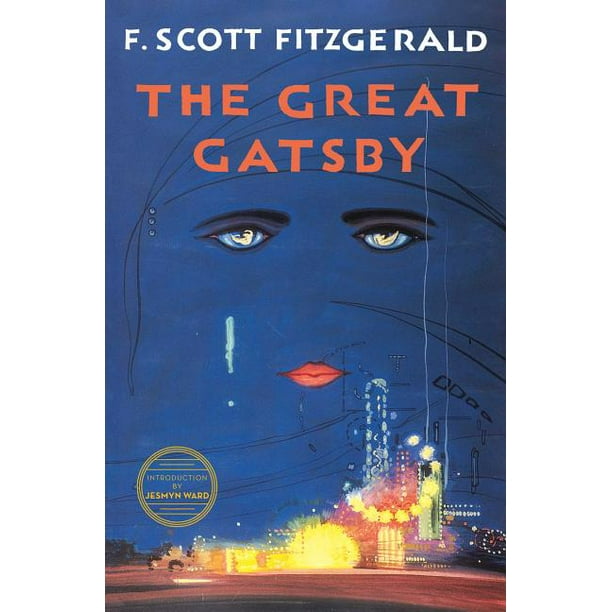
No one Is Coming to Save Us by Stephanie Powell Watts is marketed to be a retelling of The Great Gatsby, and there are certainly echoes of Fitzgerald’s iconic novel here. The twists, however, make the novel rise above a simple re-telling. Jade Chang in her New York Times review describes the novel as a “skillful riff on ‘The Great Gatsby,’ which revolves around a contemporary black family in a declining North Carolina town,” an apt description of the novel.

Jay Gatsby is recast as JJ Ferguson, a young man who has left Pinewood, a small town in the Piedmont, to seek the American Dream. He returns a wealthy man, and begins to court Ava, our Daisy, who is now married to a weak man who is unfaithful to her.

Sound familiar?

Yes, some of the same themes are there, but the novel reveals the importance of setting in a novel. This is not a New York story. It is not one Nick Carraway could have told. It is not a story that any one person can tell, so we discover the hidden truths from multiple points of view, all circling around the most unlikely of Nick-type characters, Ava’s mother Sylvia, who is rooted in the soil of her Southern home.

Perhaps because I am about the same age as Sylvia, her perspective resonates the most with me. Her transformation is quiet and not earth-shattering– acceptance of herself, her past, and her place in life. Forgiveness. During the extraordinary days that have been the Summer of 2020, I have found myself learning these things, too.

And feeling good about it.

Here is a passage that captures Sylvia’s self-deprecating mood at the beginning of the novel, one of the passages that drew me into this amazing woman’s story:

“None of that hoping and believing girl was left in Sylvia now or at least she couldn’t be found. The woman she was now didn’t yearn for sophistication, and as far as she could tell she’d stopped yearning for much at all. The woman she’d become was fat and weighed down, but not just fat, dumb too, and always in the process of adjusting, like there was two of everything, the real thing and the shimmering copy that her brain had to work with focus and concentration to integrate. Her brain in slow-mo or she felt slow–same difference. The result was the girl she’d been had evaporated from her body like an emancipated soul.”

What I like is that Sylvia makes an honest appraisal of herself here. She is not eliciting pity–simply telling the truth.

I find that refreshing.

That is why I liked No One Is Coming to Save Us. Although it first seemed to focus on the deprivation of a black community in the South, I quickly saw it isn’t only about the African-American South or even about poverty in the contemporary South. It is about the American Dream and how these people, in this special place and time, define it, how they lose it or make it come true.

My next book review will be about the next Western Carolina University Book Club read, Bryan Stevenson’s Just Mercy. I have seen the movie version of the book, too, so maybe it will be a book/movie comparison. Spoiler alert: the book is better than the movie, but the movie is very good.

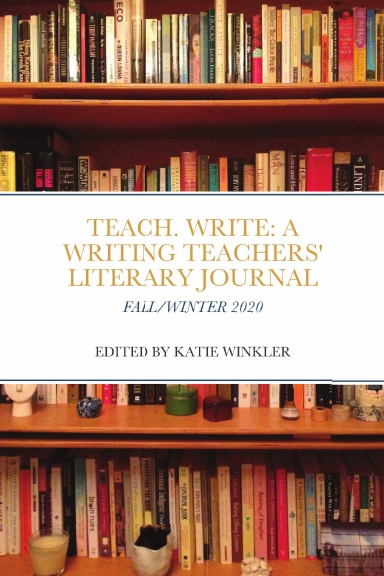
Also, I will soon be unveiling the 2020 fall/winter edition of Teach. Write.: A Writing Teachers’ Literary Journal, slated to appear October 1.

So come back!!

Mrs. Winkler’s Summer 2020

Photo by cottonbro on Pexels.com

Thanks to the pandemic, this has been a unique summer for me and almost everybody else, but not all bad. My reading continues, I have attended several interesting online seminars, and the work on my novel progresses. I am also making plans for the upcoming semester of teaching.

The big difference is not traveling, which I do greatly miss. I have family and friends in Alabama, Colorado, Virginia, Wyoming, Pennsylvania, Germany and elsewhere. I like traveling to visit them, and I also like to explore within my own state, attending meetings for the North Carolina Writers Network and the Dramatists’ Guild of America as well as “adventuring” with my daughter Hannah.

This summer I am at home almost always–weird.

I have developed routines, which is actually a novelty for me–I tend to improvise, but I am doing more of the things that are good for me, including exercising, reading, and writing more than I usually do.

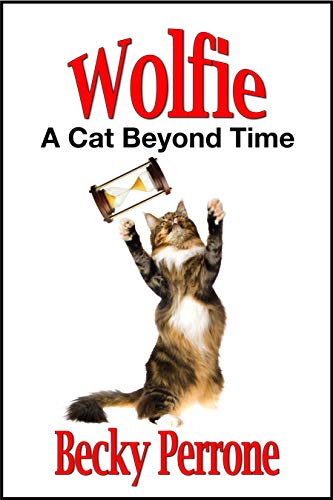
The cover of Wolfie: A Cat Beyond Time shows a large cat tossing an hour glass into the air.

I have been posting about my reading, which I have really ramped up this summer. My friend Joe Perrone, Jr. (check out his blog) asked me to read and review his wife’s debut middle-grade novel, Wolfie: A Cat Beyond Time, which I was glad to do; Becky is my friend, too. I thoroughly enjoyed reading it, and if you have YA readers in your life, I highly recommend that you purchase it for them, especially if they like cats as much as I do.

Here is the review I posted on Goodreads:

History is best learned through storytelling, and that is why this middle- grade novel would be a good addition to any middle school classroom bookshelf or young readers’ collection. It is part historical fiction, part adventure story, and part fantasy, a compelling combination that balances fact with fiction. The two young protagonists are charming, and Wolfie, the big cat that serves as a catalyst to their adventure, well, he is magnificent. One of the aspects that I like best is the balance the book brings to the history of the Old West. We get to see the good, the bad, and the ugly, but infused with enough humor and positivity to be appropriate for the targeted age group. An enjoyable and educational read for any youngster.

Photo by bongkarn thanyakij on Pexels.com

I have also been writing. Boy, have I been writing–30,000 words since May 19. I have never written almost every single day, but this summer I have. The two secrets for me have been determining how many words a day, approximately, I need to write to have a rough draft of my novel completed by the time school starts in August and then meeting or exceeding my quota each day. So far I have written six days a week and exceeded my goal most days, so I am ahead of the game. I should mention that I started out with 26, 000 words already written from November’s National Novel Writing Month. ( I wrote 50,000 but only half were usable.)

Of course, a first rough draft is a long way from finished novel, but I feel encouraged because I have wanted to finish a novel for four summers now but haven’t met my goal. I am determined to this year.

I am also busy attending webinars, submitting short stories to journals, and preparing for my classes in the fall, but I will save thoughts about those activities for future posts.

So come back and check them out!!!!

Are you writing this summer, too? Do you have a poem, essay, flash fiction, short story, or short drama you would like to share? Why not submit to Teach. Write.: A Writing Teachers’ Literary Journal?

You can find submission guidelines HERE.

I look forward to reading your work!!