A Liberal Arts Education

visitspartanburg.com

My husband and I attended our only child’s graduation on May 14. She graduated cum laude  with a bachelor’s degree in music from a small liberal arts college. People ask me, they ask my husband, they ask her, what is she going to do with that degree? It’s not very practical, is it? I suppose that depends on what value one puts on a solid liberal arts education.

I put great value on it, but I find that my standard explanation of the value of a college education — a liberal arts education teaches a person how to think — falls flat, even to my own ears. Therefore, I was delighted to encounter David Foster Wallace’s 2005 commencement speech at Kenyon College. The author of the modern classic Infinite Jest eloquently defends that old cliche and renewed confidence in my belief that what my daughter learned by earning her degree is so much more than training for a career–it has ushered her into a lifetime of thinking, and choosing, for herself.

Here are some of my favorite quotes from the speech, followed by a link to a youtube video of it in its entirety (audio only). I encourage you to listen to the whole thing–well worth the 22 or so minutes and so relevant to our time.

“Learning how to think really means learning how to exercise some control over how and what you think. It means being conscious and aware enough to choose what you pay attention to and to choose how you construct meaning from experience.”

“I submit that this is what the real, no bullshit value of your liberal arts education is supposed to be about: how to keep from going through your comfortable, prosperous, respectable adult life dead, unconscious, a slave to your head and to your natural default setting of being uniquely, completely, imperially alone day in and day out.”

“…if you really learn how to pay attention, then you will know there are other options. It will actually be within your power to experience a crowded, hot, slow, consumer-hell type situation as not only meaningful, but sacred, on fire with the same force that made the stars: love, fellowship, the mystical oneness of all things deep down.”

“Not that that mystical stuff is necessarily true. The only thing that’s capital-T True is that you get to decide how you’re gonna try to see it. This, I submit, is the freedom of a real education, of learning how to be well-adjusted. You get to consciously decide what has meaning and what doesn’t. You get to decide what to worship. Because here’s something else that’s weird but true: in the day-to day trenches of adult life, there is actually no such thing as atheism. There is no such thing as not worshiping. Everybody worships. The only choice we get is what to worship.

“If you worship money and things, if they are where you tap real meaning in life, then you will never have enough, never feel you have enough. It’s the truth. Worship your body and beauty and sexual allure and you will always feel ugly….Worship power, you will end up feeling weak and afraid, and you will need ever more power over others to numb you to your own fear. Worship your intellect, being seen as smart, you will end up feeling stupid, a fraud, always on the verge of being found out. But the insidious thing about these forms of worship is not that they’re evil or sinful, it’s that they’re unconscious. They are default settings.”

“And the so-called real world will not discourage you from operating on your default settings, because the so-called real world of men and money and power hums merrily along in a pool of fear and anger and frustration and craving and worship of self. Our own present culture has harnessed these forces in ways that have yielded extraordinary wealth and comfort and personal freedom. The freedom all to be lords of our tiny skull-sized kingdoms, alone at the center of all creation. This kind of freedom has much to recommend it. But of course there are all different kinds of freedom, and the kind that is most precious you will not hear much talk about much in the great outside world of wanting and achieving…. The really important kind of freedom involves attention and awareness and discipline, and being able truly to care about other people and to sacrifice for them over and over in myriad petty, unsexy ways every day. That is real freedom. That is being educated, and understanding how to think. The alternative is unconsciousness, the default setting, the rat race, the constant gnawing sense of having had, and lost, some infinite thing.”

“The capital-T Truth is about life BEFORE death. It is about the real value of a real education, which has almost nothing to do with knowledge, and everything to do with simple awareness; awareness of what is so real and essential, so hidden in plain sight all around us….”

The complete speech


Chicago Follow Up

cloud-gate_c

The Bean–Chicago (chicagotraveler.com)

Finally getting back to my blog after a busy, busy spring break and catching up with my classes. I wanted to take some time to talk about some of the great books, monographs, white papers and other materials I collected while I was in Chicago. Here’s just a few of the things I brought back for my colleagues and me:

  • Understanding Cultural Diversity in a Complex World by Dr. Leo Parvis. I went to Dr. Parvis’s session on cultural diversity and it was quite inspiring. Dr. Parvis shows what dedication and enthusiasm can do. He has built up the cultural diversity at his college–Dunwoody Community College in Minnesota–from practically nothing to its current healthy mix of cultures. His book examines some of his most successful ideas.
  • Toward a New Ecology of Student Success: Expanding and Transforming Learning Opportunities Throughout the Community College by Dr. Jim Rigg. I went to Dr. Rigg’s session mainly out of curiosity since I entered the monograph competition that I had applied for and he won. He sure deserved to! His monograph is a well-researched and persuasive argument for “The Emerging/Transformative Cognitive Frame” (9) approach to student learning that he claims will lead students “toward becoming life long learners” (10). On improving retention, Riggs says, “Numerous studies on improving persistence rates and increasing student success point out the importance of having a rigorous academic curriculum and an engaging and nurturing campus environment” (7). So much of what he says in the books echoes my own views and the views of many of my colleagues. It’s nice to have validation as well as numerous great ideas I hope to share with our president before too long.
  • Bread and Roses: Helping Students Make a Good Living and Live a Good Life by Dr. Terry O’Banion, President Emeritus of the League for Innovation in Community Colleges. This excellent monograph makes the case for what the author calls “Essential Education,” one that combines the best of Liberal Arts education (the rose) with Workforce education (the bread). He says, “We need a practical liberal arts and a liberal career education” (25). One of my favorite quotes in the book comes from Tyton Partners, an educational advisory firm in Boston, “Foundational, lifelong skills, such as critical thinking, teamwork and collaboration, and problem solving are climbing to the top of employers wish lists [….] Ultimately, integration in this area should bridge academic and applied education and skills expectations across institutions” (24). Excellent and informative reading with practical steps for implementing an Essential Education.
  • Numerous white papers, briefs and monographs from the Community College Research Center at Cornell University. A few of the titles are
    • “Using Technology to Reform Advising: Insights from Colleges” I met and talked to the young man who wrote this white paper, Jeffrey Fletcher.
    • Track Transfer: New Measures of Institutional and State Effectiveness in Helping Community College Students Attain Bachelor’s Degrees by Davis Jenkins and John Fink
    • “Improving Assessment and Placement at Your College: A Tool for Institutional Researchers” by Clive R. Belfield
    • “What We Know about Online Course Outcomes” by Shannon Smith Jaggers, et, al.
    • “Increasing Access to College-Level Math: Early Outcomes Using the Virginia Placement Test” by Olga Rodriguez
    • “What We Know About Guided Pathways” by Thomas Bailey, et al.

These are just a few of the materials I gathered on my recent trip to the League for Innovation in Community College’s Conference in Chicago. It was a great conference. I look forward to sharing this material with my colleagues when we all get a breather. Might not be until after grades are turned in.

Chicago–Day Two

shedd

Shedd Aquarium (Chicagofree.com)

John spent the day at Shedd Aquarium and Adler Planetarium while I went to meetings. It was gorgeous and not too cold, so I did get out and walk a little down the River Walk during a break. It was a long day of meetings, but again, it was good, and I gleaned a great deal from most of the sessions I went to and am eager to share what I’ve learned with my colleagues.

Here’s a break down of my day:

8:00-9:00–Library Instruction That Improves Self-Efficacy and Academic Achievement. Two librarians from a large Nevada Community College presented on library instruction. It was interesting and validated many of the things our librarians are doing in and for our classes, but I did get some new ideas that I want to take back and share with our librarians. I also liked that this session included an activity. It was the first session that did.

9:15-10:15–Faculty Voices on Student Success and Completion. Excellent information to take back and share with our Achieving the Dream Team, especially for my supervisor who heads up the team as well as my colleague who is the head of communications. She presented some good materials to use in faculty focus groups to help start meaningful discussion–free resources! And I have copies!

11:30-12:30–Use Technology to Engage Students and Raise the Learning Bar–After a coffee break (I went up to our room and worked on my presentation), I went to the most well-attended session so far. This couple, who are both accounting instructors introduced a myriad of low-cost or free apps that are useful for students and teachers. They had great attitudes about the technology too, repeating several times how technology is only a tool and that content is king. I agreed with their philosophy and learned a great deal. Their session was well-organized, interesting and focused with interesting graphics and short informative videos about the different technology. They have a blog I plan to find and follow.

Ate lunch in the hotel where John and I had breakfast. Excellent buffet that was ironically cheaper than the breakfast buffet had been. Weird.

1:00-2:00–Building Academic Tenacity–Although not really a true round table, this session did offer some validation that what I am doing in my classes meshes with the literature on student persistence and retention. I was a bit disappointed that the speaker took almost all the time going through her powerpoint that we couldn’t see because it was a roundtable session. Towards the end we finally began a discussion, but it was too late to really get into it.

3:15-4:15–Creativity+Innovation+Entrepreneurship=Making Arts Sustainable–This was another useful session and a true roundtable discussion. The presenter was engaging and informative with an obvious passion for the arts combined with a pragmatic attitude towards funding arts programs. Some things that she does at her large, urban school are not likely to happen at our school, but she and others in the group offered great suggestions for sustaining the arts programs and getting buy in from the administration. Can’t wait to share some of this info with my arts faculty colleagues.

4:30-?  –Keynote address–I didn’t stay for the whole thing because it really didn’t relate to me–much more geared to administrators. I was so tired after the long day and there were so many people there, I slipped out and went to the room.

After talking to my mother, who is in the hospital, and being encouraged by her continued improvement, John and I walked over a block to a restaurant we had seen the night before, Howells and Hood. It has New American cuisine and a nice view of the city from its sprawling dining area. It has a large beer menu, which is what attracted John, I think. He was pleased with his porter. His meal, a brisket sandwich and fries, was okay, he said. I’ve spoiled him with my cooking, I said. My fish tacos, on the other hand, were tasty and flavorful, recommended by our attentive server. My Chicago-brewed Pilsner was great as well.

The night was getting quite chilly as we walked back, so I was glad we didn’t have far to go.  We enjoyed just lounging around the rest of the evening. Tomorrow, we’re going to take a well-deserved break, sleep in and then walk to the Art Institute of Chicago to see the Van Gogh exhibit–the first time these particular paintings have been on exhibit in America. I will make it back for a couple of sessions in the afternoon.

That’s the plan anyway.

League for Innovation in the Community College 2016

chicago

Courtesy of sheratongrand.com

I’m in  Chicago for the 2016 League of Innovations Conference. I have already experienced some of the best professional development I’ve ever had after only one day of meetings, which makes for an auspicious beginning.

Yesterday was all about getting here and getting settled in. John and I left Asheville super early on Saturday and got here before noon, so we had plenty of time to explore the city. It wasn’t warm (this isn’t called the Windy City for nothing), but the sun was out, and it was a beautiful day, so we left the hotel, ate at a sandwich shop down the street from the hotel and walked down to the Navy Pier, less than a mile from our home away from home.

navy pier

Navy Pier (courtesy of Trippy Media)

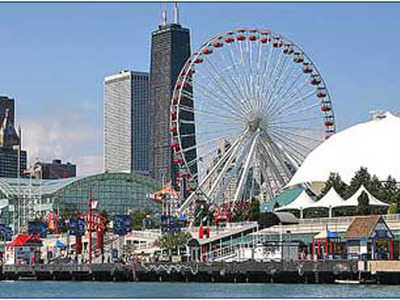
According to conciergepreferred.com the Navy Pier was not developed for use by the military but was used as a housing and training facility for the Navy during both world wars. Since 1946 the pier has been used for various purposes, including the undergraduate campus of the University of Chicago, but now is mainly a recreational facility, featuring a major embarking center for city cruises and bus tours, restaurants, biking and walking paths, restaurants, music venues, a children’s museum and, of course, the Ferris wheel. Walking around the pier and down the walkways along the Chicago River was a great way to be introduced to the city.

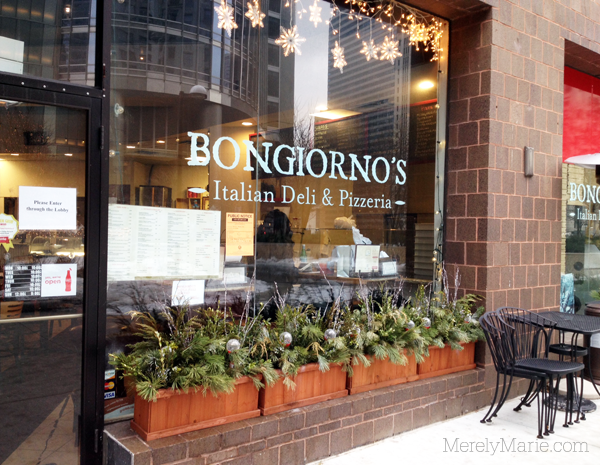
After making it back to the hotel and getting registered for the conference, an easy process thanks to the efficiency of my college’s educational foundation staff, we relaxed in the room for a while and later enjoyed a great meal at Bongiorno’s Italian Deli and Pizzeria. We were greeted by the proprietor, sat under signed Ernie Banks photos, had excellent service, ate authentic Italian Capricciosa pizza, drank good imported Italian beer and enjoyed a nice chat with the owner, who told us how he played minor league ball in Greensboro years ago and kindly admired my beautiful double-knitted scarf that my daughter Hannah made me for Christmas. Truly a Bella Notte!

Bongiornos-Italian-Deli-Pizzeria

The only thing that marred the evening was that Bongiorno’s is directly across from the Trump Tower–Just can’t get shed of that guy.

Today started early. We had breakfast at the little cafe in the hotel, then John headed out to explore while I started a long day of informative and interesting sessions as the conference began. Here’s a breakdown of the sessions I attended today:

8:30-9:30–Expand Your Horizon of Inclusion: Connect with Local Communities. This session was led by Dr. Leo Parvis, Coordinator of Social and Behavioral Sciences at Dunwoody College of Technology in Minnesota. He is the author of  Understanding Cultural Diversity in Today’s Complex World, now in its fifth edition. Dr. Parvis uses this textbook in the course he teaches on cultural diversity, so I bought a copy to take back to the college and share with our Inclusive Education Committee of which I am a member. An excellent presentation by one of the nation’s leaders in inclusive education.

9:45-10:45–Toward a New Ecology of Student Success: Expanding and Transforming Learning Opportunities throughout the Community College, The Cross Papers, Number 19. I have to make a confession. I did research, wrote and submitted a proposal in the 2016 Cross Papers’ competition and did not win, so I attended this session out of curiosity about the man who won this year’s competition more than anything else. I also must confess that I was humbled. Jim Riggs, who wrote this year’s monograph, gave a wonderful presentation, discussing the importance of faculty and support staff working together toward the same goals of student success–that faculty are the center of this effort because of their close contact, but that this “new ecology” must include ALL of the college–that the disconnect between these two parts of the community college must be repaired. I look forward to acquiring a copy of the monograph and bringing it back to the college and sharing it with administration, staff and fellow faculty.

11:00-12:00–How to Successfully Teach Online–Michael Corona, Business Communications Instructor, Excelsior College, NY–I didn’t learn a whole lot of new things at this session, but it was great for my spirit because it validated so much of my own online teaching practices. To hear that such an experienced and obviously successful online instructor employs many of the same strategies as I do in his online classes was inspiring. I also had a chance to network with other instructors, which is one of the main benefits of attending educational conferences.

1:00-2:00–Storytelling with Data: Telling the Tale of ALP–Facilitated by a former English instructor and a graduate student at the University of South Carolina, who, I found out later, taught at Piedmont Community College, this excellent session gave me some great ideas about how to present program data that helps elicit real change. I am looking forward to sharing this information with my supervisor and colleagues. After the session I had a nice discussion about ALP (Accelerated Learning Program) with Dawn Coleman,  the grad student who used to teach in North Carolina.

2:15-3:15–Life During Community College: Your Guide to Success–Terry Arndt, College Transition Publishing. This was another validating session, but I also was introduced to a few very useful tidbits I can take back to the college that is sure to interest many at my college, especially ideas about orientation courses and student retention. Listening to the questions and comments from other educators, I also realized in this session how progressive our college is when it comes to the first-year experience as well as our instruction in library resources.

If you have to work on Sunday, then this was a good way to do it.

Now I’m back in my room, watching the Penguins play the Capitals, the Pens just went up by one, and wondering when John will get hungry enough for some more good Chicago food and drink. I love the Penguins but…..

Want Great Engineers? Invest in Reading and Writing

writing-skills

My frustration levels are again rising to a boiling point. To hear from education professionals that surveys show one of the top three skills desired by local business and industry is good writing and then, in the same meeting, hear nothing about plans to develop these skills is more than discouraging to me as a composition teacher.

How can I  not get disheartened when I hear plans to spend millions of dollars on buildings and technology for engineering, automotive and mechatronics programs when the computers in my classrooms are outdated and sometimes take 30 minutes to boot up, when our tutoring center, which has doubled the number of mainly English and math students it serves within two years, does not appear to be included in anyone’s expansion plans?

What do employees want according to the report I heard this week? They want students who can read and write complex texts, but now a student can get an AA or AS degree without taking a 200-level literature course–the very courses which require students to read, study and write about the most complex texts of all. What a world…

Just for funsies, here’s an article about how important the “soft skill” of writing is to the profession of engineering:

http://www.automationworld.com/automation-team/writing-essential-skill-engineers

Guest Blog–Zoe Carpenter of The Nation

Pittsburgh Post-Gazette (postgazette.com)

Discouraging news today as the war on liberal arts, especially the study of literature, continues. Let’s make it possible for students not to be challenged or stretched by their education. Path of least resistance to a meaningless piece of paper. What are the hardest subjects? Let’s make it possible for students to just skip those bugbears.

It’s just getting worse folks.

I used to think that people in power just didn’t understand how writing literary analysis helps to lead  students into higher levels of thinking. Now, I’m not so sure. Could it be that the powers that be don’t want students to move into levels of higher thinking? Thinking people, after all, are much harder to control, aren’t they?

Oh, well, I must go back to grading my American Literature I and British Literature II course work and developing practical, yet exciting, exercises to help my students learn active reading and deeper research skills while I still have a chance.

Lord, I’m just too tired to deal with it today, so I’ll let Zoe Carpenter speak for me through an article from 2015.

http://www.thenation.com/article/how-right-wing-political-machine-dismantling-higher-education-north-carolina/

And another great article from Dr. Loretta Jackson-Hayes, a chemistry professor at a liberal arts institution:  https://www.washingtonpost.com/posteverything/wp/2015/02/18/we-dont-need-more-stem-majors-we-need-more-stem-majors-with-liberal-arts-training/


Online Inspiration

I teach 200-level college transferable literature courses online at a small community college in North Carolina. Oh, I know what you’re thinking. I thought the same things myself when I developed my first course–World Literature II–years ago. Things like

  • I will never be able to engage them like I can in a seated class.
  • This course will never be equal to a seated one.
  •  The grading load will be totally unmanageable.
  • I need the interaction with students that only a seated class can give.
  • I will never be able to have the kind of variety of assignments and activities that I have in my seated classes

All of these things were true in those first years and perhaps at least one or two of them is still true in my mind, but the time is rapidly approaching, with new advancements and technology as well as continued training when even the final issues will be resolved and students will be able to choose whatever form is best for them and know that they will get equal quality of instruction.

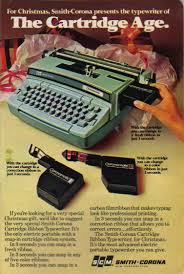
My opinion about teaching online classes has begun to change primarily because of training offered by our college’s distance learning personnel and help from colleagues as well as computer savvy young people, including my 21-year-old computer-raised daughter. I, who thought I had died and gone to heaven when I received my first Smith-Corona electric typewriter with its changeable cartridges,

never imagined back then the Star Trek technology that would become a reality in my lifetime, but as the programs and software have become increasingly user friendly, I have been able, if not to master them, at least to find ways to incorporate technology into my online classes. Some of this technology has helped to engage my students and aided me in what was at first an untenable amount of grading, while maintaining rigor and upholding the standards expected of college transfer students.

At my college’s professional development day last Thursday I shared some of the ways I am using technology to help the students in my online literature classes become more active readers as well as learn to research more deeply. I will be presenting this same presentation in March when I attend the League of Innovation in Community College’s conference in Chicago.

I used Prezi (one of the free presentation software applications I talked about in the PD session) to create a slide show that in itselfis a representation of how my knowledge of technology is improving. Furthermore, I have to tell you a secret…I had fun.

Here’s the link to the Prezi presentation (It may take a minute or two to load):

Dig Deep: Encouraging Active Reading and Deep Research in Online Classes

Let me know what you think!


Guest Blog–David Brooks on Being a Good Person

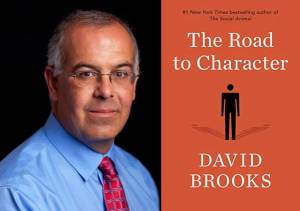
david_brooks_road_to_characterI want to write sometime this weekend about yesterday’s professional development day at our college, but today I have too much else to do, so I’m going to give you a wonderful New York Times article by one of my favorite columnists–David Brooks, from back in April 2015. He is not an educator, officially, but I want to become more like the people he describes–a teacher who builds not “resume virtues,” but “eulogy virtues.”

Please read this. Great stuff.

http://www.nytimes.com/2015/04/12/opinion/sunday/david-brooks-the-moral-bucket-list.html?_r=0


Another Idol

Governor McCrory and the Bulk of Politicians in Raleigh,

I will never believe you when you say you care about the Middle Class of North Carolina.

I will never believe you when you say you take action for the benefit of all North Carolinians.

I will never believe you when you say you are concerned for family values when you seek to take away spousal medical insurance coverage from state employees, limit their options and possibly drastically increase out-of-pocket expenses for standard care.

I will never believe you if you say you care about any average North Carolinian. And you certainly don’t care about the poor–that lazy, undeserving rabble. Your actions ever since you have been in office scream that you care about one thing and one thing only–the Almighty Dollar. You worship it but you choose to sacrifice others–rarely yourselves. I imagine your spouses have their health care covered. I imagine your political aides’ jobs have not been cut. I imagine you still receive regular wage increases.

It seems, Governor McCrory, that your salary is ranked 20th in the nation. Do you know where the median salary of a North Carolina educator ranks? 47th, according to National Center for Education Statistics, the U.S Census Bureau, the U.S. Bureau of Labor Statistics and other groups. That’s right. 47th.

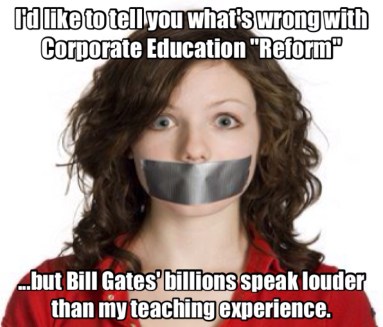
What you have been doing to educators, while sacrificing other state employees that you claim to care about, including law enforcement personnel, is nothing short of punitive. You punish us because our goal is to educate, even those who cannot afford it (how dare we?). You punish us because we cost you money and do not add gold to your coffers. You punish us because we tend to be liberal in our politics. You punish us because we speak out for the sake of students as well as ourselves. You punish us because your real wish is to privatize education–to make yet another social institution a money-making machine. You don’t care about quality education. There is something else that rules your hearts.

Maybe you did care about the people of this state at one time, but things have obviously changed. And so, what Belle said to her former fiance, Ebeneezer Scrooge, I say to you:

“Another idol has displaced me; and if it can cheer and comfort you in time to                      come, as I would have tried to do, I have no just cause to grieve.”

“What Idol has displaced you?” he rejoined.

“A golden one.”