Retiring?

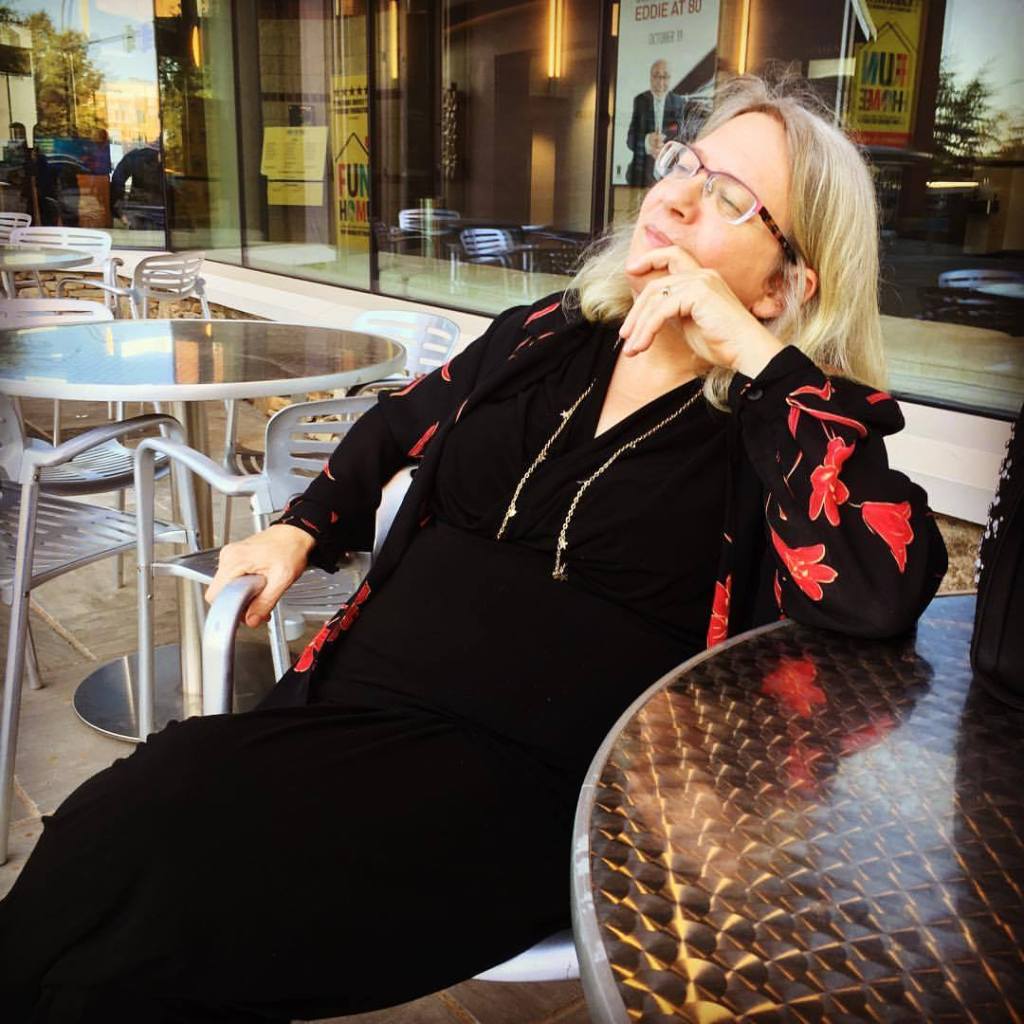
Mrs. Winkler photo by Scott Treadway at Treadshots.com

So, it’s true. Retirement after almost 40 years of teaching English composition is, number 1, freaking awesome! Not having the constant class planning and paper grading has been true freedom for me. I guess I didn’t realize what a huge chunk of my life was wrapped up in doing those two things. Even in the summer when I wasn’t teaching, I was still spending on average a couple of hours each day tweaking old assignments, writing new ones, and updating online material (necessary but oh so tedious), among other college-related things I would just as soon forget.

The second true thing is that I have planned way too much for the first few months. So many people told me that I would be busier than ever when I retired, but I didn’t believe it could be true.

It is.

Here are a few of things I’m working on:

  • A teaching memoir–this is highest on my list because my 87-year-old mother suggested it, and I love the idea. I am ahead of schedule, even though I’m not writing at least six days a week as I promised myself I would. That said, when I do write, the words just flow out, and I’m averaging over my quota per day.
  • Writing blogposts more often. My goal is to write a post, on average, once a week. I am quickly learning that I won’t be able to write on the same day every week. My schedule is too unpredictable, but if I write four posts a month, I’m going to feel pretty darn good about myself.
  • Applying for membership in the Community of Literary Magazines and Presses (CLMP). I told myself that once I retire, I want to improve the quality of my literary magazine Teach. Write.: A Writing Teachers’ Literary Journal. Then, I discovered CLMP, and I knew becoming a part of this organization would help me reach my goal.
  • The first step in being approved for membership in CLMP is developing an independent website for Teach. Write. I have already launched the new site, but there isn’t much content yet, so I am taking some time several days a week to work on that project.
  • Launching the next edition of Teach. Write. on October 1. Still on schedule to launch the new edition on the new site!!
  • Writing and submitting new short fiction. I’ve written and submitted one new story for a contest already and submitted one other story that I love but still hasn’t found a home. I think it is important to keep submitting my shorter works while I’m working on this long non-fiction project.
  • Thinking about my next play project–just thinking about it. I have two plays in mind–one is an adaptation and the other is original. At this point, I’m just re-reading the novel I’m thinking of adapting and doing some minor research on the original play idea.

These are only my writing and teaching-related activities. Despite all I’m doing as a writer/teacher, I don’t feel as stressed because I know I don’t have to do them. Also, because those two huge responsibilities–planning classes and grading papers–are no longer looming, I have time to do all the things I’ve been able to barely do and do them better. At least, I’m trying to do them better.

Yes, retirement suits Mrs. Winkler very well.

Photo by Nathan Martins on Pexels.com

Refire, not Retire!

My father always said, in his loveably corny way, that he wasn’t ever going to retire, but refire! I think I will take his mantra as I embark on this new phase of my life. I have taken a few days to just re-evaluate things and decide what I want to spend my time doing.

So much of my time the last 55 years and more has been about getting an education or being an educator that it is going to take time to learn how to focus on other things, but I’m eager to try. I am already loving the freedom to order my life according to what is important to me, not my teachers or my employers.

Where to begin? Sheesh, now that it comes down to it, I’m having trouble even putting anything down. I know I want to spend more time with my family without annoying them, and I want to do things for them without hovering or being bossy.

But when it comes to the non-essentials, I guess the first thing I want is to write. I know that! Of course, I will continue writing this blog—my goal is to write a post once a week. But more than that, I want to start marketing the blog more and learn more about the business side of blogging and up my game a bit in that department. So, I guess I will be going back to school in that sense, but again, I want to do it. Nobody can make me anymore. Or voluntell me!!

It’s been a year since I worked on my podel (podcasted novel) Campus: A Novel That Wants to Be a Musical, so I want to pick that back up. I think I will shoot for one episode a month and try to increase that gradually. I want to improve the quality of the productions as well, which I am looking forward to doing.

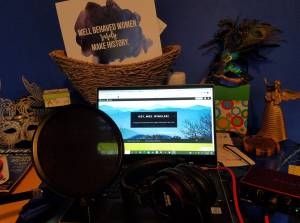
My podcasting set up thanks to husband and daughter

I have already started working on the book that my mother suggested I write—a memoir of my teaching career. My goal is to finish by the end of the year, which means averaging about 600 words a day, so I’m on track. I am pleased with the format I’ve chosen and the writing is coming so much easier now that I am not spending so much of my summer vacation days planning my classes for the fall semester.

Spending more time with each edition of Teach. Write., the literary journal I founded, edit, and publish, is also something I want to do. I feel like I have made small improvements since the first edition in 2017, but I have always felt rushed to get each edition out. I am glad that retirement will afford me more time to work on this passion project.

First edition of Teach. Write.

So many other things I want to do, but I never want to forget that I also want to leave room in my life to be less busy, to listen more, read more, and have times like today to just sit on a porch in Alabama with a cup of coffee on a cool summer morning before the day heats up, listen to the collared Eurasian doves coo, pet a soft German shepherd puppy, and talk about life with my baby brother.

It’s a good life.

Me several years ago before seeing a play at the Peace Center in Greenville, SC.

Print Version of Teach. Write. Now Available

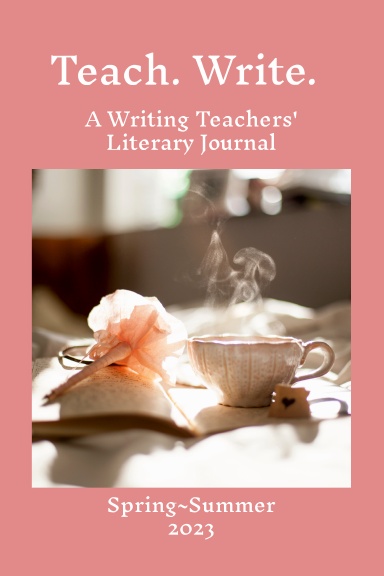
The print version of the 2023 spring~summer edition of Teach. Write.: A Writing Teachers” Literary Journal is available for purchase. Go to this link if you want to order a copy.

Also, an updated online version is also now available here.

I am currently seeking submissions for my first post-retirement edition of Teach. Write. Submissions will close on September 1, 2023. Click here for submission guidelines. I would love to see your work, especially if you are, or were, a writing teacher.

A Special Day

Photo by hendersonville.com

One of the great joys for any teacher is celebrating the successes of her students. On Saturday, July 9, at Hendersonville Theatre in Hendersonville, NC, I was so happy to attend a reading of my former student’s short play that she wrote while in my creative writing class last spring. It was her last semester, and although she is not planning to study English as she continues her academic career, she told her advisor, my colleague and friend, that she always wanted to be a writer, so my colleague suggested Creative Writing I, a course that I was teaching for the first time as an eight-week course–completely online.

It wasn’t an easy course to teach or to take–fitting in sixteen weeks of material in half the time was going to be a challenge, but my student consistently turned in quality, polished work in all of the genres we studied. About the time we got to the drama unit, I found out that the local community theater was conducting a play reading series to help local playwrights workshop their plays. Then, my student submitted the ten-minute play, “Book Club,” to fulfill the playwriting assignment.

My student and I after the reading of her play “Book Club” at Hendersonville Theatre

The play was good, very good–it had solid structure, strong characters with distinct voices, humor, and most importantly, something to say about the foibles of our society. Almost on a whim, I suggested that Amber submit the play for the reading series and gave her the information, not really thinking that she would have the time with her busy schedule to submit the play, but a few weeks later, she e-mailed me that her play had been accepted.

So, there I was on that Saturday, in the audience, listening to six fine local actors read my student’s little play and then hearing the audience members–actors, directors, family members, and patrons of the theater offer words of encouragement to the young writer and give suggestions for taking the play further, maybe expanding it. Afterwards, I was able to meet her parents and grandmother who were there in support of her achievement

To make the day even better, my good friend and fellow playwright Pat’s play, “Amanda” was also read. It, too, was a fine play and also featured great actors–A short play about a woman’s whose house cat suddenly and inexplicably miraculously changes form to the great delight and laughter of the audience. Like all good comedies, however, it had its poignant and touching moments as well.

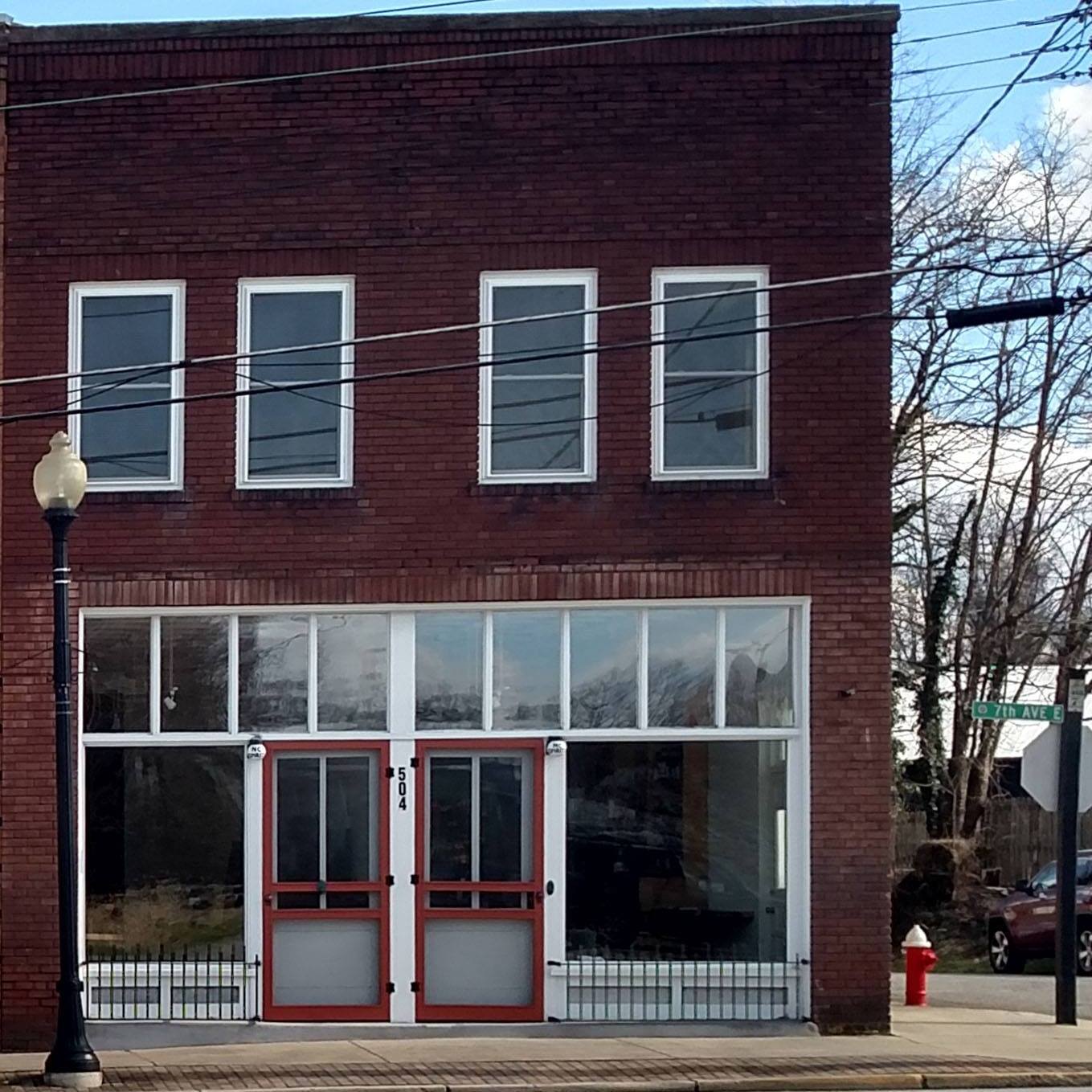
The Brandy Bar in Hendersonville, NC

On Wednesday of the next week, Pat and I talked about writing ten-minute plays at the fantastic little watering hole called the Brandy Bar in Hendersonville on historic 7th Avenue for the “In the Company of Writers” series sponsored by the North Carolina Writers’ Network–Henderson County. After sipping on brandy cocktails and listening to some cool, jazzy blues, we read our own little play about writing plays before talking about plays, among other literary things, especially the non-pecuniary value of our art.

It was a great evening in the mid-week after classes to follow a wonderful afternoon on the weekend, spending quality time with writers and immersing myself in one of my great loves–the theater.

Teach. Write. –It’s a good life!

Finding a Way

Photo by Polina Kovaleva on Pexels.com

I’m behind keeping up with my summer loves, especially reading and writing, because I’m working this summer. It’s not too bad a gig–Monday through Thursday schedule, three classes instead of five or six, ten weeks instead of sixteen with a two-week vacation at the end. I can handle it this summer and the next because I have something to look forward to–permanent summer break.

Yes, retirement begins on August 1, 2023. I’m a little excited. Can you tell?

In the meantime, I make the best of things in my temporary office in the library at our college as we await the final touches being put on the new multi-million dollar building that replaces two of the oldest buildings on campus. One of those buildings was my work home for 26 years, so as the building is being torn down, I admit I have become nostalgic. Who wouldn’t?

photo by Katie Winkler

However, I am not too sorry to see it go. It served us all well over the years, but it was built during a different time and doesn’t meet the needs of a 21st-century student body or its faculty. My students being able to access the WI-FI from my office will be a nice change. I hear the adjustable stand-up desks are really rad as well. Do people still say “rad”?

So, I watch the goings-on across the lake, answer numerous messages and emails, occasionally chat with colleagues, teach one small seated class, and grade, grade, grade the assignments and essays of my mere 43 composition and developmental students. During regular semesters, English faculty usually teach six classes and have 100 or more students. To earn an overload, an instructor must have over 110 students or more than six courses, so this “leisurely” pace helps a little.

Despite the tedious nature of grading essays, I know from long experience that working directly with student writing through grading and conferencing and therefore establishing a relationship with students as individuals is the most important work I do as a composition teacher. I do not think there is any substitute for it.

Hence the dilemma.

The demand for English instructors to deliver online instruction is higher than ever, but course loads that already did not consider how much time an English professor needs to deliver meaningful writing instruction online have not been altered to reflect the nature of effective andragogy in the English classroom and how it has been affected by the increasing number of online students.

In addition, the number of students desiring accelerated online English instruction has increased. If you take the already heavy grading load of a 16-week semester and cut it in half, something’s got to give. Often times that is the student, who may or may not have been advised that the course must cover 16 weeks of material in 8 weeks’ time.

Photo by Vlada Karpovich on Pexels.com

Currently, I am the only instructor at my institution who is crazy enough to attempt teaching eight-week online freshman composition classes. I must say, now that I have taught them for several semesters, the accelerated classes work extremely well for a certain type of student, especially those who are working towards degrees to gain a promotion at work. Highly motivated students like those in our pre-nursing, emergency medical services, and law-enforcement programs also tend to do well.

Students who are not good candidates for online learning, are not prepared for the workload, are not willing to make changes to their schedules to make room for the extra time they will need to spend, or those who do not manage their time well, along with those who are weak students or writers in general, simply should not take the accelerated course.

But they do.

So what is an English teacher who cares about learning for ALL students, whether they should be there or not, supposed to do? Furthermore, what does an instructor do if she wants to infuse her own personality into her course and resists the impersonal “canned” classes that so often do not fit her institution’s student body and do not help build the vital personal relationships that are required for good teaching of any kind?

Find a way.

With all that extra time (guffaw) I have this summer, I am continuing to make changes in hopes that the Mad English Person who, after my retirement, steps into the perilous land of acceleration will have an easier time of it. Here are a few things I have done and am doing to help that poor soul:

Photo by Pixabay on Pexels.com
  • Adding lessons–In my learning management system (LMS), I can create multi-media lessons that help guide the students through the essential material. My own simple questions can be embedded throughout each lesson that is automatically graded by the computer, allowing an easy low-stakes grade for the student and zero work for me. Of course, I must take considerable time to build the lessons, but remember, I have all that extra time this summer.
  • Early in the course, assigning paragraphs instead of full-length essays–Having students write paragraphs of seven to ten sentences instead of full essays has been a game-changer. I can still teach multiple rhetorical modes as required by the state, including illustration, process analysis, classification, and definition, but now I have more time to focus on the basic elements of any good writing–thesis, support, conclusion, organization, transitions, sentence structure, diction, grammar, and mechanics. In addition, I can grade closely without overwhelming the students. My constructive criticism seems easier for them to digest. Best of all–it’s doable for even the weakest of my students.
  • Fewer and shorter essays–Beyond a doubt, less is more. In an accelerated class, I must limit what students write for both our sakes, but I have found that the writing is stronger because I have more preliminary work leading up to the final draft that is low stakes for them and little work for me. Win. Win.
  • Require rough drafts but give little direct feedback. If one of the learning objectives is for students to revise and edit more effectively, why in the world am I going to revise and edit for them? How does that help anybody learn? I am handicapping students if I give too much feedback on a rough draft. I require them because they help students with time management, and I have an earlier draft to judge students’ revising and editing skills. Because I give mainly completion grades for drafts (and make sure students are aware of this), there is little work for me.
  • Line editing less–In the “old” days, I felt like I owed it to students to mark every single error I could find. No more. I save time, energy, and my sanity, by line editing the first paragraph of an essay, and then marking and making comments occasionally after that. I used to spend 45 minutes to an hour grading one researched essay, but now I can effectively grade one in half that time.
  • Make use of the LMS advanced grading system–I am not a fan of Turnitin (subject for another day), and I’m too close to retirement to want to pursue a change in our relationship, but I do make use of the LMS’s built-in advanced grading system. I can easily build new rubrics and checklists. I also have access to a “quicklist” when I am marking an essay. I choose from a long, long drop-down menu of common comments. Over the years, I have added links to webpages that give students more information or offer exercises to help them with various writing issues. It has really helped me save time.
  • Adding more required online sessions and conferences–I am able to record the sessions, so even though few students can attend live, one or two usually do, and the other students are required to view the sessions. Logs on the computer allow me to verify if the student downloaded and viewed the recording. The conferences are even better because I can speak in person to each student, which helps to form those all-important relationships between us through discussing the student’s writing and listening to their concerns.
Photo by cottonbro on Pexels.com

I may be old and worn out, and some people can’t seem to wait to put me out to pasture, but I’ve been at this work a long time, and I am not afraid to say it–I’m damn good at it. I know what works, and letting some AI, no matter how sophisticated, do the instruction, may lead to better data in the short term, but it won’t lead to better writing–only holding students to a standard, then compassionately working directly with them and their writing can achieve that.

Way Too Long

The last time I wrote a blog post was back on April 9, so it is high time I write another. I suppose.

I’m not sure what writing this blog means to me anymore. No one is forcing me to do it. I rather think there may be some who would be perfectly happy if I never wrote another word. Ah, who am I kidding? Mrs. Winkler, do not think of yourself more highly than you ought. I mean, what are you doing? You muse and mutter about this life work you do that may be important to you and possibly to some of your students but the essence of which seems to be of little importance to the “people who count,” those who seem to measure success through the uptick of certain numbers and the downward trend of others.

Photo by Vincenzo Malagoli on Pexels.com

But enough of this muttering, I say to myself. Buck up, Buttercup! You aren’t long for the world of decreasing academic freedom and shrinking shared governance. You, my dear Mrs. Winkler, are bound for retirement!! Ah, yes, many blissful days with absolutely no grading of freshmen essays laden with 1st and 2nd person pronouns, unnecessary repetition, and comma splices. You will only write and read what you wish as you sit on the front deck with your feet propped up, a cup of steaming coffee or glass of iced tea in your hand. Your daughter will give you more and more gift books like The Dictionary of Obscure Sorrows to fill the lazy days. And you will like it very much.

How’s that for a segue into my next book review?

Yes, for Christmas, my daughter gave me this unusual, incredible book called The Dictionary of Obscure Sorrows by John Koenig. She had a hard time finding a copy when she went Christmas shopping because she considers the book more like poetry or creative non-fiction than anything else. She found it finally in the reference section of the bookstore. Someone with a literal mind shelved it there, I suppose.

The book is as hard to describe as it was for her to find. It is indeed a dictionary because it has a series of words along with their parts of speech, definitions, and etymologies, but that is about all this book has in common with a dictionary. The invented or reinterpreted words are not in alphabetical order, but they are separated into categories that are equally as obscure as the words, such as “Between Living and Dreaming” (1) and “Montage of Attractions” (81)

Each entry defines a word that describes an emotion, feeling, or action that eludes denotation, but somehow, the author, through his poetic prose, puts words to what seems undefinable. Following each definition is the word’s etymology, so clever and accurate that it leaves readers nodding their heads and saying, “Yeah, that’s right. I know that feeling.”

Some of the definitions are short but others, my favorites, are essay length, often accompanied by a photograph or some other illustration. One of my favorite examples is the definition of Lumus, which comes from the Latin lumen, meaning light or brightness and humus–dark, rich soil. The brief definition of the word is “the poignant humanness beneath the spectacle of society” (127).

Pretty obscure, right? Until Koenig writes about what it means–to get away from society’s expectations and rediscover our humanity only to be swept back up into the rat race again. Then, his meaning becomes clear: “We know it’s all so silly and meaningless, and yet we’re still here, holding our breath together, waiting to see what happens next. And tomorrow, we’ll put ourselves out there and do it all again. The show must go on” (129)

Yeah, I say. That’s right. I know that feeling.

I know it right now. And am inspired to write my own word to name this current malaise.

Photo by cottonbro on Pexels.com

The word is Meloncholied, which comes from the German Melancholie (melancholy)+Lied (song)

And so goes the old teacher’s song:

I’m not sure I even know what it is I do anymore. It seems like more and more, pardon the sports metaphor, I’m playing some evasive game with definite, elusive rules that are only made clear once they are broken and penalties are imposed. How do I score if I don’t know where the goal line, post, net, or basket is?

And the chorus:

You are simply more trouble than you are worth, Mrs. Winkler. We won’t even bother trying to rein you in since your pasture has been seeded and will soon sprout its winter grass. But these young content experts, whose subject knowledge exceeds that of anyone else at our college, whose enthusiasm for teaching has not been beaten down by political pandering and bureaucratic busyness, let’s pour all our condescension and patronizing onto them while we passively aggressively work on the lowering of the industry standards we claim to uphold.

And yet!

Oh, the blessed “and yet” — the turn of my sonnet–the sestet to the glum octave.

And yet, there is hope. Our educational felix culpa. It is coming. It is. I don’t know if I will live to see it, but the fire is coming that will burn down all of these false constructs that have plagued the educational institutions of our country for so long. After the destruction, we can build anew and again lay a foundation of learning for learning’s sake.

That is my hope anyway.

Therefore, despite feeling lost at times in this specious world, where upholding academic standards for the eventual betterment of students’ lives and society at large is no longer the apparent goal of our colleges and universities, I am nevertheless optimistic about the future of higher education in America. A dread, mixed with excitement is growing in me as I sense that we are on the cusp of major change–painful, soul-wrenching, horrible, miraculous, life-giving change.

For that, I wait.

And tomorrow I teach.

Meloncholied.

Work Cited:

Koenig, John. The Dictionary of Obscure Sorrows. Simon & Schuster, 2021.

SPRING~SUMMER 2022 TEACH. WRITE. IS HERE!!!

I am happy to present the Spring~Summer 2022 edition of Teach. Write.: A Writing Teachers’ Literary Journal. It continues to amaze me how things come together despite my fumbling and failing in the midst of all the planning, teaching, and grading, grading, grading. Oh, my, the grading.

Don’t get me wrong. I still love my work, but editing my fellow writers’ stories, poems, and essays isn’t the same. These writers have made the process a joy–a source of pleasure and relief from the daily routine of over 30 years. I only hope that my efforts do justice to my contributors’ work.

So here it is! Enjoy! And thank you so much, dear contributors!

FYI–A link where those who are interested can purchase a print version will be available soon, usually takes me about a week.

New Episode of CAMPUS, Finally!

Episode 13 of my podel (podcasted novel) is now available. Why not take a listen to it and the other twelve as well? I hope it won’t be so long between episodes again. Episode 13: Mrs. Whittakers 7,360th Class

CAMPUS: A Novel That Wants to Be a Musical has gnomes and fairy godteachers among other magical creatures.
Also, coming up April 1 is the Spring~Summer 2022 edition of Teach. Write.: A Writing Teachers’ Literary Journal. It’s gonna be a great issue, y’all! Mrs. Winkler’s on a roll!!

HAUNTED HENDO: ADD SOME SPOOKINESS AND HALLOWEEN FUN TO YOUR WEEKEND

Haunted Hendo: An Anthology of Short Films Featuring Mountain Mysteries and Local Lore premiered last night on YouTube. Some of the 50, yes 50, cast and crew gathered at the college for a pot luck supper. We enjoyed watching the films and seeing all our hard work come together. We kept saying over and over again, “I can’t believe we pulled it off.”

It’s been a wild ride.

At the end of the spring semester last year, Jennifer Treadway, the head of the theater department, and I conceived of a series of short films focusing on local ghost stories and legends. In the summer, the director called together a core group of faculty, students, alumni, community members, and actor/producer/writer Z. Joseph Guice, our artist-in-residence, to write the scripts for the films to be included in the series. By the end of the summer, the scripts were written.

Early in the semester, Jennifer held group auditions for all films, casting students and community members, as well as assigning people to various filmmaking roles, including directors, assistant directors, cinematographers, editors, and general crew. With limited resources, including film equipment, the schedule for filming was carefully planned and all took on multiple roles. The schedule was tight and sometimes we didn’t think we would make it, but we did.

Although sometimes frustrating and difficult, what a wonderful learning opportunity for all of us, especially the students in the Acting for Film class and those in the Film and Video Production program. The end result is eight short films connected by some ghostly introductions.

Below is a link to the BRCC Theatre YouTube Page. There, you will find the playlist for Haunted Hendo. I wrote the screenplays for Boojum: The Musical and The Tourist. I directed the film my daughter wrote and edited called The Siren of the French Broad.

Enjoy!

AND HAPPY HALLOWEEN!!!

HAUNTED HENDO

Photo by Mathias P.R. Reding on Pexels.com