
One of the joys of retirement with my husband John is being able to linger over coffee in the morning, making deep dives into subjects that interest us and talking about them without interruption, except for getting warmups of our coffee, of course. A day or two ago, having watched an episode of a Thomas Jefferson documentary the night before, John, who has always been a history buff and especially interested in Jefferson, found a picture online of the Jefferson biography that he read in elementary school. From there, he looked for other books from his early days, one on the American ship builder Donald McKay, who built the famous clipper ship the Flying Cloud. Then there was the book about dinosaurs, Prehistoric America by Anne Terry White, part of the Landmark book series for children published from 1950 to 1970. John remembers how he checked that book out numerous times from his school’s library, how the librarian would always let him know when there was a new dinosaur book for him to read.
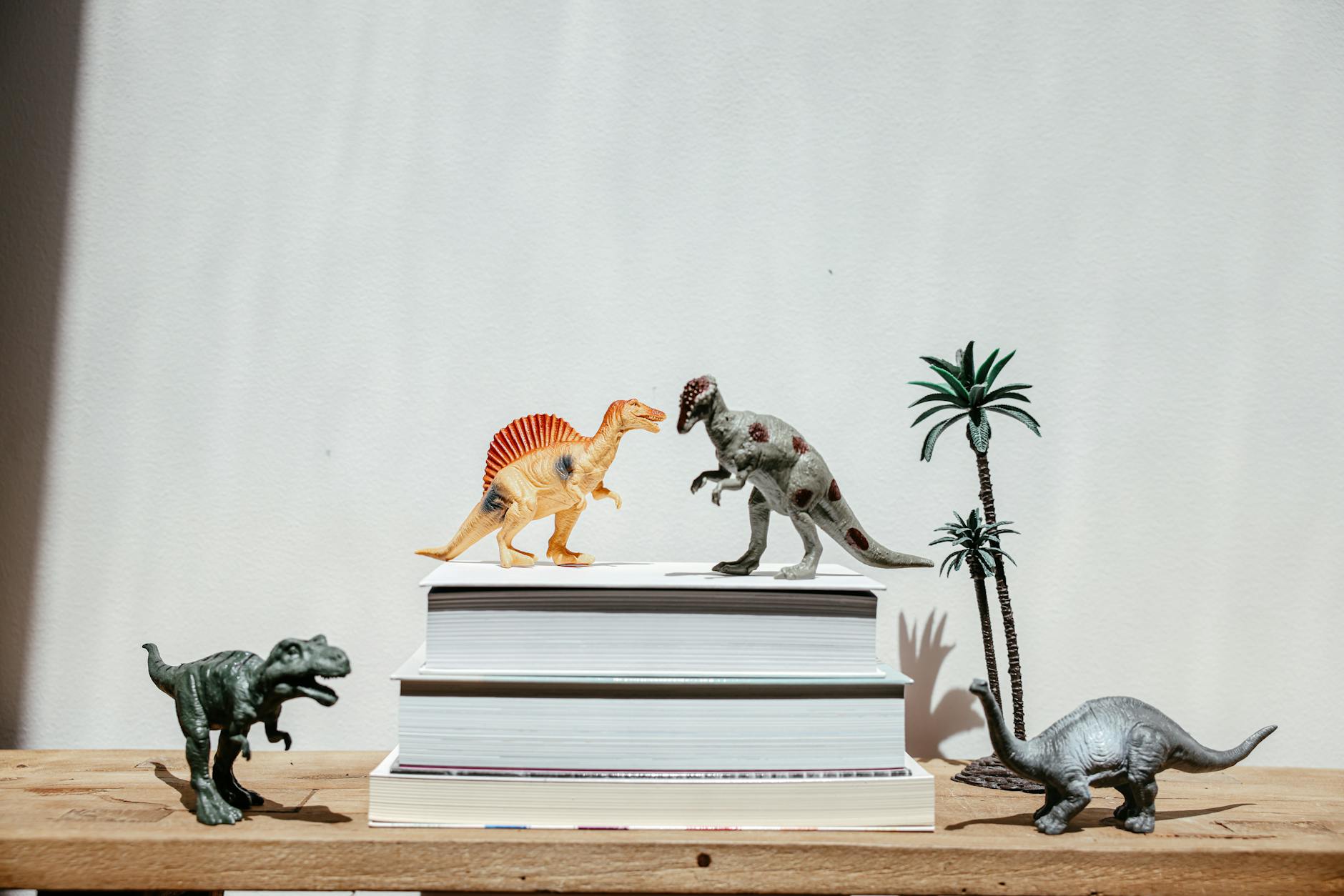
As I poured my second cup, I remarked how important libraries AND librarians were when we were children, how those early reads influenced us and how librarians helped us to find those books. That comment led me to think about how I tried (It wasn’t always easy) to show my freshmen English composition students how important libraries and librarians still are by taking them to the library to search for landmark texts within their chosen area of study, real paper books with covers and everything, that they would physically have to find, pull from the shelves, and search through to discover if it was indeed a landmark text.
Of course, I told my husband who dutifully listened, the first thing I had to do once we were at the library was explain to them what I meant by landmark text within the context of the essays they were writing about the profession they were hoping to enter, or were at least somewhat interested in. They would have to look for the following clues:
– Books that had multiple editions, but still current
– Books written by or about prominent people within the profession
– Current textbooks from subjects important to the profession
– Current handbooks, manuals, and other texts that contained important reference material

After handing out forms that students would fill out to justify the books as landmark texts, as well as gauge their engagement with the exercise, I would let the students use the rest of the class time to search for their texts. What the students didn’t know was that the whole class period had been carefully coordinated between the librarians and me. They were aware of the assignment, and the research day had been scheduled, so they were ready and able to assist students, some of whom had never set foot in a library before. No, I am not exaggerating. If they had experienced libraries, many had only encountered the Dewey Decimal System of classification and were new to the Library of Congress system used in our library.
I needed the librarians to be the roaming helpers who assisted students in discovering and locating possible books because I would station myself in the classroom area in the back of the library away from the other patrons so that students could bring their texts to me for approval before filling out their forms. Within a very few minutes, students would be standing in line at my station expecting to turn in their forms and leave early, but more often than not, these students’ choices were rejected for not meeting one or more of the criteria. Often times, the student had just pulled a book off the shelf because it was about their chosen profession and nothing more. I would remind them that the word landmark means something that is prominent, that stands out, marking an important milestone or event. A landmark text would be one that would be foundational to the study of the occupation they would be writing about in their essay.
Soon, I would have a long line of students waiting to have their books checked. As word spread about what I was looking for the process became easier and students would turn in their papers with a smile. I had one student who was studying business and found a biography of Warren Buffet, another studying environmental science who found Silent Spring by Rachel Carson, still another who wanted to be a pilot and brought me a well-regarded flight handbook. And the student going into the medical field who offered Grays Anatomy. Yes. Yes. Yes. Yes, I told them. And so it went for the rest of the class period and beyond, students discovering, analyzing, engaging with real books and real people.
Imagine that.
 Hey, Mrs. Winkler!