Teach. Write.

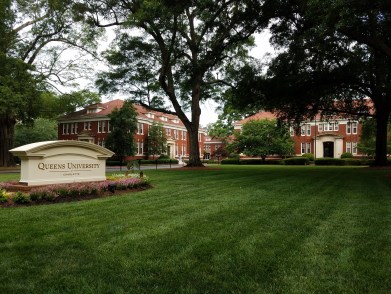
Queens Univ_CharlotteA couple of weeks ago, I attended a wonderful four-day writing workshop at Queens University in Charlotte, sponsored by the North Carolina Writers Network (NCWN), of which I am a member. I came away humbled but also encouraged, with new confidence in my work and with my writing spirit renewed. This long weekend convinced me that teachers of writing need to not only practice their own writing, but also put it out there! Go to workshops and critique groups, present at readings and literary open mic events. Teachers who write and open that writing up to criticism can come back into the classroom with a renewed sense of what it’s like to be a student. At least, that’s what happened to me.

Dinner at Fenwicks

Shrimp and Grits at Fenwick’s

The workshop began on Thursday afternoon. I arrived and was the first one to sign up for the open mic night. After I got settled, I had time to explore that area of Charlotte,  with many stately old homes and the impressive Queens University campus. Then, I found a nice little restaurant called Fenwick’s and had some scrumptious shrimp and grits with a nice chardonnay to start things off right. That evening Ed Southern, director of NCWN led us in a fun exercise to help us get to know one another followed by  a fascinating presentation on The Wall Poems of Charlotte, a grass roots public art project, which highlights the work of North Carolina poets. I think our college should consider a similar public art project at our college or in our town. Perhaps I will propose it.

One of the best things about the trip was that I was able to remember what it is like to be a student again–always good for a teacher to experience, especially if she’s been at it as long as I have.

At my age, I never thought to again be sharing the bathroom and showers in the dorm, seeking  out a friend in the dining hall at lunch or walking with some fellow students down to one of the local hangouts, but that’s what I did! The closeness and camaraderie I developed with the eight other fiction writers in the workshop as well as the other writers in the poetry and non-fiction workshops, helped take away the initial uncomfortable feelings I had at moving out of my middle-aged comfort zone and made it easier to accept the constructive criticism offered by the instructor and my fellow students.

Our marvelous instructor Sarah Creech, who teaches at Queens University, also helped us feel more comfortable by  doing some simple exercises that encouraged us to get to know one another better, but it wasn’t long before we were seriously critiquing the work that we had shared with each other in the weeks before the workshop began.

For some ungodly reason, I signed up to be the first person (again) to be critiqued, but Sarah facilitated the group with such finesse and my fellow writers were so kind and supportive, that it wasn’t hard to accept the criticism. In fact, I found it affirming and encouraging because most of the areas that needed improvement were areas that I myself targeted for revision. It sure didn’t hurt to hear the positive comments either.
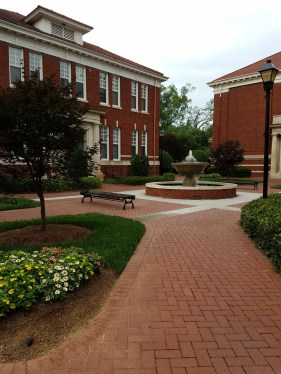
In front of Chapel

It was pretty hot, but in the morning and evening, I enjoyed walking around the beautiful campus or writing in one of the common areas.

We repeated the process of critiquing, beginning with what is working and what could use revision, for the other eight attendees. What I found especially interesting was the better I got to know the other people in my group, the more I wanted to offer truly helpful words of advice and not just give some throw away comments. I also found myself going back and re-reading their work, so I could give more in depth comments. In addition, my confidence grew in my own work. Here were other serious writers, good writers, but my work was on a par with theirs.

After the first day of critiquing each others’ work, Sarah concentrated on lecture and exercises to help bolster the class’s weaker areas that had been revealed from the critiques the day before. We emphasized character development and motivation, sensory details and setting, among other issues. The lectures were always targeted and blessedly short, followed by periods of writing. That evening we enjoyed our literary open mic event, which was a wonderful time to hear the work of writers in my own group as well as poets and non-fiction writers from the other group. a pizza party in the commons area of Sykes Learning Center ended the official events of the evening, but a few of us continued our discussion of the weekend at a local pub, just like in the old college days.

Sykes Learning Center

Sykes Learning Center

The last day we did more writing but also had time to share our work with the group, no critiquing this time–just enjoying each other as writers. As much as I missed my family and was glad to be going home, I truly was sad to say goodbye to my new writer friends but glad that I had a chance to meet them. I hope to continue sharing my work with them. It is amazing how quickly people can bond when they share a passion for storytelling.

It may be obvious what I learned and had affirmed about teaching composition during the workshop, but here is a list of a few things that come to mind:

  • spend time letting students get to know each other as people
  • build in time to socialize
  • celebrate your students’ writing
  • provide opportunities to share writing
  • keep any lecture relevant to the particular group of students you are teaching
  • keep lecture to a minimum
  • target areas that need work and tailor-make exercises to help improve weak areas
  • make exercises creative and fun
  • allow students to critique each other’s writing in small groups
  • begin with positive feedback but move on to areas that need improvement

Stay tuned for my next blog post when I present the details of my new project–an online literary magazine designed to showcase the work of those who teach writing.

Making Sense

img_1295

gadflyonthewallblog.wordpress.com

I’m very excited to be working on a stage adaptation of Frankenstein that is as faithful to Mary Shelley’s novel as I can get it. It is a tremendous amount of work, but is a joy. I don’t think I’ve ever said anything like that before except when I was writing “A Carolina Story.”

Anyway, working hard on the play has kept me from posting on my blog, so when I read a great editorial about the failures of the Bill and Melinda Gates Foundation’s educational reform efforts, I had to post. Many state governments have drastically changed polices and programs, poured resources, especially administrative and faculty resources, into initiatives promoted, and only partially paid for, by the Bill and Melinda Gates Foundation.

Now that many of these initiatives are failing, the foundation is beginning to pull out, often leaving the educational systems to fix the mess. Many educators, like me and some of my colleagues, have tried to warn administrators about the potential problems with these plans, but to no avail. Why listen to the people who are in the classroom day after day and work most closely with students? What do they know about education?  Let’s allow people who know little about education but have lots and lots of money and political power dictate to dedicated educators with years and years of experience how best to spend money on reforms. Yeah, that makes sense.

Of course it doesn’t, but this article, printed from the Jacksonville Daily News does:

Quick Fixes for Education Are Scarce

The Art of Collaboration

Cast Meets with Susan Burk

Cast meets via Skype with Susan Burk from the Matthew Shepard Foundation during rehearsals for The Laramie Project – photo by Vince LaMonica

Not soon after I started working at the community college where I teach, I was thrilled that a new degree was added–an Associates of Fine Arts in Drama. The young woman who led the program brought back to life my love of all aspects of theater production. I had dabbled in community theater as a publicist, properties manager, stage director and actor in several places where I lived, but raising a small child and teaching a heavy adjunct load meant little time for this passion.


The drama department at the college brought it all back to me. Furthermore, it offered me opportunities to get back onto the stage through small roles that didn’t require a great deal of rehearsal time. Jennifer, the director, always made it doable, and the more I became involved the more I wanted to do. Because her department is small, and she is the only full-time instructor, Jennifer and I, an English teacher, started finding more and more opportunities to work together, forming a cross-curriculum relationship that has, I think, greatly enhanced both departments for the advancement of our students and has sustained us both by allowing us the creative outlets that we crave.

It all started one day, long ago, over lunch at a Chinese buffet restaurant, when we were discussing the upcoming production. Jennifer had decided she wanted to do two one-act plays with her directing one and me the other as I had expressed the desire of getting my feet wet as a director. She had already decided on one of the plays–Blue Window by Craig Lucas, but she hadn’t been able to find a suitable play for me to direct.

Almost as a joke, I said, “Hey, guess what?”

“What?” she said.

“I wrote a play long years ago. It’s called Green Room. How about that, Blue Window, Green Room.” I was almost laughing. I really wasn’t serious at all or suggesting anything, I swear.

Then, she said, “Let’s do that one.”

“What?” I said.

“Let’s do your play.”

“But you haven’t even read it. You don’t know anything about it. It might suck. I mean, as far as I remember it does suck.”

“Here’s the beauty of it,” she said. “It doesn’t matter. Whatever we don’t like, we change.”

Thus began a truly productive collaboration between two instructors. I can’t tell you what it means as a writer and an educator to have this kind of partnership, which protects Jennifer and her department from isolation and offers me opportunities to stretch the creative side in me–the writer, the actor.

We did produce Blue Window and Green Room. I ended up handing the directing baton over to Jennifer when, two weeks before opening night, one of the leads quit, and I had to step in to act. In addition, Curtis, a student who played a lead role in the play, also composed original music for Green Room and has gone on to collaborate with me, and Jennifer,  on many projects even after he left school.

The next semester I directed my first full length play, Bertolt Brecht’s Mother Courage and Her Children. Was I crazy? Of course, I was, but of course, Jennifer was there to help me through the process, and without her expertise the show would have been a disaster. On the other hand, because of my knowledge of German (I double majored in English and German in undergraduate school), I was able to contribute direct translations from the original text when the British translations we were using didn’t work. Also, I have a particular interest in musicals, which Jennifer doesn’t share, so working again with Curtis, we composed original music for the play.

Over and over again, Jennifer and I, along with students like Curtis, as well as colleagues, have collaborated on productions. So many times our ideas came from just seeing plays together in the community or at conferences. Other times they simply sprang from casual conversation or out of a desire to find a special project for a special actor. Here are just a few examples of our working together (in no particular order):

  • A production of Moises Kaufman and the Tectonic Theatre Project’s Laramie Project with student-led talk back facilitated by the public speaking instructor at the college. In addition, Jennifer had frequent discussions with Susan Burk from the Matthew Shepard Foundation and cast members had a teleconference with Burk to prepare for their roles. I acted in the show and wrote two features about the production for the local newspaper. Follow these links to read the features: 1)  Pre-Production 2)  Production
  • BRCC’s participation in the 48 Hour Film Project, winning Asheville’s contest in 2008. See the film at this link: Serial Love
  • Tennessee Williams’ One-Act Play Festival–we had two separate stages, a southern-style picnic and a lecture on Williams by one of our English faculty
  • Pre-show lecture about Lord Byron and the Shelleys before the production of Howard Brenton’s Bloody Poetry
  • Pre-show lecture, scenes and short film (produced by drama department) before production of Shakespeare’s Taming of the Shrew.
  • Pre-show lecture by me and an adjunct English instructor before Shakespeare’s Macbeth (we both acted in the production as well)
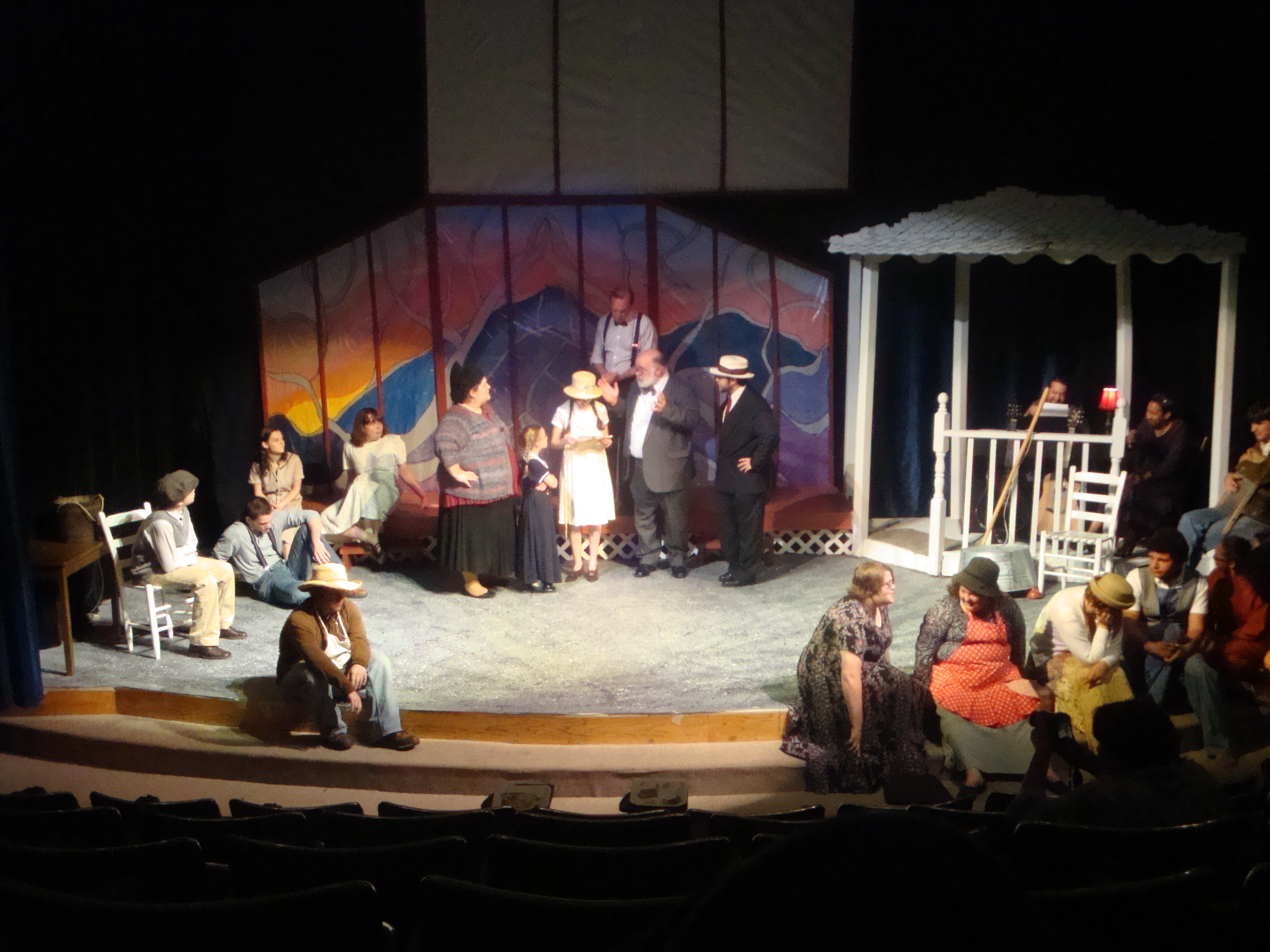
  • World premiere of A Carolina Story, a musical based on the Book
    Carolina Story 029

    A Carolina Story, April 2012

    of Job, by me with music by Curtis (We produced it a second time as a fund-raiser for the student emergency grant and loan fund)

There have been so many other examples of how our collaboration has enhanced our teaching. Currently, we are collaborating on perhaps our most ambitious project yet, an original stage adaptation of Mary Shelley’s Frankenstein. We are attempting to preserve the plot and style of the original while adding exciting multi-media effects to enhance the production.

Most theaters cannot sustain this kind of freedom and collaboration between writer and producer/director. It is educational theater, especially in higher education, that allows for this kind of risk-taking to take place. It is also this kind of educational theater that should be supported with proper funding and promotion because in the end, collaboration between faculty, staff, students, administration and community is what it takes for the arts in education to flourish, teaching us to work together for the betterment of all.

And hey, if you’re near Asheville the weekend before Halloween, come see Frankenstein!!


Want Great Engineers? Invest in Reading and Writing

writing-skills

My frustration levels are again rising to a boiling point. To hear from education professionals that surveys show one of the top three skills desired by local business and industry is good writing and then, in the same meeting, hear nothing about plans to develop these skills is more than discouraging to me as a composition teacher.

How can I  not get disheartened when I hear plans to spend millions of dollars on buildings and technology for engineering, automotive and mechatronics programs when the computers in my classrooms are outdated and sometimes take 30 minutes to boot up, when our tutoring center, which has doubled the number of mainly English and math students it serves within two years, does not appear to be included in anyone’s expansion plans?

What do employees want according to the report I heard this week? They want students who can read and write complex texts, but now a student can get an AA or AS degree without taking a 200-level literature course–the very courses which require students to read, study and write about the most complex texts of all. What a world…

Just for funsies, here’s an article about how important the “soft skill” of writing is to the profession of engineering:

http://www.automationworld.com/automation-team/writing-essential-skill-engineers

Guest Blog–Zoe Carpenter of The Nation

Pittsburgh Post-Gazette (postgazette.com)

Discouraging news today as the war on liberal arts, especially the study of literature, continues. Let’s make it possible for students not to be challenged or stretched by their education. Path of least resistance to a meaningless piece of paper. What are the hardest subjects? Let’s make it possible for students to just skip those bugbears.

It’s just getting worse folks.

I used to think that people in power just didn’t understand how writing literary analysis helps to lead  students into higher levels of thinking. Now, I’m not so sure. Could it be that the powers that be don’t want students to move into levels of higher thinking? Thinking people, after all, are much harder to control, aren’t they?

Oh, well, I must go back to grading my American Literature I and British Literature II course work and developing practical, yet exciting, exercises to help my students learn active reading and deeper research skills while I still have a chance.

Lord, I’m just too tired to deal with it today, so I’ll let Zoe Carpenter speak for me through an article from 2015.

http://www.thenation.com/article/how-right-wing-political-machine-dismantling-higher-education-north-carolina/

And another great article from Dr. Loretta Jackson-Hayes, a chemistry professor at a liberal arts institution:  https://www.washingtonpost.com/posteverything/wp/2015/02/18/we-dont-need-more-stem-majors-we-need-more-stem-majors-with-liberal-arts-training/


Online Inspiration

I teach 200-level college transferable literature courses online at a small community college in North Carolina. Oh, I know what you’re thinking. I thought the same things myself when I developed my first course–World Literature II–years ago. Things like

  • I will never be able to engage them like I can in a seated class.
  • This course will never be equal to a seated one.
  •  The grading load will be totally unmanageable.
  • I need the interaction with students that only a seated class can give.
  • I will never be able to have the kind of variety of assignments and activities that I have in my seated classes

All of these things were true in those first years and perhaps at least one or two of them is still true in my mind, but the time is rapidly approaching, with new advancements and technology as well as continued training when even the final issues will be resolved and students will be able to choose whatever form is best for them and know that they will get equal quality of instruction.

My opinion about teaching online classes has begun to change primarily because of training offered by our college’s distance learning personnel and help from colleagues as well as computer savvy young people, including my 21-year-old computer-raised daughter. I, who thought I had died and gone to heaven when I received my first Smith-Corona electric typewriter with its changeable cartridges,

never imagined back then the Star Trek technology that would become a reality in my lifetime, but as the programs and software have become increasingly user friendly, I have been able, if not to master them, at least to find ways to incorporate technology into my online classes. Some of this technology has helped to engage my students and aided me in what was at first an untenable amount of grading, while maintaining rigor and upholding the standards expected of college transfer students.

At my college’s professional development day last Thursday I shared some of the ways I am using technology to help the students in my online literature classes become more active readers as well as learn to research more deeply. I will be presenting this same presentation in March when I attend the League of Innovation in Community College’s conference in Chicago.

I used Prezi (one of the free presentation software applications I talked about in the PD session) to create a slide show that in itselfis a representation of how my knowledge of technology is improving. Furthermore, I have to tell you a secret…I had fun.

Here’s the link to the Prezi presentation (It may take a minute or two to load):

Dig Deep: Encouraging Active Reading and Deep Research in Online Classes

Let me know what you think!


Guest Blog–David Brooks on Being a Good Person

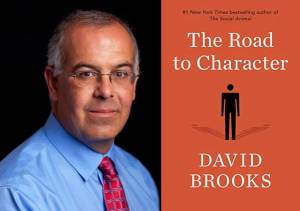
david_brooks_road_to_characterI want to write sometime this weekend about yesterday’s professional development day at our college, but today I have too much else to do, so I’m going to give you a wonderful New York Times article by one of my favorite columnists–David Brooks, from back in April 2015. He is not an educator, officially, but I want to become more like the people he describes–a teacher who builds not “resume virtues,” but “eulogy virtues.”

Please read this. Great stuff.

http://www.nytimes.com/2015/04/12/opinion/sunday/david-brooks-the-moral-bucket-list.html?_r=0


Another Idol

Governor McCrory and the Bulk of Politicians in Raleigh,

I will never believe you when you say you care about the Middle Class of North Carolina.

I will never believe you when you say you take action for the benefit of all North Carolinians.

I will never believe you when you say you are concerned for family values when you seek to take away spousal medical insurance coverage from state employees, limit their options and possibly drastically increase out-of-pocket expenses for standard care.

I will never believe you if you say you care about any average North Carolinian. And you certainly don’t care about the poor–that lazy, undeserving rabble. Your actions ever since you have been in office scream that you care about one thing and one thing only–the Almighty Dollar. You worship it but you choose to sacrifice others–rarely yourselves. I imagine your spouses have their health care covered. I imagine your political aides’ jobs have not been cut. I imagine you still receive regular wage increases.

It seems, Governor McCrory, that your salary is ranked 20th in the nation. Do you know where the median salary of a North Carolina educator ranks? 47th, according to National Center for Education Statistics, the U.S Census Bureau, the U.S. Bureau of Labor Statistics and other groups. That’s right. 47th.

What you have been doing to educators, while sacrificing other state employees that you claim to care about, including law enforcement personnel, is nothing short of punitive. You punish us because our goal is to educate, even those who cannot afford it (how dare we?). You punish us because we cost you money and do not add gold to your coffers. You punish us because we tend to be liberal in our politics. You punish us because we speak out for the sake of students as well as ourselves. You punish us because your real wish is to privatize education–to make yet another social institution a money-making machine. You don’t care about quality education. There is something else that rules your hearts.

Maybe you did care about the people of this state at one time, but things have obviously changed. And so, what Belle said to her former fiance, Ebeneezer Scrooge, I say to you:

“Another idol has displaced me; and if it can cheer and comfort you in time to                      come, as I would have tried to do, I have no just cause to grieve.”

“What Idol has displaced you?” he rejoined.

“A golden one.”

Herman Melville, Lincoln’s Inn and Serendipity

Lincoln’s Inn–London (photo courtesy of Honourable Society of Lincoln’s Inn)

One of the things I love doing as a teacher is creating opportunities to become a student again. It renews the love of learning that is at the heart of my profession but sometimes gets lost under the mind-numbing bureaucratic tasks and pointless political pandering that has become so much a part of what it means to be an educator.

It’s at times like these that I most need to remember how exciting it is to learn something new, to read and study a work I’ve never encountered before, to visit places I’ve never been. My trip to London in the fall of last year provided me with many such opportunities.

Like the day I discovered Lincoln’s Inn.

I say discovered because I hadn’t gone looking for Lincoln’s Inn. I didn’t know it was there. I didn’t know anything about it. I certainly didn’t know that a month later I would be writing a lesson on Herman Melville for my new online American Literature I class and encounter Lincoln’s Inn once again.

It happened this way:

I woke up the first day that I was alone in London, finally free to do some serious walking and exploring. I planned out a trip that I had been longing to take ever since I developed a sample travel project for my British Literature II class several years ago. I decided to walk from my hotel in Russell Square to the Sir John Soane Museum at Lincoln’s Inn Fields. Sir John Soane was a famous and wealthy Regency Era architect who designed the Bank of England and other famous landmarks, including his own house that he willed to his country.

Not knowing how long it would take me to walk there, I sat out rather early, clutching my google map instructions tightly in my hands. I made quick work getting there, too quick in fact. The museum was not yet open. With more than 20 minutes to wait, I decided to cross e street to Lincoln’s Inn Fields and walk around. Although it is a beautiful little park with its trees at their peak of Autumn foliage, I still had about 15 minutes to spare after walking the perimeter.

I decided to explore just a little further, and noting the street names began to head towards the most interesting brick building. As I approached, I realized that there were other similar buildings. Then, I passed through what looked to be a very old tower gate, and I realized I was in some sort of compound–beautifully landscaped and tended–the large main building almost like a church with beautiful stone accents and stained glass windows. I saw that there was a library  in the building and got a hint to its use when I saw a man traditionally dressed in barrister’s robes walking up the sidewalk towards the building.

I returned to the Morton Hotel after many more wonderful adventures, including the Sir John Soane Museum that I finally got to see (it was magnificant), an outdoor art display by Ai Weiwei at the Royal Academy of Arts (incredible), lunch at a classic London Pub (tasty onion and mushroom pie) and a trip to the British Museum (I love that place). Even though I visited the British Museum on my first trip to London, I went to rooms I didn’t get to see that first time–my favorite being the Ancient European room and the clock room.

After a bite to eat from the little Tesco down the street and a hot shower, I settled in to find out what exactly that incredible building was. I quickly discovered that what I had been looking at and admiring was none other than Lincoln’s Inn, one of the four Inns of Court, which are the professional organizations for all barristers in England and Wales. I researched and read until late in the night, fascinated and excited to learn something new that would help me read, study and teach more effectively as well as humbled, feeling that I, as a teacher of British literature, should have known more about these things already.

When I returned home, I immediately found ways to incorporate what I had learned in my British Literature I class. That goes without saying, but I had no idea how my experience of discovering Lincoln’s Inn would enhance my teaching in American Literature until I read Melville’s “A Paradise of Bachelors.” The setting is one of the Inns of Court where the main character in this highly autobiographical story goes walking through the streets of London just as I did and is impressed with the beauty and grandeur of the grounds around the Temple Bar, just as I was.

IT lies not far from Temple-Bar.

Going to it, by the usual way, is like stealing from a heated plain into some cool, deep glen, shady among harboring hills.

Sick with the din and soiled with the mud of Fleet Street — where the Benedick tradesmen are hurrying by, with ledger-lines ruled along their brows, thinking upon rise of bread and fall of babies — you adroitly turn a mystic corner — not a street — glide down a dim, monastic way flanked by dark, sedate, and solemn piles, and still wending on, give the whole care-worn world the slip, and, disentangled, stand beneath the quiet cloisters of the Paradise of Bachelors. Sweet are the oases in Sahara; charming the isle-groves of August prairies; delectable pure faith amidst a thousand perfidies: but sweeter, still more charming, most delectable, the dreamy Paradise of Bachelors, found in the stony heart of stunning London.

Melville’s description spoke to my experience so completely. His observations so piquant that I immediately found renewed admiration for this, one of the greatest of American writers.

“Found in the stony heart of stunning London.”

Again, No Time But Must Post Something

Prop poster

Mock Propaganda Poster Inspired by Ray Bradbury’s Fahrenheit 451 (Pinterest)

I’m in the midst of grading my brains out here at the end of the semester, but I don’t want to let any more time go by without posting something because the current state of liberal arts education, especially at the community college level in my state, demands it. Thank goodness there are others who feel the way I do. So until I’m able to do some more research, I’m posting this great article by Gary Saul Morson, professor of Slavic Languages and Literature at Northwestern University.

As a literature instructor I was a bit taken aback at first, and a little insulted, but then I read on, and he has some great things about the importance of college level literature studies as well as sensible ways to engage students in literature classes.

Article by Gary Saul Morson from Commentary Magazine